Morocco's Full 2026 World Cup Bracket Path — And What Beating France Would Set Up

Group C: surviving Brazil, grinding past Scotland, taming a wild night with Haiti
Every deep World Cup run needs a foundation, and Morocco's was poured on June 13 against Brazil. Drawn into a group with the five-time champions, a well-organized Scotland and an unpredictable Haiti side, Morocco opened with the kind of result that tells the rest of the tournament to pay attention: a 1-1 draw with Brazil. It was not a backs-to-the-wall smash-and-grab. Morocco matched Brazil for long stretches, took their goal, and walked away with a point that, in hindsight, set the tone for everything that followed — this was not a team here to make up the numbers.
Six days later, on June 19, came a different kind of test. Scotland arrived in a low block, content to defend deep and make Morocco solve a compact defensive puzzle for ninety minutes. Morocco found the answer through patience rather than fireworks, winning 1-0 in a match remembered as much for its opening seconds as its only goal: Ismael Saibari struck after just 71 seconds, the fastest goal of the entire tournament at that point, instantly relieving any pressure a stalemate might have created and letting Morocco see out a professional, low-drama win.
The group finale against Haiti, on June 24, was the one match in the entire run that did not go according to plan for long stretches. Haiti, playing with nothing to lose, twice took the lead against a Moroccan side that looked uncharacteristically loose at the back. Twice Morocco responded, and when Soufiane Rahimi struck what proved to be the winner in the 78th minute, it capped a 4-2 win that was equal parts alarming and reassuring — alarming because of the defensive lapses, reassuring because of the attacking depth and mental resilience it revealed under real pressure.
Seven points from a possible nine, unbeaten, and through to the round of 32 as one of the strongest-performing sides in the group phase. Under interim numbers alone, Morocco had already matched the platform they built in 2022. What came next is where this tournament turned from promising into historic.
It is worth remembering the context this group stage was played against. Morocco arrived in North America as reigning Africa Cup of Nations champions and the highest-ranked African team in FIFA history, but a World Cup group containing a five-time champion and two well-drilled European and Caribbean sides was never going to be a formality. Getting through Group C unbeaten, without the benefit of a favorable draw, mattered as much for belief inside the camp as it did for the standings — a reminder to a squad half-built around new faces that this group could live with the best teams in the world across ninety minutes, not just for spells.
Round of 32: Bounou, Diop and a shootout for the ages against the Netherlands
If there is a single 90-plus-30 minutes that defined Morocco's tournament before France even entered the picture, it was June 29 against the Netherlands. For long stretches this was the tightest, most nerve-shredding match of Morocco's run. The Dutch broke the deadlock through Cody Gakpo in the 72nd minute, and for nearly twenty minutes Morocco stared straight down the barrel of an early elimination that would have ended the run before the knockout rounds even got going.
Then, in the 91st minute — as deep into stoppage time as a moment can get without the final whistle actually sounding — substitute Issa Diop rose above the Dutch back line to meet a cross and head Morocco level. It was the kind of goal that reroutes a tournament's entire narrative in three seconds, and it sent the Moroccan end of the stadium into the kind of delirium that only a stoppage-time save from elimination can produce.
Nothing was decided in the additional thirty minutes that followed; the score stood at 1-1 through the full 120, and the tie went to penalties. That is when Morocco's two 2022 heroes did what they had done once before on the biggest stage. Yassine Bounou, the shootout hero against Spain four years earlier, produced another decisive save when it mattered most, and Ismael Saibari — already the scorer of the tournament's fastest goal — stepped up to bury the winning kick. Final score: 3-2 to Morocco on penalties, and a place in the round of 16 that had, for twenty agonizing minutes, looked completely lost.
It is worth pausing on what that shootout confirmed. Bounou's penalty-save pedigree is not a one-off; it is becoming a signature. Twice now, at two different World Cups, a Bounou shootout has decided whether Morocco's tournament continues. For any opponent that finds itself level with Morocco after 120 minutes going forward — France included, should Thursday's quarterfinal stay tight — that history is impossible to ignore.
There is also a squad-management story buried inside that round of 32 win that matters for everything after it. Going to 120 minutes plus a shootout means Morocco's outfield players logged significantly more minutes, and more high-intensity sprints, than a team that wins in 90. Ouahbi's staff had four days to manage recovery before the Canada match and will have had five before Thursday's quarterfinal — tight but standard by modern tournament scheduling. How fresh Morocco's legs are in the second half against France, after two knockout matches that both demanded everything physically, is one of the quieter variables that could decide a tight quarterfinal.

Round of 16 in Houston: Ounahi, Diaz and a statement 3-0 over Canada
Four days after the penalty drama against the Netherlands, Morocco produced the most complete ninety minutes of their entire tournament. The round of 16 against co-hosts Canada, played in Houston on July 4, was not close. Morocco controlled the game from the opening whistle, and by the final whistle they had eliminated the first of the tournament's three co-host nations with a performance that looked less like a knockout scare and more like a declaration of intent.
Azzedine Ounahi was the headline act, scoring twice — the opener in the 50th minute and a second in the 82nd — with the kind of late, driving runs from midfield into the penalty area that few teams in this tournament have found an answer for. In stoppage time, Brahim Diaz slid a pass through the Canadian defense for Soufiane Rahimi to finish off the scoring in the 90+8th minute. The assist mattered as much as the goal: it was Diaz's fourth of the tournament, a new record for an African player at a single World Cup, and a number that captures just how central he has become to how this Morocco team creates chances from deep areas of the pitch.
The 3-0 scoreline made Morocco the first African nation ever to reach back-to-back World Cup quarterfinals — a distinction that, on its own, would already have been a milestone achievement for a continent still chasing its first appearance in a World Cup final. It also sent an unmistakable signal to whoever awaited in the quarterfinal: this is not a team living off 2022 nostalgia. It is a team that has, if anything, gotten more dangerous going forward since then.
Add up the numbers across all five matches and a genuinely elite profile emerges. Unbeaten through the entire tournament. Unbeaten in 34 consecutive internationals overall. Reigning Africa Cup of Nations champions. Seventh in the FIFA world rankings, the highest any African nation has ever climbed. This is the platform Morocco carry into Foxborough.
The Canada result also carried a symbolic weight beyond the scoreline. Eliminating a co-host nation, on home soil, in front of a Houston crowd that had traveled in numbers to support Canada, is a genuinely difficult thing to do at a World Cup — home advantage in the round of 16 is real, and plenty of stronger sides than Canada have found it decisive in past tournaments. That Morocco not only won but won by three clear goals, with two different players scoring and a third setting up the finish, suggested a level of composure under pressure that goes beyond individual quality. It looked, to many neutral observers, like the performance of a team that expected to win rather than hoped to.

Thursday in Foxborough: France, revenge and Boston Stadium
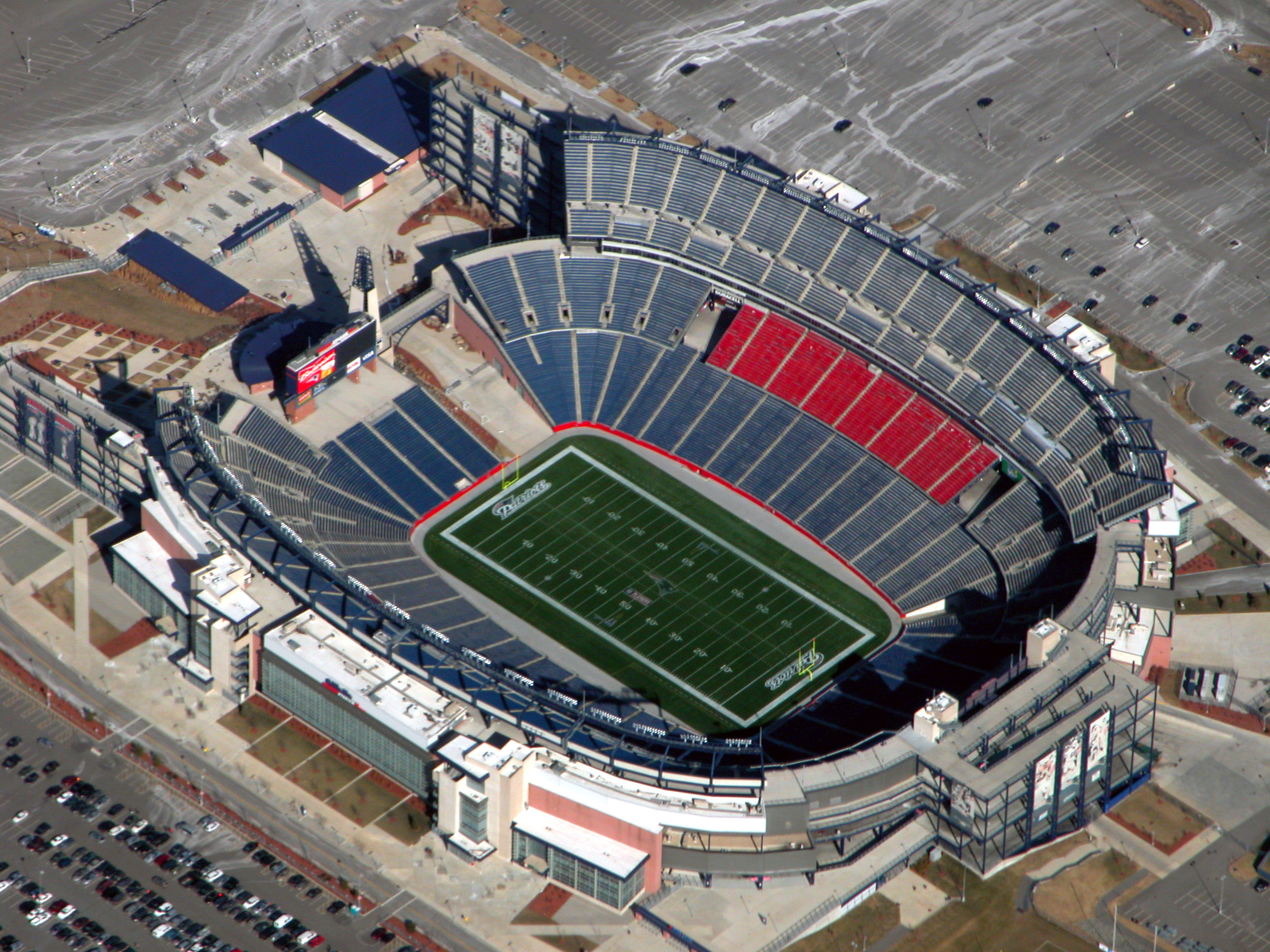
All of it — Brazil, Scotland, Haiti, the Netherlands shootout, the demolition of Canada — leads to a single Thursday afternoon. On July 9, at 4pm ET, Morocco face France in the quarterfinal at Boston Stadium, the World Cup rebranding of Gillette Stadium in Foxborough, Massachusetts. It is a direct rematch of the Qatar 2022 semifinal, the game France won 2-0 in Lusail to end the greatest run in African World Cup history — the run that made Morocco the first African and first Arab nation ever to reach a World Cup semifinal.
The two teams have arrived at this rematch by very different roads. Morocco's path, detailed above, has been a story of resilience: a draw with the best team in the group, a backs-against-the-wall shootout win, and a statement blowout. France's road has been one of ruthless efficiency, sweeping through their group and knockout matches behind Kylian Mbappe and a Champions League-winning attacking core. On paper, France arrive as favorites, exactly as they did in 2022.
But paper has not mattered much to this Moroccan squad across the last four years. Under new coach Mohamed Ouahbi — who took over after Walid Regragui departed following Morocco's Africa Cup of Nations title defense in 2025 — this team has fused the tactical discipline of the 2022 golden generation with a faster, more direct attacking edge. Six goals across the last two knockout matches, against opposition as different as an ultra-defensive Netherlands and an aggressive Canada, suggest a side that has found more ways to win than the one-goal, backs-to-the-wall Morocco of four years ago.
Whatever happens on Thursday, the occasion itself is guaranteed to be enormous. Boston Stadium hosted the France-Morocco rematch as its marquee quarterfinal, and the Moroccan diaspora across the American Northeast — one of the largest and most vocal fan bases at this entire World Cup — is expected to turn Foxborough into what has, at every Morocco match so far, felt like a home fixture regardless of geography.
This piece is not a minute-by-minute preview of that match. It is about what comes after it — because if Morocco find a way past France on Thursday, the door that opens next is one no African team has ever walked through before.
What beating France would actually mean
Start with the plain historical fact: no African nation has ever reached back-to-back World Cup semifinals. Morocco's 2022 run to the final four was, by any measure, the single greatest achievement in the history of African football at this tournament — the first time any team from the continent had gotten that far. A second consecutive semifinal, four years later, with a different coach and a partially rebuilt squad, would not read as lightning striking twice. It would read as proof that Morocco has built something durable: a genuine system, not a one-off miracle run.
There is a psychological layer to it as well. Morocco have never beaten France in a senior international, across friendlies and that one enormous 2022 semifinal. Every previous meeting has ended in a French win or a draw. A victory on Thursday would not just be Morocco's first-ever win over France — it would be delivered in the exact fixture, and arguably the exact stadium region, where the two nations' World Cup history was written. Closing that circle carries weight far beyond three league points' worth of value; it is a symbolic settling of the specific defeat that ended the 2022 dream.
Then there is the doorway it opens. Beating France would put Morocco two wins away from a first-ever African appearance in a World Cup final — a barrier no team from the continent has ever breached. Morocco came within two matches of it in 2022. Getting back to that exact point, against the same opponent that stopped them last time, with a deeper and arguably more talented squad, would be received across the continent as this generation's defining achievement, eclipsing even the run in Qatar.
None of this requires getting ahead of the result. Morocco still have to win a genuinely difficult quarterfinal against one of the most talented squads left in the draw. But the scale of what a win unlocks is precisely why this quarterfinal is being treated, across African and global football media alike, as one of the two or three biggest matches of the entire tournament — bigger, in stakes terms, than most semifinals.
The semifinal picture: who Morocco would face next
Bracket logic in a 48-team World Cup is unforgiving and precise, and it is already fixed regardless of what happens on Thursday. Morocco's half of the draw contains one other quarterfinal: Spain against Belgium, scheduled for Friday, July 10, at Los Angeles Stadium (SoFi Stadium) in Inglewood, California — a day after the France-Morocco tie in Foxborough. Whichever of those two teams wins will be waiting in the semifinal for whoever comes through Thursday's Morocco-France match.
That means the honest, unembellished answer to 'who would Morocco play in the semifinal' is this: the winner of Spain vs Belgium. Both are serious opponents. Spain arrive as one of the tournament's most fluid, possession-dominant sides, built around a technically elite generation and a manager unafraid to press high and control matches through the ball. Belgium, in what has been billed for years as the twilight of their so-called golden generation, still carry real individual quality and a knockout pedigree that has troubled bigger names before. Neither side can be dismissed, and neither result should be assumed before the match is played.
This is exactly the kind of situation where it matters to be precise rather than to invent a storyline. Nobody outside Inglewood on July 10 can honestly say today whether Morocco's semifinal opponent would be Spain or Belgium — only that it will be one of the two, and that the identity of that opponent will not be settled until a full day after Morocco's own quarterfinal is played. What is certain is the shape of the challenge: a technically excellent European side, either way, arriving into the semifinal off the back of a full tournament of knockout football.
For a Morocco team that has already beaten a Netherlands side built on structured possession (on penalties) and blown past a physical, direct Canada side, the profile of a Spain or Belgium semifinal opponent would not be unfamiliar territory. It would, however, be the single biggest test of Ouahbi's tenure — a step up in individual quality from anything Morocco have faced so far in this tournament, France included.
There is also a scheduling wrinkle worth flagging plainly rather than glossing over. Because Spain vs Belgium is played a full day after France vs Morocco, whichever of Morocco or France advances from Foxborough will already know their semifinal date and venue before knowing their opponent's identity. That is simply how tournament bracket logistics work in a 48-team format with staggered quarterfinal kickoffs across different time zones — it is not a disadvantage unique to Morocco, and it applies equally to France. But it does mean that, writing this before either the France-Morocco or Spain-Belgium quarterfinals have been played, the single most honest thing that can be said about Morocco's potential semifinal opponent is the bracket slot itself, not a name.
Where the semifinals and the final would be played
The logistics of a potential Moroccan run to the final four are already locked in, independent of results. The first semifinal — the one Morocco would play in if they beat France on Thursday — is scheduled for Tuesday, July 14, at AT&T Stadium in Arlington, Texas, with kickoff at 3pm ET (2pm local time). It is the earlier of the tournament's two semifinals, giving the winner of the France-Morocco/Spain-Belgium side of the bracket a one-day jump on the final.
The other half of the draw — Norway against England and Argentina against Switzerland in their respective quarterfinals — feeds into the second semifinal, scheduled for Wednesday, July 15, at Mercedes-Benz Stadium in Atlanta, also at 3pm ET. Morocco, sitting in the opposite half of the bracket, would have no path to that particular semifinal; their route, should they advance, runs exclusively through Arlington.
Beyond the semifinals, the entire tournament funnels toward a single date and stadium: the final is scheduled for Sunday, July 19, at MetLife Stadium in East Rutherford, New Jersey, just outside New York City — the biggest stage in world football, in the largest World Cup ever staged, with 48 teams and an expanded format built for exactly this kind of moment. For a Moroccan federation and fanbase that watched their team fall two matches short of that stadium in 2022, the mere fact that the road runs through Arlington and, potentially, all the way to East Rutherford is its own kind of statement.
None of this is a guarantee of anything. Morocco have to beat France first, and then a Spain-or-Belgium side that will have had an extra day of rest. But the map is drawn, the dates are fixed, and the stakes of Thursday afternoon in Foxborough could not be plotted any more clearly: win, and the road runs to Texas next Tuesday, with New Jersey looming five days after that.
The stadiums themselves add their own layer of theater to the story. AT&T Stadium, the Dallas Cowboys' home ground, is a cavernous, roofed venue built for exactly this kind of spectacle, with a listed World Cup capacity comfortably above 80,000 — among the largest crowds any Morocco match could be played in front of at this tournament. MetLife Stadium, the eventual final venue, sits in the New York media market with its own sizable Moroccan and broader North African community within reach, meaning that even the logistics of ticket demand and travel would tilt some of the atmosphere Morocco's way if the run continued that far. None of it substitutes for what happens on the pitch, but it underlines just how large a stage is already reserved for whichever side wins on Thursday.


Ouahbi's golden generation: the coach, the squad and why this run feels built to last
It is impossible to tell the story of this bracket run without stopping on the man who has overseen it from the bench. Mohamed Ouahbi took charge of Morocco after Walid Regragui — the architect of the entire 2022 miracle — left the post following the team's Africa Cup of Nations title defense in 2025. Handing the job, just months before a home-stretch World Cup, to a coach best known for guiding Morocco's youth ranks to major honors was, by any measure, a bold call. Five matches into this tournament, unbeaten, it looks close to inspired.
What Ouahbi has built is a genuine blend rather than a simple continuation. The spine of the 2022 semifinalists remains: Bounou between the posts, still delivering shootout heroics on demand; Achraf Hakimi driving forward from right back; Sofyan Amrabat screening the midfield with the same ferocity that made him a cult hero in Qatar. Around that spine, a younger wave has taken over the creative and goalscoring burden — Ounahi's driving runs, Brahim Diaz's tournament-record assist tally, Rahimi's knack for arriving in the right position, and Saibari's ice-cold penalty-taking under the heaviest possible pressure.
The style has shifted too. The 2022 team is remembered, fondly and accurately, as a defensive fortress that ground out 1-0s and rode moments of individual brilliance in transition. This 2026 vintage has scored six goals across its last two knockout matches alone — the Netherlands shootout aside — a marker of a team that defends with the same discipline but attacks with considerably more conviction. That is not an accident; it is the fingerprint of a coach who won a World Cup at youth level playing progressive, front-footed football, now layering that instinct onto a golden generation that already knew how to defend a lead.
That blend — proven winners at the back, hungry new talent doing the damage further forward — is precisely why so many inside Moroccan football believe this run is not a repeat of 2022 so much as an upgrade on it. A team that could go toe-to-toe with Brazil, survive a Dutch onslaught on penalties and blow away Canada by three clear goals is, on the evidence, a more complete side than the one that stunned the world four years ago. Thursday against France is the test that will confirm or complicate that theory.
Nine members of the 2022 semifinal squad made the trip to North America for this tournament, giving Ouahbi a locker room with a rare combination of scar tissue and hunger for redemption built directly into it. Every one of those nine players has lived with the 2-0 Lusail scoreline for four years; several have spoken publicly, in the buildup to this tournament, about wanting one more crack at the exact team that ended their fairytale. Layering that motivation onto a genuinely talented new generation, rather than an aging group simply trying to relive past glory, is a large part of why this Morocco squad feels less like a nostalgia act and more like a team peaking at the right moment.
The bigger picture: Africa's ceiling and Morocco's chance to redraw it
Zoom out from the bracket, the venues and even the France rematch itself, and this quarterfinal sits at the center of a much larger question African football has been asking since Qatar 2022: was that run a ceiling, or a floor? For years, the debate over African representation at World Cups has circled around structural disadvantages — fewer automatic qualification slots historically, less exposure to elite-level knockout football, talent drain to European federations. Morocco's 2022 semifinal was treated, understandably, as a landmark exception to that pattern rather than a new normal.
This tournament is the first real chance to test which interpretation was correct. A Morocco side with a new coach, a partially refreshed squad and the same underlying footballing culture has gone unbeaten through five matches, including two knockout rounds that both went to the wire before being settled decisively. If that team now beats France — the exact opponent that ended the 2022 dream — the 'exception' argument becomes very difficult to sustain. Back-to-back semifinals, achieved by two different squads under two different coaches, looks a great deal more like a program than a fluke.
The reach of that goes well beyond Morocco's own fanbase. Every African federation, every academy from Casablanca to Dakar to Lagos to Cairo, is watching this specific bracket path with an interest that has nothing to do with club allegiance. Morocco carried the hopes of an entire continent through Qatar in 2022; the emotional intensity around Thursday's rematch, and around what a win would set up, suggests they are carrying it again now, arguably with even higher expectations attached.
Whatever happens against France, and whatever the Spain-Belgium winner brings to a potential semifinal in Arlington, the framework of this story is already historic. Morocco have guaranteed themselves, at minimum, a second straight World Cup quarterfinal — itself an African first. The bracket in front of them offers something even bigger: a realistic, mapped-out route to a second consecutive semifinal, and beyond that, to the one prize African football has never touched. Thursday at 4pm ET in Foxborough is where that route either opens or closes.
It is that combination — a fixed, mapped bracket, a historic opponent, and stakes that reach far past one team's ambitions — that makes this quarterfinal worth previewing in full rather than treating as just another last-eight tie. Win or lose, Morocco have already rewritten what an African World Cup campaign can look like twice in four years. A win on Thursday would simply mean the story is not finished being written.
Frequently asked
What is Morocco's full record at the 2026 World Cup so far?
Morocco are unbeaten through five matches: a 1-1 draw with Brazil, a 1-0 win over Scotland, a 4-2 win over Haiti in the group stage, a 3-2 penalty shootout win over the Netherlands (1-1 after 120 minutes) in the round of 32, and a 3-0 win over co-hosts Canada in the round of 16.
Who scored Morocco's goals in the win over Canada?
Azzedine Ounahi scored twice, in the 50th and 82nd minutes, and Soufiane Rahimi added a third in the 90+8th minute from a Brahim Diaz assist — Diaz's fourth assist of the tournament, a World Cup record for an African player.
How did Morocco beat the Netherlands in the round of 32?
The Netherlands led through Cody Gakpo in the 72nd minute. Morocco equalized in the 91st minute through substitute Issa Diop's header, taking the match to a penalty shootout that Morocco won 3-2, with Yassine Bounou making the decisive save and Ismael Saibari scoring the winning kick.
Who is Morocco's coach at the 2026 World Cup?
Mohamed Ouahbi, who took over after Walid Regragui left the role following Morocco's Africa Cup of Nations title defense in 2025. Ouahbi previously guided Morocco's youth national team to a major title before stepping up to the senior side.
What would beating France mean for Morocco historically?
A win would give Morocco back-to-back World Cup semifinals, something no African nation has ever achieved. It would also be Morocco's first-ever victory over France in a senior international, avenging the 2-0 loss in the 2022 semifinal in Lusail.
Who would Morocco face in the semifinal if they beat France?
The winner of the other quarterfinal in their half of the bracket: Spain vs Belgium, played July 10 at Los Angeles Stadium (SoFi Stadium) in Inglewood, California. That result was not yet known at the time of this article, so Morocco's semifinal opponent would be either Spain or Belgium.
Where and when would Morocco's semifinal be played?
If Morocco beat France, their semifinal would be played on Tuesday, July 14 at AT&T Stadium in Arlington, Texas, with kickoff at 3pm ET (2pm local time).
Where and when is the 2026 World Cup final?
The final is scheduled for Sunday, July 19 at MetLife Stadium in East Rutherford, New Jersey.
Has Morocco ever beaten France?
No. Morocco have never beaten France in a senior international across all previous meetings, including the 2022 World Cup semifinal, which France won 2-0.
What is Morocco's overall unbeaten run heading into the France quarterfinal?
Morocco are unbeaten in 34 consecutive internationals heading into the July 9 quarterfinal, a stretch that includes their Africa Cup of Nations title and their entire 2026 World Cup campaign. They are ranked seventh in the world by FIFA, the highest ranking any African nation has held.
Did Morocco reach the World Cup semifinal in 2022?
Yes. Morocco became the first African and first Arab nation ever to reach a World Cup semifinal in Qatar 2022, before losing 2-0 to France and finishing fourth overall after a loss to Croatia in the third-place match.
What other quarterfinals are being played alongside France vs Morocco?
Spain face Belgium on July 10 in Inglewood, California, while Norway face England and Argentina face Switzerland complete the round, all scheduled between July 9 and 11. Only the Spain-Belgium winner can meet Morocco or France in the semifinal, since the other two quarterfinals feed into the opposite half of the bracket.
- FIFA — World Cup 2026 Knockout Stage schedule and bracket ↗
- Yahoo Sports — World Cup semifinals bracket: full schedule, matchups and path to the final ↗
- Olympics.com — FIFA World Cup 2026 bracket: quarter-finals full schedule ↗
- Athlon Sports — Where is Spain vs Belgium being played? City and stadium for the 2026 World Cup quarterfinal ↗
- SI.com — 2026 World Cup Quarterfinal & Semifinal Locations: Stadiums, Schedule and Kickoff Times ↗
- DK Network — 2026 FIFA World Cup Schedule: France vs. Spain Semifinal Preview, Game Time ↗
- Wikipedia — 2026 FIFA World Cup final ↗
- Opta Analyst — Canada 0-3 Morocco stats, World Cup 2026 round of 16 ↗
Video via official YouTube embeds; photos via Wikimedia Commons under their stated licenses. All rights belong to the respective owners; 212 Daily claims no ownership.