What Is a Moussem? Inside Morocco's Annual Saint Festivals
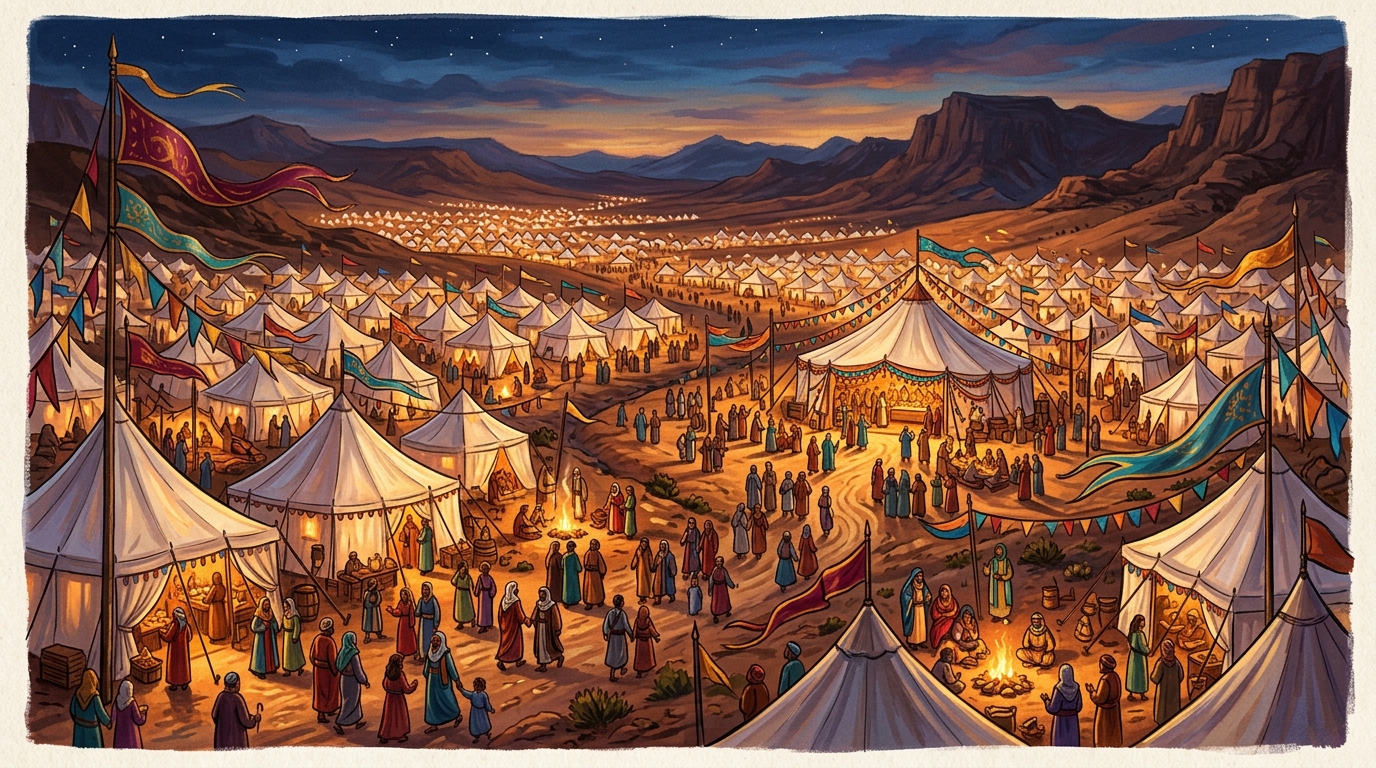
What exactly is a moussem?
The word moussem comes from the Arabic mawsim, meaning "season" or "time of," from a root that also gives words for marking or setting a date. In practice, a moussem is an annual festival, usually lasting several days, organized around the shrine of a local saint — a wali (holy person) whose tomb, or qubba, becomes a site of ziyara, meaning visitation or pilgrimage. Pilgrims come to pray at the tomb, ask for the saint's baraka (a kind of blessing or spiritual grace), and take part in the communal life that builds up around the shrine for that one week or weekend a year.
The saints honored this way are often called sidi, moulay or sheikh, honorifics that mark them as respected religious figures, many of them founders or leaders of Sufi brotherhoods (tariqas) that spread across Morocco from the medieval period onward. Nearly every region of the country has at least one such figure buried locally, and many villages built their own small qubba around a more modest local marabout. This layer of devotion to saints and their shrines is often called "popular" or "Maraboutic" Islam, distinct from — and historically debated alongside — more scripturalist currents of Moroccan religious life, but it has remained deeply embedded in how communities mark the calendar and organize social life.
Not every moussem centers on a saint, however. Some are essentially seasonal fairs tied to the agricultural or pastoral calendar rather than a specific tomb — gatherings timed to a harvest, a herding cycle, or simply a customary meeting point for trade between tribes. The word moussem, in other words, describes the format — an annual gathering combining ritual, market and celebration — more than it describes a single fixed religious ceremony.
How a moussem unfolds: structure and timing
A typical saint-centered moussem builds around a few recurring elements. There is a procession, often carrying embroidered banners and led by members of the local Sufi order, moving through the streets toward the shrine. There is collective prayer and Quranic recitation at the tomb itself, sometimes continuing through the night. There are communal meals — couscous shared among pilgrims and visiting families is a near-universal feature — and there is often a fantasia, or tbourida, the choreographed cavalry charge in which lines of horsemen in traditional dress gallop in unison and fire antique muskets into the air in a synchronized volley, a display of tribal pride and horsemanship that closes out many moussems' festive side.
Timing varies by moussem. Some follow the Islamic hijri calendar, which is lunar and roughly eleven days shorter than the Gregorian year, so their dates drift earlier each year when converted to the Western calendar. Others — including some of the largest and most tourism-oriented moussems — are now held on fixed Gregorian dates, commonly in the summer months when travel is easiest and diaspora families are more likely to be visiting Morocco. A number of moussems were also historically tied to agricultural seasons, timed around harvests or the movement of herds, which anchored them to the solar year rather than the lunar one.
Alongside the religious core, a moussem has always been a market. Around the tents and the shrine, a souk springs up where rural families historically bought and sold livestock, wool, grain, leather goods and handicrafts, often the year's single biggest trading opportunity for communities with otherwise limited access to regional commerce. That commercial dimension, alongside marriages arranged and tribal alliances renewed on the sidelines, is why moussems have long been described as having economic and social functions fully as important as their religious one.

Moussem of Moulay Idriss Zerhoun: Morocco's largest religious gathering
The single best-known example is the moussem of Moulay Idriss Zerhoun, a hill town near Fez and Meknes built around the tomb of Moulay Idriss I, the eighth-century founder of the Idrisid dynasty and, by tradition, a great-grandson of the Prophet Muhammad. The town's status as a pilgrimage site was cemented in 1318, during the Marinid dynasty, when Idriss I's remains were reportedly rediscovered — an event that drew intense local and royal attention and set the stage for the annual moussem that developed from the Marinid period onward.
Held every August, it is widely regarded as Morocco's largest single religious gathering, drawing devotees from across the country for extended nighttime prayer, Sufi brotherhood processions with Quranic recitation, and rituals at the saint's tomb, including the periodic ceremonial replacement of the gold-embroidered cloth covering it. For some rural Moroccans, popular tradition holds that repeated visits to Moulay Idriss can substitute for those unable to make the Hajj to Mecca — a belief that captures how central this particular shrine is within Morocco's own religious geography.
The town's relationship with outsiders has also long been unusually strict for Morocco: Moulay Idriss Zerhoun was off-limits to non-Muslims until 1912, and non-Muslims were not permitted to stay overnight in the town until 2005; the zawiya (shrine complex) itself remains closed to non-Muslim visitors to this day, even as the town has otherwise opened up considerably to tourism centered on its proximity to the Roman ruins of Volubilis.
Moulay Abdellah Amghar: the Doukkala region's equestrian moussem
Near El Jadida on the Atlantic coast, the moussem of Moulay Abdellah Amghar honors a Sufi saint of the Doukkala region, Abu Abdallah Mohammed Amghar, who founded the Sanhaja religious order in the 11th century during the Almoravid period — considered one of the earliest formal Sufi orders in the Maghreb. His shrine sits in the small village of Tit, a few kilometers from El Jadida, and has drawn pilgrims from the tribes of Doukkala for centuries.
Held every August, the moussem has grown into one of Morocco's largest, temporarily swelling the area with reported crowds in the hundreds of thousands. Its signature spectacle is a fantasia on a genuinely national scale — accounts describe several thousand horsemen taking part across the days of the event — alongside falconry displays and performances by regional folk troupes, all built around the religious ceremonies at the saint's tomb that remain the moussem's devotional core.
Historically, the gathering also functioned as the yearly meeting point for the various tribes of the Doukkala region, a moment to renew ties, trade livestock and goods, and mark the rhythm of the rural year — the same social and commercial role that underpins moussems across the country, just at an unusually large scale here.
Tan-Tan and the deeper economic role of moussems
Not every major moussem centers on a shrine. The Moussem of Tan-Tan, in southwestern Morocco, gathers more than thirty nomadic and semi-nomadic tribes from the Sahara and beyond, and traces its format to gatherings that were originally tied to the pastoral and agricultural calendar — annual meeting points where nomadic communities traded food and goods, held camel and horse-breeding competitions, arranged marriages and consulted herbalists, long before it took its modern organized shape in 1963. Security concerns tied to the Western Sahara conflict forced its suspension between 1979 and 2004; it was revived afterward and inscribed in 2005, then again in 2008, on UNESCO's Representative List of the Intangible Cultural Heritage of Humanity.
Tan-Tan makes explicit what is true, in a quieter form, at nearly every moussem in Morocco: these gatherings have always been engines of rural economic life as much as devotional ones. A single moussem could represent a community's main annual opportunity to sell livestock, wool and crafts, to negotiate marriages between families from different areas, and to renew alliances between tribes that otherwise had limited regular contact. That combination — Quranic recitation and camel trading, saintly blessing and dowry negotiation, prayer vigils and a poetry contest, all under the same tents — is precisely what distinguishes a moussem from either a purely religious pilgrimage or a purely secular fair.
Today, UNESCO recognition and government tourism promotion have added a further layer: moussems like Tan-Tan and Moulay Abdellah Amghar are actively marketed as heritage attractions, drawing domestic and international visitors and generating hospitality revenue for the surrounding region, even as organizers and communities work to keep the older social functions — trade, marriage, tribal reunion — from being crowded out by the festival's newer role as a tourist spectacle.

Moussems in Morocco's broader religious and cultural calendar
Hundreds of moussems, large and small, take place across Morocco over the course of a year, each attached to a local saint, a regional tribe, or simply a customary date on the agricultural calendar. Some, like Moulay Idriss Zerhoun and Moulay Abdellah Amghar, draw crowds from across the entire country and are effectively national events; most are far smaller, drawing pilgrims mainly from the surrounding province and serving primarily as that area's yearly social and commercial reunion.
The saint-veneration at the heart of many moussems has also long been a point of internal Moroccan religious debate. More scripturalist and reformist currents have criticized aspects of Maraboutic practice — treating a saint's tomb as a site of intercession — as straying from orthodox practice, even as the moussems themselves have persisted as some of the most durable expressions of local identity and Sufi heritage in the country. The Moroccan state, for its part, has increasingly folded major moussems into its cultural and tourism policy, supporting UNESCO heritage nominations and promoting events like Tan-Tan and Moulay Abdellah Amghar as showcases of Moroccan intangible heritage.
Whatever tensions exist around them, moussems remain one of the clearest windows into how Moroccan communities blend the sacred and the everyday: a shrine and a souk sharing the same dusty field, a night of Quranic recitation followed by a morning of camel trading, and a calendar that has marked the rhythm of rural Moroccan life for centuries longer than the modern state that now promotes it.
Frequently asked
What does the word moussem mean?
Moussem (from Arabic mawsim) means "season" or "time of." It refers to an annual festival, typically several days long, that combines religious pilgrimage to a local saint's shrine with markets, trade, music and social gathering.
What is a marabout or wali in this context?
A marabout is a Muslim holy person or saint, often the founder or leader of a Sufi order, whose tomb (qubba) becomes a local site of pilgrimage and blessing (baraka). Wali is the Arabic term for such a saint; almost every Moroccan region has at least one venerated locally.
Is a moussem a religious pilgrimage or a festival?
Both. The core of most moussems is ziyara — visitation and prayer at a saint's shrine — but the event also functions as a regional fair with markets, livestock trading, music, fantasia horseback displays and family reunions, making it simultaneously devotional and social.
When do moussems take place?
It varies. Some follow the Islamic lunar (hijri) calendar and shift roughly eleven days earlier each Gregorian year; others are held on fixed Gregorian dates, often in summer; and some, like Tan-Tan's original gatherings, were historically tied to the agricultural or herding calendar.
What is Morocco's largest moussem?
The moussem of Moulay Idriss Zerhoun, held every August near Fez and Meknes at the tomb of Idris I, founder of the Idrisid dynasty, is widely described as Morocco's largest single religious gathering, drawing devotees from across the country.
Can non-Muslims visit the moussem of Moulay Idriss Zerhoun?
The town itself was off-limits to non-Muslims until 1912 and non-Muslims could not stay overnight until 2005; today outside visitors can tour the town, but the zawiya (shrine complex) housing the tomb remains closed to non-Muslims.
What happens at the Moussem of Moulay Abdellah Amghar?
Held every August near El Jadida in honor of the 11th-century Sufi founder Abu Abdallah Mohammed Amghar, it combines religious ceremonies at his shrine in the village of Tit with a large-scale fantasia (tbourida), falconry displays and folk performances, drawing reported crowds in the hundreds of thousands.
What is the Moussem of Tan-Tan and why is it UNESCO-listed?
It is an annual gathering of more than thirty nomadic and semi-nomadic Saharan tribes in southwestern Morocco, rooted in older pastoral and trading gatherings rather than a single saint's shrine. Revived after a suspension from 1979 to 2004, it was inscribed on UNESCO's Representative List of the Intangible Cultural Heritage of Humanity in 2005 and again in 2008.
Do moussems still serve an economic purpose today?
Yes. Historically they were the main annual opportunity for rural communities to trade livestock, wool and crafts and to arrange marriages and tribal alliances. Many moussems still host active souks alongside the religious ceremonies, and major ones now also generate tourism revenue.
Are moussems controversial in Morocco?
The saint-veneration at their core has long been debated by more scripturalist religious currents, which view shrine-centered devotion as departing from orthodox practice. Despite this, moussems remain widespread and are increasingly supported by the state as heritage and tourism assets.
- UNESCO Intangible Cultural Heritage — Moussem of Tan-Tan ↗
- Wikipedia — Mawsim (moussem) ↗
- Wikipedia — Moulay Idriss Zerhoun ↗
- Wikipedia — Tan-Tan Moussem ↗
- Morocco World News — Moulay Idriss Zerhoun: A Piece of Largely Untouched Moroccan History ↗
- Le Matin — Clap de fin du Moussem Moulay Abdallah Amghar 2025 à El Jadida ↗
Video via official YouTube embeds; photos via Wikimedia Commons under their stated licenses. All rights belong to the respective owners; 212 Daily claims no ownership.