Vegetarian Morocco Food Guide
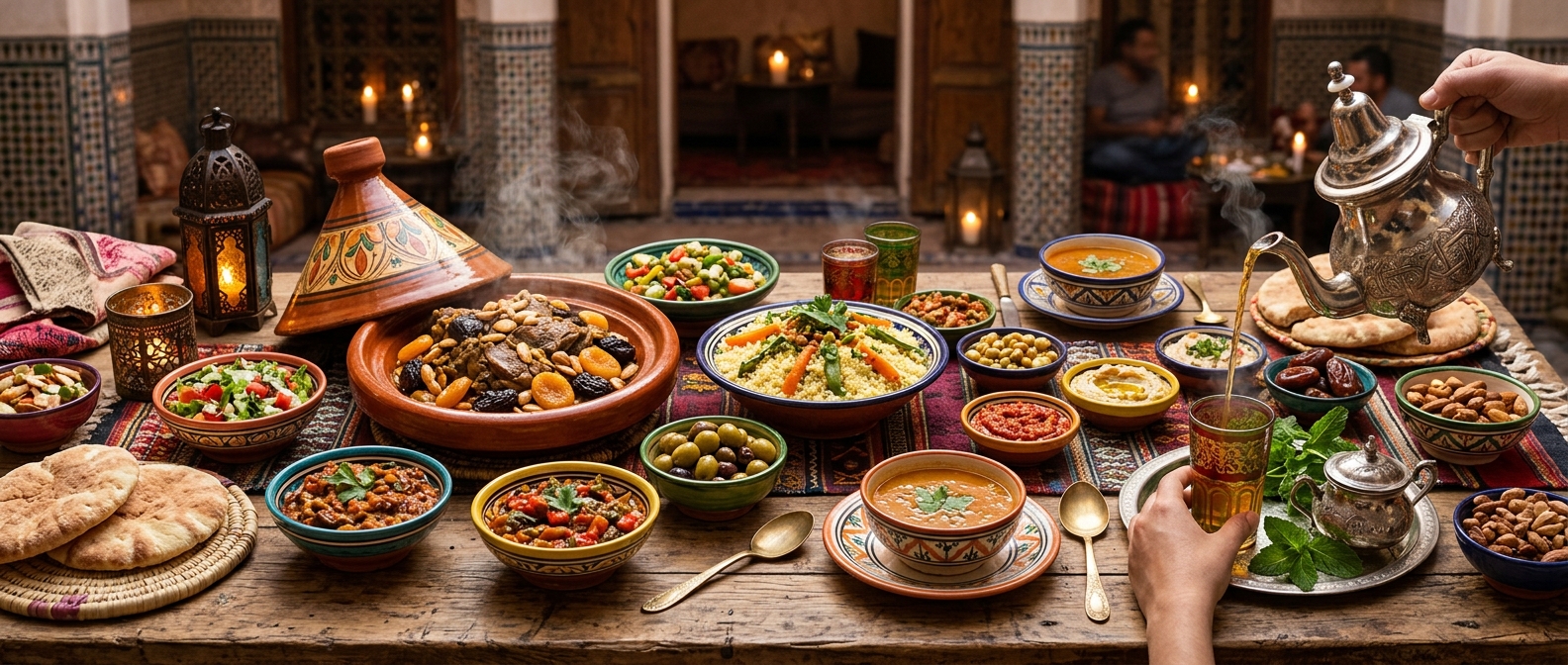
How Vegetarian-Friendly Is Morocco?
Moroccan cuisine is rich in vegetables, legumes, grains, and bread, which makes eating vegetarian quite feasible, especially if you are flexible. Markets overflow with fresh produce, and many traditional dishes are naturally meat-free or easily adapted.
The main caution is that meat and meat-based stock are central to traditional cooking, so dishes that look vegetarian may contain meat broth. Vegetarianism as a defined diet is less common locally, so explaining your needs clearly and asking questions is essential.
Vegetable Tagines and Couscous
Vegetable tagine, sometimes listed as tagine de légumes, is a staple option featuring slow-cooked seasonal vegetables such as carrots, potatoes, zucchini, tomatoes, and chickpeas with warm spices. It is widely available and one of the most reliable vegetarian choices.
Couscous is traditionally served with a meat-and-vegetable stew, but vegetable couscous is common and delicious. Confirm it is prepared without meat broth, as the steaming liquid and sauce sometimes use stock. Many restaurants will happily prepare a vegetarian version.
Legumes, Soups, and Salads
Lentils (adas) and beans feature in hearty, satisfying dishes that are often vegetarian. Loubia (white bean stew) and lentil stews are common, though it is worth checking they are not cooked with meat. Bissara, a fava bean or split pea soup drizzled with olive oil and cumin, is a vegetarian breakfast favourite.
Harira, the famous soup, traditionally contains meat or meat stock, so ask before assuming it is vegetarian. Moroccan salads such as zaalouk (smoky eggplant), taktouka (peppers and tomatoes), and carrot or beet salads are flavourful, naturally meat-free starters.
Breakfast and Snacks
Moroccan breakfasts are very vegetarian-friendly, built around breads like khobz, msemen (flaky pancakes), baghrir (semolina pancakes), and harcha (semolina bread), served with olive oil, honey, jam, amlou (almond and argan spread), and cheese.
Street snacks include msemen, fried pastries, roasted nuts, olives, and fresh fruit and juice. Eggs are widely available, and many cafés serve omelettes. Sweet pastries and dates make easy snacks for travellers seeking quick meat-free options.
Ordering and Useful Phrases
Learning a few phrases helps enormously. In French, widely spoken in Morocco, say sans viande (without meat) and sans bouillon de viande (without meat stock). In Arabic, bla lham means without meat. Clarify that fish and chicken also count as meat for you if needed.
Tourist areas, riads, and modern restaurants are increasingly used to vegetarian requests, while small local eateries may need clearer explanation. Cooking classes and home-style restaurants are great places to enjoy vegetarian Moroccan food prepared with care.
Tips for a Smooth Vegetarian Trip
Stay flexible and focus on naturally vegetarian dishes rather than expecting menus to label items clearly. Self-catering from markets is easy and rewarding given the abundant produce, bread, olives, nuts, and fruit available.
Carry snacks for travel days, choose riads that offer home-cooked meals, and do not be shy about asking how a dish is prepared. With a little communication, vegetarians can eat extremely well across Morocco.
| Dish | Description | Check for |
|---|---|---|
| Vegetable tagine | Slow-cooked spiced vegetables | Meat stock |
| Vegetable couscous | Couscous with vegetables | Meat broth in steaming liquid |
| Zaalouk | Smoky eggplant and tomato salad | Usually safe |
| Bissara | Fava bean or split pea soup | Usually vegetarian |
| Msemen | Flaky pancake breakfast | Naturally vegetarian |
Reliable vegetarian dishes in Morocco
FAQ
Is it easy to be vegetarian in Morocco?
It is quite feasible thanks to vegetable tagines, couscous, legumes, salads, and breads, though you must ask about meat stock and be flexible in smaller eateries.
Does harira soup contain meat?
Traditional harira usually contains meat or meat stock, so always ask before assuming it is vegetarian.
What phrase should I use to order without meat?
In French say sans viande and sans bouillon de viande; in Arabic say bla lham, and clarify whether fish or chicken should also be excluded.
Loved this? Useful? React below — your feedback helps other readers.