Vegan Morocco Food Guide
Is Veganism Practical in Morocco?
Vegan travel in Morocco is achievable but requires more vigilance than vegetarian eating. The cuisine offers many plant-based building blocks, including vegetables, legumes, grains, fruits, nuts, and olive oil, yet animal products are woven into many traditional dishes in less obvious ways.
Beyond meat itself, you need to watch for meat or chicken stock, smen (fermented butter), regular butter, honey used as a sweetener and glaze, eggs in pastries and pancakes, and dairy. Communicating clearly and choosing the right places makes a vegan trip enjoyable.
Naturally Plant-Based Dishes
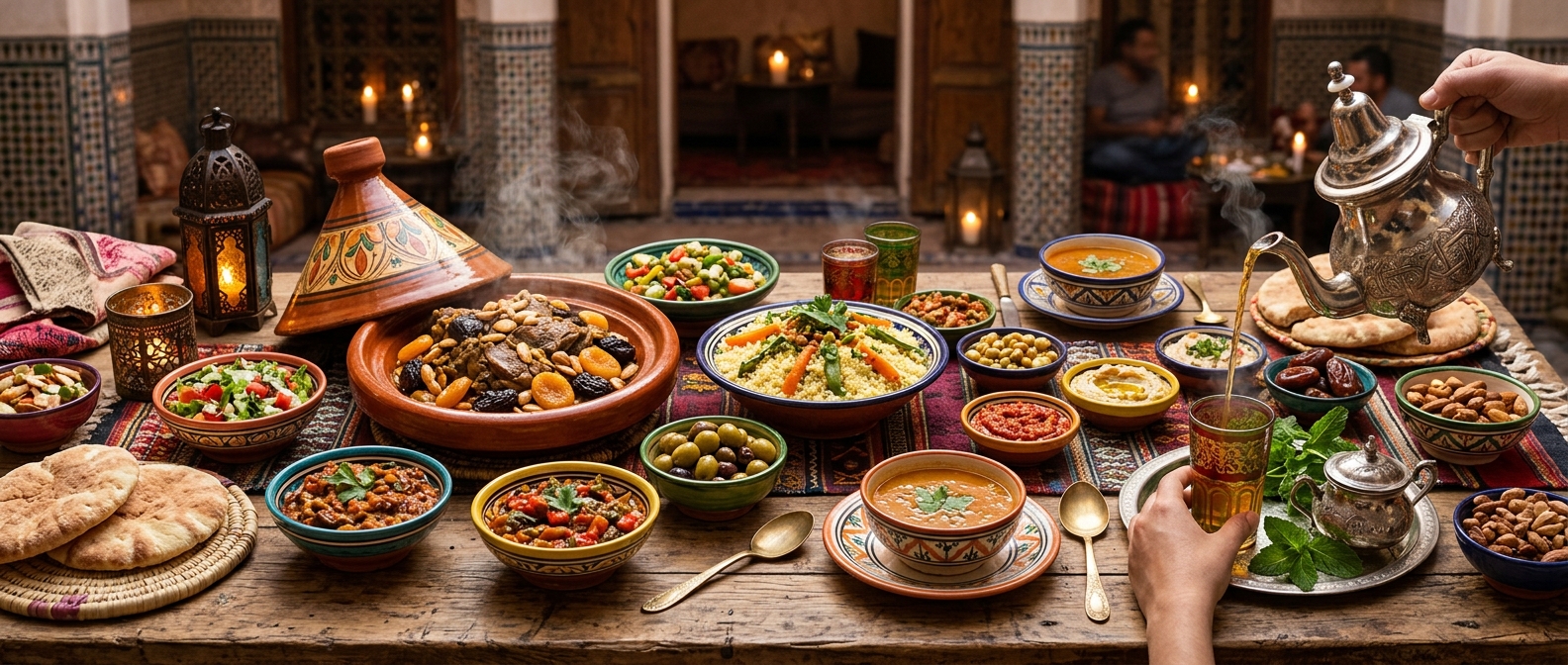
Vegetable tagine prepared with olive oil rather than smen is a strong vegan option, packed with seasonal vegetables, chickpeas, olives, and preserved lemon. Vegetable couscous can be vegan if steamed and sauced without meat broth or butter.
Bean and lentil dishes such as loubia (white beans), lentil stew, and bissara (fava or split pea soup with olive oil and cumin) are often vegan, though you should confirm no meat stock or butter is added. Many salads are naturally plant-based.
Salads, Sides, and Breads
Cooked salads like zaalouk (eggplant), taktouka (peppers and tomatoes), and carrot or beet salads are typically vegan and full of flavour. Olives, marinated vegetables, and fresh tomato and onion salads make excellent sides and starters.
Bread is central, and plain khobz is usually vegan. However, enriched breads and some pancakes can contain butter or eggs, so check msemen and baghrir. Olive oil, amlou (almond and argan paste, when honey-free), and certain jams pair well with bread for vegans.
Hidden Animal Ingredients to Watch
Smen, a preserved fermented butter, is used in many traditional tagines and couscous, so ask for dishes cooked with zit zitoun (olive oil) instead. Honey appears in many pastries, glazes, and even some savoury-sweet dishes, and most Moroccan sweets contain butter, eggs, or honey.
Harira and many soups use meat stock, and some bean dishes are cooked with meat for flavour. Dairy shows up in breakfasts and drinks like avocado smoothies, which are typically made with milk, though they can sometimes be adapted.
Communicating Your Diet
Explain that you eat no animal products at all, since vegan as a concept may be unfamiliar. In French, useful phrases include sans viande, sans poisson, sans beurre (without butter), sans miel (without honey), sans oeufs (without eggs), and sans produits laitiers (without dairy).
Riads, cooking classes, and modern or tourist-oriented restaurants are most likely to accommodate vegans well. Asking for dishes cooked with olive oil and confirming each potential animal ingredient individually gives the best results.
Self-Catering and Practical Tips
Markets make self-catering easy and affordable, with abundant vegetables, fruits, olives, nuts, dates, and bread. Carrying snacks such as nuts, dried fruit, and fresh fruit is wise for travel days and remote areas.
Larger cities like Marrakech, Casablanca, and Rabat have a growing number of vegan-friendly and health-focused cafés. With preparation, clear communication, and a focus on naturally plant-based dishes, vegans can eat well and varied throughout Morocco.
| Dish | Vegan if | Watch for |
|---|---|---|
| Vegetable tagine | Cooked in olive oil | Smen, butter, meat stock |
| Vegetable couscous | No meat broth or butter | Stock, smen |
| Bissara | Olive oil only | Butter, meat stock |
| Zaalouk | Standard preparation | Usually safe |
| Plain khobz bread | No added butter | Enriched breads with dairy/egg |
Vegan-friendly choices and what to check
FAQ
What is smen and why does it matter for vegans?
Smen is a fermented preserved butter used in many tagines and couscous; vegans should ask for dishes cooked with olive oil (zit zitoun) instead.
Are Moroccan sweets vegan?
Most are not, as they typically contain butter, eggs, or honey; check carefully and expect limited vegan dessert options outside specialist cafés.
How do I explain veganism in Morocco?
Explain you eat no animal products at all and use French phrases like sans viande, sans beurre, sans miel, sans oeufs, and sans produits laitiers.
Loved this? Useful? React below — your feedback helps other readers.