Throne Day in Morocco
What Is Throne Day?
Throne Day, known in Morocco as Eid al-Arch, is the national holiday celebrating the King's accession to the throne. It is observed every year on July 30, the date marking the day King Mohammed VI ascended to power in 1999.
As a fixed Gregorian date, Throne Day does not shift from year to year, unlike Morocco's religious holidays. It is widely regarded as the most significant secular national celebration in the country.
History and Significance
Throne Day honors the institution of the monarchy, which is central to Moroccan identity and governance. King Mohammed VI became the country's ruler on July 30, 1999, following the death of his father, King Hassan II.
The holiday is an occasion for the nation to reaffirm its allegiance to the throne and to reflect on the kingdom's achievements and direction. The monarchy traces its lineage to the Alaouite dynasty, which has ruled Morocco since the 17th century.
The King's Speech
A central feature of Throne Day is the King's address to the nation, broadcast on television and radio. In this speech the monarch typically reviews the past year, outlines national priorities, and speaks on issues such as the economy, social development and international affairs.
The speech is closely watched and widely discussed, setting the tone for policy and national conversation in the months that follow. It is one of the most prominent royal communications of the year.
Ceremonies and Official Events
Throne Day involves official ceremonies, including the awarding of decorations and honors to citizens and officials who have served the nation, as well as military and diplomatic protocol events.
Allegiance ceremonies and receptions form part of the formal calendar, underscoring the relationship between the monarchy, government institutions and the people. State buildings and public spaces are decorated for the occasion.
Public Celebrations and Festivities
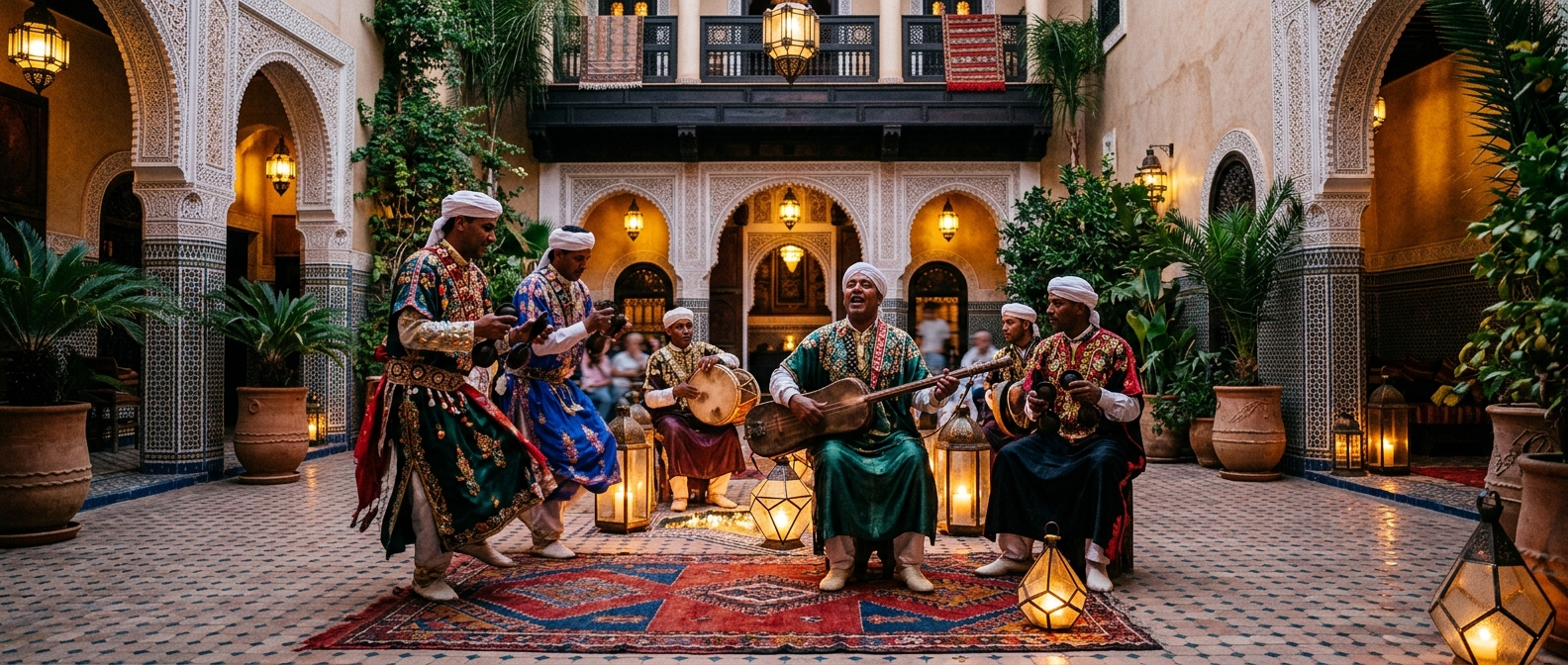
Across the country, cities and towns are decorated with Moroccan flags and portraits of the King. Streets, squares and buildings are illuminated, and many places hold fireworks displays, concerts and cultural events.
It is a festive and patriotic atmosphere, with families enjoying the day off, public gatherings and entertainment. The red and green of the national flag dominate decorations nationwide.
Tips for Travelers on Throne Day
Throne Day is a public holiday, so government offices, banks and many businesses close, while tourist sites and some restaurants remain open. Visitors will find a celebratory, decorated atmosphere in most cities.
It is a good day to witness Moroccan national pride and festivities. Expect crowds at evening events and fireworks. Travelers should plan for possible traffic and book transport in advance, as it is a popular time for domestic travel.
| Aspect | Details |
|---|---|
| Local name | Eid al-Arch |
| Date | July 30 (fixed每 year) |
| Commemorates | Accession of King Mohammed VI (1999) |
| Type | National secular holiday |
| Key feature | The King's annual speech to the nation |
| Festivities | Fireworks, flags, concerts, ceremonies |
Throne Day at a glance
FAQ
When is Throne Day in Morocco?
Throne Day is celebrated every year on July 30. As a fixed Gregorian date, it does not move from year to year.
What does Throne Day commemorate?
It marks the accession of King Mohammed VI to the Moroccan throne on July 30, 1999, and honors the monarchy as a central institution of the nation.
Is Throne Day a public holiday?
Yes, it is one of Morocco's most important national public holidays. Government offices, banks and many businesses close, while celebrations and fireworks take place across the country.
Loved this? Useful? React below — your feedback helps other readers.