Tanger Med: How Morocco Built Africa's Port Powerhouse at the Gateway to Europe
A Port Born of Geography and Ambition
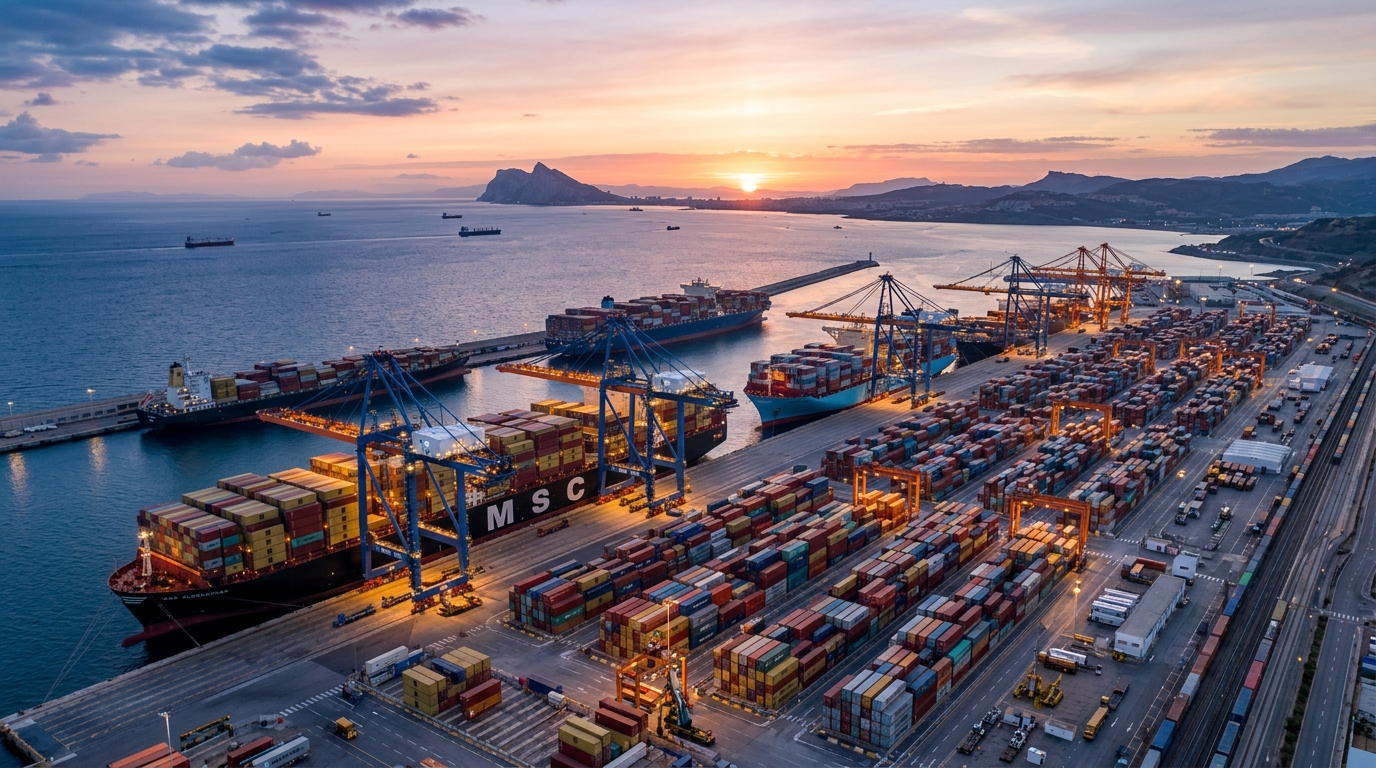
Few pieces of infrastructure capture Morocco's transformation as vividly as Tanger Med. Built on the country's northern tip, where the Mediterranean meets the Atlantic at the narrow Strait of Gibraltar, the port sits astride one of the busiest shipping lanes on the planet. Thousands of vessels pass through the strait every year, carrying goods between Europe, Africa, the Americas and Asia, and Morocco recognized that this geography was a strategic asset waiting to be exploited.
Before Tanger Med, Morocco lacked a port capable of handling the scale of global container shipping required to anchor an export-driven industrial economy. The decision in the 2000s to build a major deep-water port and surrounding industrial zones near Tangier was a bold, capital-intensive bet on the country's future as a trade and manufacturing hub. It was conceived not as a single quay but as an integrated platform combining maritime terminals, free zones, logistics areas and connecting infrastructure.
The bet paid off spectacularly. Over successive expansion phases, Tanger Med grew into one of the largest container ports in Africa and the wider Mediterranean basin, with annual container-handling capacity climbing into the multi-million range measured in standard containers. It transformed a relatively underdeveloped corner of the country into a magnet for global manufacturers and logistics operators, and became a symbol of Moroccan economic ambition recognized far beyond the region.
More Than a Port: An Integrated Industrial Platform
What distinguishes Tanger Med from a conventional harbour is that it was designed from the outset as an integrated industrial and logistics ecosystem, not merely a place to load and unload ships. Surrounding the maritime terminals are extensive free-trade and industrial zones, where companies benefit from streamlined customs, tax incentives and direct, frictionless access to the port. This co-location of manufacturing and shipping is the heart of the model's success.
These zones host hundreds of companies across sectors including automotive, aeronautics, textiles, logistics and electronics. The logic is powerful: a manufacturer can import components duty-efficiently, assemble or process them within the zone using competitively priced labour, and export finished goods through the adjacent port to Europe, often within a day's sailing. This proximity dramatically compresses lead times and costs, a decisive advantage in modern just-in-time supply chains.
The automotive sector exemplifies this synergy. Vehicles and components produced in plants linked to the Tangier industrial area flow directly to European markets through Tanger Med, making the port the export gateway for what has become Morocco's leading industrial sector. The combination of deep-water access, free-zone incentives and a skilled, cost-competitive workforce created a virtuous cycle that continues to attract fresh investment and deepen the industrial base.
Connecting Morocco to the World
Tanger Med functions as a global transshipment hub, where containers from one shipping route are transferred to another. Because of its position on the Europe-to-everywhere shipping highway, major container lines use it as a pivot point, consolidating and redistributing cargo across the Mediterranean, West Africa and the Atlantic. This transshipment role multiplies the port's throughput far beyond what Morocco's own trade alone would generate.
The port connects to an extensive network of destinations through the world's largest shipping alliances, linking Morocco directly to ports across dozens of countries. For Moroccan exporters, this connectivity means their goods can reach distant markets efficiently; for the global lines, Tanger Med offers a strategically located, modern and efficient alternative or complement to congested European hubs across the strait.
Connectivity does not stop at the water's edge. Tanger Med is integrated into Morocco's broader transport network, including motorways and rail links that move goods inland toward Casablanca, Kenitra and beyond, and increasingly toward the rest of the country as infrastructure expands. The port also includes dedicated passenger and ferry terminals handling the enormous seasonal flow of travellers, especially Moroccans living in Europe returning home, making it a human as well as commercial gateway.
Economic Impact on Northern Morocco and Beyond
The development of Tanger Med has reshaped the economic geography of northern Morocco. A region that had historically lagged behind the Atlantic coast in industrial development became, within a couple of decades, one of the country's most dynamic economic poles. Tens of thousands of direct and indirect jobs have been created in the port, its free zones and the dense web of suppliers and service providers that have sprung up around them.
This industrial gravity has had powerful spillover effects. The city of Tangier itself has been transformed, with new housing, services, hospitality and infrastructure following the influx of investment and workers. The success of the model encouraged Morocco to replicate elements of the free-zone-plus-logistics approach elsewhere, embedding it as a core tool of national industrial policy aimed at climbing the global manufacturing value chain.
At the national level, Tanger Med is a cornerstone of Morocco's export economy and its trade balance. By providing world-class logistics capacity, it lowers the cost and friction of doing business internationally, making the entire country a more attractive base for export-oriented investment. The port effectively underwrites Morocco's ambition to be the industrial bridge between Europe and Africa, a role that grows more relevant as companies seek to bring supply chains closer to home.
The Strategic Logic in a Shifting World
Tanger Med's importance has only grown as global supply chains have come under stress. The disruptions and bottlenecks of the early 2020s, combined with rising geopolitical tensions, prompted many European and global companies to rethink long, fragile supply lines stretching to distant Asia. The trend toward nearshoring and friendshoring, locating production closer to end markets in stable, friendly jurisdictions, plays directly to Morocco's strengths.
For a European company, manufacturing in northern Morocco and shipping through Tanger Med offers proximity, competitive costs, free-trade access, political stability and short, reliable lead times, all within easy reach of the continent. This value proposition has helped sustain a steady flow of investment into the port's zones even amid global uncertainty, and positions Morocco to capture a meaningful share of relocated manufacturing capacity.
Looking ahead, continued expansion, deeper integration with renewable energy and green logistics, and the broader infrastructure push tied to the 2030 World Cup all reinforce Tanger Med's central role. As Morocco builds out high-speed rail, upgrades airports and modernizes its road network, the port remains the critical node linking domestic industry to global markets. It stands as perhaps the clearest physical embodiment of the country's strategy to convert geography into prosperity.
Lessons from a Logistics Success Story
Tanger Med offers a template that policymakers across the developing world study closely. Its core insight is that a port is most powerful not as an isolated facility but as the anchor of an integrated ecosystem combining world-class maritime infrastructure, business-friendly free zones, reliable inland connections and a deliberate industrial strategy that channels investment toward higher-value activities.
Equally important was the long-term, patient commitment behind the project. Building Tanger Med required enormous up-front capital, multi-decade vision and the willingness to develop an entire region's road, rail and utility infrastructure in parallel. The payoff arrived not overnight but as a compounding return as more companies clustered, supply chains deepened and the platform's gravitational pull strengthened year after year.
For Morocco, the port is more than an economic engine; it is a statement of intent. It declares that a country at the meeting point of two seas and two continents intends to be a maker and mover of goods, not merely a supplier of raw materials or a stop on someone else's map. As the World Cup decade unfolds, Tanger Med will remain at the heart of that ambition, the powerhouse port that helped redraw northern Morocco's economic destiny.
| Feature | Description | Benefit |
|---|---|---|
| Location | At the Strait of Gibraltar facing Europe | Astride one of the world's busiest shipping lanes |
| Deep-water terminals | Capacity to handle the largest container ships | Multi-million-container annual throughput |
| Free-trade zones | Industrial parks with customs and tax incentives | Co-located manufacturing and shipping |
| Transshipment role | Cargo transferred between global shipping routes | Throughput far beyond Morocco's own trade |
| Automotive gateway | Export route for Morocco's car industry | Anchors the leading export sector |
| Inland connectivity | Motorway and rail links to major cities | Efficient access to the national market |
Why Tanger Med became a regional powerhouse
FAQ
Where is Tanger Med located?
Tanger Med is on Morocco's northern coast near Tangier, at the Strait of Gibraltar where the Mediterranean meets the Atlantic and Morocco lies closest to Europe, just across the water from Spain.
How big is Tanger Med port?
It is one of the largest container ports in Africa and the Mediterranean, with annual container-handling capacity in the multi-million range measured in standard containers, built across successive expansion phases.
What makes Tanger Med different from an ordinary port?
It was designed as an integrated platform combining deep-water terminals with extensive free-trade and industrial zones, customs facilities and inland transport links, so manufacturing and shipping happen side by side rather than the port simply loading ships.
Why is Tanger Med important for Morocco's car industry?
Vehicles and components made in the Tangier industrial region are exported directly to Europe through Tanger Med, making the port the gateway for what has become Morocco's leading industrial and export sector.
How does Tanger Med benefit from global supply-chain shifts?
As companies pursue nearshoring to bring production closer to European markets, Morocco's proximity, competitive costs, free-trade access and stability make manufacturing near Tanger Med highly attractive, sustaining investment into the port's zones.
Loved this? Useful? React below — your feedback helps other readers.