Sufism in Morocco
What Sufism Means in Morocco
Sufism, known in Arabic as tasawwuf, is the inward, mystical dimension of Islam. Where Islamic law guides outward conduct, Sufism focuses on the purification of the heart and the cultivation of a direct, loving awareness of God. In Morocco, this spiritual current is not a fringe movement but a deeply woven thread in the nation's religious fabric.
Moroccan Sufism developed alongside the Maliki legal tradition, and the two have long been seen as complementary rather than opposed. For centuries, Sufi masters have been respected scholars, teachers, and community leaders, helping to spread Islam through example, education, and personal mentorship.
Brotherhoods and Their Spiritual Lineages
Sufism in Morocco is organized into tariqas, or brotherhoods, each tracing a chain of spiritual transmission back through a founding master and ultimately to the Prophet Muhammad. A disciple joins a brotherhood under the guidance of a sheikh, who instructs in prayer, remembrance, and ethical conduct.
Among the most influential orders is the Tijaniyya, founded in the 18th century, whose principal shrine in Fez draws pilgrims from across West Africa. The Boutchichiyya, based near Berkane in the northeast, has attracted many followers in modern times, including intellectuals and professionals seeking spiritual grounding.
The Zawiya: Heart of the Sufi Community
The zawiya is the institutional and spiritual home of a Sufi brotherhood. Often built around the tomb of a revered saint, a zawiya serves as a place of worship, learning, charity, and gathering. Historically, these lodges offered shelter to travelers, food to the poor, and education to local children, making them vital social institutions.
Many of Morocco's most important zawiyas are centuries old and remain active today. Cities such as Fez and Marrakesh contain famous shrines, and pilgrimage to these sites is a cherished practice. The zawiya embodies the Sufi principle that spiritual life and service to the community are inseparable.
Dhikr, Music, and Devotional Practice
A central Sufi practice is dhikr, the rhythmic remembrance of God through the repetition of divine names and sacred phrases. Performed individually or in groups, dhikr is intended to focus the heart and draw the worshipper closer to the divine. In communal settings it may be accompanied by chanting, swaying, and song.
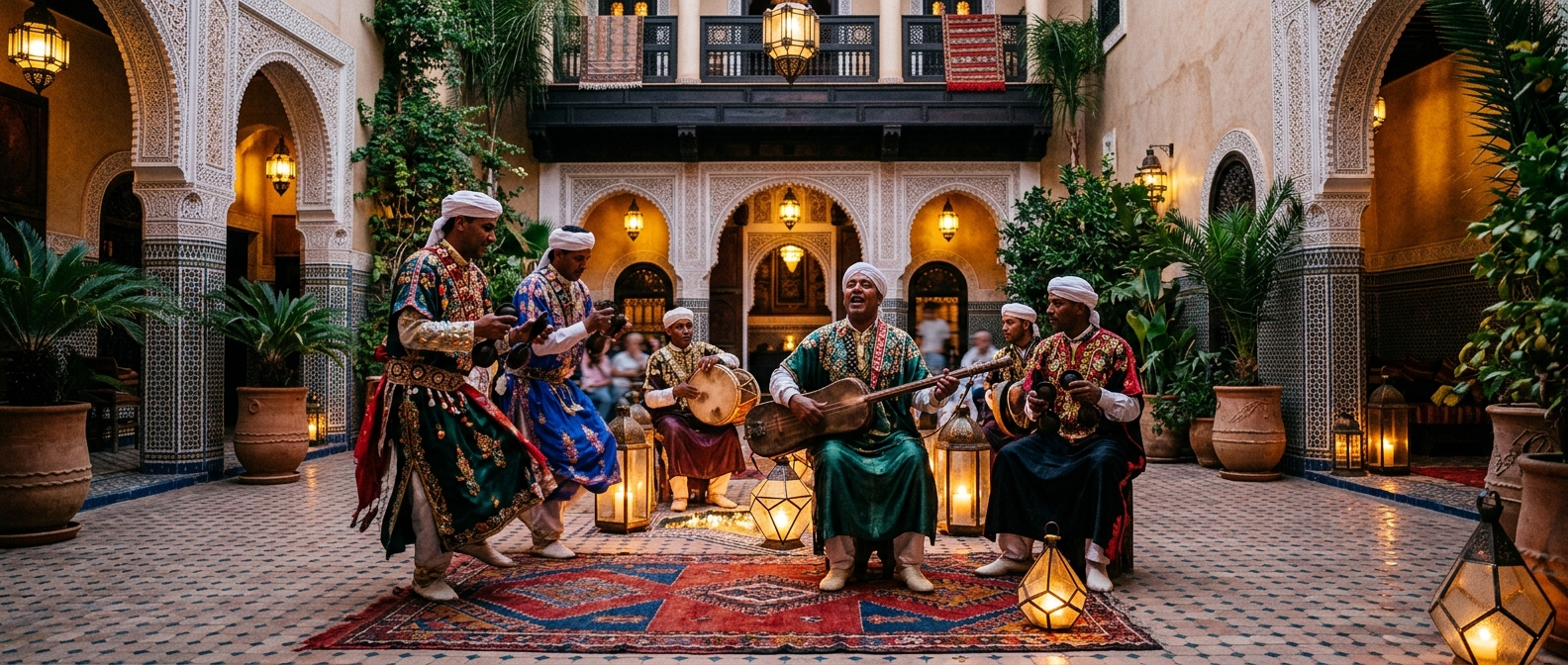
Music holds a special place in Moroccan Sufism. Devotional singing, drumming, and the recitation of sacred poetry create atmospheres of intense spiritual feeling. Some brotherhoods are known for distinctive musical and ceremonial styles, and these traditions have influenced Moroccan culture far beyond the religious sphere.
Saints, Baraka, and Popular Devotion
Closely linked to Sufism is the veneration of saints, holy figures believed to possess baraka, a divine blessing or spiritual grace. Moroccans visit the tombs of saints to seek intercession, blessing, healing, or guidance. These visits, and the annual festivals known as moussems held in a saint's honor, are among the most vivid expressions of popular religious life.
This devotion to saints has sometimes been debated within the broader Muslim world, but in Morocco it remains a widely accepted and culturally cherished tradition, deeply tied to local identity and family heritage.
Sufism's Place in Modern Morocco
In recent decades, Moroccan authorities have encouraged Sufism as part of a broader promotion of moderate, tolerant Islam. Sufi brotherhoods are seen as bearers of a spiritual tradition that emphasizes inner reform, peaceful coexistence, and respect for established religious institutions.
Sufism also carries diplomatic and cultural weight. Through brotherhoods like the Tijaniyya, Morocco maintains deep spiritual ties with countries across West Africa. Festivals of sacred music and scholarship celebrate this heritage and present Moroccan Sufism to a global audience.
| Brotherhood | Notes |
|---|---|
| Tijaniyya | Major shrine in Fez; large following across West Africa |
| Boutchichiyya | Based near Berkane; popular in modern times |
| Qadiriyya | One of the oldest and most widespread orders |
| Shadhiliyya | Influential North African order with deep Moroccan roots |
Notable Sufi brotherhoods in Morocco
FAQ
What is Sufism?
Sufism is the mystical dimension of Islam, focused on purifying the heart and seeking a close, loving relationship with God through practices such as remembrance, prayer, and devotion.
What is a zawiya?
A zawiya is a Sufi lodge, usually built around the tomb of a saint, that serves as a place of worship, learning, charity, and community gathering.
Is Sufism widely practiced in Morocco?
Yes. Sufism is deeply rooted in Moroccan religious life, organized into brotherhoods, and actively encouraged today as part of the country's moderate Islamic tradition.
Loved this? Useful? React below — your feedback helps other readers.