Staying in a Riad: Morocco's Best Accommodation
What a Riad Really Is
The word riad comes from the Arabic for garden. Architecturally, a riad is a house or small palace turned inward around a central courtyard, traditionally planted with orange or lemon trees and centered on a fountain. The outer walls are deliberately plain and windowless for privacy, so the beauty is all on the inside.
This inward design reflects Islamic and Andalusian ideas of family privacy and sanctuary from the heat, noise and bustle of the medina just outside the door. Many riads are centuries old, with hand-carved cedar, zellij tilework and stucco detailing.
What to Expect Inside
Step through an unassuming wooden door and you enter a calm, cool oasis. Rooms open onto the courtyard rather than the street, so they can feel dim but blissfully quiet. Expect intricate tiled floors, plaster carving, lanterns, and a rooftop terrace where breakfast and mint tea are often served with views over the medina.
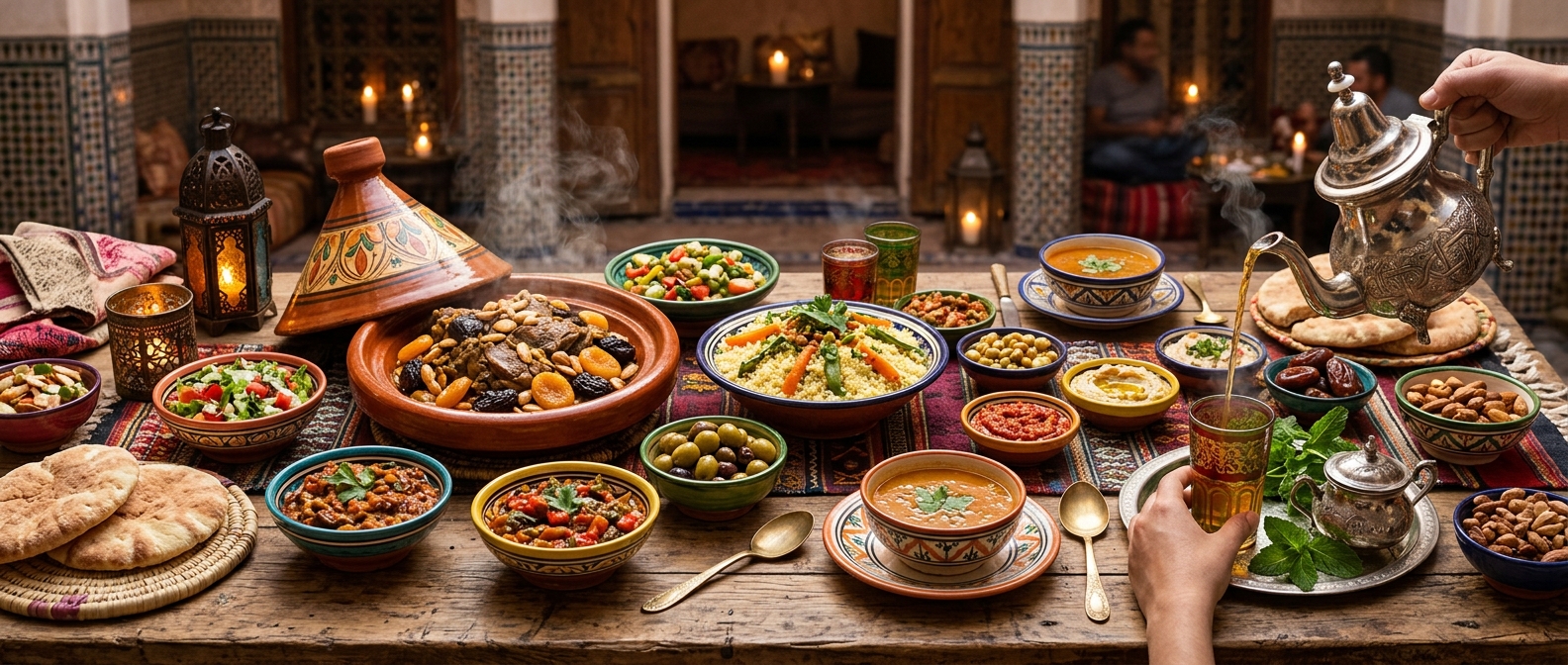
Most riads are small, sometimes only four to eight rooms, run by attentive hosts who feel more like a family than a hotel. Many offer optional home-cooked dinners that are among the best meals you'll eat in Morocco.
Riad vs Hotel: The Trade-offs
A riad's charm comes with quirks. They're buried deep in car-free medinas, so you'll usually arrive at a square and walk the last stretch through the alleys. Layouts are old, so rooms vary, stairs are steep, and elevators are rare.
In return you get character no chain hotel can match: silence, history, personal service and a true sense of place. For accessibility, families with lots of luggage, or anyone wanting a pool and gym, a modern hotel in the new town may suit better.
How to Choose & Book
Pick your location first: a riad in the heart of the medina puts you steps from the souks but can be noisier near busy squares, while one on a quieter edge is calmer but a longer walk. Read recent reviews for sound insulation, hot water and how easy the riad is to find.
Confirm whether airport transfers and medina pickup are offered, since addresses are notoriously hard to navigate. Ask about breakfast (usually included), dinner options, and whether there's a plunge pool or terrace. For the full experience, choose a riad with original architecture rather than a heavily modernized one.
| Feature | Riad | City hotel |
|---|---|---|
| Setting | Inside the historic medina | New town / main roads |
| Size | Small, 4-12 rooms | Large, many rooms |
| Atmosphere | Intimate, traditional | Standardized, modern |
| Access by car | Walk in from a square | Direct drop-off |
| Best for | Character and culture | Convenience and amenities |
Riad vs conventional hotel
FAQ
What is a riad in Morocco?
A riad is a traditional Moroccan house or palace built around an inner courtyard or garden, with plain outer walls for privacy. Many are now restored as small boutique guesthouses in the medinas of cities like Marrakech and Fes.
Is staying in a riad worth it?
For most travelers, yes. Riads offer atmosphere, quiet, personal service and home-cooked meals that hotels can't match. The trade-offs are walking in through the medina and fewer big-hotel amenities.
How do I find my riad in the medina?
Medina addresses are hard to navigate, so arrange a pickup or porter through the riad in advance. You'll typically be met at the nearest car-accessible square and guided through the alleys to the door.
Loved this? Useful? React below — your feedback helps other readers.