Souss Cuisine & Amlou Country
The Argan Heartland
The Souss region, centered on Agadir, Taroudant and Tiznit, is the only place on earth where argan trees grow in abundance. This unique landscape shapes a cuisine built around argan oil, an amber, nutty oil pressed from the kernels inside the argan fruit.
The local population is largely Amazigh (Chleuh Berber), and Souss cooking reflects rural Berber traditions: resourceful, ingredient-driven and deeply tied to the land. Argan cooperatives, many run by women, keep the labor-intensive craft of oil pressing alive.
Amlou: Morocco's Liquid Gold Spread
Amlou is the most beloved product of Souss cuisine, often called Berber Nutella. It is made by grinding roasted almonds into a paste, then blending it with culinary argan oil and honey until it forms a thick, sweet, nutty spread.
Traditionally eaten at breakfast scooped up with fresh khobz or msemen, amlou is rich in flavor and energy. Variations may include other nuts, but the classic almond-argan-honey trio remains the gold standard and a prized gift from the region.
Tagines and Couscous of the Souss
Souss tagines often feature argan oil as a finishing touch, lending a distinctive toasted-nut aroma. Fish tagines are common given the Atlantic coastline at Agadir, prepared with chermoula, tomatoes and preserved lemon.
Couscous (seksou in Berber tradition) is central to family and Friday meals, frequently topped with seasonal vegetables, chickpeas and a splash of argan oil or smen. Rural Berber versions can be simpler and more vegetable-forward than urban couscous.
Tikourbabin, Tagoula and Berber Specialties
Beyond the famous exports, the Souss has lesser-known Amazigh dishes worth seeking out. Tagoula is a porridge of barley or corn flour, often eaten with argan oil and honey, a warming rustic breakfast.
Other specialties include herb-and-grain dishes, barley soups and preparations using local olives and dried fruits. These dishes reflect a frugal, agricultural way of eating that values whole grains and home-pressed oils.
Cooking Argan vs Cosmetic Argan
It is important to distinguish culinary argan oil from cosmetic argan oil. Culinary oil is made from roasted kernels, giving it a deep, toasty, nutty flavor ideal for amlou, drizzling over couscous or finishing tagines.
Cosmetic argan oil is pressed from unroasted kernels and is used for skin and hair. When buying argan products in the Souss, ask whether the oil is roasted (for food) or raw (for beauty) to get the right one.
Hospitality in the Berber South
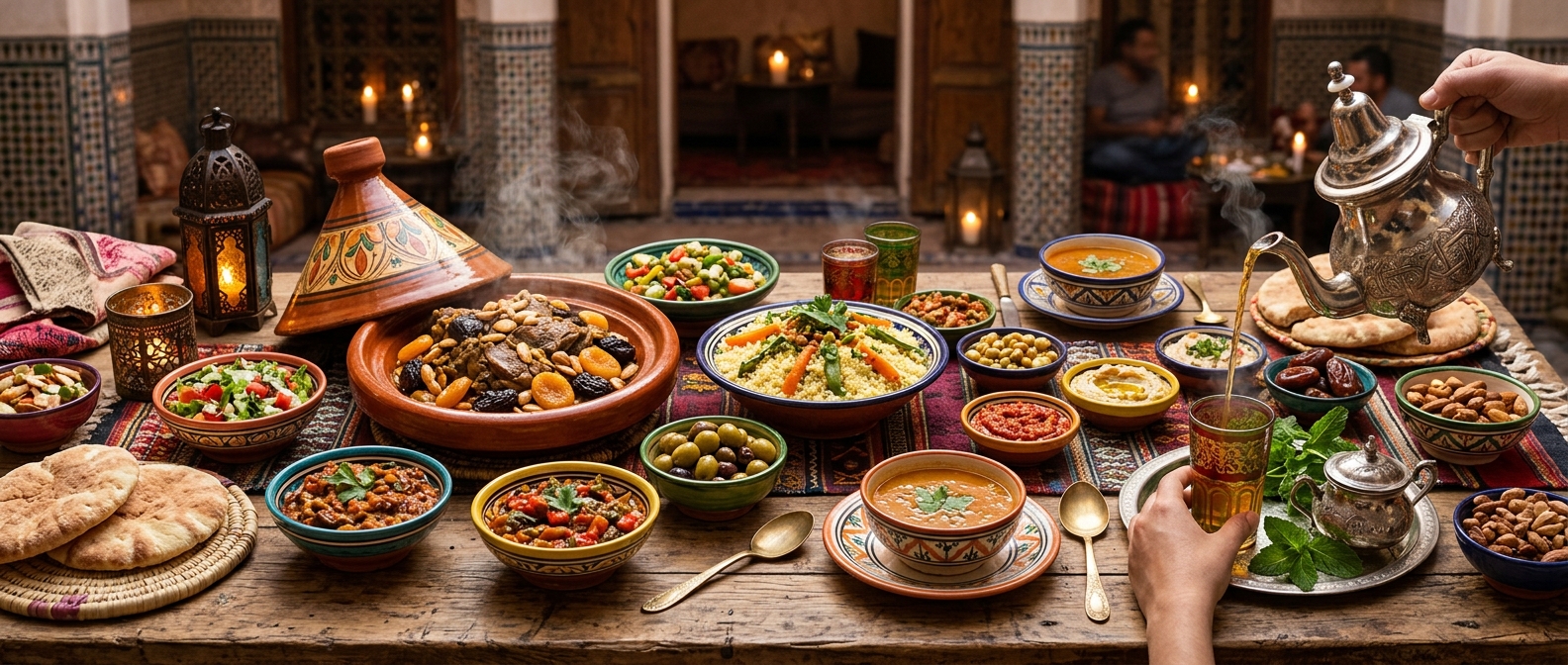
A Souss welcome typically begins with bread, amlou, argan oil, honey and mint tea, a spread that doubles as breakfast and as a gesture of generosity. Sharing the family's argan oil is a point of pride.
Markets in Taroudant and the souks of Agadir are good places to taste and buy authentic amlou and argan oil directly, ideally from women's cooperatives that ensure fair production and genuine quality.
| Item | What it is | How it is eaten |
|---|---|---|
| Amlou | Almond, argan oil and honey spread | Breakfast with bread |
| Culinary argan oil | Roasted-kernel nutty oil | Drizzled on couscous, tagines |
| Tagoula | Barley or corn porridge | With argan oil and honey |
| Fish tagine | Atlantic fish with chermoula | Main meal |
| Berber couscous | Grain with vegetables, chickpeas | Friday family lunch |
Souss regional specialties and their uses
FAQ
What does amlou taste like?
Amlou tastes like a rich, nutty almond butter sweetened with honey and deepened by the toasty flavor of culinary argan oil. It is smooth, energy-dense and slightly more aromatic than regular nut spreads.
Can you cook with argan oil?
Yes, culinary argan oil made from roasted kernels is used in Souss cuisine to make amlou and to finish couscous, tagines and salads. It is best used raw or as a drizzle rather than for high-heat frying.
Where can I buy authentic argan products in Morocco?
The Souss region around Agadir, Taroudant and Essaouira is the source. Buying from women's argan cooperatives ensures authentic, fairly produced oil and amlou, and you can taste before you buy.
Loved this? Useful? React below — your feedback helps other readers.