Saibari's Penalty: The Man Who Knocked Out the Netherlands and Became the Face of Morocco's Golden Generation
The Penalty That Silenced an Entire Nation
There are moments in a footballer's life that compress an entire career into a single breath. For Ismael Saibari, that breath came on the evening of June 29, 2026, as he placed the ball on the penalty spot in front of a wall of orange shirts, with the World Cup hopes of two nations balanced on his right boot. Morocco led the shootout 3-2. If he scored, the Netherlands were out and the Atlas Lions were through to the Round of 16. If he missed, the door he had nudged open would swing shut again.
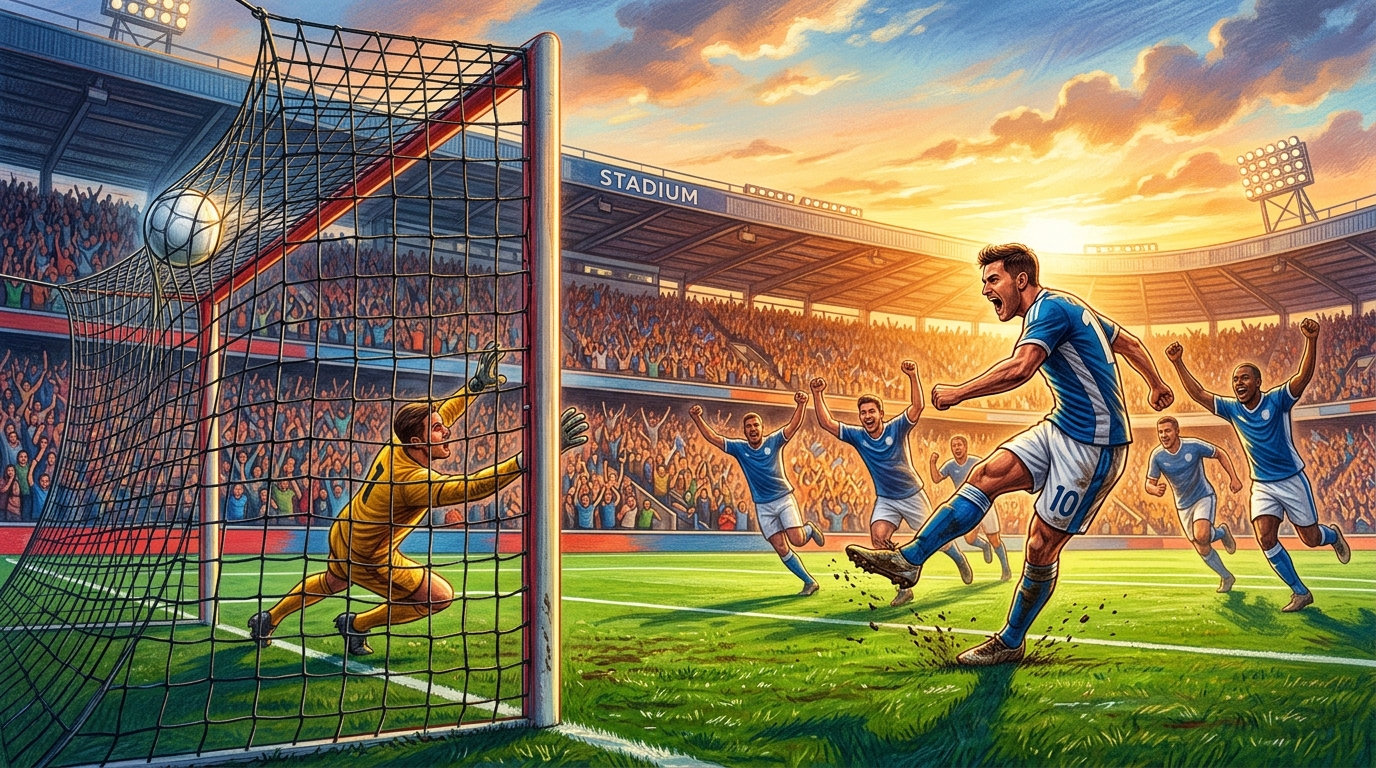
He did not miss. Saibari took a short, measured run-up and blasted the ball high and true, beyond the reach of the Dutch goalkeeper, and the Moroccan section of the stadium detonated. Teammates sprinted from the halfway line. The bench emptied. Somewhere in the chaos, the realization landed: Morocco had just eliminated the Netherlands from the World Cup, and the man who delivered the final blow plays his club football in the heart of the Dutch game, week in and week out, for PSV Eindhoven.
It was the kind of script that no screenwriter would dare submit, because it would be dismissed as too neat. A player born in Spain, raised in Belgium, who stars in the Eredivisie and was once courted by Belgium's national team, sending the Dutch home from the spot to keep alive the dream of a North African nation built on its global diaspora. And yet that is exactly what happened, and it is exactly why this single penalty has become so much more than a goal. It is a symbol — of one man's improbable journey, and of an entire generation that has rewritten what Moroccan football can be.
This is the full story behind that decisive kick: how the match arrived at penalties at all, who Ismael Saibari really is, why his triumph over the Netherlands carries such heavy irony, and how he came to embody the most exciting collection of talent Morocco has ever produced.
How the Night Unfolded: 1-1 and a 90th-Minute Lifeline
For long stretches, this was not a night that looked destined to end in Moroccan celebration. The Netherlands, a side stacked with Premier League and elite continental talent, controlled large portions of the contest and finally broke through in the 72nd minute. Cody Gakpo, the Liverpool forward and one of the Dutch team's most dangerous attackers, found the net to give the Oranje a 1-0 lead and, with under 20 minutes to play, the upper hand in a tight knockout tie.
Trailing in a World Cup elimination match, with the clock draining away, is the moment when a team's character is truly tested. Many sides fold. Morocco did not. The Atlas Lions threw bodies forward, piled pressure on the Dutch box, and refused to accept that their tournament was ending. The reward came in the most dramatic fashion possible — deep into stoppage time, with the match seemingly slipping away.
In the 91st minute, Issa Diop rose highest in a crowded penalty area and glanced a header into the Dutch net. The equalizer was pure defiance: a centre-back, a son of the Parisian suburbs and another product of Morocco's diaspora recruitment, popping up at the death to drag his country back from the brink. The goal sent the Moroccan supporters into delirium and forced extra time, completely reframing a match the Netherlands had appeared to have under control.
That late equalizer mattered for reasons beyond the scoreline. It changed the psychology of the contest. Morocco had stared at elimination and refused it; the Netherlands had been seconds from the next round and seen it snatched away. Momentum, that intangible but very real force in knockout football, had swung decisively, and it would never fully swing back.
Extra Time and the Long March to the Spot
Extra time in a World Cup knockout match is a peculiar kind of theatre — 30 minutes of tension stretched over legs that are already heavy, minds that are already frayed, and stakes that only climb higher with every passing second. Both Morocco and the Netherlands had chances to settle it before penalties, but neither could find the decisive moment. The additional period ebbed and flowed without a winner, and so the match arrived at the cruellest, most exhilarating mechanism football has devised: the penalty shootout.
By the time the players gathered at the halfway line and the goalkeepers prepared themselves, the contest had become a test of nerve as much as skill. The two coaches had their lists. The takers steeled themselves. And the two goalkeepers — Morocco's Yassine Bounou, one of the most respected shot-stoppers of his generation, and his Dutch counterpart — knew that the next few minutes could define how this World Cup remembered them.
For Morocco, the shootout carried echoes of 2022, when penalties became almost a signature of their fairytale run in Qatar. Bounou had been the hero then, too, and the collective memory of those nights in Qatar travelled with this squad into Monterrey. There is a confidence that comes from having done something once before, and Morocco walked to the spot carrying it.
What followed was a shootout of swings and near-misses, of held breath and sudden release, that would not be settled until the very last kicks. And in the end, it would be settled by the man whose entire story seemed to have been building toward this exact moment.
The Shootout, Blow by Blow
This was not a clean, comfortable shootout for Morocco — far from it. The Atlas Lions actually missed twice. Neil El Aynaoui saw his penalty fail to find the net, and even captain Achraf Hakimi, one of the most reliable big-game players on the planet, was unable to convert. For a moment, those misses threatened to undo everything the team had fought for across 120 minutes.
But the Netherlands could not capitalize. Quinten Timber missed one of the Dutch penalties, and Justin Kluivert — son of the legendary Patrick Kluivert — also failed to convert, the misses cancelling out Morocco's own errors and keeping the shootout agonizingly alive. Each failed kick raised the temperature, narrowing the margin for error until a single moment of brilliance could decide everything.
That moment belonged to Bounou. Facing Crysencio Summerville's penalty — the Netherlands' fourth — the Moroccan goalkeeper read it, dived, and made the save that swung the shootout decisively in Morocco's favour. It was the kind of intervention that Bounou has made a career of: ice-cold under the most extreme pressure, a wall in the moments that matter most. His save handed Morocco the advantage and set the stage for the kill.
And so it fell to Ismael Saibari. With the chance to win it, the PSV man stepped forward, struck his penalty into the roof of the net, and ended the contest. Morocco 3, Netherlands 2. The Atlas Lions were through to the last 16, and the Dutch dream was over. Bounou had built the platform with his save; Saibari finished the job with the coolest of finishes. Two diaspora sons, two decisive acts, one unforgettable night.
Bounou: The Save That Made the Penalty Possible
It is worth pausing on Yassine Bounou, because Saibari's heroics do not happen without him. The goalkeeper, long one of the finest in his position anywhere in the world, has built a reputation as a man who grows larger as the stakes rise. In 2022, his shootout heroics against Spain helped propel Morocco into uncharted territory. In 2026, against the Netherlands, he did it again, denying Summerville at the most critical juncture.
Bounou's save was not luck. Elite penalty saving is a craft — a blend of homework, body language reading, and the sheer courage to commit early and trust the read. Goalkeepers who thrive in shootouts tend to share a certain temperament: they treat the moment not as a threat but as an opportunity, a chance to be the hero rather than a risk of being the villain. Bounou belongs firmly in that category, and his presence behind this Moroccan team is one of its quietest, most important strengths.
There is also a leadership dimension to what Bounou provides. A goalkeeper who exudes calm transmits that calm to the players in front of him. When El Aynaoui and Hakimi missed, the Moroccan players did not unravel, in part because the man between the posts had already shown he could turn the shootout. His save did not just stop a ball; it steadied an entire team and handed the initiative to the taker who would finish the job.
When the history of this Moroccan generation is written, Bounou will be remembered as one of its foundational figures — the safety net beneath the high-wire act, the man whose hands made room for moments like Saibari's to exist.
Who Is Ismael Saibari?
To understand why Saibari's penalty resonates so deeply, you have to understand the man who took it, and his story is itself a microcosm of modern Moroccan football. Ismael Saibari was born on January 28, 2001, in Terrassa, an industrial city in Catalonia, Spain, to a Moroccan family with roots in Ksar el-Kebir in the north of the kingdom. At 25 years old, he has lived a footballing life that has crossed more borders than most players experience in a lifetime.
His family's journey reads like a map of European migration. They moved from Morocco to Spain, where Ismael was born, then on to Belgium, and eventually to the Netherlands. As a result, Saibari holds triple nationality — Moroccan, Spanish, and Belgian — and grew up immersed in multiple cultures and languages. That multinational upbringing is not a footnote to his identity; it is central to it, and it helps explain why so many young players with similar stories now feel that Morocco is a natural home.
On the pitch, Saibari is a versatile attacking talent. He can operate as an attacking midfielder or as a forward, and his game blends physical power with technical refinement and an instinct for arriving in the right place at the right time. He is the kind of player who can carry the ball through midfield, link play in the final third, and finish chances himself — a profile that has become increasingly valuable in the modern game and one that makes him difficult to mark out of a match.
What sets Saibari apart, though, is not just his ability but his temperament. The willingness to step up and take the decisive penalty against the Netherlands — in a stadium full of pressure, after his own teammates had missed — tells you something about the man. This is a player who wants the moment, who runs toward it rather than away from it. That is a rare and precious quality, and it is one Morocco may lean on heavily in the rounds to come.
From Beerschot to Genk: A Belgian Football Education
Saibari's footballing education took place almost entirely in Belgium, a country with one of the most productive youth development systems in Europe. He passed through a series of well-regarded academies — Beerschot, Anderlecht, K.V. Mechelen, and Genk — each of them a respected name in Belgian football and each contributing to the player he would become. That academy circuit is precisely the kind of environment that has produced a steady stream of elite talent over the past two decades.
It is no accident that so many Moroccan internationals have emerged from the Belgian system. Belgium's large and well-integrated Moroccan community, combined with the country's investment in youth coaching and its emphasis on technical development, has made it a fertile breeding ground for dual-national talent. Saibari is one of many to have come through that pipeline, and his time at clubs like Anderlecht and Genk gave him a grounding in the fundamentals that would later allow him to flourish at a higher level.
Progress through youth football is rarely linear, and Saibari's path had its share of patience required. He spent years developing, learning, and waiting for the breakthrough that would take him from promising academy graduate to genuine first-team contributor. That breakthrough would ultimately come not in Belgium but across the border, in the Netherlands, where a move to one of the country's biggest clubs would transform his career.
The Belgian chapter of his story matters because it is the foundation on which everything else was built. The technique, the tactical understanding, the physical conditioning — all of it was shaped in those academies. And it is part of why Belgium's national team would later come calling, believing they had a legitimate claim on a player their own system had helped to raise.
PSV Eindhoven: The Making of a Star
If Belgium gave Saibari his education, the Netherlands gave him his stage. His move to PSV Eindhoven, one of the giants of Dutch football, proved to be the pivotal transfer of his career. At the Philips Stadion, Saibari found a club big enough to challenge for major honours yet patient enough to develop him, and the combination unlocked the best version of his game.
The 2025-26 season was Saibari's coronation. PSV retained the Eredivisie title, defending their crown in one of Europe's most competitive smaller leagues, and Saibari was at the heart of it — so much so that he was named the club's Player of the Year. His statistical output told the story of a player who had reached a new level: 15 goals and 8 assists across the campaign, the kind of direct attacking contribution that marks a player out as a match-winner rather than merely a contributor.
Those numbers are not just impressive; they are the numbers of a star. A player producing 15 goals and 8 assists from an attacking-midfield or forward role is shaping outcomes, deciding matches, and demanding the attention of bigger clubs across Europe. PSV's title defence was built in no small part on Saibari's ability to find the net and create for others, and his Player of the Year award was recognition that he had become the team's most important attacking force.
For Morocco, the significance of all this was obvious. They were not calling up a squad player or a project for the future. They were calling up a man in the form of his life, the reigning Player of the Year at one of the Netherlands' two biggest clubs, arriving at the World Cup at the absolute peak of his powers. That form would translate directly to the international stage in the most spectacular fashion.
The Irony: Dumping Out the Dutch While Lighting Up Their League
Here is where Saibari's story becomes almost poetic. The man who scored the penalty that eliminated the Netherlands from the World Cup is, every other week of the year, one of the brightest stars of Dutch club football. He does not just play in the Eredivisie; he was its champions' standout performer, the Player of the Year at PSV Eindhoven. He knows the Dutch game intimately. He shares dressing rooms, training pitches, and weekend battles with the very players he helped knock out.
Think about the layers of that irony. Several members of the Dutch national team and Saibari operate in the same footballing ecosystem. He understands their rhythms, their strengths, their tendencies — and on the biggest stage of all, he used that intimacy to help send them home. There is no malice in it; football careers cross national lines constantly in the modern game. But the symbolism is impossible to ignore. The Eredivisie's reigning Player of the Year ended the Eredivisie's parent nation's World Cup.
It also speaks to a broader truth about the global game: the lines between club and country, between where a player is born, raised, and employed, have never been blurrier. Saibari is a Spanish-born, Belgian-raised, Netherlands-based footballer who plays for Morocco. He is, in a very real sense, a product of the whole of Western Europe. And on June 29, all of that converged into a single penalty that broke Dutch hearts.
For Moroccan fans, the irony is a source of pure delight. There is a particular sweetness in seeing one of your own — a man the European powers helped develop, a man whose talent lights up one of their leagues — choose Morocco and then deliver the decisive blow against a European heavyweight. It is, in miniature, the entire story of this Moroccan generation: talent forged in Europe, claimed by Morocco, and turned against the establishment that once overlooked it.
Choosing Morocco: The Call From Belgium He Turned Down
Saibari's commitment to Morocco was not inevitable. As a triple national who had spent years in the Belgian system, he was an obvious target for Belgium's national team, and during the 2022 World Cup period, the approach came. Roberto Martinez, then Belgium's head coach, reportedly contacted Saibari directly in an attempt to persuade him to commit his international future to the Red Devils.
Saibari's response has become part of his legend. According to his own account, he told them plainly that the decision was already made: he had chosen Morocco. There was no agonizing, no playing one federation against another for leverage. For Saibari, representing the country of his family's heritage was not a fallback or a second choice — it was the choice, full stop. That clarity says a great deal about both the player and the pull that Morocco now exerts on its diaspora.
A decade or two ago, a player in Saibari's position might well have chosen the European nation, drawn by the prestige, the visibility, and the perceived ceiling of a traditional power. That so many talented dual-nationals now choose Morocco instead is one of the most striking shifts in international football. Morocco has made itself a destination rather than a default, a team that ambitious young players actively want to represent.
Saibari turning down Belgium for Morocco, and then scoring the goal that eliminated the Netherlands, is the perfect encapsulation of that shift. The European powers no longer have first claim on this talent. Morocco competes for it, wins it, and is rewarded with moments like the one in Monterrey. The penalty against the Dutch was, in a sense, the dividend on a decision Saibari made years earlier.
Saibari's World Cup 2026 Explosion
The penalty against the Netherlands did not come out of nowhere. Saibari arrived in the knockout rounds as one of the breakout stars of the entire tournament, having lit up Morocco's group-stage campaign with a series of goals that announced him to a global audience. In Group C — alongside Brazil, Haiti, and Scotland — Saibari was Morocco's most dangerous attacker.
His goal against Brazil was a thing of beauty and audacity. In the 21st minute, Brahim Diaz threaded a through ball into his path, and Saibari, faced with Brazil's world-class goalkeeper Alisson, chose the most difficult and most stylish finish imaginable: a delicate lob over the goalkeeper and into the net. To score against Brazil at a World Cup is special; to do it with such composure and imagination marks a player as something more than ordinary.
He followed it up against Scotland, striking again inside the opening minutes after another incisive Brahim Diaz pass released him in behind the defence. Two games, two goals, two assists from the same creator — a partnership beginning to bloom at exactly the right time. By the time Morocco had completed their group campaign, Saibari had reached three World Cup goals, making him Morocco's joint-leading scorer in the competition and one of the tournament's most talked-about names.
That goalscoring form carried a deeper significance: it established Saibari as a man Morocco could trust in the decisive moments. So when the shootout against the Netherlands arrived and the team needed someone to step up and finish it, there was a logic to it being him. He had been finishing chances all tournament. The penalty was simply the most important of them all.
Saibari's Role Under Mohamed Ouahbi
Every flourishing player needs a system that suits him, and under head coach Mohamed Ouahbi, Saibari has found a role tailored to his strengths. Ouahbi's Morocco is built to get its most creative and incisive players into positions where they can hurt opponents, and Saibari — with his ability to drift between midfield and attack, to arrive late in the box, and to finish — fits that blueprint perfectly.
The partnership with Brahim Diaz has been particularly fruitful. Diaz, the gifted creator, supplies; Saibari, the arriving threat, finishes. Two of the group-stage goals followed almost identical patterns — Diaz's vision releasing Saibari's run — and that kind of repeatable, rehearsed connection is exactly what tournament football rewards. Ouahbi has built a structure that allows these relationships to flourish, and the results have been immediate.
There is also a tactical flexibility to Saibari's deployment that gives Ouahbi options. Because he can play deeper as a midfielder or higher as a forward, Morocco can shift their shape without losing him from the pitch. Against a possession-heavy side, he can do the dirty work in midfield; against a team that sits deep, he can push higher and become an extra attacker. That adaptability is gold dust for a coach navigating the unpredictable terrain of knockout football.
For a manager who arrived under enormous pressure and on a short timeline, having a player like Saibari in this kind of form is a gift. Ouahbi has built a team that maximizes its best attacking talent, and Saibari has repaid that faith with goals in the group stage and the decisive penalty in the Round of 32. The relationship between coach and player has been one of the quiet success stories of Morocco's tournament.
Ouahbi: The Man Who Replaced a Legend
It is impossible to tell the story of this Moroccan team without telling the story of the man on the touchline, because Mohamed Ouahbi took the job under circumstances that would have unnerved a lesser coach. He was appointed Morocco's head coach in March 2026 — less than 100 days before the World Cup — to replace Walid Regragui, the man who had led the country to its historic 2022 semifinal.
Regragui's departure was not a quiet retirement. He stepped down in March 2026 amid heavy criticism for failing to win the Africa Cup of Nations on home soil, a tournament Morocco had been desperate to claim. The man who had made history in Qatar left under a cloud, and into that charged atmosphere stepped Ouahbi, tasked with taking a squad of enormous talent and high expectations into a World Cup with barely three months to prepare.
The pressure on Ouahbi was, and remains, immense. Morocco's 2022 run set a bar that hangs over everything this team does; anything less than a deep run risks being framed as a disappointment. To inherit that weight of expectation so close to the tournament, with no time to fully impose his own ideas, would have crushed many coaches. Instead, Ouahbi has guided Morocco out of a group containing Brazil and through a brutal Round of 32 tie against the Netherlands.
Whatever happens from here, Ouahbi has already demonstrated a calm authority and a clear tactical identity. He has kept the squad united, got the best out of his star players, and navigated two of the toughest assignments the draw could have offered. For a man who took the job under fraught circumstances and on a punishing timeline, reaching the last 16 by beating the Dutch is a considerable early statement.
Issa Diop and the Equalizer That Made It All Possible
Saibari may have scored the decisive penalty, but the night belonged to more than one diaspora hero. Issa Diop, the centre-back whose 91st-minute header dragged Morocco level, deserves to be remembered alongside Saibari and Bounou as one of the architects of this victory. Without his goal, there is no extra time, no shootout, and no chance for Saibari to play hero.
Diop's story rhymes with Saibari's in important ways. Born in France, he is another of the European-developed talents who has chosen to wear Moroccan colours, bringing Premier League-honed defensive quality and aerial presence to the Atlas Lions' backline. That a centre-back should pop up with the most important goal of the night is one of football's lovely accidents, but it is also a testament to the depth of quality running through this Moroccan squad.
There is something fitting about the fact that Morocco's lifeline came from a defender throwing himself forward in desperation. It captured the spirit of the team — the refusal to accept defeat, the willingness of every player to do whatever the moment demanded. Diop is not a regular goalscorer, but in the 91st minute against the Netherlands, with his country's tournament hanging by a thread, he delivered when it mattered most.
Together, Diop's equalizer, Bounou's save, and Saibari's penalty form a perfect triptych of the diaspora model in action. A French-born defender, a goalkeeper who is a giant of the European game, and a Spanish-born forward raised in Belgium and starring in the Netherlands — three different paths to the same Moroccan shirt, three different acts in the same heroic night.
Morocco's Golden Generation: What It Really Means
The phrase golden generation gets thrown around carelessly in football, often applied to teams that ultimately deliver nothing. In Morocco's case, it has been earned. This is a group of players who reached a World Cup semifinal in 2022 — the first African nation ever to do so — and who have backed it up by remaining a genuine force on the global stage into 2026. The talent is real, the results are real, and the belief is real.
What makes this generation special is not just the quality of its best players but the depth and balance across the squad. Morocco has world-class talent in every department: a goalkeeper in Bounou who wins shootouts, a captain in Achraf Hakimi who is one of the best full-backs on the planet, creators like Brahim Diaz, finishers like Saibari, and a defensive core stocked with players schooled at Europe's biggest clubs. There are no obvious weaknesses to exploit.
Just as important is the mentality. This is a team that has learned how to win the matches that define tournaments — the tight, tense, knockout games decided by fine margins and strong nerves. The 2022 run was full of such victories, and the win over the Netherlands in 2026 was cut from the same cloth: resilient, composed under pressure, and ruthless when the decisive moment arrived. That kind of know-how cannot be coached overnight; it is the product of a group that has grown up together on football's biggest stages.
A golden generation is ultimately defined by what it achieves, and Morocco's is still writing its story. But by any reasonable measure — talent, depth, mentality, results — this is the finest collection of players Morocco has ever assembled, and the run in 2026 is a chance to cement a legacy that the semifinal in Qatar began.
The Diaspora Model: How Morocco Built a Global Team
At the core of Morocco's golden generation is a recruitment strategy that has become the envy of international football: the systematic, intelligent cultivation of its global diaspora. Morocco does not rely solely on players developed at home. It actively scouts, courts, and integrates dual-national talent raised in the football academies of France, Spain, the Netherlands, Belgium, Canada, and beyond.
The numbers are striking. For the 2026 World Cup cycle, a substantial majority of Morocco's squad was born outside the country — reports indicated that roughly 20 of the 26 players held birth certificates from foreign nations. Morocco even fielded what was described as the first all-foreign-born starting XI in the national team's history. This is not a team that happens to include a few diaspora players; it is a team built, deliberately and brilliantly, on the diaspora.
The strategy works because Morocco has made representing the Atlas Lions genuinely attractive. The federation has invested in scouting networks across Europe, in relationship-building with young players and their families, and in creating an environment that makes joining Morocco feel like joining something special rather than settling for a second option. When players like Saibari turn down approaches from European nations to commit to Morocco, it is because that groundwork has been laid.
There is also an emotional engine beneath the strategy. For many of these players, choosing Morocco is a reconnection with family, heritage, and identity. It is a chance to represent the country of their parents and grandparents, to honour a lineage that migration carried across borders. That emotional pull, combined with the federation's professionalism and the team's recent success, has created a virtuous cycle: success attracts talent, and talent breeds more success.
The Faces of the Diaspora: Hakimi, Diaz, and More
No discussion of Morocco's diaspora generation is complete without Achraf Hakimi. Born in Madrid to Moroccan parents, Hakimi chose to represent Morocco at 18 and has become the spiritual leader of this team — a world-class attacking full-back, the captain, and the player who, perhaps more than any other, paved the way for the current wave of diaspora commitments. His decision to choose Morocco years ago helped make it normal, even aspirational, for others to follow.
Brahim Diaz is another headline name. Spanish-born and a graduate of elite academies, Diaz deliberated long and hard before committing his international future to Morocco, and his decision was a significant coup. His creativity has been central to Morocco's 2026 attack — it was his passes that released Saibari for goals against both Brazil and Scotland. The Diaz-Saibari axis is one of the most dangerous diaspora partnerships in the tournament.
Then there is Issa Diop, the French-born centre-back whose header forced extra time against the Netherlands, and a steady stream of younger talents who have chosen the Atlas Lions over the European nations of their birth. Players developed in France, born in Belgium, or raised across the continent continue to opt for Morocco, drawn by the team's trajectory and the pathway that Hakimi and his peers established.
Taken together, these players represent something larger than any individual. They are proof of concept for the diaspora model — evidence that a nation can assemble a genuinely elite squad by embracing its global community rather than confining its talent search to its own borders. Hakimi, Diaz, Diop, Saibari and the rest are not just teammates; they are the living argument for a new way of building a national team.
The 2022 Foundation: Where the Dream Began
To understand the belief coursing through this Morocco team, you have to go back to Qatar in 2022. That was the tournament that changed everything — when Morocco, under Walid Regragui, became the first African and first Arab nation to reach a World Cup semifinal. Along the way, they eliminated Belgium, Spain, and Portugal, three of European football's traditional powers, before finally falling to eventual finalists France in the last four.
The 2022 run was not a fluke, and it was not a smash-and-grab. Morocco played with structure, discipline, and a defensive resilience that frustrated some of the best attacking teams in the world. They conceded remarkably few goals, leaned on Bounou's heroics in shootouts, and rode a wave of passionate support from across the Arab world and the African continent. It was a campaign that captured global imagination and reset expectations of what an African team could achieve.
Crucially, that run created a template and a belief that the current squad still draws upon. Many of the players who delivered the win over the Netherlands in 2026 were either part of the 2022 squad or grew up watching it, internalizing the lesson that Morocco belongs in the latter stages of World Cups. The semifinal proved it was possible; everything since has been about proving it was repeatable.
The challenge heading into 2026 was always going to be sustaining that level after the architect of it, Regragui, departed. But the foundation he and that 2022 squad laid — the mentality, the defensive identity, the shootout pedigree — has carried forward. The win over the Dutch was, in many ways, the 2022 blueprint executed by a deeper, even more talented group.
A Pipeline From Top to Bottom
One of the most reassuring signs for Moroccan football is that the success is not confined to the senior team. The Atlas Lions have built a pipeline that runs from the very top of the game down through every youth category, and that depth is what separates a fleeting golden generation from a sustained era of dominance.
The evidence is in the trophy cabinet. Morocco won the 2025 FIFA U-20 World Cup, a landmark achievement that signalled the country's elite-level talent development is producing results at the global youth level. They also claimed the 2025 U-17 Africa Cup of Nations and have collected a string of other youth titles across age groups. These are not isolated successes; they are the output of a coherent, well-funded system.
What this means in practical terms is continuity. The current senior squad is not a one-off collection of gifted players who happened to come along at the same time. Behind them is a steady supply of talent rising through the ranks, both from Morocco's domestic academies and from the diaspora pipeline that continues to identify and recruit young dual-nationals across Europe and North America. The conveyor belt is moving.
For a country that once watched its best diaspora talents disappear into European national teams, this represents a complete reversal of fortune. Morocco has built the structures — the scouting, the academies, the federation relationships, the winning culture — to ensure that the golden generation is not the end of the story but the beginning of a much longer one. The youth titles are a promise of more to come.
Why This Generation Can Go Far in 2026
So how far can this Morocco team go? The honest answer is that there is no obvious ceiling. They have already shown they can beat anyone — they topped a group containing Brazil only on goal difference, having pushed the five-time champions all the way, and they dispatched a strong Netherlands side in the Round of 32. A team capable of that is capable of anything in a tournament defined by fine margins.
The ingredients for a deep run are all present. Morocco have a goalkeeper who wins shootouts, a defence schooled at Europe's biggest clubs, a captain in Hakimi who lifts the team in the biggest moments, creators like Diaz, and an in-form match-winner in Saibari who has shown he can both score crucial goals and hold his nerve from the spot. Add to that a battle-tested mentality forged in 2022 and reaffirmed against the Dutch, and you have the profile of a genuine contender.
Knockout football, of course, is brutal and unpredictable. A single moment, a single refereeing decision, a single penalty can end a campaign no matter how well a team has played. Morocco know this better than anyone, having lived on the right side of those margins against the Netherlands. But the very fact that they keep finding themselves on the right side of them is itself a kind of evidence — of nerve, of preparation, and of belief.
Next up is a Round of 16 clash against co-hosts Canada in Houston on July 4, a fixture that carries its own intrigue given Canada's home advantage and the carnival atmosphere a host nation generates. For Morocco, it is another step on a road they hope leads further than even 2022 did. With Saibari in this form and the whole diaspora generation believing, few would bet against them making more history.
The Symbol and the Substance
When Ismael Saibari struck that penalty into the Dutch net on June 29, 2026, he did more than win a football match. He authored a moment that crystallizes everything Morocco's golden generation represents. The Spanish-born, Belgian-raised, Netherlands-based forward, who turned down Belgium to play for the country of his heritage, ended the World Cup of the very nation whose league he illuminates. You could not design a more perfect symbol of the diaspora model if you tried.
But Saibari is not only a symbol; he is substance. Three goals in the group stage, a lob over Alisson against Brazil, the decisive nerve to convert when his country needed it most — this is a footballer delivering on the biggest stage, not merely a convenient narrative. The story is beautiful, but the talent is what makes it matter. Morocco are in the last 16 because Saibari, Bounou, Diop and their teammates are genuinely, demonstrably good enough.
That is the dual truth of this Moroccan team. They are a story — of migration, identity, heritage, and belonging, of a nation reclaiming its global children and being rewarded with glory. And they are a force — a deep, balanced, fearless squad capable of beating any team in the world on its day. The penalty against the Netherlands was where the story and the force became one.
Whatever happens against Canada and beyond, June 29, 2026 will be remembered in Morocco for a long time. It was the night Ismael Saibari knocked out the Dutch from the spot, the night a diaspora son broke European hearts, and the night the golden generation served notice that it is not finished writing history. The Atlas Lions march on, and the man who plays his football in the Netherlands has given them another reason to believe.
Frequently asked
Who scored the winning penalty for Morocco vs Netherlands?
Ismael Saibari scored the decisive penalty for Morocco against the Netherlands in their World Cup 2026 Round of 32 shootout on June 29, 2026. With Morocco leading the shootout 3-2, Saibari blasted home the spot-kick that confirmed a 3-2 penalty win and sent the Atlas Lions through to the last 16.
Who is Ismael Saibari?
Ismael Saibari is a 25-year-old attacking midfielder and forward who plays for PSV Eindhoven and the Morocco national team. Born on January 28, 2001, in Terrassa, Spain, to a Moroccan family, he was raised in Belgium and the Netherlands and holds triple Moroccan, Spanish, and Belgian nationality. He emerged as one of the breakout stars of the 2026 World Cup.
What club does Saibari play for?
Saibari plays for PSV Eindhoven in the Dutch Eredivisie. In the 2025-26 season he was named PSV's Player of the Year after scoring 15 goals and providing 8 assists, helping the club retain the Eredivisie title. The irony of the Netherlands match is that the man who eliminated the Dutch national team is a star of their domestic league.
Why is Morocco's squad called a golden generation?
Morocco's squad is called a golden generation because it became the first African nation to reach a World Cup semifinal in 2022 and has remained an elite force in 2026, beating teams like the Netherlands and pushing Brazil all the way. The squad combines world-class talent in every position with a battle-tested, knockout-winning mentality and remarkable depth.
Where was Ismael Saibari born and why does he play for Morocco?
Saibari was born in Terrassa, Spain, to a Moroccan family with roots in Ksar el-Kebir. Despite being eligible for Belgium and Spain, he chose to represent Morocco, the country of his heritage. During the 2022 World Cup period, Belgium coach Roberto Martinez tried to recruit him, but Saibari said his decision was already made: he had chosen Morocco.
How did the Morocco vs Netherlands match finish?
The match finished 1-1 after extra time, with Morocco winning 3-2 on penalties. Cody Gakpo put the Netherlands ahead in the 72nd minute before Issa Diop equalized with a 91st-minute header. In the shootout, Yassine Bounou saved Crysencio Summerville's penalty, and after misses on both sides, Saibari converted the decisive kick.
Who else scored or starred for Morocco against the Netherlands?
Issa Diop, the French-born centre-back, scored Morocco's 91st-minute equalizer with a header. Goalkeeper Yassine Bounou made the crucial save from Crysencio Summerville's penalty to swing the shootout. Both, like Saibari, are products of Morocco's diaspora, illustrating how the team is built on talent raised across Europe.
How many goals did Saibari score at the 2026 World Cup?
Saibari scored three goals in the 2026 World Cup group stage, making him Morocco's joint-leading scorer in the tournament. His goals included a stunning lob over Brazil goalkeeper Alisson and a strike against Scotland, both set up by Brahim Diaz, before he added the decisive shootout penalty against the Netherlands.
Who is Morocco's coach at the 2026 World Cup?
Morocco's head coach is Mohamed Ouahbi, who was appointed in March 2026 — less than 100 days before the World Cup. He replaced Walid Regragui, who led Morocco to the 2022 semifinal but stepped down following criticism for failing to win the Africa Cup of Nations on home soil.
How many of Morocco's squad were born outside Morocco?
Reports indicated that around 20 of Morocco's 26 players at the 2026 World Cup were born outside the country, in nations such as France, Spain, the Netherlands, Belgium, and Canada. Morocco even fielded what was described as the first all-foreign-born starting XI in the national team's history, underlining its diaspora-based recruitment model.
Who do Morocco play next at the 2026 World Cup?
Morocco face co-hosts Canada in the Round of 16 in Houston on July 4, 2026. It is the next step in a campaign that the Atlas Lions hope can match or even surpass their historic semifinal run from 2022.
Which famous players are part of Morocco's golden generation?
Morocco's golden generation includes captain Achraf Hakimi (born in Madrid), creative midfielder Brahim Diaz (Spanish-born), goalkeeper Yassine Bounou, centre-back Issa Diop (French-born), and in-form PSV forward Ismael Saibari, among others. Many are dual-nationals raised in Europe who chose to represent Morocco, the country of their heritage.