The Complete Guide to the Sahara Desert in Morocco: Merzouga, Erg Chebbi and Beyond
Understanding the Moroccan Sahara
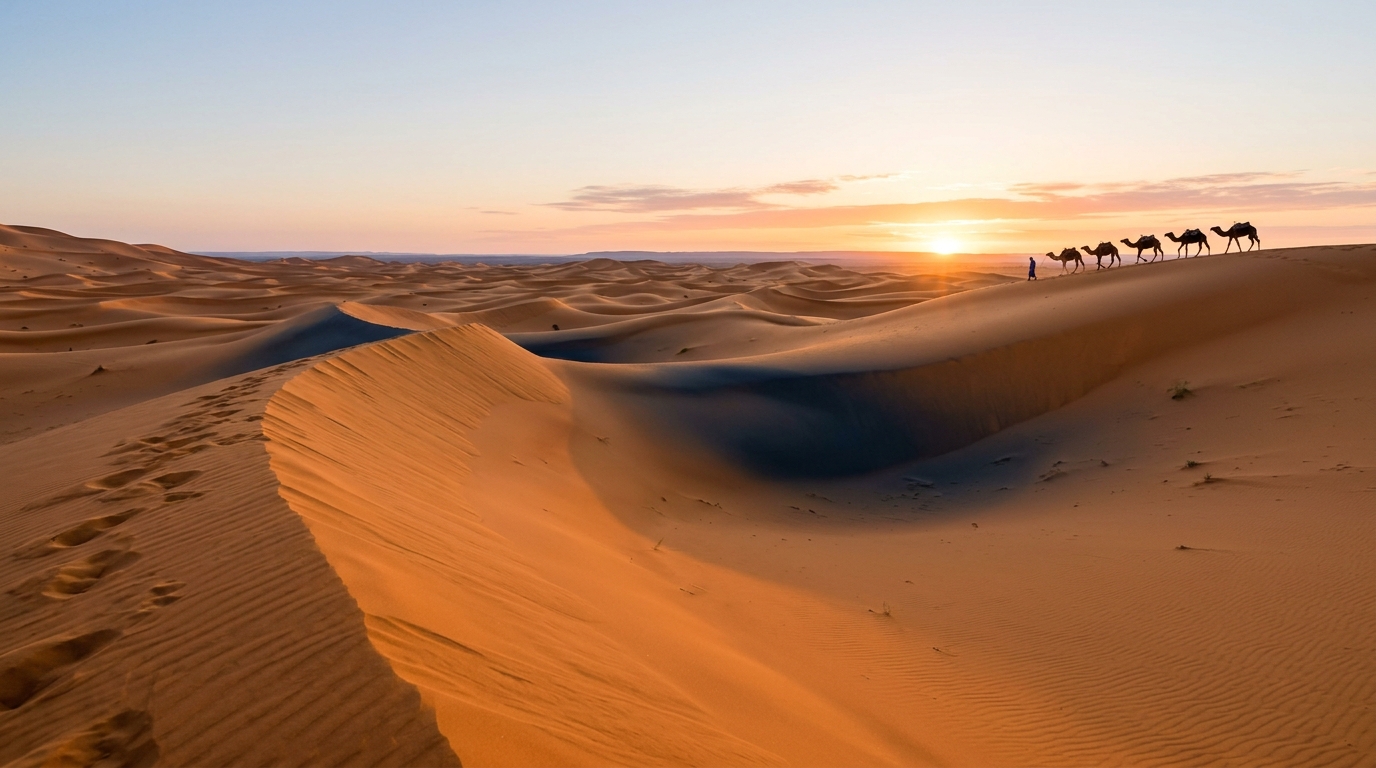
The Sahara is the largest hot desert on Earth, and Morocco offers one of the most accessible and spectacular windows into it. While the desert stretches across much of North Africa, the Moroccan portion delivers the classic imagery most travelers dream of: enormous, sculpted sand seas, called ergs, glowing gold at dawn and rose at dusk, set against an immense silence.
Two great dune fields dominate the experience. Erg Chebbi, near the village of Merzouga in the southeast, is the most famous, with dunes soaring up to roughly 150 meters and a relatively easy approach by paved road. Erg Chigaga, beyond Zagora and M'hamid, is larger, wilder and far less visited, but requires a longer four-wheel-drive journey across rough terrain to reach.
Beyond the dunes lies a landscape of palm oases, fortified kasbahs, dry riverbeds and nomadic Berber communities who have crossed these sands for centuries. The journey to the desert is itself a highlight, winding through the Dades and Todra gorges, past the Valley of Roses and the film-set kasbah of Ait Benhaddou. The Sahara is not merely a destination; it is the climax of one of the world's great road trips.
Merzouga vs Zagora: Choosing Your Gateway
The single most important planning decision is which desert to visit, and the choice usually comes down to time. Zagora and its Erg Chigaga dunes are closer to Marrakech, reachable in a long single day of driving, which is why countless budget two-day tours funnel here. The trade-off is that Zagora's accessible dunes are smaller and the area feels more touristed and less dramatic.
Merzouga and Erg Chebbi, by contrast, lie further southeast, requiring roughly nine to ten hours of driving from Marrakech, which is why the standard trip is three days and two nights. The reward is worth it: Erg Chebbi's towering, postcard-perfect dunes are the Sahara of the imagination, and the longer route passes more scenery, including the Todra Gorge and Dades Valley.
If you have only two days and want a taste of the desert, Zagora delivers. If you can spare three days and want the genuine, jaw-dropping article, choose Merzouga. Travelers based in Fez have an advantage here, as Merzouga is closer to Fez than to Marrakech, making a Fez-to-Merzouga or Merzouga-to-Fez routing especially efficient. Whichever you choose, avoid the temptation to compress too much into too little time; the desert rewards those who linger.
The Camel Trek and Desert Camp Experience
The iconic Sahara moment is the camel trek into the dunes at sunset. Led by a turbaned Berber guide, a small caravan of dromedaries plods over the sand as the light turns molten and shadows stretch across the ridges. The ride typically lasts around an hour to ninety minutes, long enough to feel transported and short enough that the unfamiliar saddle does not become punishing. Those who prefer can reach camp by four-wheel drive instead.
The camps themselves range from simple to sumptuous. Standard camps offer Berber tents with shared facilities, communal dinners of tagine cooked over fire, and drumming under the stars. Luxury camps, increasingly common around Erg Chebbi, provide private en-suite tents with real beds, hot showers and gourmet meals, blending desert romance with creature comforts. There is an option for every budget.
Whatever the style, the magic is the same after dark. With no light pollution for hundreds of kilometers, the night sky over the Sahara is staggering, a dense canopy of stars and the visible band of the Milky Way. Wake before dawn to climb a nearby dune barefoot and watch the sun rise over the sand sea; it is, for many travelers, the most memorable single moment of their entire trip to Morocco.
When to Go and What to Expect
Timing matters enormously in the desert. The Sahara is a land of extremes, and the difference between a magical trip and a miserable one often comes down to the season. The sweet spots are spring (March to May) and autumn (September to November), when daytime temperatures are warm but bearable and nights are cool rather than cold.
Summer (June to August) is brutal, with daytime temperatures regularly exceeding 40 degrees Celsius and sometimes far higher, making camel treks genuinely dangerous in the midday sun. Most reputable tours during these months operate only at dawn and dusk. Winter (December to February), by contrast, brings pleasant sunny days but startlingly cold nights, where temperatures can drop near or below freezing, so warm layers are essential.
Regardless of season, the desert demands respect. Sandstorms can blow up with little warning, blurring the horizon and grounding activities. Connectivity is limited, so download maps and inform someone of your itinerary. And while the dunes look benign, the heat, sun and shifting sand are deceptively taxing. A little preparation transforms the Sahara from intimidating to unforgettable.
Booking, Costs and Choosing an Operator
Sahara trips are almost always booked as guided tours, and the market is enormous and competitive. The most common formats are the shared group tour, where you travel in a minivan with strangers at a low per-person price, and the private tour, where you have your own driver and vehicle for greater flexibility and comfort at a higher cost. Both are widely available from Marrakech and Fez.
Quality varies wildly, so vetting your operator matters. Read recent independent reviews, confirm exactly what is included, the type of camp, the meals, the vehicle, the group size, and beware of suspiciously cheap deals that cut corners on safety or rush the itinerary. A reputable three-day Merzouga tour with a decent camp represents excellent value for the experience delivered.
Tipping is customary for guides, drivers and camp staff, and budgeting a little extra for it is good practice. Booking ahead is wise during the spring and autumn peak, when the best camps fill up. Above all, match the tour length to the desert you choose: never attempt to see Erg Chebbi in two days, and give yourself enough time to actually arrive, settle, and absorb the silence that makes the Sahara so profoundly different from anywhere else.
What to Pack and Practical Tips
Packing for the Sahara is an exercise in managing extremes. Bring lightweight, loose, breathable clothing that covers the skin to protect against sun and blowing sand, along with warm layers, including a fleece or jacket, for the surprisingly cold nights and early mornings. A scarf or lightweight turban is invaluable for shielding your face during windy stretches.
Essentials include high-SPF sunscreen, sunglasses, a hat, lip balm and plenty of water. A headlamp or flashlight is genuinely useful around camp after dark, and a portable power bank keeps cameras and phones alive where charging is limited. Closed shoes protect against hot sand and the occasional scorpion, though sandals are nice for climbing dunes barefoot at dawn.
A few practical habits go a long way. Carry small bills in dirhams for tips and incidental purchases at oasis stops. Keep electronics sealed against fine sand, which gets into everything. Respect local customs in the conservative rural south by dressing modestly. And finally, build in patience: the long drives and remote setting are part of the experience, not an obstacle to it. The Sahara is one of the few places left where you can experience true silence and an undimmed night sky, and that alone justifies the journey.
| Factor | Merzouga (Erg Chebbi) | Zagora (Erg Chigaga area) |
|---|---|---|
| Drive from Marrakech | ~9–10 hours | ~7 hours |
| Typical trip length | 3 days / 2 nights | 2 days / 1 night |
| Dune height | Up to ~150 m, dramatic | Smaller, more modest |
| Crowds | Popular but spread out | More touristed (accessible dunes) |
| Best for | The classic Sahara experience | Quick taste of the desert |
Merzouga vs Zagora desert trips compared
FAQ
How many days do I need for a Sahara desert trip?
For the dramatic Erg Chebbi dunes near Merzouga, plan three days and two nights from Marrakech due to the long drive. A quicker two-day trip to Zagora is possible but offers smaller dunes and a more rushed experience.
What is the best time to visit the Moroccan Sahara?
Spring (March to May) and autumn (September to November) are ideal, with warm days and cool nights. Avoid summer, when daytime heat can exceed 40°C, and pack warm layers in winter, when desert nights can near freezing.
Is the camel trek difficult or uncomfortable?
The typical sunset camel trek lasts about an hour to ninety minutes and is manageable for most people, though the saddle takes getting used to. Travelers who prefer can reach the desert camp by four-wheel drive instead.
How much does a Sahara tour cost?
Costs vary widely by tour type and camp quality. Shared group tours are the most affordable, while private tours with your own driver cost more for added flexibility and comfort. Be wary of very cheap deals that cut corners on safety.
What should I pack for the Sahara desert?
Bring breathable clothing that covers the skin, warm layers for cold nights, a scarf for sandstorms, high-SPF sunscreen, sunglasses, a hat, a headlamp, plenty of water, a power bank and small bills in dirhams for tips.
Loved this? Useful? React below — your feedback helps other readers.