Rif Cuisine: Northern Morocco
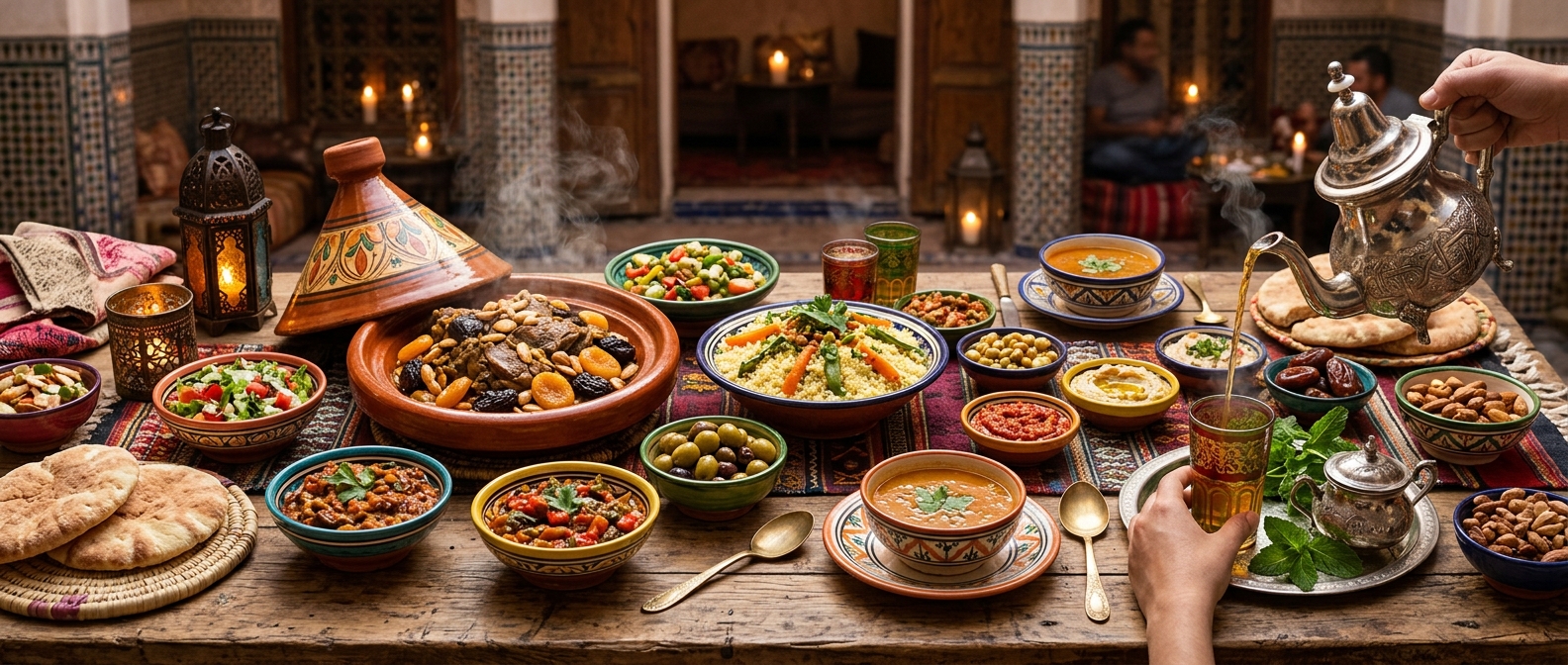
A Mountain and Mediterranean Table
The Rif is Morocco's rugged northern region, stretching from the blue city of Chefchaouen to the Mediterranean ports of Al Hoceima and the Andalusian-flavored city of Tetouan. Its cuisine reflects both mountain farming and coastal fishing.
Compared to the rich imperial cooking of the interior, Rif food tends to be greener, lighter and more rustic, leaning on legumes, fresh herbs, olive oil and seasonal produce grown on the terraced hillsides.
Bissara: The Northern Comfort Soup
Bissara is the signature dish of the north, a thick, creamy soup of dried fava beans (or split peas) blended with garlic and olive oil, finished with a dusting of cumin, paprika and a generous pour of olive oil on top.
Cheap, filling and warming, bissara is classic winter breakfast and street food in cities like Chefchaouen and Tetouan. Served piping hot with crusty bread for dipping, it is the ultimate Rif comfort food.
Fresh Goat Cheese and Mountain Dairy
The Rif mountains are dairy country, and fresh goat cheese (jben) is a regional treasure. Sold wrapped in palm leaves at local souks, this soft, tangy white cheese is eaten with bread, honey or herbs.
Chefchaouen is especially associated with jben, and travelers often encounter it at breakfast tables. The mountain pastures also yield other dairy products and the herbs that flavor much of the local cooking.
Seafood of the Mediterranean Coast
Along the northern coast at Al Hoceima, Nador and the Tetouan region, Mediterranean seafood is central. Fresh sardines, anchovies, shrimp and white fish are grilled, fried or simmered with tomato and chermoula.
The lighter Mediterranean style here contrasts with the Atlantic catch of the west, and dishes often highlight olive oil, garlic and fresh herbs rather than heavy spicing, letting the fish taste of the sea.
Tetouani and Andalusian Influences
Tetouan, settled by Andalusian refugees after the fall of Granada, carries a distinct culinary heritage. Its cooking shows refined Andalusian touches in pastries, savory pies and the use of fragrant spices and orange blossom water.
Tetouani sweets and breads are prized, and the city's cuisine sits at the meeting point of Moroccan, Andalusian and Mediterranean traditions, giving the northern table a sophistication that complements the rustic mountain fare.
Herbs, Greens and Everyday Eating
Rif cooking makes heavy use of wild and cultivated greens, herbs and legumes. Lentil and bean stews, herb omelets and vegetable tagines are everyday staples, reflecting an agricultural economy and a lighter touch.
Mint tea is, as everywhere in Morocco, the social glue, and in the cool mountain air a hot glass of sweet tea with fresh garden mint is especially welcome. The overall picture is of a green, fresh, frugal and welcoming regional cuisine.
| Dish | Description | Where it shines |
|---|---|---|
| Bissara | Creamy fava bean soup with cumin and olive oil | Chefchaouen, Tetouan |
| Jben | Fresh tangy goat cheese | Rif mountain souks |
| Grilled sardines | Mediterranean fresh fish | Al Hoceima, Nador |
| Tetouani pastries | Andalusian-influenced sweets | Tetouan |
| Herb and lentil stews | Greens and legume dishes | Mountain villages |
Rif and northern Moroccan specialties
FAQ
What is bissara made of?
Bissara is a thick soup made from dried fava beans or split peas blended with garlic, olive oil and water, then seasoned with cumin and paprika and topped with more olive oil. It is a popular northern Moroccan breakfast and street food.
What food is Chefchaouen known for?
Chefchaouen is known for bissara soup, fresh goat cheese (jben) sold in palm-leaf wrappers, and rustic mountain dishes using local herbs and produce, all enjoyed in the famous blue-painted medina.
Why does Tetouan have Andalusian-style food?
Tetouan was largely settled by Muslim and Jewish refugees from Andalusia after the fall of Granada in 1492. They brought refined Andalusian cooking, pastries and spice traditions that still define the city's cuisine.
Loved this? Useful? React below — your feedback helps other readers.