The Architecture of the Riad
What Defines a Riad
The word riad derives from the Arabic for garden, and traditionally refers specifically to a house built around an interior garden divided into quadrants. In common usage today it describes the broader Moroccan courtyard house, whether centered on a planted garden or a tiled patio with a fountain.
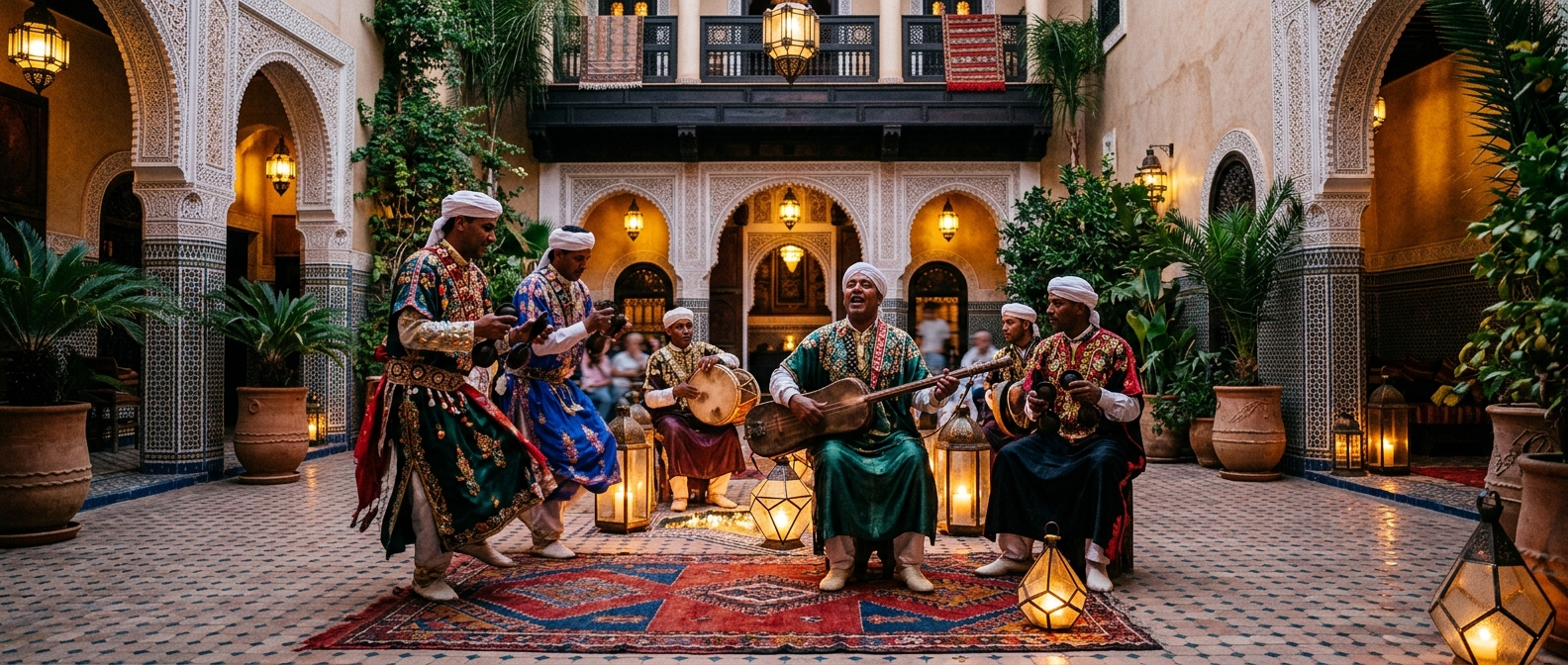
The defining principle is inward orientation. Exterior walls are plain and largely windowless, while the entire architectural and decorative effort focuses on the central courtyard and the rooms surrounding it. This creates a private, sheltered world hidden from the bustling medina streets.
Origins and Andalusian Influence
The riad form draws on a long tradition of courtyard architecture in the Mediterranean and Islamic worlds, with particularly strong influence from Andalusia, the Muslim civilization of medieval Spain. The quadripartite garden recalls Persian and Andalusian paradise garden designs.
As Andalusian Muslims and Jews migrated to Morocco, especially after the fall of Granada in 1492, they brought refined tastes in architecture, gardens, and craftsmanship. Cities such as Fez, Tetouan, and Marrakech absorbed these influences into their courtyard houses.
The Courtyard and Garden
At the heart of a riad lies the courtyard, often centered on a fountain or a small garden of citrus trees and aromatic plants. The classic garden riad divides the space into four parts by walkways, sometimes with a central pool, symbolizing the gardens of paradise.
This central space regulates temperature, channels light into surrounding rooms, and provides a tranquil retreat. The sound of water and the greenery create a cool, calming atmosphere that contrasts sharply with the heat and noise outside.
Decorative Crafts of the Riad
Riad interiors showcase the finest Moroccan crafts. Walls are covered in zellige mosaic tile, ceilings and friezes carved from cedar, and upper walls sculpted in intricate plaster known as gebs. Doors and shutters feature elaborate woodwork and metal fittings.
Tadelakt, a polished waterproof lime plaster, often lines walls and bathing areas. Together these crafts transform the riad into a jewel box of geometric and floral ornament, each surface reflecting centuries of accumulated artisan skill.
Daily Life in a Traditional Riad
Traditionally, a riad housed an extended family, with rooms arranged around the courtyard and often a second story with galleries overlooking the central space. A rooftop terrace provided additional living space, used for laundry, relaxation, and socializing.
The inward design reinforced the separation between public and private life that is central to traditional Moroccan society. Guests were received in formal salons, while family life unfolded in the protected courtyard and surrounding rooms.
The Riad Revival
Beginning in the late twentieth century, foreign and Moroccan investors began buying and restoring old riads, particularly in Marrakech and Fez, converting them into boutique guesthouses and private homes. This movement revived interest in traditional crafts and saved many decaying buildings.
The riad guesthouse has become an iconic form of Moroccan hospitality, offering travelers an intimate experience of historic architecture. The trend also raised debates about gentrification and the displacement of local families within the medinas.
Staying in a Riad Today
For visitors, staying in a riad is one of the most atmospheric ways to experience Morocco. Behind an unremarkable door lies a serene courtyard, ornate craftsmanship, and a rooftop with views across the medina.
Choosing a well-maintained, locally engaged riad supports the preservation of these buildings and the artisans who keep traditional techniques alive. Each restored riad represents both a heritage asset and a living example of Moroccan design philosophy.
| Feature | Material or craft | Purpose |
|---|---|---|
| Central courtyard | Tile, stone, plants | Light, cooling, privacy |
| Wall mosaics | Zellige | Decoration and durability |
| Ceilings and friezes | Carved cedar | Ornament and structure |
| Sculpted upper walls | Gebs plaster | Geometric and floral detail |
| Rooftop terrace | Tile and plaster | Extra living and views |
Common features of a Moroccan riad
FAQ
What is a riad?
A riad is a traditional Moroccan house or palace built around an interior courtyard or garden, with plain outer walls and richly decorated interiors focused inward.
Why are riads built inward-facing?
The inward design provides privacy, security, and natural cooling, reflecting Islamic principles separating public and private life and adapting to a hot climate.
Can tourists stay in a riad?
Yes. Many historic riads, especially in Marrakech and Fez, have been restored as boutique guesthouses offering an intimate experience of traditional architecture.
Loved this? Useful? React below — your feedback helps other readers.