How Walid Regragui's Morocco Plays: The Complete Tactical System
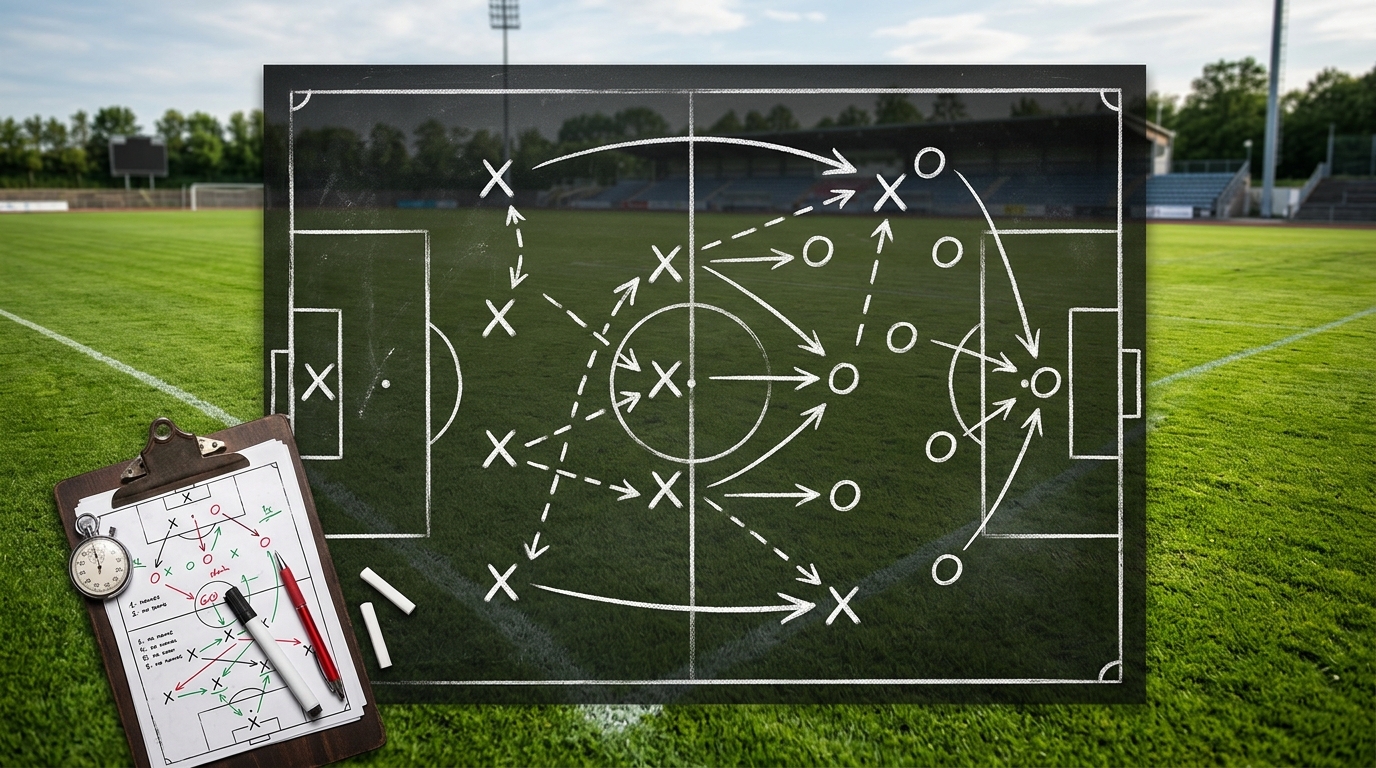
The Identity: Defend Deep, Strike Fast
To understand Morocco under Walid Regragui you have to throw away the romantic idea of a possession team that dominates the ball. That is not what the Atlas Lions are, and it is not what made them the first African and Arab nation ever to reach a World Cup semi-final. Regragui took over only months before Qatar 2022, and rather than impose a brand-new philosophy on a squad with no time to absorb it, he sharpened what Morocco already did well: defend as a unit, suffer without panicking, and punish opponents the instant they lose the ball. That clarity of identity is the single most important thing about this team.
The Morocco system is built on a simple, almost old-fashioned premise. Concede territory, never concede space. Regragui's side is happy to let a more illustrious opponent have 60 or 65 percent of the ball, because possession in front of a compact block is possession that goes nowhere. The Atlas Lions defend in tight horizontal and vertical lines, force the opposition wide or backwards, and wait for the moment a pass is misplaced or a winger takes a touch too many. Then they explode forward with pace that most defenses simply cannot live with.
What makes Regragui's version of this approach special is the quality of the players executing it. Reactive, low-block football is often associated with limited teams who have no other choice. Morocco are not limited. They have a Champions League-winning full-back in Achraf Hakimi, a goalkeeper in Yassine Bounou capable of game-defining saves and penalty heroics, and a generation of technically gifted, tactically intelligent players raised across the elite leagues of Europe. The fusion of disciplined organization with individual class is exactly why this team can out-defend and then out-punch nations ranked far above them.
Across this article we break the system down piece by piece: the base formation and how it shifts, the defensive block and its pressing triggers, Hakimi's dual role as defender and attacker, the midfield engine that holds everything together, the transition mechanics that turn defense into goals, the set-piece threat, the goalkeeper's role in distribution, and the dark art of game management. We will look at the Qatar 2022 blueprint that beat Belgium, Spain and Portugal, the defensive lapses exposed in the 4-2 win over Haiti at the 2026 World Cup, and how the system must adapt for a Round of 32 meeting with the Netherlands in Monterrey.
The Base Formation: A Flexible 4-3-3 That Becomes a 4-1-4-1
On paper Regragui lines Morocco up in a 4-3-3, but a formation written on a team sheet tells you very little about how a side actually plays. The number that matters is the shape Morocco adopt when they do not have the ball, and out of possession that 4-3-3 collapses into a tight 4-1-4-1 or, against the very best opponents, something closer to a 4-5-1 with two banks compressed into a narrow channel in front of their own box. The front three drop, the wide midfielders tuck in, and the team becomes a wall.
The back four is the foundation: two full-backs and two centre-backs who hold a disciplined line and rarely get dragged out of position. Ahead of them sits a single pivot, the defensive midfielder who screens the space between the lines and acts as the first line of organization. In front of that anchor sit two more central midfielders, slightly higher, who shuttle between pressing and protecting. The front three are nominally a centre-forward and two wide forwards, but their first job without the ball is to defend, cutting passing lanes into midfield and herding the opponent's build-up toward the touchlines.
The flexibility comes from how these units slide as a block. When the ball is on Morocco's right, the entire team shifts right, the left-sided players tucking infield to overload the strong side and leave only a long, low-percentage switch as the escape route. When the ball is on the left, the whole structure mirrors itself. This constant, coordinated sliding is what makes the block so hard to play through. There are almost never gaps between the lines, because the lines move together as if connected by elastic.
In possession the same 4-3-3 takes on a different face, and this is where Hakimi's role transforms the picture entirely. When Morocco attack, the right-back pushes so high that the shape can resemble a back three in build-up, with the left-back tucking in and the single pivot dropping between the centre-backs. This asymmetry is deliberate. It gives Hakimi a launchpad to attack the right flank while the rest of the team retains enough numbers behind the ball to be safe if the move breaks down. The formation, in other words, is not fixed. It breathes, contracts, and expands depending on whether Morocco are protecting a lead, chasing a game, or springing a counter.
The Defensive Block: Compact, Patient, and Disciplined
The defensive block is the heart of everything Regragui's Morocco do, and it is worth describing in detail because its excellence is what separates this team from other counter-attacking sides. The first principle is compactness. Morocco keep their defensive and midfield lines close together vertically, so the dangerous space between defense and midfield, the space where elite playmakers love to receive, simply does not exist. An opponent can have the ball in front of the block all day, but the moment they try to play a forward pass into the gap, there is no gap to find.
The second principle is patience. Many teams that try to defend deep eventually crack because they cannot resist the urge to step out and chase the ball, and the instant a player breaks the line, a hole appears for the opponent to exploit. Morocco's discipline in this regard is remarkable. The block holds its shape even under sustained pressure, even when the crowd wants them to press, even when the opponent is knocking the ball around in front of them for long stretches. The players trust the structure and trust each other. They know that if everyone stays connected, the opponent will eventually force a pass that is not on, and that is the trigger.
Pressing triggers are the third principle, and they are precise. Morocco do not press randomly. They wait for specific cues: a heavy touch, a pass played backward, a midfielder receiving with his back to goal, a ball rolled toward the touchline where the sideline acts as an extra defender. When one of these triggers appears, the nearest Moroccan player jumps to close the ball, and the rest of the block shifts to support, collapsing the available space around the man in possession. The pressing is collective and conditional, not constant. This is what makes it sustainable across ninety minutes and across a tournament.
The block also has a vertical discipline that is easy to overlook. Morocco defend in zones rather than chasing men, which means each player is responsible for a space and for the passing lanes that run through it. The wide forwards drop to form a five-man midfield line when needed, the central midfielders screen the half-spaces, and the single pivot patrols the area directly in front of the centre-backs. Because everyone knows their zone, the team rarely gets pulled apart by clever movement. Opponents who try to create overloads find that Morocco simply slide an extra body across, restoring numerical balance before the danger materializes.
Finally, the block is built around protecting the centre. Regragui's Morocco are perfectly content to concede crosses from wide areas, because they trust their centre-backs and goalkeeper to deal with aerial balls, and because a cross is a low-percentage attacking action against a well-organized box. What they will not concede is a clean ball through the middle. Everything is funneled wide, away from goal, into areas where the threat is reduced and where Morocco can commit numbers without exposing the central channel.
Achraf Hakimi: The Engine of the Whole System
If the defensive block is the heart of Morocco's system, Achraf Hakimi is its engine. The Paris Saint-Germain full-back is the single most important attacking outlet in the team, and the way Regragui uses him is the clearest illustration of how this side turns rock-solid defending into devastating attacking. Hakimi is asked to do two jobs that, on paper, contradict each other: defend like a disciplined full-back and attack like a flying winger. The genius of the system is in how it lets him do both.
When Morocco are defending deep, Hakimi tucks into the back four and does the unglamorous work, holding the line, tracking runners, and resisting the temptation to push forward prematurely. He is not a liability defensively, which is crucial, because a system built on defensive solidity cannot afford a full-back who gambles. But the moment Morocco win the ball and the transition begins, Hakimi is gone. His acceleration over the first ten yards is among the best in world football for a defender, and he uses it to turn a recovered ball into a counter-attack before the opponent has even reorganized.
Hakimi's attacking role is essentially that of a right wing-back in a counter-attacking team. He provides the width on the right side, allowing the wide forward ahead of him to drift into the half-space or even into central positions, which creates overloads and confuses opposing defenders about who should mark whom. When the wide forward comes inside, Hakimi overlaps outside; when the wide forward stays wide, Hakimi underlaps inside. This rotation gives Morocco a constant attacking question on the right flank that defenses struggle to answer, particularly in transition when they have no time to organize.
His delivery and his end product matter enormously. Hakimi is not just a runner; he can cross with quality, he can carry the ball at speed without losing control, and he has the composure to make the right final decision in the chaos of a counter-attack. He scored the decisive penalty against Spain at Qatar 2022, the famous panenka that sealed Morocco's place in the quarter-finals, and that moment captured everything about his importance: he is the player who carries the biggest individual responsibility in the biggest moments.
The risk, of course, is the space he leaves behind. When Hakimi bombs forward, the right flank of Morocco's defense is temporarily exposed, and this is the trade-off Regragui accepts in exchange for his attacking threat. The system mitigates the risk through rest defense, the shape Morocco maintain even while attacking. The single pivot slides across to cover, a central midfielder drops, and the centre-backs shade toward the vacated side. The whole team is wired to compensate for Hakimi's adventure, which is why his forward runs are a calculated feature of the system rather than a reckless individual habit.
The Midfield Engine: The Anchor and the Shuttlers
No counter-attacking system survives without a midfield that can both destroy and connect, and Morocco's midfield is the unsung machinery that makes Regragui's plan function. At the base sits the defensive anchor, the single pivot whose job is to break up play, screen the back four, and serve as the first relay station when Morocco win the ball. At Qatar 2022 this role belonged most memorably to Sofyan Amrabat, whose tireless ball-winning and willingness to cover enormous ground became a symbol of Morocco's run. Squads evolve and personnel may change across cycles, but the role itself is fixed and non-negotiable in this system.
The anchor's defensive responsibilities are immense. He patrols the space in front of the centre-backs, steps out to challenge anyone who receives in the pocket, and constantly scans for runners trying to break the line. He is the player who decides when the block can hold and when it must shift, and his positioning sets the reference point for the entire midfield. A misplaced anchor opens the central channel, the one thing Morocco refuse to concede, so the discipline and reading of the game required in this role cannot be overstated.
Ahead of the anchor sit the two shuttling midfielders, who carry a dual burden of their own. Out of possession they form part of the compact midfield line, screening the half-spaces and supporting the press when triggers appear. In transition they become the link between defense and attack, the players who receive the ball from the anchor or the centre-backs and drive it forward, either by carrying or by playing the early pass that releases the runners. Their lungs are as important as their feet; this is a role that demands relentless box-to-box running for ninety minutes.
The balance between these midfielders is carefully managed. Regragui typically wants at least one ball-winner who prioritizes defensive work and one more progressive presence who can carry the ball and find the killer pass. The combination gives Morocco both security and a route forward. If the team is too defensive in midfield, transitions die for lack of a creative spark; if it is too adventurous, the block loses its protection. Getting the right blend, and adjusting it depending on the opponent, is one of Regragui's most important selection decisions.
Crucially, the midfield is where Morocco's transitions are won or lost. The speed at which the anchor and shuttlers move the ball forward in the first three seconds after a turnover determines whether a counter-attack catches the opponent disorganized or runs into a reset defense. The best Moroccan performances feature midfielders who win the ball and release it forward almost in the same motion, turning defense into attack without the pause that lets opponents recover.
Transition Attacking: The Three-Second Window
Transitions are where Morocco do their damage, and understanding the mechanics of how they counter-attack is essential to understanding the whole team. A transition begins the instant possession changes hands, and in that moment there is a window, perhaps three seconds, perhaps five, in which the opponent is at their most vulnerable. They have committed players forward, their defensive shape is broken, and they are mentally caught between attacking and defending. Morocco are trained to attack ruthlessly into exactly this window.
The first move in a Moroccan transition is almost always vertical. Rather than recycling possession sideways or backward to consolidate, the player who wins the ball looks immediately for a forward pass or a forward carry. The target is usually a runner attacking the space behind the opponent's full-backs or the channel between centre-back and full-back, the seams that open up when a team has pushed forward to attack. Pace is everything here, and Morocco have it in abundance through Hakimi on the right and through forwards who can stretch a defense with their running.
The second principle of the transition is numbers and timing. Morocco do not throw everyone forward; they commit a controlled number of runners while the rest of the team holds its rest-defense shape. The forward who wins or receives the ball is supported by two or three runners attacking different lanes, typically one going outside, one underlapping inside, and one arriving late through the centre to finish. This staggered movement gives the ball-carrier options and forces retreating defenders to make impossible choices about whom to track.
Direction and decisiveness define the best counters. The most dangerous Moroccan transitions are the ones that reach the opposition box within a handful of passes, before the defense can set. When the counter is on, Morocco play it at maximum speed and commit to it; when the window has closed and the opponent has recovered their shape, the team is disciplined enough to abandon the counter, recycle possession, and reset rather than forcing a low-percentage attack into a settled defense. Knowing the difference between those two situations is a collective intelligence that Regragui has drilled into the side.
It is worth noting that Morocco's transition game is not purely about pace and chaos. There is structure within the speed. The runs are coordinated, the supporting angles are practiced, and the finishing positions are deliberate. This is why their counters look so clean when they come off: they are rehearsed patterns executed at high velocity, not random sprints. The combination of explosive athleticism and rehearsed movement is exactly what makes them so hard to defend against in open space.
Set Pieces: An Underrated Weapon
For a team that defends deep and concedes large amounts of possession, set pieces represent a disproportionately valuable scoring opportunity, and Regragui's Morocco treat them with the seriousness they deserve. When you spend long stretches of a match without the ball, every corner, every dangerous free-kick, every long throw becomes a precious chance to score against the run of play. Morocco have invested in making their set-piece routines a genuine weapon rather than an afterthought.
Attacking set pieces play to Morocco's physical strengths. The squad contains powerful, aerially dominant defenders and midfielders who become attacking threats from corners and wide free-kicks. The routines often involve blockers and decoy runs designed to free a target in the six-yard box, and the delivery is calibrated to specific zones rather than hopeful balls into the mix. A team that scores from set pieces gains an enormous tactical advantage, because it means they do not need to dominate a game to win it, which suits Morocco's reactive style perfectly.
Defensively, Morocco are equally diligent. Because they concede so many crosses and corners by design, funneling opponents wide, they have to be exceptional at defending dead balls. They typically use a hybrid of zonal and man-marking systems, with key zones protected by their strongest aerial defenders and dangerous opposition targets tracked individually. Bounou's command of his area is a major asset here; a goalkeeper who claims crosses confidently relieves enormous pressure on the defensive structure.
The psychological dimension of set pieces matters too. For an underdog defending a narrow lead, every defensive set piece survived is a small victory that drains the opponent's belief, and every attacking set piece that threatens reminds the favorite that they can be punished at any moment. Morocco understand this. Their set-piece discipline is part of the broader game-management identity that lets them protect leads and frustrate superior teams into errors. In knockout football, where margins are razor-thin and a single dead-ball goal can decide a tie, this competence is worth its weight in gold.
Yassine Bounou and the Goalkeeper's Role
A deep-defending team lives and dies by its goalkeeper, and in Yassine Bounou, Morocco have one of the most important figures in the entire system. Bounou is far more than a shot-stopper, although his shot-stopping is excellent and was decisive throughout the Qatar 2022 run, most famously in the penalty shootout against Spain where he saved the decisive spot-kicks to send Morocco through. But to view him only as a save-maker is to miss most of his value to this team.
Bounou is the organizer behind the block. From his position he sees the whole field, and he constantly directs the back four, adjusting their line, warning of runners, and managing the team's depth. A back line that defends deep needs a vocal, authoritative goalkeeper to keep it coordinated, and Bounou provides exactly that. His communication is part of why Morocco's defensive shape so rarely breaks down; there is a brain behind the defense constantly making micro-adjustments that prevent gaps from appearing.
His command of the penalty area is the second pillar of his importance. Because Morocco invite crosses, the goalkeeper must be willing and able to claim aerial balls, punch clear under pressure, and dominate his six-yard box. Bounou does this with the calm authority of a top-level keeper, which allows the centre-backs to attack the ball aggressively knowing their keeper will deal with anything that gets behind them. This trust is foundational to the whole defensive approach.
Bounou's distribution adds a layer that elevates the system from purely reactive to genuinely dangerous. He can launch transitions himself with accurate long distribution, finding a forward or Hakimi in space the moment Morocco regain the ball through him. A goalkeeper who can turn a routine claim or save into the first pass of a counter-attack is a huge asset for a team that lives on transitions. In an era where goalkeepers are increasingly expected to be the start of attacks, Bounou gives Morocco both the security of a traditional shot-stopper and the modern ability to play out and launch quickly when the moment is right.
Game Management: The Art of Killing a Match
Some of the most important tactical work Morocco do does not appear on any heat map or pass network. It is the dark art of game management, the collection of behaviors a team uses to control the rhythm of a match, protect a lead, and frustrate a superior opponent into submission. Regragui's Morocco are masters of this, and it is a skill that travels especially well into the knockout stages of a World Cup, where one goal can settle everything and where suffering without conceding is often the path to victory.
When Morocco hold a lead, the game slows down. They are content to keep the ball in safe areas, to recycle possession without risk, to take the sting out of the contest. They make substitutions designed to reinforce the block, bringing on fresh legs to maintain defensive intensity and to add energy to the press in the closing stages. The message to the opponent is clear: you will have to break us down, and we have no intention of helping you do it. For a favorite chasing a game, there are few experiences more demoralizing than running into a Moroccan block that refuses to crack.
Tempo control runs through everything. Morocco choose when to speed a game up and when to slow it down, and that choice is dictated by the scoreline and the moment. Leading late, they will use every legitimate means to manage the clock and break the opponent's momentum. Needing a goal, they will inject urgency and commit more bodies forward, accepting greater risk because the situation demands it. The ability to switch between these modes, and to do so as a coordinated team, is a sign of tactical maturity that many more talented sides lack.
Game management is also about emotional discipline. Defending a lead against a superior opponent is psychologically exhausting; the pressure mounts, the chances against you keep coming, and the temptation to retreat into pure survival can become a trap that eventually leads to a goal. Morocco manage this by staying connected to their structure and by retaining the threat of the counter. As long as the opponent knows that one Moroccan break could end the game, they cannot commit everyone forward, and that restraint is what keeps the pressure manageable. The counter-attack, in this sense, is not just an attacking weapon; it is a defensive one, a deterrent that protects the block by keeping the opponent honest.
The Qatar 2022 Blueprint: How Morocco Shut Down Elite Teams
The proof of any system is in its results against the best, and at Qatar 2022 Morocco's system passed the ultimate test by dismantling a succession of elite teams on its way to a historic semi-final. The blueprint was consistent across those victories, and revisiting it shows exactly how the tactical principles described above translate into beating the giants of world football. It started in the group stage with a commanding win over Belgium, a top-ranked side packed with stars, who simply could not find a way through Morocco's compact block and were then punished on the break and from a set piece.
Against Spain in the Round of 16, Morocco produced perhaps the purest expression of their identity. Spain enjoyed enormous possession, knocking the ball around in front of the Moroccan block for the entire match, but they were systematically denied any meaningful penetration. Morocco's lines stayed connected, the central channel stayed locked, and Spain's intricate passing found no gaps to exploit. The match went to penalties, and there Bounou's heroics and Hakimi's audacious panenka sent Morocco through. It was the perfect demonstration of how organized defending plus penalty-box quality can defeat a possession superpower.
The quarter-final against Portugal followed the same logic. Morocco defended deep and with total discipline, absorbed the pressure, and struck on a set piece, with Youssef En-Nesyri rising for a towering header. Then they defended the lead with the game-management mastery that became their signature, suffering through wave after wave of Portuguese pressure without breaking. Portugal, for all their attacking talent, could not solve the puzzle of a team that conceded territory but never conceded the chances that mattered.
The run ended in the semi-final against France, who had the quality and the experience to find the small margins that the earlier opponents could not. But even in defeat, Morocco's system held its shape and made the eventual finalists work for every inch. The lesson of Qatar 2022 was not that Morocco got lucky; it was that a clearly defined, ruthlessly executed reactive system, powered by genuine individual quality at key positions, can take a team further than anyone expects. The blueprint, beat the press with compactness, win the duels, strike on transitions and set pieces, and manage the game, is now the template every future opponent must prepare for.
The 2026 Group Stage: A System Under New Pressure
The 2026 World Cup has presented Regragui's Morocco with a new context and new questions. Expanded to a larger format, the tournament has placed Morocco in a Group C from which they advanced in second place behind Brazil, securing their passage to the Round of 32. The headline result of their group campaign was a 4-2 win over Haiti in Atlanta on June 24, a victory that secured progression but which also exposed cracks in the defensive structure that have become a genuine tactical talking point.
On the surface, a 4-2 win with goals from Hakimi, Ismael Saibari, substitute Soufiane Rahimi and Gessime Yassine looks like a comfortable evening. The reality was more uncomfortable. Morocco conceded an early own goal that put them behind against opposition they were expected to control, and later shipped a long-range screamer from Wilson Isidor that briefly threatened to make the night nervous. For a team whose entire identity is built on defensive excellence, conceding twice to Haiti, including a goal from distance, is exactly the kind of detail that elite opponents will have noticed and filed away.
There are tactical lessons buried in those concessions. An early own goal often stems from a defense that is not yet fully settled, that is reacting rather than controlling, and it forced Morocco to play on the front foot in a way that does not naturally suit their reactive system. Chasing the game pulls a counter-attacking team out of its preferred shape, which is uncomfortable territory for a side that thrives on letting opponents come to them. The long-range goal raises a separate question about how aggressively Morocco close down shots from distance when their block is set deep, since a compact low block can sometimes concede space in front of the box precisely because everyone is protecting the area inside it.
It would be a mistake to overstate these problems, because the result was achieved and the attacking output, four goals, was emphatic. But it would be an equal mistake to ignore them. The whole point of Morocco's system is that it concedes very little, and when the defensive foundation wobbles, the entire structure becomes more vulnerable than the talent of the squad should allow. Heading into the knockout rounds, where the margin for error vanishes, Regragui will be acutely focused on restoring the defensive certainty that the Haiti match called into question. Against better finishers, two such concessions would have been far more costly.
Adapting for the Netherlands: The Round of 32 Test
Morocco's reward for finishing second in Group C is a Round of 32 meeting with the Netherlands on June 29 in Monterrey, and it is a fixture that will test the system against a genuinely elite, well-coached opponent. The Dutch carry real attacking threats: Memphis Depay's movement and finishing, Cody Gakpo's pace and end product from wide areas, and the towering presence of Virgil van Dijk anchoring their defense and posing a threat at set pieces. This is exactly the kind of high-quality opponent against which Morocco's blueprint was designed to function.
In many ways the Netherlands tie is a more natural match for Morocco than the Haiti game was. Against Haiti, Morocco were the heavy favorites expected to take the initiative, which is not their comfort zone. Against the Dutch, Morocco can revert to the reactive identity that suits them best: cede possession, defend the compact block, and look to strike on transitions. The very fact that the Netherlands will likely dominate the ball plays into Morocco's strengths rather than against them. This is the Spain and Portugal scenario from Qatar 2022, the situation in which Regragui's system is at its most dangerous.
The specific tactical battles will be fascinating. Gakpo operating on the left puts pressure on Hakimi's flank, which raises the perennial question of how far Hakimi can push forward without exposing the space behind him to a quick, direct winger. Regragui may ask Hakimi to be slightly more conservative in his starting position, picking his moments to attack rather than bombing on at will, and trusting the rest defense to cover when he does commit. Containing Depay's clever movement between the lines will fall to the defensive anchor and the centre-backs, who must deny him the pockets where he is most dangerous.
Set pieces loom large in this matchup. Van Dijk is one of the most dangerous aerial threats in world football, and a Netherlands side with his height and delivery will see dead balls as a primary route to goal against a deep-defending Morocco. The discipline of Morocco's set-piece marking, the very thing that wobbled slightly against Haiti, will be tested directly. Conversely, Morocco's own set-piece threat could be decisive against a Dutch defense that, for all van Dijk's quality, can be vulnerable to pace and movement in the box. The team that wins the set-piece battle may well win the tie.
The biggest adjustment Regragui must make is mental as much as tactical: restoring the defensive certainty that briefly deserted the team against Haiti. If the block holds with the discipline it showed against Spain and Portugal, and if the transitions are sharp and the set pieces taken seriously, Morocco have every tool needed to eliminate the Netherlands. The system is proven against precisely this profile of opponent. The question is execution, and whether the concessions against Haiti were a one-off blip or a warning sign that the foundation needs reinforcing.
The Evolution Toward 2026 Knockout Football
Systems do not stand still, and one of the more interesting subplots of Morocco's 2026 campaign is how Regragui's tactical approach is evolving from the one that conquered Qatar. Squads change between cycles, players age and emerge, and opponents adapt to a blueprint once it becomes famous. The Morocco of 2026 cannot simply replay the Morocco of 2022, because every coach in the tournament has studied how the Atlas Lions defend and counter, and the element of surprise that helped at Qatar is gone.
The most likely evolution is in Morocco's willingness and ability to take the initiative when required. The Haiti match showed that there are now games in which Morocco are expected to be the dominant side, and a team whose entire identity is reactive can look uncomfortable when forced to break down a deeper opponent. Developing a more proactive plan B, a way to control possession and create against a low block, is the natural next step in the system's maturation. Whether Regragui can add this string to Morocco's bow without diluting the defensive identity that defines them is the central tactical challenge of this cycle.
Personnel evolution drives some of this. The anchor role that Amrabat embodied at Qatar may pass to different profiles, the attacking options ahead of Hakimi continue to develop, and depth across the squad gives Regragui more flexibility to tailor his approach game by game. The emergence of younger attacking talents, evidenced by goalscorers like Saibari and Gessime Yassine contributing against Haiti, suggests a squad with more attacking variety than the 2022 vintage, which could give Morocco more ways to hurt opponents who set up to nullify the counter.
Yet the core must remain intact. The temptation, after a historic semi-final, might be to chase a more expansive identity, to try to match the giants for possession and control. That would be a mistake. Morocco's greatness comes from doing one thing exceptionally well: defending as a unit and striking with ruthless efficiency. The evolution should be additive, layering new options on top of a rock-solid foundation, not transformative in a way that abandons what makes them special. The best version of Morocco at the 2026 knockout stages is one that retains the iron discipline of Qatar while adding just enough proactive variety to solve the games where opponents sit deep and dare them to create.
What Makes the System Work: The Human Element
Tactics are diagrams until players bring them to life, and the final, essential ingredient in Morocco's system is the human element that no formation chart can capture. Regragui has fostered a unity and a collective belief that turns a good defensive structure into an unbreakable one. The togetherness of this squad, the sense of fighting for something bigger than themselves, is repeatedly cited as the intangible that powers the team through moments when the structure alone might not be enough. Players who run for each other, cover for each other's mistakes, and refuse to break under pressure are what make a low block genuinely impenetrable.
The diaspora dimension is part of this story. Many of Morocco's players were born or raised in Europe, and representing the Atlas Lions carries a profound emotional weight tied to identity, family, and heritage. Regragui has channeled that emotion into a relentless collective intensity. The 'Dima Maghrib' spirit that unites the fans, a phrase that captures an unconditional, ever-present pride in Morocco, is mirrored on the pitch by a team that defends every blade of grass as if it were sacred. That emotional fuel is a tactical asset, because the discipline and effort required to maintain a compact block for ninety minutes is fundamentally a question of will as much as instruction.
The fan backing magnifies everything. Morocco enjoy enormous support wherever they play, with a huge global diaspora turning supposedly neutral venues into something close to home fixtures. That backing energizes the team's defensive resilience and adds to the pressure on opponents trying to break them down. In knockout football, where atmosphere and momentum can tilt fine margins, having tens of thousands of passionate supporters behind the block is a genuine advantage that feeds directly into the team's ability to suffer, survive, and strike.
Ultimately, Regragui's Morocco work because the tactical system and the human character are perfectly aligned. The system asks for discipline, sacrifice, patience, and collective effort, and the squad's culture supplies exactly those qualities in abundance. The flying brilliance of Hakimi, the calm authority of Bounou, the engine of the midfield, and the wall of the defensive block are all real, but they are amplified by a belief that this group of players can do things no Moroccan or African team has done before. They proved it once at Qatar 2022. The 2026 World Cup, beginning with the Netherlands in Monterrey, is their chance to prove that the system, and the spirit behind it, was no fluke.
| Phase | Shape | Key principle | Key players |
|---|---|---|---|
| Out of possession | Compact 4-1-4-1 / 4-5-1 | Deny central space, funnel play wide, hold the block | Defensive anchor, centre-backs, Bounou |
| Pressing | Conditional collective press | Jump on triggers: heavy touch, back-pass, touchline | Midfield shuttlers, front three |
| Transition (attack) | Vertical counter, 3-5 second window | Strike fast into the space behind committed defenders | Hakimi, wide forwards, runners |
| In possession (build-up) | Asymmetric back three, pivot drops | Free Hakimi to attack, keep rest defense intact | Hakimi, pivot, full-backs |
| Set pieces | Hybrid zonal / man-marking | Win dead balls both ways, exploit aerial strength | Aerial threats, Bounou |
| Game management | Reinforced block, tempo control | Protect the lead, frustrate, keep the counter as a threat | Whole team, substitutes |
Morocco's tactical system at a glance under Walid Regragui
FAQ
What formation does Walid Regragui's Morocco play?
Morocco line up nominally in a 4-3-3, but out of possession the shape compresses into a tight 4-1-4-1 or 4-5-1, with the front three and wide midfielders dropping to form a compact defensive block. In build-up the shape becomes asymmetric, often resembling a back three, to free Achraf Hakimi to attack the right flank.
Why is Achraf Hakimi so important to Morocco's system?
Hakimi is the team's main attacking outlet. He defends as a disciplined full-back but explodes forward on transitions with elite acceleration, providing width and delivery on the right. The system is built with rest defense to cover the space he vacates, making his attacking runs a calculated feature rather than a risk.
How did Morocco beat Belgium, Spain and Portugal at Qatar 2022?
They defended in a compact, disciplined block that denied central penetration, won individual duels, struck on transitions and set pieces, and managed games to protect leads. Against Spain they survived heavy possession and won on penalties through Bounou's saves and Hakimi's panenka; against Portugal they scored from a set piece and held firm.
What weaknesses did Morocco show against Haiti at the 2026 World Cup?
In the 4-2 win on June 24 in Atlanta, Morocco conceded an early own goal and a long-range strike from Wilson Isidor. The lapses suggest a defense not fully settled and questions about closing down shots from distance, an uncomfortable detail for a team whose identity is built on defensive excellence. Hakimi, Saibari, Rahimi and Gessime Yassine scored.
Who does Morocco play next at the 2026 World Cup?
Morocco face the Netherlands in the Round of 32 on June 29 in Monterrey, after finishing second in Group C behind Brazil. The Dutch carry threats in Memphis Depay, Cody Gakpo and Virgil van Dijk, but a possession-dominant opponent actually suits Morocco's reactive, counter-attacking system better than the Haiti match did.
Why does Morocco's defensive block work so well?
It is compact, patient and disciplined. The lines stay connected vertically to erase the space between defense and midfield, players defend zones rather than chasing men, pressing happens only on specific triggers, and everything funnels the opponent wide away from the central channel. Bounou organizes the block from goal and commands his box.
How might Morocco's system evolve for the 2026 knockout rounds?
The likely evolution is adding a more proactive plan B to break down deeper opponents, since Morocco are now sometimes expected to take the initiative. Younger attacking talents give more variety. But the core defensive identity must remain intact, with new options layered on top rather than replacing what makes the team special.
What role does the 'Dima Maghrib' fan culture play?
Morocco's huge global diaspora turns neutral venues into near-home fixtures, energizing the team's defensive resilience and pressuring opponents. The 'Dima Maghrib' spirit of unconditional pride is mirrored on the pitch by players who defend every blade of grass, turning emotional fuel into the collective discipline the compact block demands.
Loved this? Useful? React below — your feedback helps other readers.