The Nafar of Ramadan: Morocco's Fading Pre-Dawn Wake-Up Callers
Who is the nafar, and what does he do?
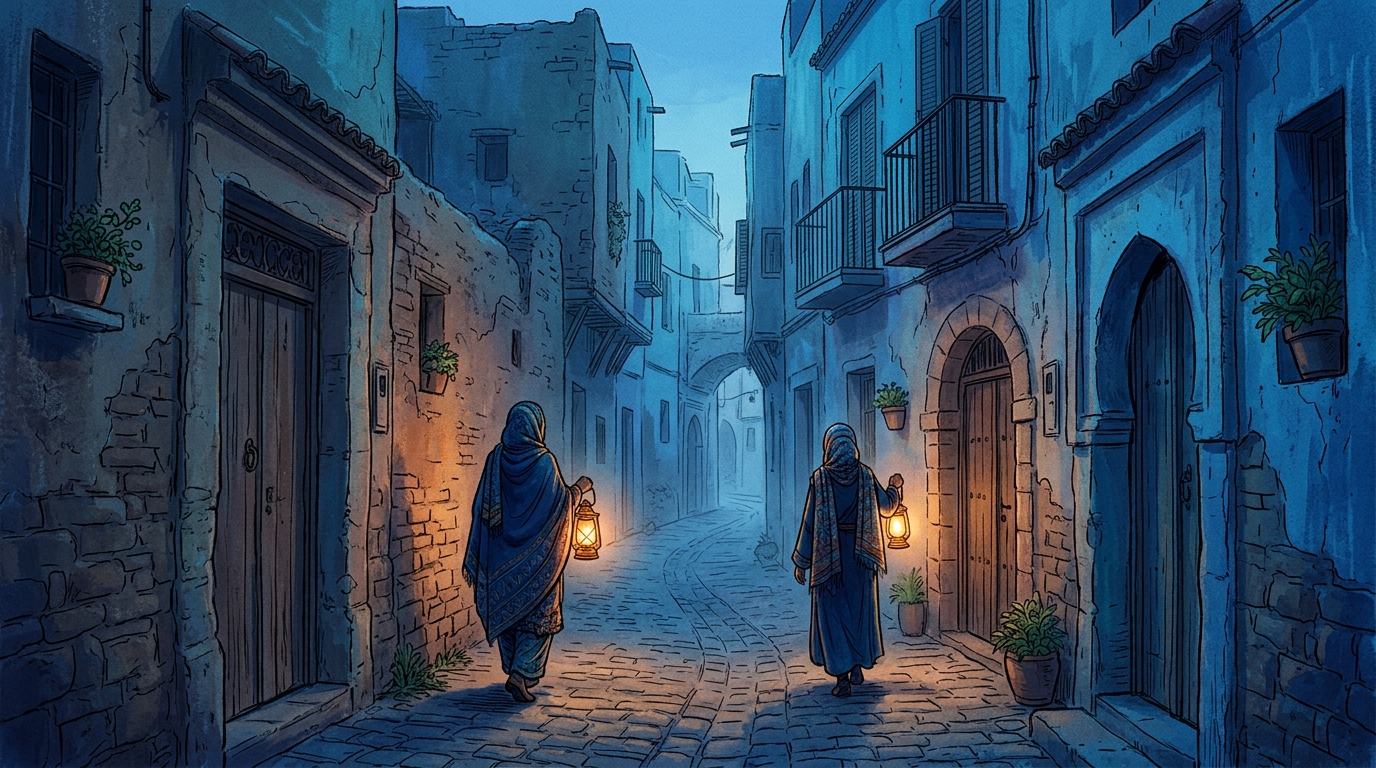
The nafar (also spelled neffar, from an Arabic root meaning "horn" or "trumpet") is Morocco's traditional pre-dawn town crier of Ramadan. Dressed in a jellaba, a red fez-style cap or turban, and often leather babouche slippers, the nafar sets out through the alleys of the old medina in the hours before dawn, sounding a long copper horn, and sometimes a drum, to wake residents in time to eat and drink before the fast begins at Fajr prayer.
Historically, the nafar's round was done in two passes: an earlier one to alert women to start preparing suhoor, the pre-dawn meal, and a second, later pass to wake the rest of the household before the meal window closed. Because the job depends on trust and a good ear for timing, families traditionally chose nafars known in the neighborhood for honesty and reliability, since an entire street's fast depended on his rounds. Suhoor itself is lighter and simpler than the evening ftour: Moroccan households typically eat yogurt, a light barley soup, bread, olives and dates, alongside milk or water, food chosen to sustain the body through a long day of fasting rather than to impress. The nafar's horn, in that sense, was never just decorative folklore; it was a practical, community-run alarm system for a meal with a hard deadline, in an era before any household could simply set a phone to ring at a precise hour.
The custom is documented most strongly in Fez, where the trumpet instrument is said to have been formally introduced under the Marinid sultan Abu Inan in the 14th century, who built towers for official trumpeters, including one still standing beside the Al-Qarawiyyin Mosque known as the Naffara Tower. A separate popular story credits a Saadian-era princess with commissioning nafars to wake worshippers after she is said to have broken her fast by accident, though most sources treat this as folklore layered onto a much older civic practice rather than settled history.
A tradition that is fading, city by city
The nafar profession has declined sharply over the past few decades. Alarm clocks, mobile phones and the television and radio programming that now marks Ramadan's rhythms have made the wake-up call less essential in most Moroccan cities, and the role has all but disappeared from newer urban neighborhoods built since the mid-20th century. Moroccan researchers and journalists who have tracked the custom describe it as endangered, kept alive today mainly by a handful of committed individuals working for modest, voluntary payment from the households on their route.
Where it survives, it survives specifically in the old medinas, above all in Fez, and to a lesser extent in cities like Marrakech and Tangier, where narrow pedestrian alleyways and a strong sense of neighborhood identity have helped the tradition hang on. The nafar remains a seasonal profession in the truest sense: the role exists only for the month of Ramadan and stops the moment Eid al-Fitr is declared, after which the same men return to their ordinary jobs for the rest of the year.
In 2025 the tradition found an unexpected new chapter when a woman from Tangier, going by the nickname "merdiyet mamaha" (roughly, "the one her mother approves of"), began performing rounds as Morocco's first documented female nafar, sharing videos of her calls on social media. The move drew a mixed reaction: some Moroccans welcomed the fresh energy she brought to a fading custom, while others argued the role should remain restricted to men, a small but telling sign that even a near-extinct tradition can still spark real debate about who gets to carry it forward.

The taste of a Moroccan Ramadan: harira, chebakia and more
If the nafar sets the day's rhythm before dawn, the ftour table (Morocco's word for the iftar meal that breaks the fast) sets it at dusk. The meal almost always opens with dates and a glass of milk or water, a quick source of energy after a full day of fasting, before the table fills with harira, a thick, tomato-based soup simmered with lentils, chickpeas, celery, cilantro and small pieces of beef, considered Morocco's signature Ramadan dish. Harira is so tied to the month that it typically disappears from home cooking again once Eid al-Fitr arrives.
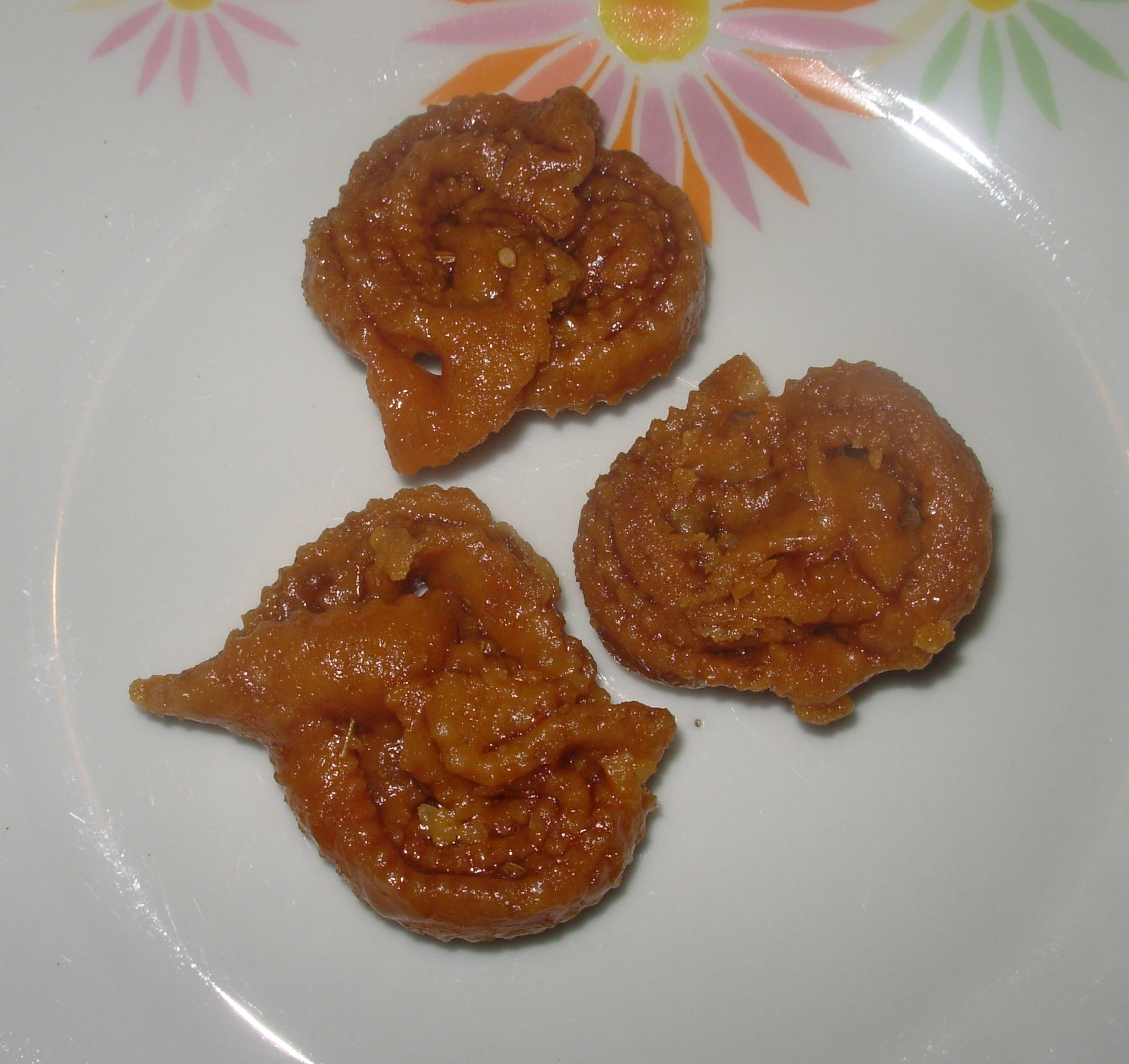
Alongside the soup comes a spread of sweets and breads built for exactly this meal: chebakia, flower-shaped pastries deep-fried and soaked in honey and sesame seeds, sellou, a dense roasted mixture of toasted flour, almonds and sesame, and msemen and beghrir, Morocco's layered flatbread and spongy semolina pancake, both served with butter and honey. Hard-boiled eggs and dates round out a table designed to replenish the body quickly after a long, hot day without fasting food or water.
In several cities, the exact moment the fast may be broken is still announced publicly rather than left to a phone app: a siren known as the zowaka sounds in many neighborhoods, while in some cities, including parts of the north, a ceremonial cannon shot marks the moment of iftar, a practice with roots in older Islamic capitals that Morocco has kept alive in a handful of places to this day.
Laylat al-Qadr and the sacred nights of Ramadan
Beyond the daily rhythm of suhoor and ftour, Ramadan in Morocco carries a deeper spiritual current in its final ten nights, among which Laylat al-Qadr, the Night of Power, is considered the holiest of the entire Islamic calendar. Morocco widely observes it on the 27th night of Ramadan, though Islamic tradition holds that its exact date is intentionally left uncertain among the last ten odd-numbered nights, encouraging devotion throughout that whole stretch rather than on a single fixed evening.
On this night, mosques across the country fill for extended prayers that often last until dawn, and many families echo the atmosphere at home: homes are perfumed with incense, the Quran is recited at length, and worshippers seek out a night the Quran itself describes as "better than a thousand months."
The night also carries a lighter, family-facing custom in many households: children who are fasting for the very first time are sometimes dressed up and celebrated around this point in the month, a small rite of passage that marks their entry into adult religious practice and gives Ramadan's most solemn night a moment of communal, generational celebration as well.
Why the nafar still matters
It would be easy to file the nafar away as a quaint relic, but Moroccan writers and cultural researchers who have documented the tradition tend to frame it differently: as a living reminder of how communities organized shared religious life before technology took over that role. The nafar's horn call was never just a wake-up alarm; it was a signal that bound an entire neighborhood to the same rhythm, the same meal time, the same act of collective devotion, delivered by a real person walking the same streets his listeners lived on.
That is also why its disappearance is treated as a genuine cultural loss rather than simple modernization. Journalists covering the custom in recent years have described actively "chasing" the tradition before it vanishes, interviewing the dwindling number of practicing nafars and documenting their routes, instruments and family histories in the role. Some of these nafars continue for minimal or symbolic payment, motivated less by income than by a sense of duty to a craft passed down, in some families, across generations.
For visitors to Fez during Ramadan today, hearing the nafar's horn echo through the medina before dawn remains one of the most distinctive, least commercialized cultural experiences left in Morocco: a sound that has called people to the table for centuries, and that, for now, a small number of dedicated men and at least one woman are still determined to keep alive.
The nafar within Morocco's wider Ramadan calendar
Moroccan media coverage of the nafar has itself become part of how the tradition survives. Reporters and documentary teams return to Fez's medina nearly every Ramadan to interview the remaining practitioners, often elderly men who inherited the horn and the route from a father or uncle, turning what used to be a purely oral, neighborhood-bound craft into something now also preserved on video and in print for a wider, even international, audience. Whether that documentation is enough to keep the role itself alive for another generation, or whether the nafar ultimately becomes a memory recorded rather than a practice performed, remains an open question that each Ramadan answers a little further.
The nafar's nightly rounds are only one thread in a month that reorganizes daily life across Morocco. Shops and offices commonly shift their hours to open later and close later in the evening, streets that are quiet in the afternoon heat fill again after ftour, and cafes and pastry shops extend deep into the night to serve families who socialize long after the fast has been broken. The unhurried, communal pace of Ramadan evenings is, for many Moroccans, as central to the month's identity as the fasting itself.
That broader rhythm is exactly what the nafar was built to bookend: a night defined by family, food and unhurried togetherness, closed off by a horn call reminding everyone that the cycle is about to begin again before sunrise. Even as the role fades from most cities, the values behind it, communal responsibility, a shared meal schedule, and a sense that the whole neighborhood observes the month together, remain very much intact across Morocco today.
Frequently asked
What is a nafar in Morocco?
The nafar, also called neffar, is a traditional pre-dawn town crier who walks the streets of old Moroccan medinas during Ramadan, playing a long horn (and sometimes a drum) to wake residents in time for suhoor, the meal eaten before the day's fast begins.
Is the nafar tradition still practiced today?
Yes, but it has declined sharply. Alarm clocks and phones have made the role largely unnecessary in most cities, and the nafar survives mainly in the old medinas of Fez, and to a lesser extent Marrakech and Tangier, kept alive by a small number of dedicated individuals.
Where did the nafar tradition in Fez come from?
The trumpet used by nafars is linked to towers built for official trumpeters in Fez under the 14th-century Marinid sultan Abu Inan, including the Naffara Tower still standing near the Al-Qarawiyyin Mosque. A popular legend also credits a Saadian-era princess with the custom, though this is generally treated as folklore rather than verified history.
Is the nafar a paid profession?
It is typically a seasonal, informal role rather than a formal job. Nafars traditionally receive small voluntary payments or gifts from households on their route, active only during the month of Ramadan and stopping once Eid al-Fitr is announced.
Has a woman ever performed the nafar role?
Yes. In 2025, a woman from Tangier became Morocco's first documented female nafar, sharing her rounds on social media. Her appearance sparked debate, with some Moroccans welcoming the revival energy and others arguing the role should remain male-only.
What food is eaten to break the fast (iftar) in Morocco?
A Moroccan iftar, called ftour, typically opens with dates and milk or water, followed by harira soup, chebakia (honey-soaked sesame pastries), sellou, and flatbreads like msemen and beghrir served with butter and honey.
Why is harira soup associated with Ramadan in Morocco?
Harira, a tomato-based soup with lentils, chickpeas and beef, is Morocco's signature Ramadan dish, eaten to break the fast almost every evening of the month. It is so closely tied to Ramadan that most households stop making it once Eid al-Fitr begins.
What is the cannon-fire or siren tradition at iftar?
In several Moroccan cities, the moment to break the fast is announced publicly: many neighborhoods use a siren known as the zowaka, while some cities mark iftar with a ceremonial cannon shot, an older tradition still preserved in a handful of places.
What is Laylat al-Qadr and when is it observed in Morocco?
Laylat al-Qadr, the Night of Power, is considered the holiest night of the Islamic calendar and is widely observed in Morocco on the 27th night of Ramadan, marked by extended mosque prayers, home recitation of the Quran, and incense, though its exact date is traditionally uncertain within the last ten nights of the month.
Do Moroccan children celebrate their first Ramadan fast?
Yes. Around the sacred final nights of Ramadan, children who have completed their first fast are sometimes dressed up and celebrated by their families, a small rite of passage marking their entry into adult religious practice.
- Morocco World News — Chasing Dawn Before It Disappears: Morocco's Endangered Ramadan 'Neffar' ↗
- Morocco World News — Breaking Tradition or Bringing Joy? Morocco's First Female Neffar ↗
- Morocco World News — Ramadan in Islam: Traditions Across Muslim Countries and Life in Morocco ↗
- Wikipedia — Shebakia ↗
- Morocco World News — Nafar Calls and Tebbal Rhythms Keep Moroccan Ramadan Traditions Alive ↗
- Shafaqna English — Morocco: Nafar, a seasonal profession during Ramadhan ↗
Video via official YouTube embeds; photos via Wikimedia Commons under their stated licenses. All rights belong to the respective owners; 212 Daily claims no ownership.