Visiting Morocco During Ramadan 2026
When Is Ramadan 2026?
Ramadan in 2026 is expected to begin around February 18 and end about March 19, with the festival of Eid al-Fitr following. Because the Islamic calendar is lunar and the start depends on the official sighting of the new moon, the exact dates can shift by a day, so confirm closer to the time.
Ramadan is the ninth month of the Islamic calendar and the holiest period of the year, when Muslims fast from dawn (suhoor, the pre-dawn meal) until sunset (iftar, the breaking of the fast). Understanding this rhythm is the key to travelling well during the month.
What to Expect During the Day
Daytime takes on a slower, more subdued pace. Many locals are fasting, abstaining from food, drink and smoking during daylight, so energy levels dip, especially in the afternoon. Some shops, cafes and restaurants reduce hours or close until sunset, particularly outside major tourist areas.
Tourist sites, major attractions, hotels and riads generally remain open and serve food to non-fasting guests. In big cities like Marrakech, more is available than in rural areas. The streets are quietest in the late afternoon as people rest and prepare for iftar.
The Magic of the Evenings
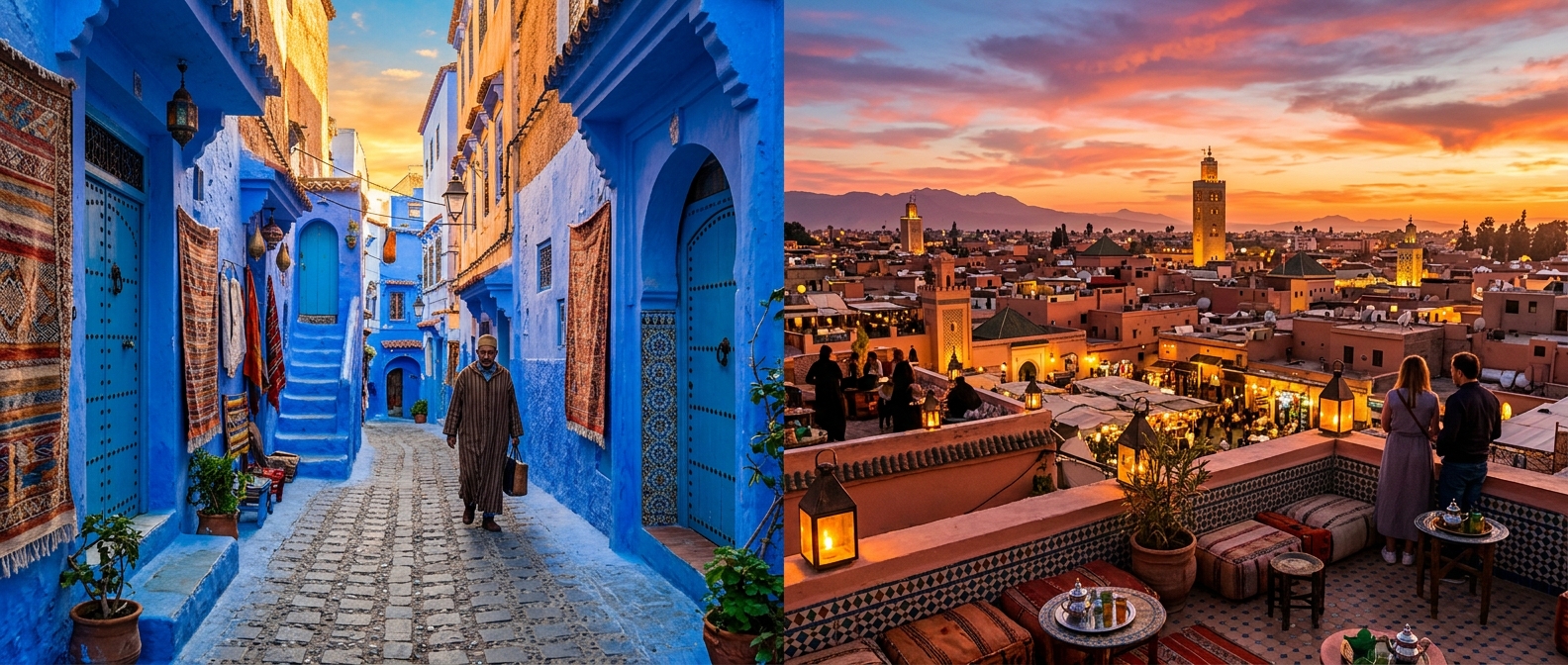
After sunset, the atmosphere transforms. The breaking of the fast (iftar) is a joyful communal occasion, traditionally starting with dates, milk, harira soup, chebakia pastries and sweet treats. Streets, cafes and markets come alive late into the night, often livelier than usual.
Evenings during Ramadan can be a wonderful time to experience Moroccan hospitality, family warmth and special foods. Being invited to share an iftar is a real privilege. Night markets, music and a festive buzz make the post-sunset hours a highlight for respectful visitors.
Etiquette and Respect
The most important guidance is to be respectful of those fasting. Avoid eating, drinking or smoking conspicuously in public during daylight; it is polite to do so discreetly or in designated tourist areas, hotels and your accommodation. This small courtesy is greatly appreciated.
Dress modestly, be patient with slower service and reduced hours, and keep noise down near prayer times. There is no expectation for non-Muslim tourists to fast, but showing awareness and consideration goes a long way and often deepens the warmth of your interactions with locals.
Should You Travel During Ramadan?
Travelling during Ramadan has both trade-offs and rewards. On the downside, some daytime services are limited, opening hours are unpredictable, and the pace is slower. On the upside, you witness an authentic and deeply meaningful side of Moroccan life, evenings are festive, and tourist sites are often less crowded.
For first-time visitors who want maximum convenience, travelling outside Ramadan may be simpler. But for those interested in culture and willing to adapt, it can be a uniquely rewarding time. Plan your meals, carry snacks and water discreetly, and embrace the rhythm rather than fighting it.
Practical Tips
Stay in a riad or hotel that serves meals, so you are never caught out at midday. Eat lunch at tourist-oriented restaurants that remain open, and stock some snacks for travel days. Plan sightseeing for the morning, when people have more energy, and rest in the afternoon like the locals.
Avoid scheduling tight itineraries that depend on shops or transport running normally, and confirm opening hours in advance. Towards the end of Ramadan, expect the Eid al-Fitr holiday, when many businesses close for celebrations, so plan around it. Above all, approach the month with curiosity and respect.
| Aspect | What to Expect |
|---|---|
| Expected dates | ~February 18 to March 19, 2026 (moon-dependent) |
| Daytime | Slower pace, some closures, fasting locals |
| Evenings | Festive iftar, lively streets and markets |
| Tourist sites | Generally open; hotels and riads serve food |
| Visitor etiquette | Eat/drink discreetly in daylight, dress modestly |
Ramadan 2026 Travel Snapshot
FAQ
Do tourists have to fast during Ramadan in Morocco?
No, non-Muslim tourists are not expected to fast. However, it is respectful to avoid eating, drinking and smoking conspicuously in public during daylight hours. Hotels, riads and tourist restaurants serve food throughout the day, so you can eat discreetly without difficulty.
Will restaurants and attractions be open during Ramadan?
Most major tourist attractions, hotels and tourist-oriented restaurants stay open, though some local cafes and shops reduce hours or close until sunset. In big cities like Marrakech more is available than in rural areas. Confirm opening times in advance and expect a slower daytime pace.
Is Ramadan a good or bad time to visit Morocco?
It depends on your priorities. Daytime services are more limited and the pace is slower, which can frustrate convenience-focused travellers. But evenings are festive, sites are less crowded, and you experience an authentic cultural moment. For curious, flexible travellers it can be uniquely rewarding.
Loved this? Useful? React below — your feedback helps other readers.