Netherlands Eliminated: Inside the Dutch Collapse Against Morocco and the Post-Mortem That Has Oranje in Crisis
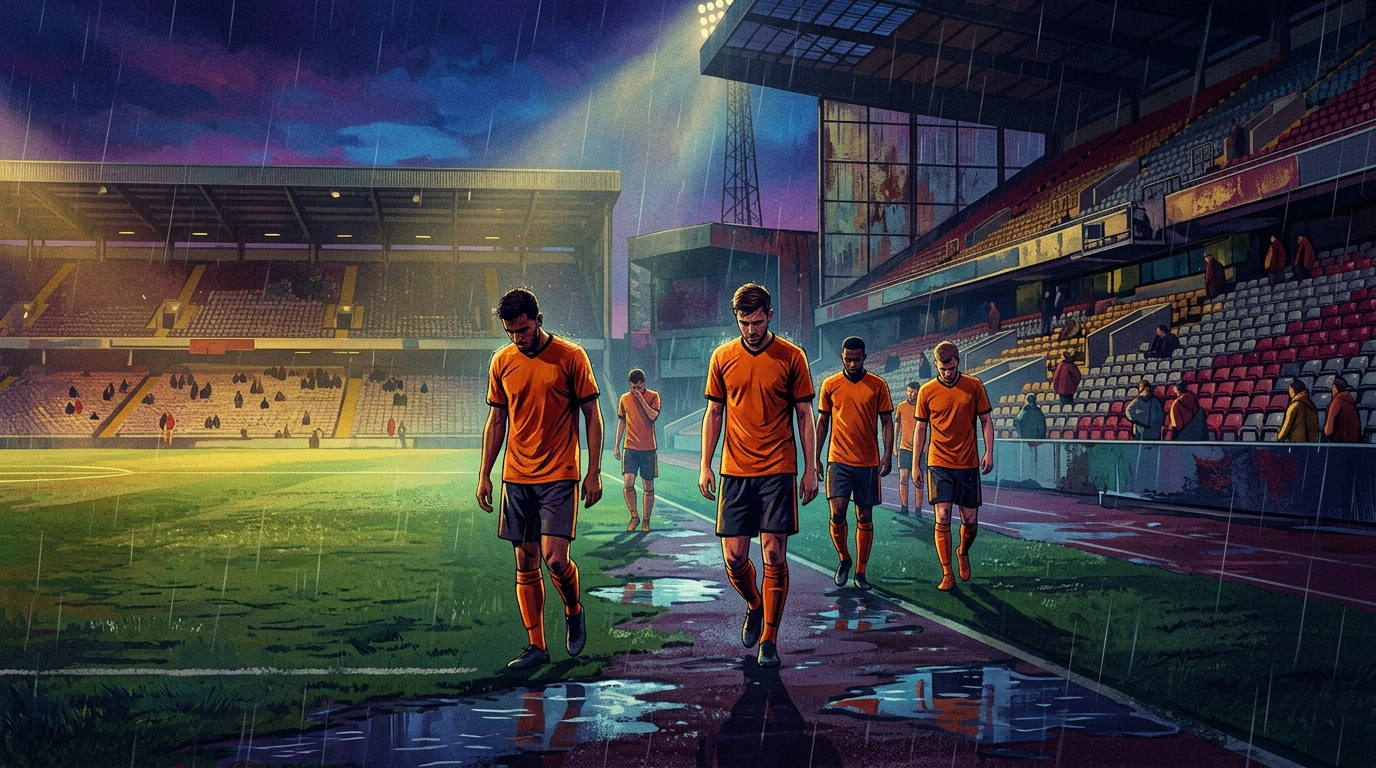
The Earliest Exit in Dutch World Cup History
There are defeats that sting and then there are defeats that rearrange a footballing nation's sense of itself. What happened to the Netherlands against Morocco on June 29, 2026, belongs firmly in the second category. A team that had walked through the group stage as one of the most fluent attacking sides in the competition, a team led by Virgil van Dijk and built around Liverpool's Cody Gakpo and Ryan Gravenberch, exited the World Cup at the Round of 32. It is the earliest stage at which the Netherlands have ever been knocked out of a World Cup, a statistical full stop that no amount of context can soften.
The bare scoreline reads Netherlands 1-1 Morocco, Morocco winning 3-2 on penalties. But the bare scoreline does what scorelines always do at moments like this: it flattens a story that was anything but flat. For 120 minutes the Dutch were second best in almost every meaningful department. They were out-run, out-thought and frequently out-fought by a Morocco side that pressed higher, moved the ball quicker and looked far more like a team that believed it belonged in the latter stages of a World Cup. That the match even reached a shootout owed more to the woodwork, to a string of saves from Bart Verbruggen, and to last-ditch defending from Van Dijk and Jan Paul van Hecke than it did to anything resembling Dutch control.
When Ismael Saibari finally rolled the decisive penalty past Verbruggen, the cameras found the Oranje bench frozen in disbelief. Ronald Koeman stood with his hands on his hips, staring at a pitch where his tournament, and quite possibly his international management career, had just ended. Within minutes the recriminations had begun. By the time the squad reached the mixed zone, the story had already curdled from heartbreak into inquest. This was not merely a loss. In the Dutch imagination, it was a betrayal of identity, and the search for someone to blame started before the players had even left the field.
How the Night Unfolded
Koeman had spent the build-up insisting the tie had come too early. "It's a big thing for this game to take place now because we are both teams that ought to go further than this stage," he told reporters before kick-off, a line that read at the time as respectful and in hindsight as faintly ominous. He clearly feared Morocco, and he set up to reflect that fear. The Netherlands lined up with a back five and a deep block, conceding territory and the ball to an opponent they had spent the week describing as one of the best teams left in the draw.
The plan, such as it was, invited pressure, and pressure duly arrived. Morocco grew into the game almost immediately and controlled most of the first half. They cut through the Dutch midfield with a regularity that should have alarmed Koeman long before the interval, and only fine goalkeeping from Verbruggen and a series of emergency interventions from Van Dijk and Van Hecke kept the scoreline goalless. The Netherlands, normally a side that imposes itself, were reduced to chasing shadows and clearing their lines. An attacking team had been turned into a defensive one, and it did not suit them.
The eerie thing about that opening period was how comfortable Morocco looked doing it. There was no nervous feeling-out process, no sense of an underdog trying to weather an early Dutch storm before daring to push forward. The Atlas Lions simply took the ball and started dictating, as though the script had been handed to them and they had memorised every line. Each time a Dutch player won possession, the options ahead of him were limited and the press behind him was immediate, and the ball came straight back to Morocco. For a side that had bullied Sweden and Tunisia only days before, the Netherlands looked oddly powerless, unsure whether they were supposed to be containing the game or trying to win it.
The decisive tactical moment of normal time arrived not from a substitution but from a hydration break in the second half. Koeman used the stoppage to gather his players, reorganise and, crucially, to introduce fresh attacking intent. Teun Koopmeiners and Wout Weghorst were thrown on in a bid to wrestle back the initiative, and for one fleeting passage it worked. Weghorst won an aerial duel, the ball broke to Crysencio Summerville, and Summerville released Gakpo to finish emphatically. Against the run of play, the Netherlands led.
It was, in its way, a vindication of the hydration break as much as the personnel. Koeman had used those few minutes to recalibrate, and the immediate reward was a goal that ran entirely counter to the flow of the contest. That sequence is the one piece of evidence that will be wheeled out in his defence for months: proof that he could read a game and intervene to change it. The cruelty is that the same caution which made the break necessary also left his team with no margin for error once they had their nose in front. A side built to defend a lead can sometimes do it; a side improvising defence on a night it expected to attack is a different proposition entirely, and the next twenty minutes would expose exactly that.
Gakpo's Goal and the Weight It Carried
No account of this match is complete without acknowledging what Cody Gakpo carried onto the pitch. The Liverpool winger had suffered the loss of his son during pregnancy only days before the game, and he had chosen to stay with the squad and play rather than withdraw. When his shot hit the net to put the Netherlands ahead, he did not celebrate in any conventional sense. He fell to his knees with tears in his eyes, overwhelmed, and his teammates gathered around him in a circle of protection rather than the usual eruption of joy. In the stands, his parents wept too.
It was, by some distance, the most human moment of the night, a reminder that the men reduced afterwards to tactical abstractions and penalty statistics are carrying private weights the rest of us never see. Koeman and Van Dijk had both publicly praised the strength of Gakpo and his partner in the days before the match, and the muted, emotional nature of the goal celebration made sense to anyone who knew the background. For a few minutes it looked as though football might, just this once, write a kind story.
It did not. Sport rarely respects narrative neatness, and the goal that should have settled the Netherlands instead seemed to settle Morocco's resolve. The Atlas Lions did not crumble at falling behind. They pushed, probed and committed more bodies forward, sensing that a Dutch side that had spent the night defending was unlikely to suddenly start controlling possession with a lead to protect. The pressure built, the clock ran down, and the Netherlands retreated ever deeper toward an outcome that, on the balance of play, they had not earned.
Issa Diop's Equalizer: The Dagger in Stoppage Time
The cruelty, when it came, arrived through an unlikely source. Issa Diop, a central defender who had only joined the Morocco squad shortly before the tournament, rose in the first minute of stoppage time to head home the equalizer. A centre-back, up for one last set-piece, punishing a Dutch defence that had survived everything else only to be undone at the death. It was the kind of goal that turns a manager's caution from prudent into damning in the space of a single header.
The timing could hardly have been more brutal. The Netherlands had been seconds from a win that would have validated, however grudgingly, Koeman's defensive gamble. Instead, Diop's intervention dragged the match into extra time and, by extension, toward the penalty shootout that has haunted Dutch football for a generation. You could see the realisation ripple through the Oranje players in real time: the sense that they had let something slip that they would never get back.
Extra time produced more of the same pattern. Morocco remained the more dangerous, more aggressive side across the full 120 minutes, while the Netherlands clung on. Verbruggen made more saves. Van Dijk threw his body in front of more shots. The Dutch were not playing for a winning goal so much as surviving to a lottery they had every historical reason to dread. When the whistle blew for the end of extra time at 1-1, the only real surprise was that Morocco had not already put the tie to bed in open play.
If anything, the extra thirty minutes hardened a sense of inevitability about where this was heading. Once a team has spent the best part of two hours on the back foot, the prospect of a shootout starts to feel less like a fresh contest and more like the final, formal confirmation of a hierarchy already established. The Dutch players who had defended so doggedly now had to summon the composure to attack a single ball from twelve yards, against a goalkeeper their own manager had publicly admitted he feared. It is hard to imagine a less favourable psychological set-up, and the body language of the Oranje as they trudged toward the centre circle suggested they knew it too.
The Shootout, Blow by Blow
This was the Netherlands' tenth penalty shootout in their history, and by the time it was over it would be their eighth defeat in one. The numbers alone tell you how loaded the moment was for every Dutchman who stepped up to the spot. The pattern of the shootout mirrored the pattern of the match: Morocco composed and clinical at the decisive moments, the Netherlands brittle when it mattered most.
It was not a one-sided shootout in terms of misses. Morocco missed twice, with Neil El Aynaoui and captain Achraf Hakimi both failing to convert, which kept the Dutch alive far longer than the run of play suggested they deserved. But the Netherlands could not capitalise. Justin Kluivert missed. Quinten Timber missed. And with the shootout poised at 2-2, Crysencio Summerville stepped up for what should have been a routine kick and instead found Yassine Bounou.
Bounou, one of the great penalty goalkeepers of the modern game, guessed correctly and pushed Summerville's effort away with his left hand. It was the save that decided the tie. With the door flung open, Ismael Saibari, the PSV midfielder, stepped up to take the responsibility and buried the winner past Verbruggen. Morocco 3, Netherlands 2 on penalties. The Atlas Lions sprinted toward Bounou; the Dutch sank to the turf. A World Cup that had promised so much for the Oranje was over before the round of 16 had even begun.
The detail that Morocco missed two penalties and still won is the one that should keep Koeman awake. Hakimi, the captain and arguably Morocco's most decorated player, failed from the spot, as did El Aynaoui. A more clinical Dutch side would have buried that opportunity and progressed. Instead, the Netherlands could not punish the errors handed to them, converting only two of the kicks they took. In a shootout that the opposition twice tried to lose, the Netherlands found a way to lose it anyway. That is not the profile of a team undone by fine margins. It is the profile of a team that, when the pressure peaked, simply did not have the nerve its talent promised.
Summerville's Miss and the Save That Defined It
Every penalty shootout produces a face that the cameras return to again and again, and on this night it was Crysencio Summerville's. The miss will follow him, fairly or not, because it was the kick that swung the balance. At 2-2, with the pressure squarely on the taker, he struck it at a height and angle that allowed Bounou to make a strong save rather than a desperate one. It was not a wild miss. It was simply not good enough against a goalkeeper of Bounou's calibre, and against Bounou that margin is the difference between progress and elimination.
It is worth being honest about the unfairness of the spotlight here. Summerville had earlier been instrumental in the Dutch goal, winning the second ball that released Gakpo, and he had the courage to step up for a kick that several more experienced players might quietly have avoided. Penalty shootouts are a place where the brave get punished as often as the cowardly get spared. The miss does not define his tournament; it defines this single, scarring moment, and the distinction matters even if it offers cold comfort.
For Bounou, by contrast, the save was confirmation of a reputation built across years of high-stakes shootouts. Koeman had admitted before the match that facing Bounou in a shootout was a genuine concern, an acknowledgement that now reads as grimly prophetic. When you set up to defend for 120 minutes against a side with one of the best penalty goalkeepers on the planet, you are, whether you intend to or not, betting your tournament on a coin flip you have specific reason to believe is weighted against you. The Netherlands made that bet, and it came up tails.
What Went Wrong Tactically: Koeman's Five at the Back
The tactical post-mortem begins and ends with the decision to play five defenders. Koeman made the call deliberately, based on his read of Morocco's threat, and it shaped everything that followed. By dropping into a low block and ceding the ball, the Netherlands handed the initiative to a Moroccan side that thrives on precisely the kind of sustained possession and territorial control the Dutch invited them to enjoy. It was, in the most literal sense, playing to the opponent's strengths.
The deeper problem was philosophical. The Netherlands had topped a group with ten goals across three matches, scoring five against Sweden and three against Tunisia. This was a side whose strength was its forward play, its movement and its capacity to overwhelm opponents. To set such a team up to absorb pressure and counter sparingly was to amputate its best limb in the name of caution. Squawka's analysis put it bluntly, describing the approach as negativity that backfired, and the Goal player ratings reached the same verdict, framing the defeat as Koeman's cautious tactics rebounding on him.
There is a version of this game in which the gamble pays off. Had Diop not equalized in stoppage time, Koeman would have been hailed as the shrewd tactician who out-thought a dangerous opponent and ground out a result on a hostile night. He said as much himself afterward. But tactics are judged on outcomes, and the outcome here was that a defensive set-up surrendered control, invited a late equalizer, and funnelled the tie into the one scenario the Netherlands have failed in repeatedly. The plan did not just fail. It failed in the most predictable way available.
There is a counter-argument worth airing, because Koeman is not a fool and his reasoning was not baseless. Morocco are a genuinely excellent side, fresh from a 2022 semi-final run and stocked with players who operate at the highest club level. Setting up to neutralise their strengths rather than trading punches with them is a defensible instinct, and plenty of successful tournament football has been built on exactly that kind of pragmatism. The Italians have won World Cups by defending; so have others. The problem is not that pragmatism is illegitimate. The problem is that the Netherlands are not built for it, do not practise it as a default, and asked a squad of natural attackers to execute an unfamiliar plan under maximum pressure against an opponent perfectly suited to exploit it.
When you strip the decision down to its essentials, Koeman bet that his side could defend better than they could attack, against a team whose whole game is predicated on making you defend. He bet that a back five could hold for 120 minutes and, failing that, win a coin-flip shootout against one of the world's premier penalty goalkeepers. Every individual assumption in that chain was questionable, and the chain as a whole was fragile. It held for 89 minutes and then snapped. Tactics that depend on perfection across two hours, with no plan B if the lead slips, are not really tactics so much as hope wearing a tactical disguise.
Koeman Defends Himself: The Press Conference
Faced with a wall of criticism in the immediate aftermath, Koeman did not retreat an inch. He backed his defensive approach without qualification and made clear he would do exactly the same again. "I also know that if Morocco hadn't equalised with that late goal, there would be all sorts of compliments for me as the Dutch coach," he told reporters, "but now, probably, I'm going to be scolded for the fact that I chose five defenders, but once again, I believe it was necessary."
He went further, pushing back directly against the journalists in the room. "You will criticise me, and that's your right, but you watch football from the sidelines," he said. "I'm with the team. I knew what needed to be improved. This is how I improved it. And once again, if I had to do it again, I would have done exactly the same." It was defiance rather than reflection, a manager planting his flag rather than examining the wreckage.
Most pointedly, Koeman rejected the suggestion that his approach had been rooted in fear of Morocco. "It was not about being afraid. That's not what it was about at all. Why afraid? I mean, we had three strikers on the field," he said in what was described as a testy exchange. "This is about a better defensive position, not out of fear, but based on an analysis of the opposition, and we can keep discussing this until tomorrow evening." Whether that distinction between caution and fear convinced anyone in the room, or anyone watching at home in the Netherlands, is another matter entirely.
The Pundits Turn: Ibrahimovic and Henry Round on Koeman
If Koeman expected a sympathetic hearing from the game's elder statesmen, he did not get one. On Fox's coverage, Zlatan Ibrahimovic and Thierry Henry both rounded on the Dutch coach, holding him responsible for the performance and accusing him of abandoning the very thing that makes Dutch football Dutch. The criticism was not about a single substitution or a missed penalty. It was about identity.
Ibrahimovic's verdict was the one that travelled furthest. "This loss is on Koeman because I didn't recognize this Dutch team," he said. "He lost with an identity that is not the Dutch identity. And that makes me angry." Coming from a player not noted for his diplomacy, the anger was perhaps predictable, but the substance of the charge cut to something real. The Netherlands have spent half a century selling the world on Total Football, on the idea that they attack as an article of faith. To watch them sit in a low block and lose on penalties offended a sense of how this team is supposed to play.
Henry's critique aligned with Ibrahimovic's: a sense that the Dutch had set up not to win but to avoid losing, and had ended up doing neither. For a footballing culture that has historically prided itself on dictating terms, the optics of a passive, reactive Oranje were almost as painful as the elimination itself. The pundits were not merely scoring the result. They were mourning a style, and pinning its abandonment squarely on the man in the dugout.
What gave the punditry its bite was the credibility of the men delivering it. Ibrahimovic and Henry are not phone-in callers or hot-take merchants; they are decorated former players who have competed at the sharpest end of the international game and understand exactly what it costs to abandon a footballing principle for a result. When they say they did not recognise the Dutch team, they are speaking to something other observers felt but could not articulate as forcefully. The Netherlands have a brand, an inheritance, and watching it set aside for a low block was, to players raised on the romance of Dutch football, a small act of cultural vandalism. The result merely confirmed what the set-up had already implied: that this was not the Netherlands as the world expects them to be.
Van Dijk, Leadership and a Captain Out of Answers
Virgil van Dijk did about as much as a captain could on the night. He produced one of the match's key defensive interventions to deny Saibari in the 80th minute, earned a 7 out of 10 in the player ratings, and was, alongside Van Hecke, a significant reason Morocco did not win the tie inside 90 minutes. If the Netherlands needed a leader to throw himself in front of danger, Van Dijk answered the call repeatedly. The problem was that a captain reduced to heroic last-ditch defending is, by definition, a captain whose team has lost control of the game.
Van Dijk's broader role in this Dutch cycle is now an unavoidable subject. He is the spine of the team, its on-field authority, and at 34 his World Cup window is closing fast. This was, in all likelihood, his last realistic shot at the trophy that has eluded the Netherlands across their entire history. To exit at the Round of 32, with the captain forced into a night of damage limitation rather than command, is a deflating way for a player of his stature to bow out of a tournament he was supposed to anchor deep into July.
There is also the human dimension that he and Koeman both addressed in the build-up. Van Dijk publicly praised Gakpo and his partner for their strength in the wake of their personal tragedy, and the squad's protective response to Gakpo's goal spoke to a dressing room with genuine solidarity. That solidarity simply did not translate into results. Leadership and togetherness are necessary conditions for tournament success, but they are not sufficient ones, and the Netherlands have just had that lesson administered in the cruellest possible fashion.
The Missing Man: Xavi Simons and the Squad That Might Have Been
Any fair assessment of this Dutch campaign has to reckon with who was not there. Koeman named his 26-man roster on May 27 without Xavi Simons, the creative fulcrum who had been expected to be one of the Netherlands' most important players. Simons ruptured his anterior cruciate ligament in April, ending his tournament before it began and depriving Koeman of a player capable of unlocking exactly the kind of compact, well-organised defence Morocco presented.
It is tempting, and partly legitimate, to wonder whether a fit Simons changes the calculus. With a genuine playmaker to break lines, would Koeman have felt the need to set up so cautiously? Would the Netherlands have carried more threat in the moments when Morocco invited them onto the ball? These are unanswerable questions, but they belong in the conversation, because a coach's risk tolerance is partly a function of the tools at his disposal, and one of Koeman's sharpest tools was unavailable.
Even so, this remained a deep and talented squad. Memphis Depay, the nation's all-time leading scorer, was available. Gravenberch and Gakpo provided Liverpool quality. Verbruggen had a strong tournament in goal. The raw materials were there for a side that should, on paper, have been capable of going deep. That is precisely why the manner of the exit has landed so heavily. This was not a thin or transitional Netherlands team caught above its level. It was a serious squad that played beneath itself at the decisive moment, and the gap between expectation and reality is the engine driving the entire post-mortem.
The Group Stage That Flattered
Part of what makes the elimination so jarring is how convincing the Netherlands had looked only days earlier. In Group F, alongside Japan, Sweden and Tunisia, the Dutch topped the table with seven points. They drew their opener 2-2 with Japan, then dismantled Sweden 5-1 and beat Tunisia 3-1, racking up ten goals in three matches. By the metrics that fans tend to fixate on, goals scored and group position, they looked like genuine contenders.
But the group stage can be a deceptive mirror. Scoring freely against sides that come out to play is a different challenge from breaking down an organised, motivated knockout opponent that is happy to defend and counter. The very fluency that made the Netherlands so watchable in the group phase may have lulled everyone, Koeman included, into a false reading of where the team's real strengths and vulnerabilities lay. The 2-2 draw with Japan in particular hinted at defensive fragility that the goal-laden wins against Sweden and Tunisia papered over.
Knockout football strips away that comfort. The first time the Netherlands met an opponent who refused to trade blows and instead committed to taking the game to them, the Dutch had no answer and, worse, no apparent intention of trying to find one. The group stage built a picture of a high-scoring, dangerous side. The Round of 32 revealed a team that, the moment it stopped dominating, did not know how to win. That dissonance is the story of the Dutch World Cup in a sentence.
Morocco Were Simply Better
Lost in the Dutch self-flagellation is a truth that deserves stating plainly: Morocco won because they were the better team. This was not a smash-and-grab or a fortunate ambush. Across 120 minutes the Atlas Lions dominated possession, sliced through the Dutch defence repeatedly, and created the clearer, more numerous chances. The Fox Sports takeaways were unambiguous that the better team prevailed, describing Morocco as far more dangerous and aggressive than an atypically defensive Oranje.
Morocco's pedigree at this level is no accident. This is a nation that announced itself with a run to the semi-finals at the 2022 World Cup, the first African side ever to reach that stage, and the 2026 vintage carried that same blend of organisation, technical quality and tournament nous. In Bounou they have a goalkeeper made for these nights. In Hakimi they have a captain of genuine world-class. And in the likes of Saibari and Diop they have squad players capable of producing the decisive moments when the headline names falter, as Hakimi did from the spot.
For Morocco, the reward is a Round of 16 tie against co-hosts Canada in Houston, with the tournament opening up invitingly in front of them. For the neutral, the result was confirmation that the gap between the traditional European powers and the best of the rest has narrowed to the point of disappearing. The Netherlands did not lose to a minnow that got lucky. They lost to a heavyweight that has been climbing the global ladder for years and has now knocked a fancied European side out of a World Cup on merit.
Koeman Under Pressure: Is His Job Safe?
The most immediate question hanging over Dutch football is whether Ronald Koeman will still be the national team coach by the time the next campaign begins. His contract was structured to run until and including the 2026 World Cup, which means his deal is, in effect, now expiring at exactly the moment his stewardship is under its harshest scrutiny. The decision about what comes next is not a formality; it is genuinely open.
Koeman himself had flagged before the tournament that his future would hinge on more than results. He has spoken about two factors governing whether he stays on toward Euro 2028: his personal circumstances, including how things go with his wife Bartina, and how the World Cup itself proceeded, balanced against what the KNVB wants and what he himself wants. With the World Cup having ended in the earliest exit in Dutch history, at least one of those variables has resolved in the worst possible direction, and he said afterward that he would reflect on his future before deciding.
The case for the defence is that Koeman remains a respected figure who delivered a comfortable qualification and a group-topping campaign, and that a single shootout, decided by fine margins against a semi-finalist-calibre opponent, is a thin basis for dismissal. The case for the prosecution is louder: that he abandoned the Dutch footballing identity, that he picked a set-up that surrendered the initiative, and that he then doubled down on it in the press conference rather than showing any contrition. When figures of Ibrahimovic and Henry's standing are publicly questioning your philosophy, the political weather rarely favours the incumbent. Whatever Koeman decides, he will not get to decide it in peace.
There is also the matter of how the KNVB reads the room. A federation preparing to co-host Euro 2028 on home soil cannot afford to take a tournament into a partisan, expectant crowd with a coach whose mandate is already in tatters. Even if the governing body privately believes the Morocco defeat was unlucky, the optics of retaining a manager publicly accused of betraying the national style would be difficult to manage. Federations tend to act not only on results but on the mood around the team, and the mood around this Netherlands side curdled the instant Saibari scored. Koeman's defiance in the press conference may have been admirable on a human level, but a more politically attuned operator might have offered the contrition the moment demanded. By refusing to give an inch, he has made it easier, not harder, for the KNVB to contemplate a change.
The Golden Generation Question
Every few years the Netherlands produce a crop of players good enough to make the nation believe this might finally be the time, and every few years that belief is buried. The 2026 group, with Van Dijk, Gakpo, Gravenberch, Frenkie de Jong's generation and the talent coming through, was supposed to be one of those crops. The Round of 32 exit forces an uncomfortable reckoning with whether this golden generation has now, definitively, run out of road at the very tournament that matters most.
The brutal arithmetic of age is unforgiving. Van Dijk is 34 and unlikely to be a force at the 2030 World Cup. Depay, the all-time top scorer, is in the closing chapters of his international career. The window in which this specific core could realistically win a World Cup may well have just slammed shut in a shootout in North America. That is the kind of thought that turns a tournament defeat into something more existential, because it raises the possibility that the best chance has already been and gone.
The Netherlands' history is littered with golden generations that flattered to deceive. The teams of the 1970s lost two finals. The 2010 side lost a third. The 2014 and 2022 vintages were undone in the knockout rounds by penalties against South American opposition. Now the 2026 group has authored the earliest exit of them all. At some point a pattern this persistent stops being bad luck and starts being a question about the nation's ability to convert prodigious talent into the one trophy it has never won. That question now hangs over Dutch football more heavily than at any point in years.
What sharpens the anxiety is the absence of an obvious successor wave at the very top. The Netherlands will always produce technicians and full-backs and clever forwards, but world-class central defenders of Van Dijk's authority do not arrive on schedule, and goalscorers of Depay's longevity are rarer still. The pieces that made this generation special are precisely the ones hardest to replace. A nation can rebuild a midfield in a cycle or two; rebuilding leadership and a defensive spine of genuine elite quality can take a decade and a great deal of luck. The 2026 exit therefore lands not just as a missed opportunity for this group, but as the closing of a window that may not reopen on the same terms for a long time.
The Dutch Penalty Curse Strikes Again
For the Netherlands, the penalty shootout is not a neutral tiebreaker. It is a recurring nightmare with its own grim history. This defeat was their tenth World Cup-era shootout and their eighth loss, and it completed a hat-trick of consecutive World Cup exits decided from twelve yards. The Dutch went out on penalties in the 2014 semi-final against Argentina, again in the 2022 quarter-final against Argentina, and now in the 2026 Round of 32 against Morocco. Three tournaments in a row, three exits at the spot.
The wider ledger is just as bleak. The Netherlands sit at one win and three losses in World Cup shootouts. The lone victory came in 2014, when Louis van Gaal famously sent on substitute goalkeeper Tim Krul specifically for the shootout against Costa Rica, a piece of tactical theatre that worked spectacularly. But that triumph is the exception that throws the rest of the record into sharper relief. Even in 2014, the Dutch lost the very next shootout, failing to convert a single penalty against Argentina in the semi-final.
There is a cruel irony buried in the history. The Netherlands have lost three World Cup finals, in 1974, 1978 and 2010, but never one on penalties. Their shootout heartbreaks have all come earlier, in the quarter-finals and semi-finals, denying them even the chance to suffer on the grandest stage. The Morocco defeat extends that lineage and deepens it, because it pushes the penalty exit earlier than ever before. Whatever psychological residue accumulates from losing shootout after shootout, this Dutch group is now carrying a full tank of it, and there is no obvious way to drain it short of finally winning one when it counts.
The Dutch Media Verdict
Back home, the reaction was swift and unsparing. NL Times led with the framing that Oranje had crashed out of the World Cup after another penalty shootout heartbreak, situating the Morocco defeat squarely within the nation's long and painful history of spot-kick failures. The emphasis on another was pointed: this was not treated as a freak result but as the latest instalment in a familiar Dutch tragedy.
The tactical critique dominated the analysis pieces. Squawka's verdict that Koeman's negativity backfired captured the consensus, and Goal's player ratings hammered the same theme, framing Saibari's winner as the seal on a Dutch penalty collapse that flowed directly from cautious tactics. The throughline across the Dutch and international coverage was remarkably consistent: a talented team had been set up to fail by a manager who second-guessed his side's strengths, and the late equalizer that forced the shootout was the punishment for that caution rather than mere bad luck.
What distinguished the Dutch reaction from a routine post-defeat inquest was the emotional charge around identity. The criticism from Ibrahimovic and Henry resonated so loudly precisely because it echoed what many in the Netherlands were already feeling: that the team had betrayed an idea of itself. For a country whose entire football mythology is built on attacking philosophy, watching the national side defend for its life and still lose was a wound to something deeper than the FIFA rankings. The media verdict was not just that the Netherlands had lost a match. It was that they had lost it the wrong way.
Where the Netherlands Go From Here
The immediate horizon is bare. With the World Cup over before it really began for them, the Netherlands' next competitive focus turns to Euro 2028, which the nation will co-host alongside the United Kingdom and the Republic of Ireland. A home European Championship would, in normal circumstances, be a tantalising target, but it also raises the stakes on every decision taken in the coming months, starting with the identity of the coach who will lead the side into it.
The squad will inevitably evolve. The core that carried the 2026 hopes is ageing at its spine, and the cycle toward 2028 and then the 2030 World Cup will demand a refresh. Younger players will be blooded, the post-Van Dijk defensive structure will have to be built, and the return of Xavi Simons from his ACL injury, if it goes smoothly, would restore a creative dimension this tournament sorely lacked. The talent pipeline in Dutch football has rarely run dry; the perennial challenge is assembling it into a team that delivers when the knockout pressure arrives.
Above all, the Netherlands face a philosophical fork. They can interpret the Morocco defeat as confirmation that pragmatism in big knockout games is necessary and was merely unlucky, doubling down on Koeman's logic. Or they can read it as a warning that abandoning their attacking identity led them straight into the kind of grinding, low-event contest that the penalty gods have repeatedly turned against them. The direction they choose, and the man they choose to embody it, will define whether a home Euro in 2028 becomes a chance at redemption or another chapter in a story of glorious, frustrating near-misses.
The Bigger Picture for Dutch Football
Step back from the immediate grief and the Morocco defeat fits a broader pattern that should concern the KNVB. The Netherlands remain a tier-one talent producer, a country that exports elite players to every major league in Europe. What they have not been, for a long time now, is a tournament-winning nation. The last major trophy was the European Championship in 1988. Across nearly four decades since, a procession of gifted squads has come up short, often agonisingly, and the 2026 exit is the rawest reminder yet that producing players and winning tournaments are different disciplines.
The narrowing of the global game is part of the context. Morocco's rise, and their willingness to take the game to a traditional power and win, is emblematic of a World Cup landscape in which the old hierarchies no longer hold. On the same weekend, Paraguay knocked out Germany on penalties, another European heavyweight undone by a side that backed itself. The Netherlands are not alone in discovering that a famous footballing name guarantees nothing once the knockout rounds begin. The margins are thinner, the upsets more frequent, and the price of caution higher.
For the Netherlands specifically, the lesson may be that their best path forward runs through embracing rather than suppressing what makes them distinctive. The teams that have most threatened to end the trophy drought have generally been the ones that played with conviction and front-foot ambition. Whether the next era of Dutch football leans into that heritage or retreats further into pragmatism is the question this defeat has forced into the open. The earliest World Cup exit in their history is a low point, but low points have a way of forcing clarity. The Netherlands now have to decide, all over again, what kind of footballing nation they want to be.
A Tournament Over Before It Began
When the dust settles on World Cup 2026, the Netherlands' chapter will be one of the shortest and most chastening in the competition's recent memory. A group-topping side with ten goals and genuine ambitions exited at the first knockout hurdle, beaten by a better team on the balance of play and by the cruellest of margins on the scoreboard. Gakpo's tear-soaked goal, Diop's stoppage-time dagger, Bounou's save, Saibari's winner: the night had everything except a Dutch happy ending.
The recriminations will run for months. Koeman's future will be debated, his tactics dissected, his press-conference defiance replayed. The golden generation's failure to convert its promise will be mourned and analysed. The penalty curse will be invoked, as it always is, with a weary inevitability. And somewhere underneath all of it sits the simple, painful fact that the Netherlands were good enough to do far better than this and did not, when it mattered, find a way to prove it.
Morocco march on toward Canada and a tournament full of possibility. The Netherlands fly home to an inquest. That contrast, between a rising nation seizing its moment and a fancied one squandering its own, is the lasting image of this Round of 32 tie. For Dutch football, the work of answering how it came to this, and what must change before 2028, begins now. It begins, as these things so often do for the Netherlands, in the aftermath of a penalty shootout they were never quite able to win.
Frequently asked
Are the Netherlands out of the World Cup 2026?
Yes. The Netherlands were eliminated from World Cup 2026 on June 29, 2026, losing 3-2 on penalties to Morocco after a 1-1 draw in the Round of 32. It is the earliest stage at which the Dutch have ever exited a World Cup.
How did the Netherlands lose to Morocco?
The match finished 1-1 after extra time. Cody Gakpo put the Netherlands ahead in the second half, but Morocco's Issa Diop equalized with a header in stoppage time to force the shootout. Morocco then won the penalty shootout 3-2, with Yassine Bounou saving Crysencio Summerville's effort and Ismael Saibari scoring the decisive kick.
Who missed the penalty for the Netherlands?
Justin Kluivert and Quinten Timber both missed their penalties for the Netherlands, and Crysencio Summerville's effort was saved by Morocco goalkeeper Yassine Bounou with the shootout level at 2-2. That save proved decisive before Ismael Saibari converted Morocco's winner.
Who scored the winning penalty for Morocco?
Ismael Saibari, the PSV midfielder, scored the winning penalty to send Morocco through 3-2 on penalties and into the Round of 16, where they will face co-hosts Canada in Houston.
Is Ronald Koeman's job safe?
It is genuinely uncertain. Koeman's contract was set to run until and including the 2026 World Cup, so it is effectively expiring. He said he would reflect on his future after the elimination, and he had previously indicated his decision would depend on his personal circumstances, what the KNVB wants and what he himself wants. He faces heavy criticism for his defensive tactics.
What did Koeman say after the Netherlands' elimination?
Koeman defended his decision to play five defenders, saying it was necessary and that he would do exactly the same again. He told reporters, "You will criticise me, and that's your right, but you watch football from the sidelines." He also insisted the approach was based on analysis of Morocco, "not out of fear," pointing out the Netherlands had three strikers on the field.
Why were Koeman's tactics so heavily criticised?
Koeman set the Netherlands up with a back five and a deep block, ceding possession to Morocco. Critics argued this abandoned the Dutch attacking identity and invited the pressure that led to Diop's late equalizer. Squawka described it as negativity that backfired, while Zlatan Ibrahimovic and Thierry Henry publicly accused Koeman of betraying the Dutch footballing identity.
What did Zlatan Ibrahimovic say about Koeman?
Speaking on Fox's coverage, Ibrahimovic said, "This loss is on Koeman because I didn't recognize this Dutch team. He lost with an identity that is not the Dutch identity. And that makes me angry." Thierry Henry echoed the criticism of the Netherlands' overly cautious approach.
How did the Netherlands perform in the group stage?
The Netherlands topped Group F with seven points, drawing 2-2 with Japan, beating Sweden 5-1 and defeating Tunisia 3-1. They scored ten goals across the three group matches, which made the early knockout exit all the more shocking.
What is the Netherlands' record in World Cup penalty shootouts?
The Morocco defeat was the Netherlands' tenth shootout in their history and their eighth loss. In World Cup shootouts specifically their record is one win and three losses, with three consecutive World Cup exits on penalties: the 2014 semi-final against Argentina, the 2022 quarter-final against Argentina, and the 2026 Round of 32 against Morocco.
Why was Cody Gakpo's goal so emotional?
Gakpo had suffered the loss of his son during pregnancy only days before the match and chose to stay with the squad and play. When he scored, he fell to his knees in tears and was surrounded by teammates, while his parents were visibly emotional in the crowd. Both Koeman and Virgil van Dijk had publicly praised his strength.
Where do the Netherlands go from here?
With the World Cup over, the Netherlands' next major focus is Euro 2028, which they will co-host. Key decisions loom over Koeman's future, the renewal of an ageing squad built around the 34-year-old Van Dijk, and whether the team returns to its attacking identity. The return of Xavi Simons from an ACL injury could restore a missing creative dimension.