Moving to Morocco 2026: Complete Relocation Guide for Expats & Retirees
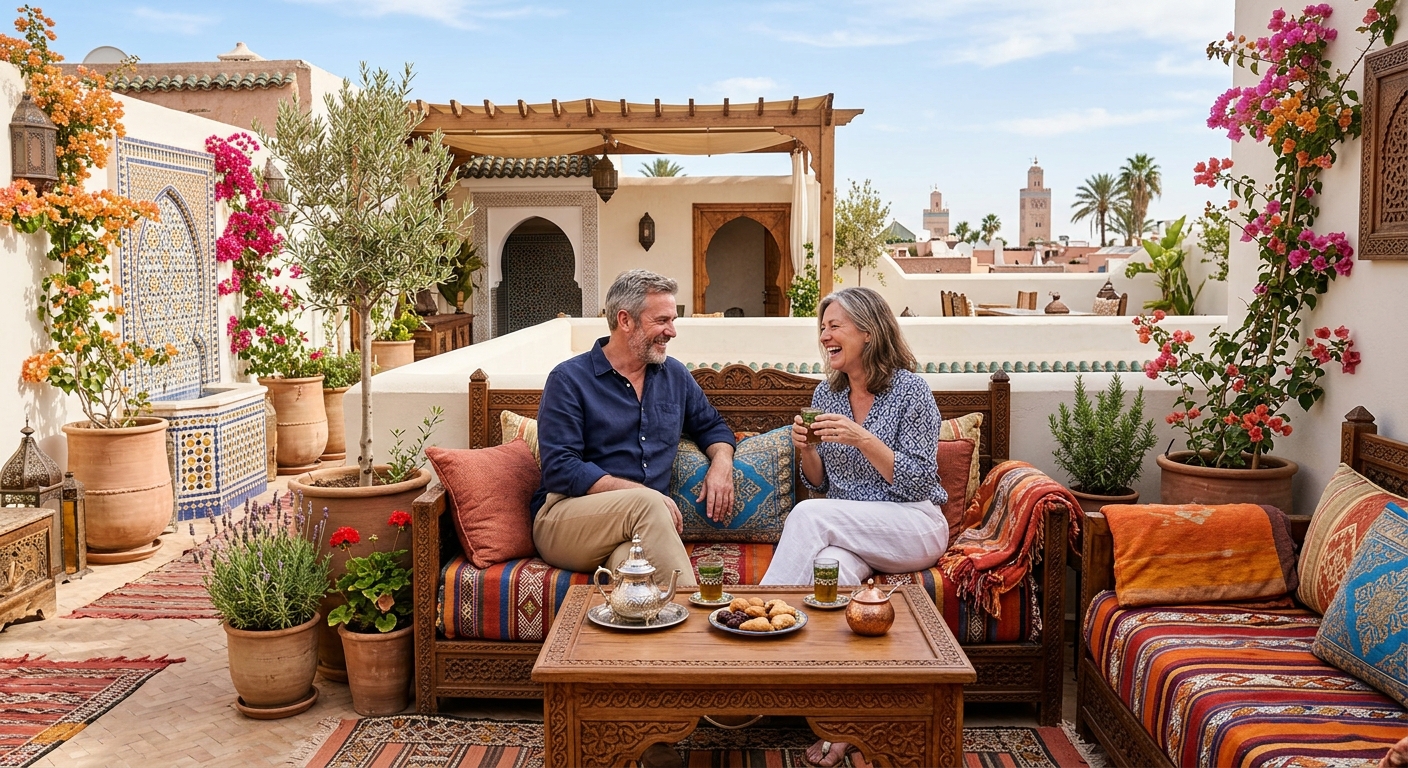
Why People Are Moving to Morocco
Morocco has steadily grown into one of the most attractive relocation destinations for Europeans and North Americans seeking a warmer climate and a lower cost of living without travelling to the other side of the world. Just a short flight from Western Europe and sharing a convenient GMT+1 time zone, it offers the affordability of a developing economy with surprisingly good infrastructure in its major cities.
The appeal is multifaceted. Retirees stretch their pensions far further than they could at home. Remote workers and entrepreneurs benefit from low overheads and a sunny lifestyle. Families are drawn to the safety, the warmth of Moroccan hospitality and the chance to raise children in a multilingual, multicultural environment where French, Arabic and increasingly English all play a role.
Morocco also offers extraordinary variety for such a compact country. You can settle in a buzzing modern city like Casablanca or Rabat, a romantic imperial city like Marrakech or Fez, a breezy Atlantic coastal town like Essaouira or Agadir, or a mountain retreat in the Atlas. This range means almost any lifestyle preference, from urban energy to seaside calm, can be accommodated within a few hours of one another.
Visas and Residency
Most Western nationals enter Morocco visa-free for 90 days. To stay longer, you apply for a residence permit, the carte de sejour, at the local prefecture or police station in your area of residence. This is the standard route for retirees and long-term expats and turns a tourist stay into legal residency.
The application typically requires proof of stable income or sufficient funds (such as pension statements or bank balances), a long-term lease or property ownership, passport photos, copies of your passport, and various administrative documents that may need to be translated and legalised. Morocco does not have a single streamlined retirement visa like some countries, so the carte de sejour is the workhorse permit, usually issued for one year and renewable.
Patience is essential. Moroccan bureaucracy can be slow and the exact documents requested can vary by location and over time, so it is wise to start the process well before your 90 days expire, keep multiple copies of everything, and consider using a local relocation agent or lawyer for a first application. Always confirm current requirements with a Moroccan consulate or the local prefecture, as rules evolve.
Cost of Living and Budgeting
The cost of living is Morocco's strongest selling point. A couple can live comfortably on roughly $1,500 to $2,500 per month, including rent, food, utilities, transport and leisure, with a frugal lifestyle costing considerably less and a near-luxury existence still coming in well below European norms. Single expats and retirees can live well on even less.
Housing is affordable by Western standards, though prices in prime expat areas of Marrakech, Casablanca and the coast have risen. Long-term unfurnished rentals negotiated locally are far cheaper than short-term furnished lets aimed at tourists. Buying property is possible for foreigners (with some restrictions on agricultural land), and many expats eventually purchase a riad or apartment.
Day-to-day costs are low: fresh produce from local souks, abundant cheap seafood and produce, inexpensive domestic help, cheap public transport and modest utility bills all keep monthly outgoings down. The main budget pressures come from imported Western goods, cars, alcohol (which is taxed and restricted) and private international schooling for families, all of which can be significantly more expensive.
Healthcare in Morocco
Morocco has a two-tier healthcare system: a public sector that is inexpensive but often overstretched and under-resourced, and a private sector that offers good-quality care at prices far below Europe and North America. Most expats and retirees rely on private clinics and hospitals in the major cities, where standards, equipment and English- or French-speaking doctors are reliable.
Private healthcare is affordable enough that some expats pay out of pocket for routine care, but comprehensive private health insurance is strongly recommended, particularly for retirees and anyone with ongoing conditions. International health insurance plans designed for expats, or local Moroccan private insurance, both exist and are worth arranging before or soon after arrival.
The best private medical facilities are concentrated in Casablanca, Rabat and Marrakech, so expats with significant health needs often base themselves near these cities. Pharmacies are widespread, well stocked and staffed by knowledgeable pharmacists who can advise on minor ailments, and many medications are available cheaply and without the prescriptions required elsewhere. For serious or specialist treatment, some expats still travel to Europe.
Banking, Money and Daily Practicalities
Opening a Moroccan bank account is possible for residents and helps with paying rent, bills and the residency process. You will typically need your residence permit, proof of address and identification, though some banks open accounts for non-residents under certain conditions. The Moroccan dirham is a closed currency, meaning there are limits on taking it in or out of the country, so plan around that.
Cash remains king in daily life, especially in markets, taxis and smaller businesses, even as card payment grows in cities and larger establishments. ATMs are widespread in urban areas. Many expats maintain a foreign account alongside a local one and transfer funds as needed, using international transfer services to manage exchange rates.
On the practical front, learning some French goes a long way, as it remains the language of business and administration, while Darija (Moroccan Arabic) wins hearts at the local level. Internet and mobile coverage are good in cities. Importing a vehicle or shipping household goods involves customs procedures worth researching in advance, and many expats find it simpler to buy locally.
Choosing Where to Live and Settling In
Marrakech is the most established expat hub, with a large international community, abundant services and a romantic lifestyle, though summers are intensely hot. Rabat appeals to those wanting a calm, clean, well-run capital with good infrastructure and a coastal climate. Casablanca suits professionals who want a true metropolis with the best healthcare and transport links.
For sun-seekers and retirees, the coast is popular: Essaouira offers a cool, breezy, artsy lifestyle; Agadir provides a resort-town feel with a mild climate and modern amenities; and Tangier in the north blends a cosmopolitan, Mediterranean-influenced atmosphere with quick ferry links to Spain. Each has a distinct character and a different cost profile, so spending time in several before committing pays off.
Successful relocation comes down to integration and patience. Learning some of the language, embracing local customs, building relationships with neighbours and being flexible with bureaucracy transform the experience. Morocco rewards those who arrive with humility and curiosity rather than expecting everything to work as it does at home. For many expats and retirees, the combination of affordability, climate, culture and warmth makes it one of the most rewarding moves they ever make.
| Topic | Detail |
|---|---|
| Initial entry | 90 days visa-free for most Western nationals |
| Long-stay permit | Carte de sejour (residence permit), renewable yearly |
| Monthly cost (couple) | Roughly $1,500 - $2,500 comfortable |
| Healthcare | Affordable private clinics; insurance recommended |
| Best expat cities | Marrakech, Rabat, Casablanca, Essaouira, Agadir, Tangier |
| Currency note | Dirham is closed; cash widely used |
Moving to Morocco at a glance
FAQ
How do I get residency in Morocco?
Most foreigners enter visa-free for 90 days, then apply for a carte de sejour (residence permit) at the local prefecture. You typically need proof of stable income or funds, a long-term lease or property, passport copies and photos. It is usually issued for one year and is renewable. Confirm current requirements with a consulate.
How much does it cost to live in Morocco as an expat?
A couple can live comfortably on roughly $1,500 to $2,500 per month including rent, food, utilities and leisure, while singles and retirees can live well on less. Costs rise with imported goods, cars, alcohol and international schooling, but day-to-day living and housing are far cheaper than in Europe or North America.
Is healthcare good in Morocco?
Private healthcare in major cities like Casablanca, Rabat and Marrakech is good quality and affordable, with well-trained, often multilingual doctors. The public system is cheap but overstretched. Most expats use private clinics and are strongly advised to hold comprehensive private health insurance, especially retirees.
Can foreigners buy property in Morocco?
Yes, foreigners can buy most types of property in Morocco, including apartments and riads, with the main restriction being on agricultural land. Many expats rent first to learn the market, then purchase. Using a reputable local notary (adoul or notaire) and lawyer is important to navigate the process safely.
Do I need to speak Arabic to live in Morocco?
No, but it helps enormously. French is widely used in business and administration, so functional French covers most needs in cities. Learning some Darija (Moroccan Arabic) greatly improves daily life and relationships with locals. English is increasingly common in tourist and business circles but is not yet widespread everywhere.
Loved this? Useful? React below — your feedback helps other readers.