Moving to Casablanca: Expat Guide
Why expats move to Casablanca
Casablanca is Morocco's largest city and business hub, home to multinational headquarters, finance, industry and the Casablanca Finance City zone. Most expats here relocate for career opportunities rather than lifestyle, making it the practical choice for working professionals.
The city is modern, cosmopolitan and fast-paced, with the country's deepest pool of international schools, private hospitals and corporate services. It feels more like a global metropolis than a tourist destination.
Best neighbourhoods
Maarif and Gauthier are central, lively districts with apartments, restaurants and shopping, popular with young professionals. Anfa and the upscale Californie area offer leafy, residential calm and larger homes for families.
Ain Diab along the Corniche has seaside living, beach clubs and nightlife, while areas near the business districts suit those prioritising a short commute. Rents are higher in Casablanca than in most other Moroccan cities.
Cost of living
As the economic capital, Casablanca is the most expensive Moroccan city, with higher rents and dining costs than Marrakech or Tangier, though still affordable by Western standards. Salaries for skilled roles tend to be highest here too.
Daily essentials and local food remain cheap, while international goods, expat-oriented housing and private schooling drive up the budget. Furnished, serviced apartments are available for those on assignment.
Work and business
Casablanca offers the broadest job market in Morocco across finance, consulting, industry, logistics and tech, plus a growing startup scene. Expats often arrive on company assignments or to work with multinationals and local conglomerates.
Networking is important, and French is essential for most professional roles, with English increasingly valued in international firms. Co-working spaces and business clubs support entrepreneurs and remote workers.
Schools, healthcare and amenities
The city has the widest choice of international schools, including French, American and bilingual options, making it strong for relocating families. Private hospitals and specialists here are among the best in the country.
Shopping malls, cinemas, gyms, international restaurants and cultural venues are plentiful. The Mohammed V International Airport connects Casablanca to destinations worldwide, a major plus for frequent travellers.
Lifestyle and getting around
Casablanca's lifestyle is urban and energetic, with traffic and density that can be challenging. A tramway network helps, and taxis and ride-hailing are common, but many expats drive or use drivers.
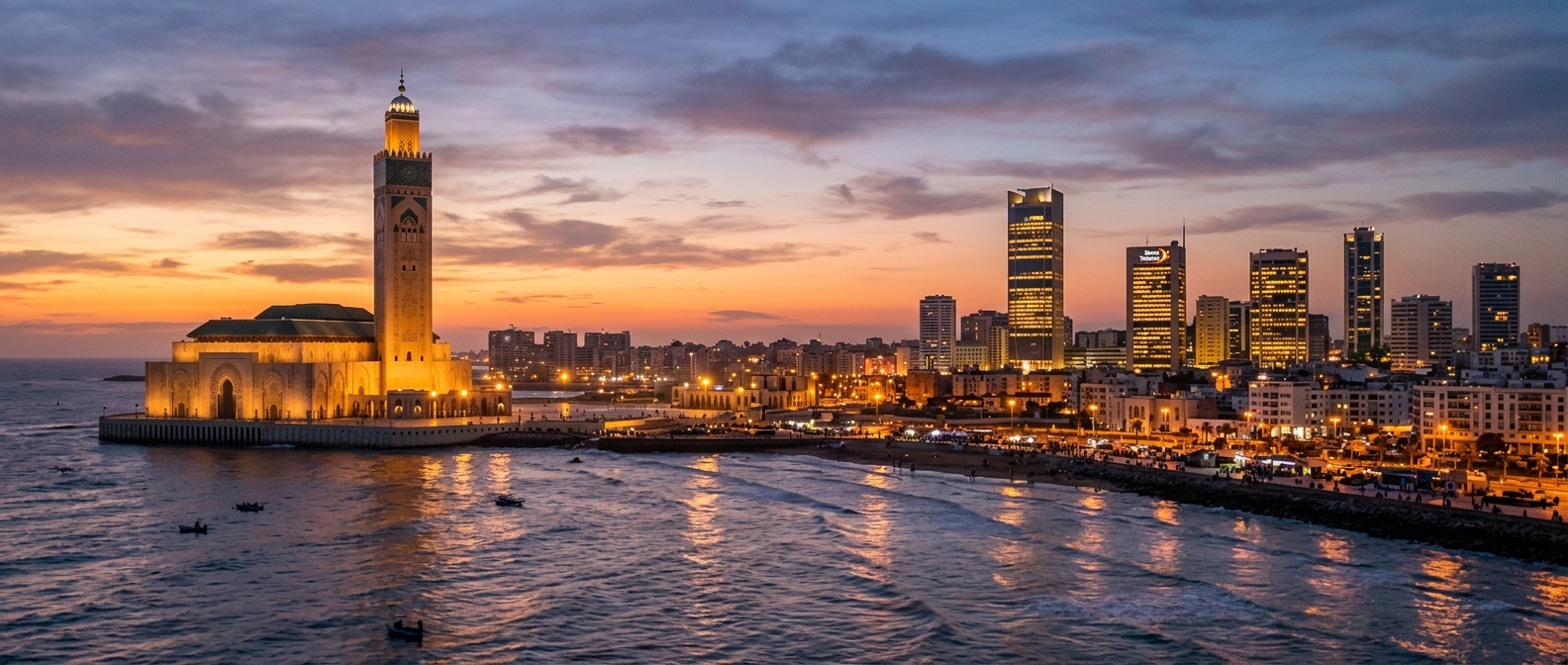
Weekend escapes to nearby beaches, Rabat, or further afield balance the work-focused weeks. The Corniche, the Hassan II Mosque and the Old Medina provide local character amid the modern bustle.
| Area | Vibe | Best for |
|---|---|---|
| Maarif / Gauthier | Central, lively | Young professionals |
| Anfa / Californie | Leafy, residential | Families, larger homes |
| Ain Diab (Corniche) | Seaside, nightlife | Beach lifestyle |
| Near business districts | Corporate, convenient | Short commutes |
Casablanca neighbourhoods for expats
FAQ
Is Casablanca good for expats?
Casablanca is best for expats moving for work, offering Morocco's strongest job market, top hospitals and the widest range of international schools. It is modern and cosmopolitan but more expensive and fast-paced than other cities.
What are the best areas to live in Casablanca?
Maarif and Gauthier suit young professionals, Anfa and Californie suit families wanting calm and space, and Ain Diab along the Corniche offers seaside living and nightlife.
Is Casablanca expensive to live in?
It is the most expensive Moroccan city, with higher rents and dining than Marrakech or Tangier, though still affordable versus Western capitals. Local food and essentials remain cheap; imported goods and private schools cost more.
Loved this? Useful? React below — your feedback helps other readers.