Morocco World Cup 2026 Squad Projection
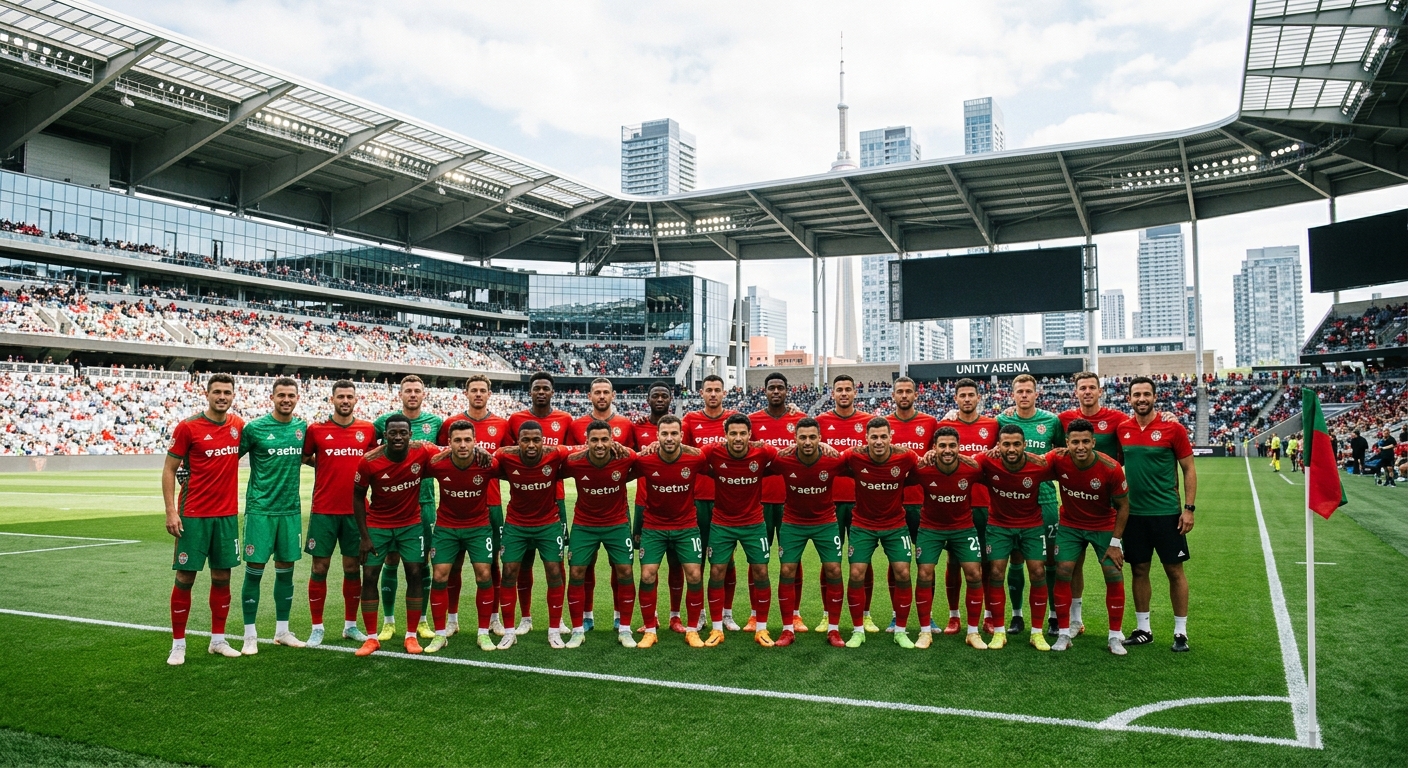
Building on a Historic Foundation
As the 2026 World Cup approaches, hosted across the United States, Canada and Mexico, Morocco enters the tournament not as a hopeful underdog but as an established force. The historic semifinal run of 2022 transformed expectations, and the Atlas Lions will arrive in North America as one of the most respected and feared non-traditional contenders in the competition.
Projecting any squad several months out is an inexact science, shaped by form, fitness and the unpredictable rhythms of a long club season. But the contours of Morocco's likely 2026 squad are reasonably clear, built around a core of proven 2022 veterans complemented by an exciting new generation of talent emerging through the diaspora and domestic pipelines.
This projection examines the players likely to lead Morocco in 2026, the balance between experience and youth, and the strengths and questions that will define the squad. With a 48-team format offering an expanded stage, Morocco has every reason to believe it can once again make a deep impression.
Goalkeeper: Bounou Still Reigns
In goal, Yassine Bounou remains the obvious first choice, provided he maintains his fitness and form. The hero of the 2022 shootout against Spain has continued to perform at a high level, and his experience, command and shot-stopping ability make him irreplaceable as Morocco's number one for as long as he is available.
Behind Bounou, Morocco will look to its depth in the position. The goalkeeping role is one where experience and reliability are prized, and the federation will want capable deputies ready to step in if needed. The development of younger goalkeepers will be important for both 2026 and the longer-term future.
By 2026, Bounou will be a veteran, and questions about succession will naturally arise. But on current evidence, he remains among the better goalkeepers available to any World Cup side, and his leadership and big-game pedigree make him a cornerstone of Morocco's projected squad.
Defence: Hakimi Leads a Solid Unit
Morocco's defence, which conceded just one goal en route to the 2022 semifinal, remains a major strength. Achraf Hakimi, still in his prime, will anchor the right side as one of the world's best full-backs and a leader of the squad. His attacking threat and defensive quality make him indispensable.
At centre-back, Nayef Aguerd is likely to feature prominently, his composure and ball-playing ability fitting the modern game. The left-back and additional central defensive roles will be contested by a mix of established names and emerging talents, with the diaspora continuing to supply options.
The defensive unit will need to manage the transition from some of the 2022 veterans, with captain Romain Saiss likely past his peak by 2026. Identifying and integrating the next generation of defenders is a key task, but the foundation, led by Hakimi and Aguerd, remains strong and reliable.
Midfield: Amrabat and the New Engine
Sofyan Amrabat, the breakout star of 2022, is projected to remain central to Morocco's midfield, his ball-winning and tempo-setting qualities essential to the team's structure. Around him, Morocco has an exciting blend of options combining experience and emerging youth.
Azzedine Ounahi, another 2022 standout, offers energy and technical quality, while the rise of younger midfielders adds depth and dynamism. The most exciting of these is Bilal El Khannouss, a gifted young playmaker who has emerged as one of the brightest talents in Moroccan football, offering creativity and vision.
The midfield blend of Amrabat's defensive solidity, Ounahi's energy and the creativity of younger players like El Khannouss gives Morocco a balanced and forward-looking engine room. Managing the integration of youth alongside the proven veterans will be a key theme as the squad evolves toward 2026.
Attack: En-Nesyri and the Rising Stars
Up front, Youssef En-Nesyri, scorer of the historic header against Portugal, is likely to remain a key attacking option, his physical presence and finishing providing a reliable focal point. His big-game pedigree makes him valuable in the high-pressure environment of a World Cup.
The wide and attacking areas will feature an exciting mix. Brahim Diaz, who committed to Morocco, brings creativity and dribbling to the attack, while young talents like Eliesse Ben Seghir, a dynamic and direct forward, represent the next wave of Moroccan attacking talent emerging through European football.
The blend of En-Nesyri's experience with the flair and pace of younger players gives Morocco a varied and dangerous attack. The challenge for the coaching staff will be integrating these talents into a coherent attacking unit that can both create and convert at the highest level.
The Rising Stars to Watch
Several young players are poised to make their mark on Morocco's 2026 squad. Bilal El Khannouss has been widely tipped as a future star, his playmaking ability and composure beyond his years marking him as a potential centrepiece of the team's creative play for years to come.
Eliesse Ben Seghir, a forward with pace, directness and an eye for goal, is another emerging talent generating excitement. His development through European football positions him as a candidate to provide attacking dynamism and to inject youthful energy into the squad.
These rising stars exemplify the strength of Morocco's talent pipeline. The combination of the 2022 success, which inspired a generation, and the continued productivity of the diaspora and domestic systems means Morocco is producing exciting young players at a healthy rate, bolstering its prospects for 2026 and beyond.
Balancing Experience and Youth
The central challenge in shaping Morocco's 2026 squad is balancing the experienced core of the 2022 semifinalists with the emerging generation of young talent. Too much reliance on veterans risks an ageing squad lacking dynamism; too rapid a transition risks losing the cohesion and big-game know-how that made 2022 so successful.
The ideal squad blends the leadership and experience of Bounou, Hakimi, Amrabat and En-Nesyri with the energy and ambition of players like El Khannouss and Ben Seghir. This balance allows the team to retain its proven foundations while injecting fresh quality and preparing for the future.
Achieving this balance will require careful management from the coaching staff. Integrating young players gradually, giving them meaningful opportunities while preserving the team's structure and spirit, is the path to a squad that combines the best of both worlds and maximises Morocco's chances in North America.
Tactical Identity for 2026
Morocco's tactical identity, forged under Walid Regragui in 2022, is likely to remain a foundation for 2026: defensive solidity, organisational discipline, and the ability to threaten on the counter and through individual quality. This pragmatic, resilient approach proved enormously effective and suits the players at Morocco's disposal.
However, the evolution of the squad may bring tactical refinements. The integration of creative young talents like El Khannouss could allow Morocco to play with more ambition in possession, while the continued presence of elite full-backs like Hakimi supports an attacking dimension out wide.
The expanded 48-team format and the conditions of a North American tournament, including travel and climate, will also shape tactical planning. Morocco's adaptability, demonstrated in 2022, will be an asset, allowing the team to tailor its approach to different opponents and circumstances across the tournament.
Realistic Ambitions in North America
What can Morocco realistically aspire to in 2026? After the 2022 semifinal, expectations are inevitably high, and reaching the latter stages of the tournament is a legitimate ambition rather than a fantasy. Morocco has proven it can compete with and beat the world's best, and the expanded format offers additional opportunity.
At the same time, the World Cup is unforgiving, and repeating or surpassing a semifinal run is enormously difficult. The depth of competition, the fine margins of knockout football, and the unpredictability of the tournament mean that even a strong Morocco side will need fortune as well as quality to go deep.
A realistic ambition is to once again reach the knockout stages comfortably and to be capable of beating top opposition on their day. Anything beyond that would represent further historic achievement. Morocco enters 2026 with genuine belief, a strong squad, and the confidence born of having already redrawn the map of world football.
A Nation Ready to Compete Again
Morocco's projected 2026 squad reflects a national team in a position of strength, built on the historic foundation of 2022 and reinforced by an exciting new generation. The blend of proven veterans like Bounou, Hakimi, Amrabat and En-Nesyri with rising stars like El Khannouss, Ben Seghir and Brahim Diaz offers both reliability and excitement.
The strengths are clear: world-class individuals, defensive solidity, a deep talent pipeline and a hard-earned big-game pedigree. The questions, around squad transition, the integration of youth and the management of ageing veterans, are the natural challenges facing any successful team seeking to sustain its level.
As the Atlas Lions prepare for North America, they do so as a team transformed by their 2022 heroics. No longer underdogs, they are genuine contenders with the talent and belief to compete with anyone. The 2026 World Cup offers Morocco the chance to prove that its golden era is not a single moment but the beginning of a sustained presence at the very top of world football.
| Position | Established core | Rising stars |
|---|---|---|
| Goalkeeper | Yassine Bounou | Younger deputies |
| Defence | Achraf Hakimi, Nayef Aguerd | Next-gen defenders |
| Midfield | Sofyan Amrabat, Azzedine Ounahi | Bilal El Khannouss |
| Attack | Youssef En-Nesyri, Brahim Diaz | Eliesse Ben Seghir |
Morocco projected 2026 World Cup squad core (illustrative)
FAQ
Will Bounou play for Morocco at the 2026 World Cup?
Provided he maintains fitness and form, Yassine Bounou is projected to remain Morocco's first-choice goalkeeper in 2026.
Who are Morocco's rising stars for 2026?
Bilal El Khannouss and Eliesse Ben Seghir are among the most exciting young talents projected to feature for Morocco in 2026.
Where is the 2026 World Cup being held?
The 2026 World Cup will be co-hosted by the United States, Canada and Mexico, with an expanded 48-team format.
Can Morocco repeat their 2022 semifinal run?
It is a legitimate ambition given the squad's quality, though repeating a semifinal run is enormously difficult in the unforgiving knockout format.
Will Achraf Hakimi captain Morocco in 2026?
Hakimi is expected to remain a leader and key figure for Morocco, anchoring the defence as one of the world's best full-backs.
Loved this? Useful? React below — your feedback helps other readers.