Atlas Lions at the 2026 World Cup: A Deep Preview of Morocco's Quest to Prove 2022 Was No Fluke
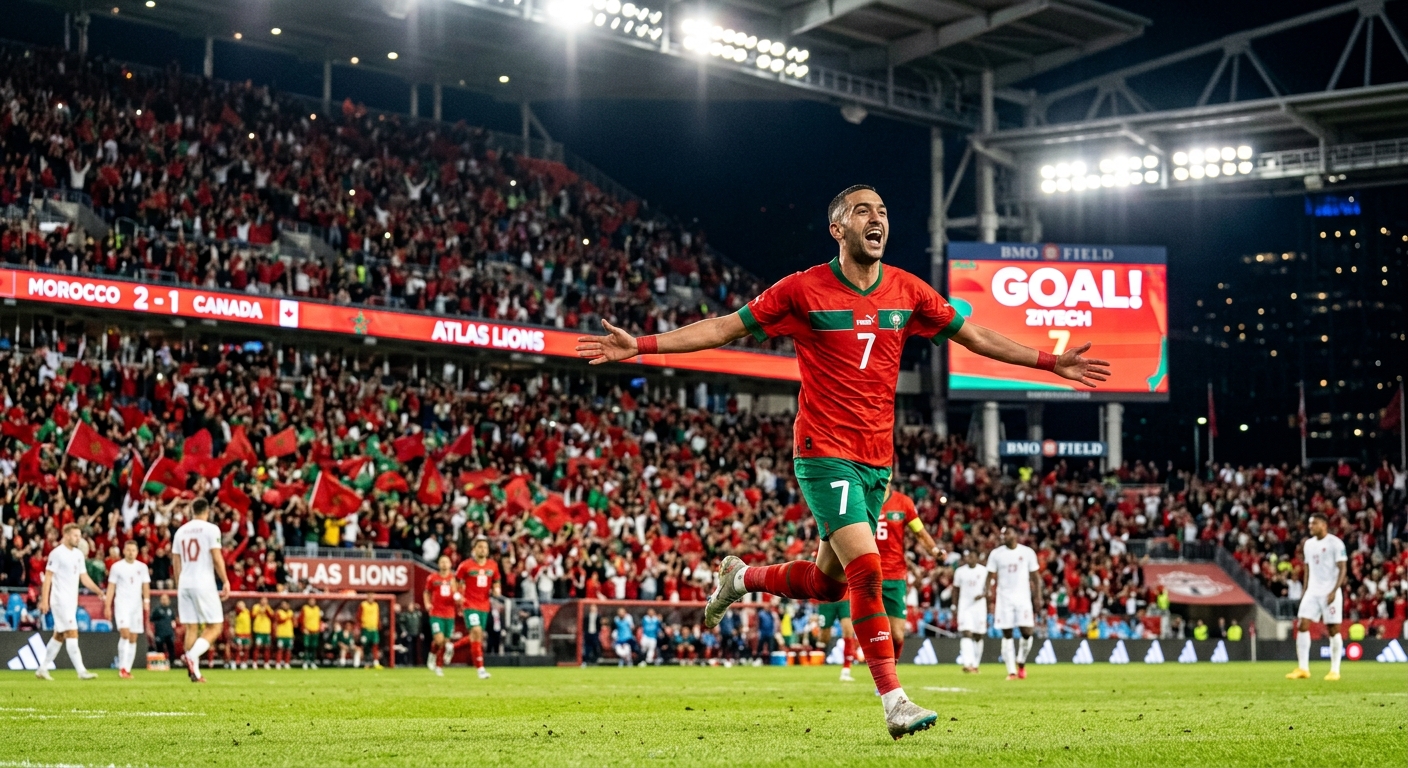
The Weight of Qatar 2022
No African team had ever reached a World Cup semifinal until Morocco did it in Qatar in 2022. Along the way the Atlas Lions topped a group containing Croatia and Belgium, knocked out Spain on penalties and then eliminated Portugal, sending Cristiano Ronaldo home in tears and detonating celebrations from Casablanca to the streets of Brussels, Paris and Doha. It was, by common consent, one of the great World Cup stories of the modern era.
That run reset expectations permanently. Before 2022, qualifying for the World Cup was the achievement and a knockout-round appearance a triumph. After 2022, anything short of the latter stages risks feeling like underperformance. This is the double edge of glory: it inspires a generation and simultaneously raises the bar to a height that is brutally hard to clear again.
Heading into 2026, the central question is whether Qatar was a perfectly timed peak or the beginning of a sustained era. The answer matters not just for Morocco but for the wider argument about whether African football is closing the gap with the traditional powers, or whether 2022 was a singular convergence of talent, organisation and momentum that may not repeat.
A New Format Changes the Maths
The 2026 World Cup, hosted across the United States, Canada and Mexico, expands from 32 to 48 teams, the largest field in tournament history. That structural change reshapes the path for a team like Morocco. The group stage grows, the number of knockout rounds increases and the overall margin for a single bad day shifts.
On paper, a larger field gives strong non-traditional nations more room to navigate the early rounds and reach the business end of the tournament. A team of Morocco's calibre should expect to clear the group phase comfortably, putting the real test in a longer, more attritional knockout gauntlet.
But expansion cuts both ways. More matches mean more chances for fatigue, injuries and the kind of upset that punctures a campaign. The teams that thrive in the new format will likely be those with depth, fitness and tactical flexibility rather than a thin reliance on a handful of stars. That is a useful lens through which to assess Morocco's prospects.
The North American setting adds its own variables: long travel distances between host cities, summer heat in certain venues and the logistics of an unprecedented three-country tournament. Acclimatisation and squad management will be quietly decisive, the unglamorous factors that often separate the teams that go deep from those that fade.
The Spine of the Team
Morocco's strength in Qatar was built on a formidable defensive structure and elite individuals at key positions. The team conceded remarkably little en route to the semifinals, anchored by organisation, discipline and a goalkeeper in inspired form. That defensive identity is the platform any 2026 campaign will be built upon, because tournaments are won on the foundation of not losing before they are won on flair.
The full-back and wing areas have been a particular source of quality, with players competing at the highest levels of European club football bringing pace, crossing and defensive intelligence. The central midfield blends ball-winning steel with creative passing, the kind of balance that allows a team to control matches against superior opposition without simply parking the bus.
In attack, Morocco carries genuine threat on the counter and from set pieces, with movement and directness that can punish opponents who push too high. The challenge, as with many defensively excellent sides, is converting territory and chances into goals against opponents content to sit deep, a problem that tends to grow as a team becomes the favourite rather than the underdog.
Crucially, much of the 2022 core is in or approaching its prime for 2026 rather than past it. A squad that was hungry and slightly unheralded in Qatar arrives in North America as a known quantity, respected and studied by opponents. Managing that shift from surprise package to marked team is the central tactical and psychological task.
From Underdog to Hunted
There is a well-worn truth in tournament football: it is easier to play with nothing to lose. In Qatar, Morocco surfed a wave of belief precisely because so little was expected. Opponents underestimated them, the pressure sat elsewhere and every win felt like a bonus. That psychological tailwind is impossible to manufacture twice.
In 2026, Morocco will be scouted to the last detail, their patterns dissected and their key players man-marked. The element of surprise is gone. The teams that handle this transition well are those that develop a deeper, more proactive game, capable of breaking down opponents rather than only countering them. Whether Morocco can add that dimension while keeping their defensive bedrock is the question coaches will obsess over.
Expectation also brings scrutiny at home. A nation that fell in love with the team in 2022 will arrive in 2026 demanding, not hoping. That energy can be rocket fuel or a millstone, and elite tournament teams learn to convert pressure into focus rather than letting it become paralysis.
The African and Arab Standard-Bearer
Morocco does not carry only its own hopes into 2026. As the team that broke the semifinal ceiling, it has become a symbol for African and Arab football's ambitions on the world stage. A deep run in North America would reinforce the argument that 2022 was a turning point rather than an outlier, with consequences for everything from television deals to youth investment across the continent.
This standard-bearer role brings an enormous, diffuse support base. Moroccan crowds in the 2022 stadiums were among the loudest and most numerous, and the diaspora across Europe and North America means home advantage of a kind can follow the team wherever it plays. In a tournament hosted in cities with large immigrant communities, that backing could be a tangible asset.
It also raises the stakes of failure. A flat group-stage exit would be read not just as a Moroccan disappointment but as a broader setback for the narrative of African progress, fairly or not. The team carries a weight that the traditional powers, who can lose early without existential questions, simply do not face.
What Would Success Look Like
Defining success for Morocco in 2026 is genuinely difficult precisely because of 2022. Matching the semifinal would be an extraordinary achievement that confirms a sustained era. Falling just short, a quarterfinal or last-16 exit after a competitive campaign, would in any rational reading be a strong tournament, yet may land as anticlimax against the memory of Qatar.
A more useful framing separates result from performance. If Morocco shows that it can control matches, manage the demands of being favourites and remain a genuinely difficult team for anyone to beat, that demonstrates the durability of the project regardless of the exact round it exits. Tournament football is cruel and a single penalty shootout can rewrite a legacy, so process arguably matters more than the bracket.
The deepest measure of success may be generational. If the players who emerged or matured around 2022 deliver another serious campaign in 2026, Morocco will have produced not a moment but a movement, the kind of consistent contention that builds a footballing culture rather than a one-summer legend.
The Verdict Before Kickoff
Predicting tournament football is a fool's errand, and Morocco's draw, fitness and the bounce of decisive moments will shape the campaign far more than any preview can anticipate. What can be said with confidence is that the Atlas Lions arrive in 2026 as a legitimate, respected force rather than a romantic underdog story, and that shift is itself the proof of how far they have come.
The expanded format gives them a realistic path beyond the group stage, the defensive identity gives them a chance against anyone, and the experience of 2022 gives them a belief that few teams outside the elite can match. The missing piece, as ever, is whether they can add cutting edge and proactivity to that platform under the new pressure of being expected to win.
Whatever happens, 2026 will be a referendum on a thesis: that Morocco belongs at the top table of world football. The team has already changed the conversation. North America is its chance to make the answer permanent.
| Factor | Qatar 2022 | Outlook for 2026 |
|---|---|---|
| Status | Surprise package, low expectations | Respected, heavily scouted favourite-tier |
| Best result reference | Semifinal (4th place) - best ever for Africa/Arab world | Pressure to match or justify the run |
| Format | 32 teams | 48 teams, longer path to the final |
| Identity | Elite defensive organisation, dangerous on counter | Same base, needs more proactive attacking edge |
| Support | Loudest crowds in Qatar | Large diaspora across US/Canada/Mexico host cities |
Morocco at the World Cup: 2022 reality vs 2026 outlook
FAQ
How far did Morocco go at the 2022 World Cup?
Morocco reached the semifinals at Qatar 2022, beating Spain and Portugal in the knockout rounds before finishing fourth, the best result ever achieved by an African or Arab nation at a World Cup.
Where is the 2026 World Cup being held?
The 2026 World Cup will be hosted jointly by the United States, Canada and Mexico, and for the first time will feature an expanded field of 48 teams.
Why is the 48-team format important for Morocco?
The larger field gives strong non-traditional nations more room to navigate the group stage, but the longer knockout path also tests squad depth and fitness, factors that will shape Morocco's chances.
What is Morocco's biggest strength heading into 2026?
Morocco's core strength is its elite defensive organisation combined with quality individuals at full-back, in midfield and in goal, the same platform that carried the team to the 2022 semifinals.
What is the main challenge facing Morocco in 2026?
The Atlas Lions must adapt from being an underestimated underdog to a heavily scouted favourite, adding proactive attacking play to their defensive foundation while handling raised expectations.
Loved this? Useful? React below — your feedback helps other readers.