Morocco vs Turkey: Which to Visit?
Big-Picture Differences
Turkey straddles Europe and Asia, with a foot in both worlds and a history spanning Greek, Roman, Byzantine and Ottoman empires. Its scale and diversity, from cosmopolitan Istanbul to ancient ruins and beach resorts, make it a heavyweight destination.
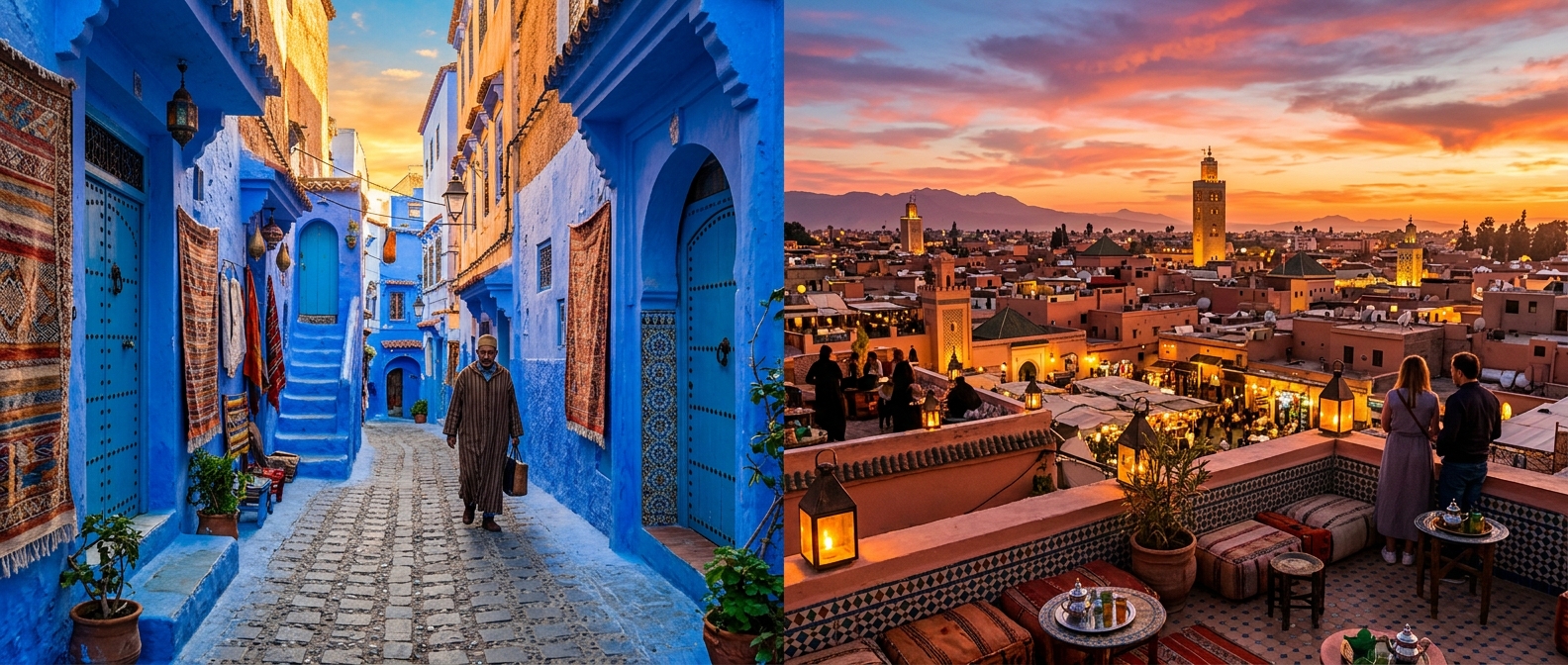
Morocco is firmly North African, defined by Arab and Berber culture with European (especially French and Spanish) influences. It feels more compact and exotic to many Western visitors, with an intense, sensory street life.
History and Architecture
Turkey boasts extraordinary historical depth: Istanbul's Hagia Sophia and Blue Mosque, the ruins of Ephesus, ancient Troy, and countless Greco-Roman and Byzantine sites. The layering of civilisations is a major draw.
Morocco's architecture shines in its medinas, mosques, madrasas, riads and kasbahs, plus Roman Volubilis. It is rich and atmospheric but centred on Islamic and medieval rather than classical antiquity.
Landscapes and Nature
Turkey offers Cappadocia's surreal rock formations and balloon rides, the travertine terraces of Pamukkale, lush coasts, mountains and lakes. Its variety is enormous and spread across a large country.
Morocco counters with the Sahara dunes, the High Atlas, dramatic gorges and two coastlines. Both deliver spectacular nature, but Morocco packs its diversity into shorter distances, while Turkey's sights are more spread out.
Beaches and Coast
Turkey is the stronger beach destination, with the turquoise Mediterranean and Aegean coasts, gulets (traditional boats), resort towns and warm, clear swimming water that suits classic beach holidays.
Morocco's Atlantic coast is better known for surfing and laid-back towns than for resort beaches, with cooler water. For a sun-and-sea holiday, Turkey generally has the edge.
Food and Culture
Both have superb cuisines. Turkey offers kebabs, mezes, seafood, baklava and a vibrant cafe culture, while Morocco delights with tagines, couscous, pastilla, mint tea and aromatic spices. Food alone is a reason to visit either.
Culturally, Morocco's souk haggling and medina maze feel more intensely exotic, while Turkey blends Eastern traditions with a more European-feeling urban life, especially in Istanbul.
Cost, Access and Practicalities
Both are affordable, though currency fluctuations can make Turkey especially good value at times. Turkey has extensive domestic flights and good transport for covering long distances, while Morocco is well connected in the north with trains and roads.
Both are Muslim-majority and tourist-friendly, with modest dress appreciated at religious sites. Turkey's tourism industry is larger and very polished; Morocco's is well developed and growing fast.
| Category | Morocco | Turkey |
|---|---|---|
| Historic depth | Medieval/Islamic | Greco-Roman to Ottoman |
| Signature scenery | Sahara, Atlas | Cappadocia, Pamukkale |
| Beaches | Surf, cooler Atlantic | Warm Med/Aegean resorts |
| Exotic factor | Very high (medinas) | High, more European feel |
| Best for | Desert and culture | History, beaches, variety |
Morocco vs Turkey comparison
FAQ
Which is better for a first big trip abroad?
Turkey's larger, polished tourism industry and mix of city, history and beach can ease first-timers in, while Morocco offers a more intense, exotic experience for those craving something different.
Which has better beaches?
Turkey, with its warm, clear Mediterranean and Aegean coasts and resort towns, is the stronger beach destination. Morocco's Atlantic coast is better for surfing than resort sunbathing.
Which is cheaper?
Both are affordable. Turkey can be exceptional value during favourable exchange rates, while Morocco offers consistently good value across food, lodging and tours.
Loved this? Useful? React below — your feedback helps other readers.