Morocco 1-0 Portugal: The Quarterfinal Upset
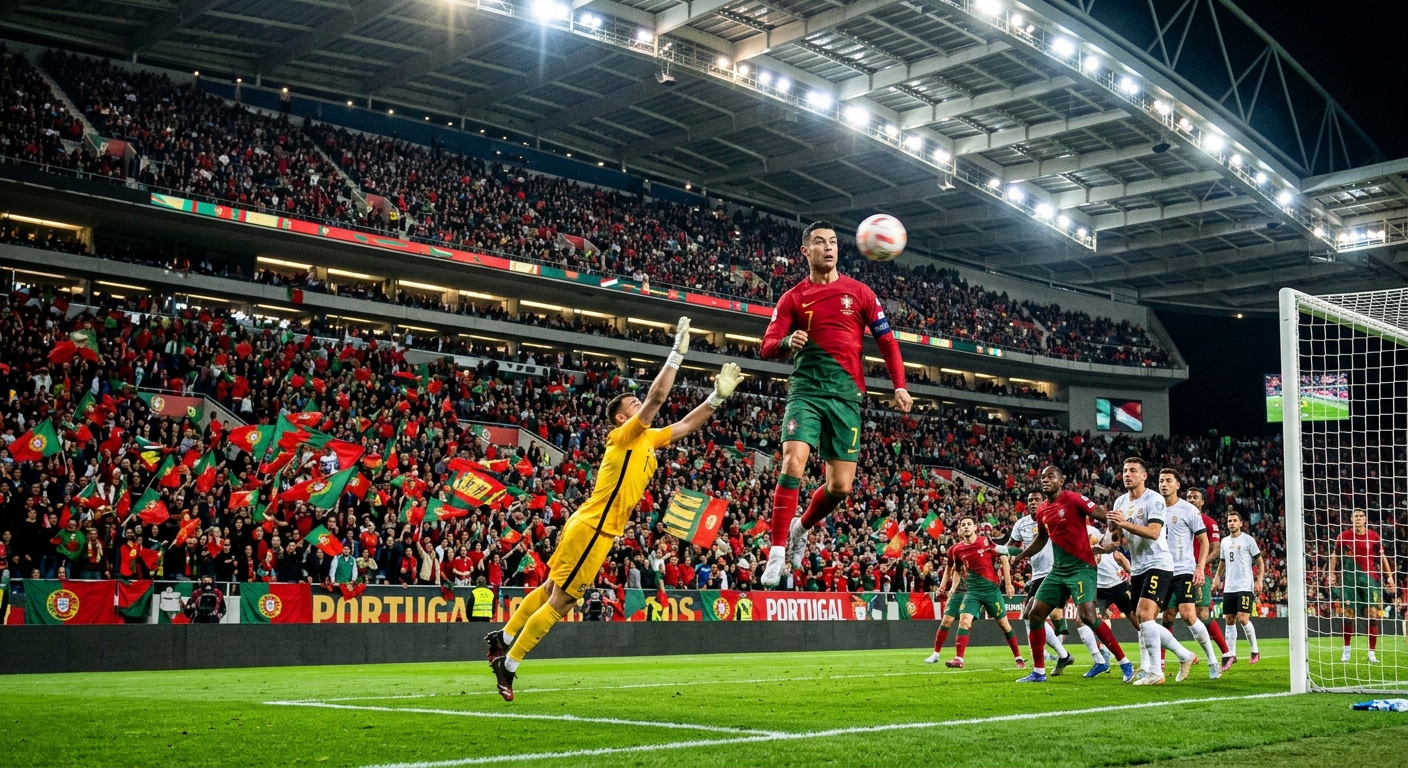
A Quarterfinal Nobody Predicted
When the draw for the knockout stages of the 2022 FIFA World Cup settled, the path to a Portugal-Morocco quarterfinal looked, on paper, like a formality for the European side. Portugal arrived in Qatar with a generation of talent that included Bruno Fernandes, Bernardo Silva, Joao Felix, Rafael Leao and the ageless Cristiano Ronaldo, and they had just dismantled Switzerland 6-1 in the round of 16 in a performance that felt like a coronation. Morocco, by contrast, were a team still being described in many quarters as a pleasant surprise rather than a genuine contender.
That framing badly underestimated what Walid Regragui had built. Morocco had topped a group containing Croatia, Belgium and Canada without conceding a single goal from open play, and had then knocked out Spain on penalties in the round of 16. They were not lucky underdogs riding a hot streak; they were a defensively disciplined, tactically intelligent side with elite individuals at full-back, in goal and in midfield. The quarterfinal on December 10 at Al Thumama Stadium was the moment that distinction became undeniable.
For Morocco and for the wider Arab and African football world, the match carried a weight far beyond ninety minutes. No African nation had ever reached a World Cup semifinal in the tournament's near-century of history. Cameroon in 1990, Senegal in 2002 and Ghana in 2010 had all reached the last eight and fallen agonisingly short. Morocco stood on the same threshold, and this time the door swung open.
The Road to Al Thumama
Morocco's journey to the quarterfinal was a masterclass in modern tournament management. In the group stage they drew 0-0 with Croatia, the eventual finalists, before stunning Belgium 2-0 with goals from Abdelhamid Sabiri and Zakaria Aboukhlal. A 2-1 win over Canada sealed top spot in Group F, an outcome few had forecast given the pedigree of their opponents.
The round of 16 against Spain was a war of nerves. Morocco soaked up Spanish possession for 120 minutes, refused to crack, and then won the penalty shootout 3-0 as goalkeeper Yassine Bounou saved twice and Spain failed to convert a single spot kick. That night announced to the world that Morocco's defensive resilience was not a fluke but a system, and that Bounou was operating at the very top of his profession.
By the time they faced Portugal, Morocco had conceded just one goal in the entire tournament, an own goal against Canada. Their back line of Achraf Hakimi, Romain Saiss, Nayef Aguerd and Noussair Mazraoui, screened by the relentless Sofyan Amrabat, had become one of the stories of the World Cup. Regragui, appointed only weeks before the tournament after the sacking of Vahid Halilhodzic, had turned a squad in apparent crisis into the meanest defence in Qatar.
Walid Regragui's Game Plan
Regragui understood that beating Portugal would require Morocco to surrender possession and territory, and he embraced it rather than fearing it. Morocco set up in a compact 4-3-3 that frequently collapsed into a 4-1-4-1 or even a 4-5-1 out of possession, denying Portugal space between the lines and forcing them wide into areas where Hakimi and Mazraoui could double up on the wingers.
The instruction was clear: keep the back four narrow, let Amrabat patrol the space in front of it, and trust the front three to threaten on the counter through the pace of Hakim Ziyech and Sofiane Boufal and the aerial and physical presence of Youssef En-Nesyri. Portugal would have the ball; Morocco would have the chances that mattered.
Crucially, Regragui's plan was emotional as much as it was tactical. He had spoken openly about playing for the whole of Africa and the Arab world, about the duty his players carried, and about belief. He banned the word 'limit' from the camp. That psychological framing turned a team of talented individuals into something closer to a movement, and it was visible in every recovery run and every block on December 10.
The 42nd Minute: En-Nesyri's Leap
The goal that decided the quarterfinal, and with it a slice of World Cup history, arrived three minutes before half-time. Yahya Attiyat-Allah, deputising at left-back, floated a deep cross from the left flank toward the far post. What happened next became one of the defining images of the tournament.
Youssef En-Nesyri timed his run between two Portuguese defenders and launched himself skyward. The leap was extraordinary, his head meeting the ball at a height later measured at well over two and a half metres off the ground, higher than the crossbar. Portugal goalkeeper Diogo Costa, who came rushing off his line to claim the cross, was beaten in the air by a striker who simply jumped higher and timed it better. The ball flashed into the empty net.
It was a moment of pure athleticism. En-Nesyri, who plays his football as a centre-forward and is renowned for his hang time, produced a vertical leap that drew comparisons to basketball. Al Thumama Stadium erupted. The Moroccan bench emptied. And from that instant, the quarterfinal became an exercise in defending a one-goal lead against one of the most talented attacking nations on earth.
Surviving the Portuguese Storm
A 1-0 half-time lead against Portugal is not a position of safety; it is the beginning of an ordeal. Portugal manager Fernando Santos reshaped his side, eventually turning to Cristiano Ronaldo from the bench in a desperate attempt to rescue the game. The pressure mounted relentlessly through the second half and deep into stoppage time.
Morocco defended with a discipline that bordered on heroic. Aguerd had been forced off injured in the warm-up, but his replacement Jawad El Yamiq slotted in seamlessly alongside Saiss, who himself was visibly struggling with injury yet refused to leave the pitch. Bounou commanded his box, Amrabat covered impossible amounts of ground, and the full-backs tracked back tirelessly.
The match grew increasingly fraught. Walid Cheddira was sent off late on for a second yellow card, leaving Morocco to defend the final minutes with ten men. Portugal threw everything forward. There were scrambles, blocks, last-ditch clearances and a goalmouth that at times resembled a siege. But the goal Portugal needed never came.
The Final Whistle and a Continent's Roar
When the referee finally blew for full time, the Moroccan players collapsed to the turf in a mixture of exhaustion and disbelief. They had done it. Morocco had reached the semifinals of the World Cup, the first African nation and the first Arab nation ever to do so. The achievement instantly rewrote the record books and reframed what was possible for football outside the traditional European and South American powers.
The celebrations spilled far beyond the stadium. In Casablanca, Rabat, Marrakech and Tangier, hundreds of thousands poured into the streets. In Paris, Brussels, Amsterdam and across the Moroccan diaspora, fans celebrated long into the night. The image of players celebrating with their mothers on the pitch, particularly Achraf Hakimi dancing with his mother and Sofiane Boufal embracing his, became one of the tournament's most beloved and humanising motifs.
Ronaldo, by contrast, left the pitch in tears, his final realistic chance of a World Cup gone. The contrast between his devastation and Morocco's joy captured the magnitude of the upset. A team valued at a fraction of Portugal's had outplanned, outfought and outlasted them.
Why Morocco Won: The Tactical Breakdown
Portugal dominated possession and territory, as expected, but Morocco's defensive structure ensured that dominance produced very few clear chances. Portugal's expected goals tally for the match was modest, a testament to how effectively Regragui's block compressed space and forced low-percentage efforts from distance or tight angles.
Morocco's midfield trio of Amrabat, Azzedine Ounahi and Selim Amallah broke up play with relentless energy and intelligent positioning. Amrabat in particular delivered one of the great individual tournament performances of his generation, screening the back four, winning duels and carrying the ball out of pressure when Morocco needed a release valve.
At the other end, Morocco needed only one moment of quality, and En-Nesyri provided it. This was the essence of the result: a perfectly executed defensive game plan, elite goalkeeping behind it, and a single decisive piece of attacking excellence. It was not luck. It was a coherent strategy executed with discipline by players operating at the peak of their abilities.
The Heroes of the Hour
Yassine Bounou, the Sevilla goalkeeper, was the foundation. His calm under pressure and his command of the box gave the defenders in front of him license to be aggressive. He had already become a national hero against Spain; against Portugal he confirmed his status as one of the finest goalkeepers in the world.
Sofyan Amrabat emerged from the tournament as arguably its breakout midfielder, his performances against Spain and Portugal sparking interest from Europe's biggest clubs. Achraf Hakimi, the Paris Saint-Germain full-back born and raised in Madrid who chose to represent Morocco, was a constant threat down the right and an emotional leader.
And then there was En-Nesyri, the man whose leap will be replayed for generations. A striker who had endured a quiet group stage, he chose the biggest moment in Moroccan football history to produce the most important goal the nation had ever scored. The collective nature of the achievement, though, was the truest story: every player on that pitch contributed to a result built on sacrifice and belief.
What the Semifinal Run Meant
Morocco's run ended in the semifinal, where they lost 2-0 to a brilliant France side, before falling to Croatia in the third-place playoff. But the significance of the achievement was never diminished by those results. Reaching the last four of a World Cup placed Morocco in the most exclusive company in the sport and shattered a psychological barrier for African football.
The run also transformed perceptions of the Moroccan diaspora's role in the national team. Many of the squad's key players were born or raised in Europe, and their decision to represent Morocco became a point of immense pride and a model that other federations began to study closely. The success demonstrated that a clear identity, smart recruitment of dual-national talent and elite organisation could compete with anyone.
For Walid Regragui, the run cemented his reputation as one of the most astute coaches in the international game, all the more remarkable given how little time he had to prepare. He had taken a fractured squad and, in a matter of weeks, forged a unit that made the entire continent believe.
The Legacy of December 10
The Morocco-Portugal quarterfinal has taken its place among the great World Cup upsets, mentioned in the same breath as the United States beating England in 1950, North Korea beating Italy in 1966, and Senegal beating France in 2002. But it was arguably more consequential than any of those, because it did not merely produce a single shock result; it produced a semifinal place and a new ceiling for an entire region.
In Morocco, the match has become a generational touchstone, the football equivalent of a moon landing. Children who watched En-Nesyri's header are now playing the game with the belief that the very top of the sport is reachable. Investment in domestic football, academies and infrastructure has intensified, and Morocco's subsequent successes at youth and senior level have flowed in part from the confidence born that night.
As Morocco prepares to co-host the 2030 World Cup alongside Spain and Portugal, the symbolism of having beaten one of those co-hosts on the road to a historic semifinal is impossible to ignore. December 10, 2022 will be remembered not just as the day Morocco beat Portugal, but as the day the map of world football quietly, permanently, redrew itself.
| Stage | Opponent | Result | Key moment |
|---|---|---|---|
| Round of 16 | Spain | 0-0 (3-0 pens) | Bounou saves two penalties |
| Quarterfinal | Portugal | 1-0 | En-Nesyri's 42nd-minute header |
| Semifinal | France | 0-2 | Theo Hernandez and Kolo Muani goals |
| Third place | Croatia | 1-2 | Morocco finish fourth overall |
Morocco's 2022 World Cup knockout run to the semifinal
FAQ
What was the score in Morocco vs Portugal at the 2022 World Cup?
Morocco won 1-0, with Youssef En-Nesyri scoring the only goal in the 42nd minute on December 10, 2022 at Al Thumama Stadium.
Who scored Morocco's goal against Portugal?
Youssef En-Nesyri scored with a powerful header, leaping above goalkeeper Diogo Costa to meet a cross from the left.
Why was the win so historic?
It made Morocco the first African nation and the first Arab nation ever to reach a FIFA World Cup semifinal.
Did Cristiano Ronaldo play in the match?
Ronaldo started on the bench and came on in the second half but could not prevent the defeat, leaving the pitch in tears at full time.
How did Morocco's World Cup run end?
Morocco lost 2-0 to France in the semifinal and 2-1 to Croatia in the third-place playoff, finishing fourth overall.
Loved this? Useful? React below — your feedback helps other readers.