Morocco vs Other Destinations 2026: How It Compares for Travel & Living
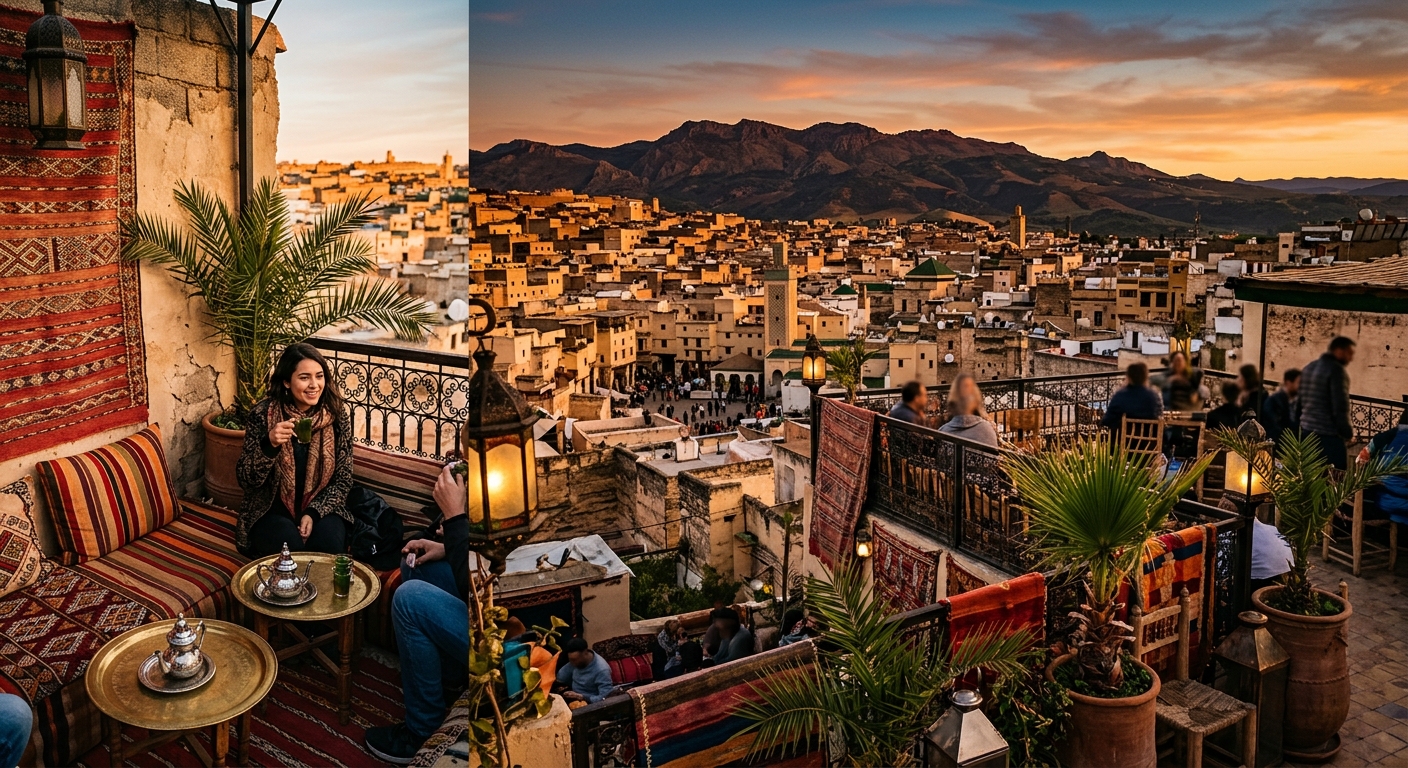
What Makes Morocco Stand Out
Morocco occupies a unique position on the world map: an Arab and Berber North African country just a short hop from Europe, with one foot in Africa, one in the Arab world, and deep historical ties to France and Spain. This crossroads identity gives it a cultural richness that few destinations can match, blending Saharan, Atlantic, Mediterranean and mountain landscapes within a single country.
For travellers and would-be expats weighing their options, Morocco's headline advantages are affordability, accessibility and exoticism. It delivers a genuinely foreign, immersive experience, bustling souks, call-to-prayer skylines, mint tea rituals, desert camps, while remaining only a few hours by plane from major European hubs and sharing a convenient time zone with the continent.
Yet Morocco is not the right fit for everyone, and an honest comparison matters. It is less polished and more chaotic than European destinations, its bureaucracy can be frustrating, and the hard-sell tourist culture in some areas wears on visitors. Understanding how it stacks up against alternatives helps you decide whether its particular blend of pros and cons matches what you are looking for.
Morocco vs Portugal and Spain
Portugal and Spain are Morocco's most direct competitors for Europeans and North Americans seeking sun, culture and a relaxed lifestyle, and the comparison is essentially polish versus value. Portugal and Spain offer EU membership, world-class infrastructure, easy residency pathways like Portugal's various visa programmes, excellent healthcare and the security of living within the European Union.
Morocco's trump card is cost. Living and travelling in Morocco is significantly cheaper than in Portugal or Spain, where rising property prices and tourism have driven up the cost of living in cities like Lisbon, Porto, Barcelona and Madrid. For the same monthly budget, your money stretches far further in Marrakech or Rabat than in any Iberian city.
The trade-offs are real. Portugal and Spain offer the comfort, predictability and legal security of the EU, with smoother bureaucracy and the ease of being inside Europe. Morocco offers more adventure, a more exotic culture and lower costs, but with rougher edges, a less straightforward residency process and the cultural adjustment of living in a Muslim country. Many people who find Portugal too expensive or too crowded look across the strait to Morocco.
Morocco vs Turkey
Turkey is perhaps Morocco's closest cultural cousin among the major travel destinations: another large, predominantly Muslim country bridging continents, rich in history, with vibrant bazaars, stunning architecture and superb food. Both offer an affordable, exotic experience within reach of Europe, and both have well-developed tourism industries.
Turkey edges ahead on sheer historical depth and scale, with Istanbul ranking among the world's great cities, the ancient sites of Ephesus and Cappadocia, and a longer, more developed tourist infrastructure. It also offers a citizenship-by-investment programme that attracts expats. Turkey's cost of living has been affected by significant currency volatility, which can make it extremely cheap for foreigners holding hard currency but unstable for residents.
Morocco counters with closer proximity to Western Europe, a more stable currency, a distinct North African and Berber culture, and the unique combination of Sahara, Atlas Mountains and Atlantic coast in a compact package. For Europeans, Morocco is often quicker and cheaper to reach. The choice often comes down to whether you are drawn to Turkey's monumental history and scale or Morocco's intimate, varied landscapes and easier European access.
Morocco vs Egypt
Egypt and Morocco are frequently compared as the two great North African travel destinations, but they offer quite different experiences. Egypt is unrivalled for ancient monuments, the Pyramids, Luxor, the temples along the Nile, and a Red Sea coast famous for diving. Its historical wonders are on a scale Morocco simply cannot match.
Morocco, however, tends to win on overall travel comfort, safety perception, infrastructure and variety of experience. Its cities feel more relaxed and walkable to many visitors, its hassle, while present, is often considered less intense than in Egypt's main tourist sites, and its landscapes are more varied for a non-monument-focused trip. Morocco is also generally seen as easier and more comfortable for independent and female travellers.
For expats and long-term living, Morocco usually scores higher on stability, lifestyle and proximity to Europe, while Egypt appeals to those whose primary draw is its incomparable ancient heritage and Red Sea resorts. If your trip is built around archaeology and history, Egypt is hard to beat; if you want a varied, comfortable blend of culture, cities, mountains, desert and coast, Morocco often comes out ahead.
Morocco vs Mexico
Mexico is the benchmark destination for North American expats and nomads, and it competes with Morocco on affordability, climate, food culture and a vibrant lifestyle. For Americans and Canadians, Mexico has the obvious advantage of proximity, no time-zone disruption, a famously generous visa regime and a huge, established expat community.
Morocco's advantages over Mexico are mainly for Europeans, for whom it is far closer and time-zone friendly, and for those seeking a more exotic cultural experience distinct from the Americas. Morocco also has a reputation for lower violent-crime concerns than parts of Mexico, where safety varies dramatically by region, though both countries are perfectly safe in their main tourist and expat areas.
Food and culture are a matter of taste: Mexican cuisine is one of the world's great culinary traditions, while Moroccan tagines, couscous and pastries offer an entirely different but equally beloved palate. Ultimately, geography is decisive: North Americans often lean toward Mexico for convenience, while Europeans and those craving North African and Arab culture gravitate to Morocco.
Which Destination Is Right for You?
There is no single winner, only the right fit for your priorities. If your top concerns are EU security, smooth bureaucracy and polished infrastructure, Portugal or Spain make more sense despite higher costs. If you crave monumental ancient history, Egypt is unmatched. If you want scale, a world-class city and citizenship options, Turkey appeals. If you are North American and value proximity, Mexico is the natural choice.
Morocco wins when you want a unique, affordable, exotic experience within easy reach of Europe, combining desert, mountains and coast, rich food and culture, and a low cost of living, and when you are willing to trade some predictability and polish for adventure and value. It is especially compelling for Europeans, for budget-conscious nomads and retirees, and for travellers who want something genuinely different without flying to the far side of the world.
The smartest approach is to match a destination to your stage of life and travel goals rather than chasing a universal best. Many seasoned travellers and expats do not choose just one: they string several together, perhaps wintering in Morocco, summering in Portugal, and exploring Turkey or Egypt in between. Morocco's strength is that, for its particular combination of cost, culture, climate and accessibility, very few destinations on Earth offer the same package.
| Destination | Cost vs Morocco | Key strength | Main trade-off |
|---|---|---|---|
| Portugal / Spain | More expensive | EU security, polish, easy residency | Higher cost, more crowded |
| Turkey | Similar / variable | Scale, history, Istanbul | Currency volatility |
| Egypt | Similar | Ancient monuments, Red Sea | More intense hassle |
| Mexico | Similar | Proximity for North Americans | Far from Europe, regional safety varies |
| Morocco | Baseline (low cost) | Exotic culture, varied landscapes, close to Europe | Bureaucracy, less polish |
Morocco compared to popular alternatives (2026)
FAQ
Is Morocco cheaper than Portugal or Spain?
Yes, significantly. The cost of living and travel in Morocco is well below that of Portugal and Spain, where tourism and property prices have driven up costs in cities like Lisbon, Porto, Barcelona and Madrid. For the same budget, your money stretches much further in Marrakech or Rabat than in any Iberian city.
Is Morocco safer than Egypt or Mexico?
Morocco is widely considered safe for travellers and expats, with low violent crime in tourist and expat areas. Many visitors find its tourist hassle less intense than Egypt's main sites, and it avoids the regional safety variations seen in parts of Mexico. All three are safe in their main destinations, but Morocco scores well on overall comfort.
Morocco or Turkey for an exotic but accessible trip?
Both are excellent. Turkey offers greater scale, deeper monumental history and the world-class city of Istanbul, plus citizenship-by-investment options. Morocco offers closer proximity to Western Europe, a more stable currency, distinct Berber and North African culture, and the unique combination of Sahara, Atlas Mountains and Atlantic coast.
Why would Europeans choose Morocco over Mexico?
For Europeans, Morocco is far closer, shares a convenient GMT+1 time zone with no jet lag, and is reachable on short, cheap flights. It also offers a distinctly exotic North African and Arab culture. Mexico's proximity advantage applies mainly to North Americans, for whom it is the natural budget-and-lifestyle choice.
Who is Morocco the best destination for?
Morocco is ideal for budget-conscious travellers, nomads and retirees, especially Europeans, who want an exotic, affordable experience close to home, combining desert, mountains, coast, rich food and culture. It suits those happy to trade some EU-style polish and smooth bureaucracy for adventure, variety and exceptional value.
Loved this? Useful? React below — your feedback helps other readers.