Morocco vs Egypt: Which to Visit?
History and Ancient Sites
Egypt is unmatched for ancient civilisation. The Pyramids of Giza, the temples of Luxor and Karnak, the Valley of the Kings and Abu Simbel offer some of humanity's most iconic monuments, drawing history lovers from around the world.
Morocco's heritage is different: medieval imperial cities, kasbahs, Roman ruins at Volubilis and living Islamic architecture in medinas. It is rich but oriented toward medieval and Islamic history rather than ancient antiquity.
Landscapes and Nature
Morocco offers remarkable geographic variety within a single trip: the Sahara dunes, the High Atlas Mountains, lush valleys, and both Atlantic and Mediterranean coasts. This diversity makes it ideal for road trips and varied itineraries.
Egypt's landscapes center on the Nile valley running through desert, plus the Red Sea coast. The Red Sea is world-class for diving and snorkelling, but overall Egypt is less geographically varied than Morocco.
Cities and Culture
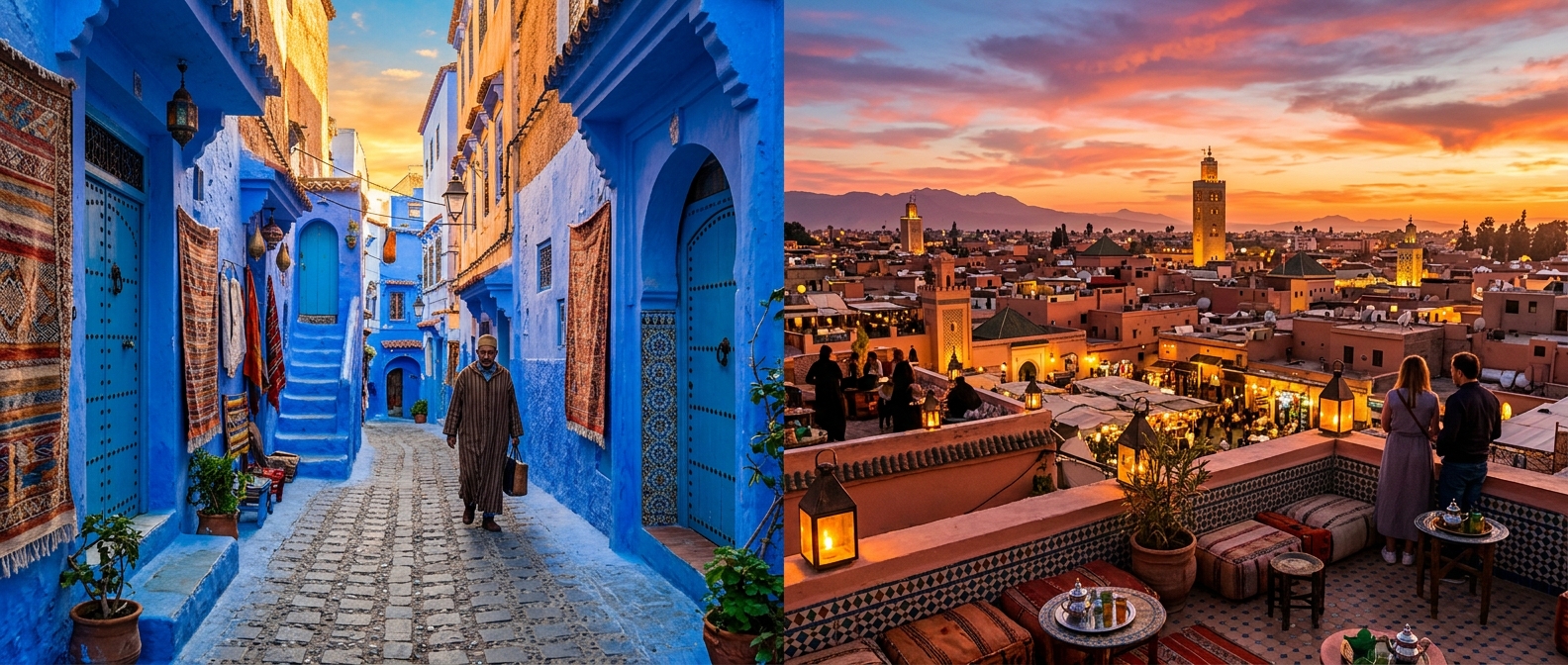
Morocco's cities like Marrakech, Fez and Chefchaouen are famous for atmospheric medinas, souks, riads and a sensory street life that feels both exotic and accessible. Berber and Andalusian influences add cultural depth.
Egypt's Cairo is a vast, intense metropolis with Islamic Cairo, museums and bustling bazaars, while cities like Aswan and Luxor are gateways to monuments. Egyptian culture is warm and historic but more monument-focused for tourists.
Beaches and Water Activities
Egypt wins decisively for beach and underwater experiences. The Red Sea resorts of Sharm El Sheikh, Hurghada and Dahab offer some of the best diving and snorkelling in the world alongside warm, clear water.
Morocco's coasts are better for surfing (notably Taghazout) and relaxed seaside towns than for tropical beach resorts, with cooler Atlantic waters that suit different travellers.
Cost, Logistics and Getting Around
Both destinations are affordable by Western standards. Egypt can be slightly cheaper for some services and offers organised Nile cruises that simplify logistics. Touts and persistent vendors are common at major Egyptian sites.
Morocco has good roads and trains in the north, making independent travel straightforward, while desert regions are best with a guide or driver. Both reward bargaining and a relaxed attitude to hustle.
Safety and Practicalities
Both countries are generally safe for tourists in main areas, with the usual precautions against scams and petty theft. Check current travel advisories, as conditions can change, particularly in remote border regions.
Both are Muslim-majority countries where modest dress and cultural respect are appreciated. Solo and female travellers should take standard precautions in both, and many find Morocco's tourist infrastructure especially well developed.
| Category | Morocco | Egypt |
|---|---|---|
| Ancient monuments | Good (medieval/Roman) | Outstanding (pharaonic) |
| Landscape variety | Very high | Moderate |
| Beaches/diving | Surf, cooler coast | World-class Red Sea |
| Medinas/souks | Exceptional | Good (Cairo bazaars) |
| Best for | Diverse explorers | History and diving lovers |
Morocco vs Egypt comparison
FAQ
Is Morocco or Egypt better for first-timers?
It depends on interests. First-timers fascinated by ancient history and diving may prefer Egypt, while those wanting varied landscapes, vibrant medinas and easy road trips often favour Morocco.
Which is cheaper?
Both are affordable. Egypt can be marginally cheaper for some services and offers convenient Nile cruise packages, while Morocco offers strong value with well-developed tourist infrastructure.
Can I combine both in one trip?
Yes, though they are far apart and require a flight between them. Each deserves at least a week, so a combined trip works best for longer holidays.
Loved this? Useful? React below — your feedback helps other readers.