Morocco vs Dubai: Which to Choose?
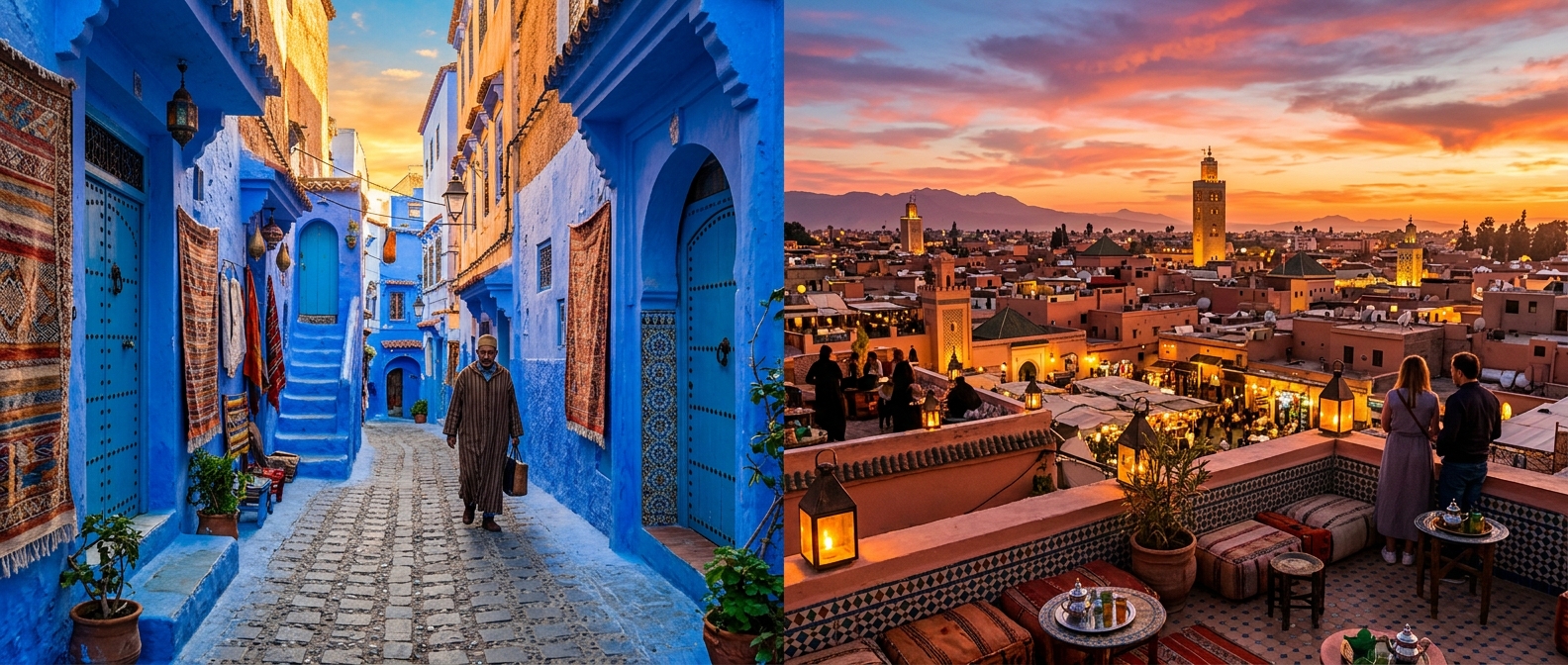
Old World vs New World
Morocco and Dubai sit at opposite ends of the travel spectrum. Morocco is a North African country steeped in centuries of history, with ancient medinas, Berber culture, mountains and the Sahara. It rewards travelers seeking authenticity and adventure.
Dubai, in the United Arab Emirates, is a young, ultramodern city built on ambition and oil wealth, defined by record-breaking skyscrapers, malls, artificial islands and a culture of luxury. It rewards travelers seeking comfort, shopping and spectacle.
Attractions and Experiences
Morocco offers souks, palaces, riads, the High Atlas mountains, blue Chefchaouen, surfing on the Atlantic coast and camel treks into the Sahara. Experiences feel raw, varied and rooted in tradition.
Dubai offers the Burj Khalifa, the Dubai Mall, Palm Jumeirah, indoor ski slopes, theme parks and desert safaris with luxury camps. Experiences are polished, engineered and built around entertainment and superlatives.
Culture and Authenticity
Morocco is culturally immersive: you interact with local artisans, eat in family-run spots, hear multiple languages and explore living historic cities. It can feel chaotic but deeply genuine.
Dubai is highly international, with expatriates making up most of the population. While it has heritage districts like Al Fahidi and traditional souks, the overall feel is global and manufactured rather than historically authentic.
Cost and Luxury
Morocco generally offers excellent value, with affordable food, accommodation and tours, though luxury options exist. It suits a wide range of budgets, including backpackers.
Dubai is more expensive, particularly for dining, drinks and premium experiences, though it also has mid-range options. It is geared toward comfort and luxury, with world-class hotels and service.
Beaches and Weather
Dubai has warm Gulf waters, pristine beaches and beach clubs, but summers are brutally hot, often exceeding 40 degrees Celsius. The best time to visit is the cooler winter months.
Morocco's beaches are mostly Atlantic and cooler, better for surfing than swimming, but its varied climate means you can find pleasant weather somewhere most of the year, from coast to mountains.
Practical Differences
Dubai is extremely organized, English-friendly, safe and easy to navigate, with excellent infrastructure, metro and ride-hailing. It is stress-free for first-time international travelers.
Morocco requires more flexibility, with haggling, language variety and occasional hassle from touts, but offers a richer sense of discovery. Both are popular, accessible destinations with good flight connections.
Which to Choose
Choose Morocco for culture, history, nature, adventure and value, especially if you enjoy exploring and don't mind a less polished experience.
Choose Dubai for luxury, shopping, beaches, family attractions and effortless comfort, especially if you want a stress-free, modern getaway. Some travelers even combine both via a stopover, as flights connect easily.
| Factor | Morocco | Dubai |
|---|---|---|
| Character | Ancient, cultural, varied | Modern, luxury, engineered |
| Main draw | Medinas, desert, mountains | Skyscrapers, malls, beaches |
| Authenticity | High, traditional | Global, manufactured |
| Cost | Good value, budget-friendly | Expensive, premium |
| Ease of travel | Requires flexibility | Very organized, easy |
| Best for | Culture and adventure | Luxury and comfort |
Comparison
FAQ
Is Morocco or Dubai cheaper?
Morocco is significantly cheaper for food, lodging and tours, while Dubai is a premium destination with higher costs for dining, drinks and experiences.
Which is better for families?
Dubai offers more polished family attractions, theme parks and stress-free logistics, while Morocco offers cultural and outdoor experiences that suit adventurous families.
Can I combine both in one trip?
Yes. Flights connect the regions easily, and some travelers use Dubai as a stopover or pair the two for a contrast of modern and traditional.
Which is hotter?
Dubai's summers are extreme, often above 40 degrees Celsius. Morocco's varied geography means milder options, though its desert and southern cities also get very hot in summer.
Loved this? Useful? React below — your feedback helps other readers.