Morocco's Tourism Boom in 2026: Why the Kingdom Is the World's Hottest Destination
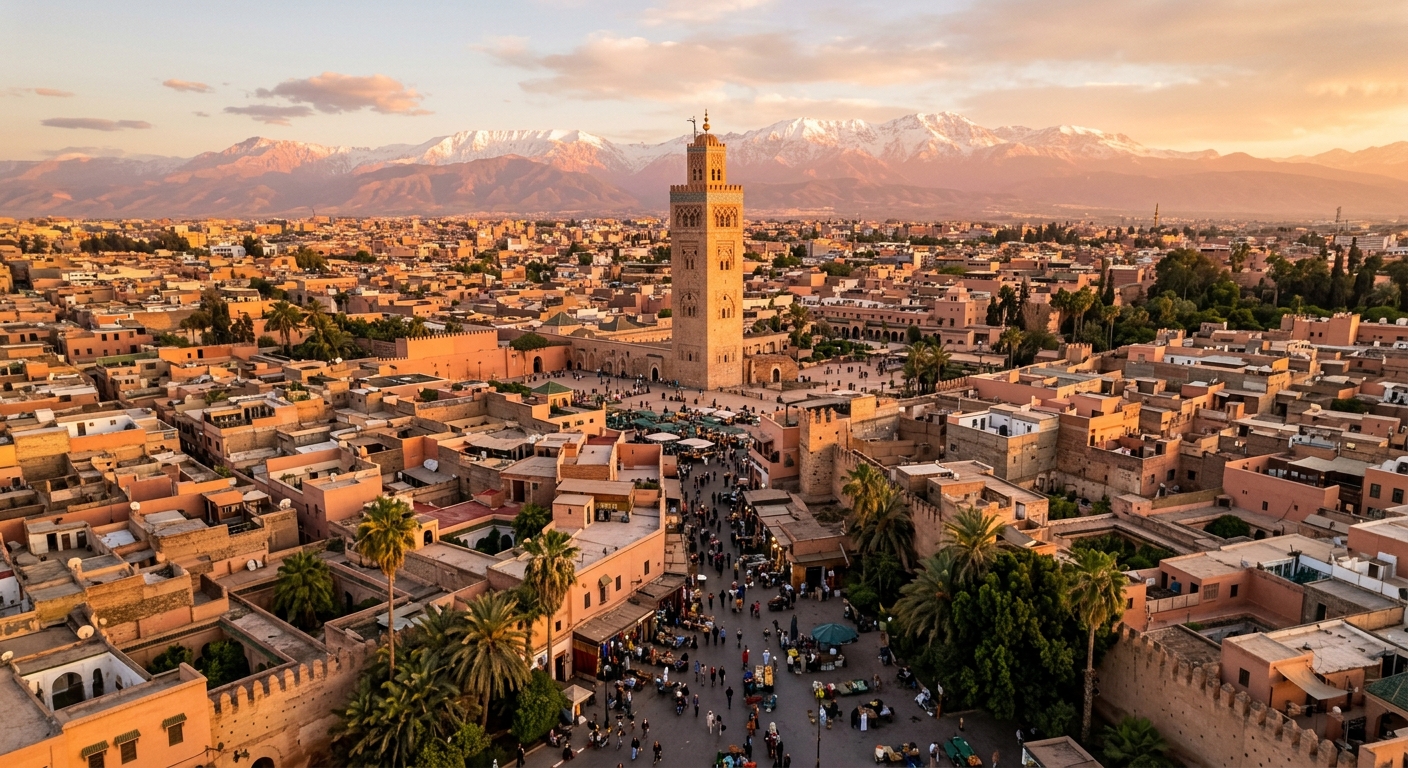
A Record-Breaking Surge
Morocco has firmly established itself as one of the planet's fastest-growing tourism markets. In 2024 the Kingdom welcomed a record 17.4 million international and diaspora visitors, an 18 percent jump over the previous year and a figure that comfortably surpassed pre-pandemic highs. The momentum has not slowed; through the first months of 2026, arrivals continued to climb at double-digit rates, putting the country on a credible path to break the 20-million barrier within the year.
What makes the surge remarkable is its breadth. Marrakech remains the undisputed flagship, but secondary destinations such as Agadir, Tangier, Essaouira and the desert gateway of Merzouga are all reporting their strongest seasons on record. The Moroccan National Tourist Office (ONMT) has set an official target of 26 million visitors by 2030, and for the first time that ambitious number feels achievable rather than aspirational.
Tourism now contributes roughly seven percent of Morocco's GDP and supports more than half a million direct jobs, making the sector a cornerstone of the national economy. The government has responded by pouring billions of dirhams into airports, rail, roads and hotel capacity, signaling that the boom is being managed as a long-term strategic asset rather than a passing trend.
Why Travelers Are Choosing Morocco Now
Several forces have converged to make Morocco irresistible in the mid-2020s. The first is accessibility. Citizens of more than 70 countries, including the United States, Canada, the United Kingdom, the European Union, Australia and Japan, can enter visa-free for up to 90 days. That frictionless entry, combined with flight times of just three to four hours from most European capitals, makes Morocco one of the easiest long-haul-feeling escapes on the continent's doorstep.
The second is value. Despite global inflation, Morocco remains extraordinarily affordable by Western standards. A night in a beautifully restored riad, a multi-course tagine dinner, or a private driver for a day all cost a fraction of comparable experiences in Europe. For travelers seeking richness of experience without the premium price tag, the Kingdom offers an unusually high return on every dirham spent.
The third is authenticity. In an age of homogenized travel, Morocco delivers genuine cultural depth: imperial cities with thousand-year histories, living craft traditions, Berber villages in the High Atlas, and a culinary heritage recognized worldwide. The country manages to feel both exotic and welcoming, adventurous and safe, which is precisely the combination modern travelers are chasing.
The 2030 World Cup Effect
Looming over everything is the 2030 FIFA World Cup, which Morocco will co-host alongside Spain and Portugal. The tournament represents the single largest catalyst in the country's modern tourism history, and preparations are already reshaping the nation's infrastructure years in advance.
Six Moroccan cities, Casablanca, Rabat, Marrakech, Tangier, Agadir and Fez, are slated to host matches, and each is undergoing a transformation. The centerpiece is the Grand Stade Hassan II near Casablanca, designed to seat around 115,000 spectators and intended to be among the largest football stadiums on Earth. New stadiums, training grounds and fan zones are rising across the country.
Even though the matches are still years away, the anticipation is already driving bookings. International media coverage has put Morocco on millions of new travel wish lists, and tour operators report a measurable uptick in interest tied to World Cup buzz. The event is functioning as a long, slow-burning advertising campaign for the entire Kingdom.
Infrastructure Built for the Future
Behind the headline visitor numbers lies a quieter revolution in infrastructure. Morocco operates Al Boraq, the first high-speed rail line in Africa, connecting Tangier to Casablanca at speeds up to 320 kilometers per hour and slashing the journey to barely two hours. Extensions of the network toward Marrakech and Agadir are in progress, promising to knit the country's tourism poles together as never before.
Air capacity is expanding aggressively. Mohammed V International Airport in Casablanca is being enlarged to handle far greater throughput, and budget carriers continue to add direct routes from secondary European cities to Marrakech, Agadir, Fez and Tangier. New highways, modern bus networks and improved roads into rural regions are opening up areas that were once difficult to reach.
Hotel investment is keeping pace. International luxury brands and boutique riad operators alike are racing to add rooms, while the government streamlines licensing to bring capacity online faster. The combination of better transport and more beds means Morocco can absorb the rising tide of visitors without the bottlenecks that plague many fast-growing destinations.
Where the Boom Is Spreading
While Marrakech still captures the lion's share of attention, the most interesting story of 2026 is geographic diffusion. Travelers who have already ticked off the Red City are venturing further, and savvy first-timers are discovering that Morocco's wealth lies well beyond its most famous square.
Tangier, long overlooked, has reinvented itself as a stylish gateway with a renovated medina, a buzzing arts scene and easy rail links. The Atlantic coast around Essaouira and Taghazout has become a magnet for surfers, digital nomads and wellness seekers. Chefchaouen, the blue-washed mountain town, has graduated from Instagram curiosity to genuine multi-day destination. And the Sahara, accessed via Merzouga or Zagora, continues to deliver the bucket-list desert experience that no other Mediterranean-adjacent country can match.
This spreading-out is healthy. It eases pressure on the most crowded sites, distributes economic benefits to rural and regional communities, and rewards travelers with a deeper, less commercialized encounter. The Morocco of 2026 invites visitors to look past the postcard and explore the full sweep of a country that stretches from Atlantic surf to Saharan dunes.
Travel Smart in the Boom Era
Popularity has a price, and travelers should plan accordingly. The peak seasons of spring (March to May) and autumn (September to November) now see hotels and riads in Marrakech, Fez and Chefchaouen booking out weeks or even months ahead. Securing accommodation and desert tours early is no longer optional during high season; it is essential.
Prices, while still excellent value, have crept upward in the most touristed zones, and the gap between high and low season is widening. Travelers willing to visit in winter, outside the Sahara's coldest desert nights, or in the shoulder weeks can still find remarkable deals and far thinner crowds. Coastal Agadir, in particular, enjoys mild sunshine year-round and offers a calmer alternative to the inland heat of summer.
The boom has also professionalized the industry, with more English-speaking guides, reliable online booking, and improved standards across the board. For the prepared traveler, there has never been a better moment to experience Morocco, provided you book ahead, embrace the shoulder seasons where possible, and venture beyond the obvious to find the country at its most rewarding.
| Metric | 2024 Actual | 2030 Target |
|---|---|---|
| International & diaspora arrivals | 17.4 million | 26 million |
| Tourism share of GDP | ~7% | Higher (key pillar) |
| World Cup host cities | Preparation phase | 6 cities hosting matches |
| High-speed rail reach | Tangier–Casablanca | Extended to Marrakech & Agadir |
| Visa-free nationalities | 70+ countries | Maintained / expanded |
Morocco tourism by the numbers (2024 vs 2030 targets)
FAQ
How many tourists visited Morocco in 2024?
Morocco welcomed a record 17.4 million international and diaspora visitors in 2024, an 18 percent increase over the prior year, and is targeting 26 million arrivals by 2030.
Do I need a visa to visit Morocco?
Citizens of more than 70 countries, including the US, Canada, the UK, the EU, Australia and Japan, can enter Morocco visa-free for stays of up to 90 days. Always confirm current requirements before traveling.
How is the 2030 World Cup affecting Morocco tourism?
Morocco is co-hosting the 2030 FIFA World Cup with Spain and Portugal, with six cities hosting matches. The event is driving massive investment in stadiums, rail and airports, and is already boosting global interest and bookings.
When is the best time to visit Morocco?
Spring (March to May) and autumn (September to November) offer the most comfortable weather but draw the biggest crowds. Coastal Agadir is mild year-round, while winter can be a quieter, cheaper time to visit inland cities.
Is Morocco affordable for travelers?
Yes. Despite rising popularity, Morocco remains excellent value compared to Europe, with affordable riads, meals and private drivers. Prices are higher in peak season and in the most touristed cities, so booking early helps.
Loved this? Useful? React below — your feedback helps other readers.