How Morocco Dismantled Canada 3-0: The Full Tactical Breakdown and the Blueprint to Beat France

What Actually Happened at NRG Stadium
The scoreline reads like a rout, but the match itself was a study in patience. Canada 0, Morocco 3, Round of 16, July 4, 2026, in Houston. Azzedine Ounahi broke the deadlock in the 50th minute, taking a free kick worked to him by Achraf Hakimi and driving a low right-footed shot through a crowd of bodies into the bottom corner from outside the box. He added a second in the 82nd minute, finishing a break set up by Brahim Diaz against a Canadian defence that was, by then, stretched beyond repair. Substitute Soufiane Rahimi completed the scoring deep into stoppage time, again from a Diaz pass, again on the counter.
The first half was, by common consent, pedestrian. Neither side created a clear-cut chance of real quality, and the underlying chance-quality numbers across the ninety minutes ended up remarkably even, which tells you something important: Morocco did not out-chance Canada by volume. They out-executed them at the exact moments that decide knockout football. Three shots of genuine conviction, three goals, zero conceded. That is tournament football distilled.
Canada coach Jesse Marsch left the stadium insisting his team had been the better side. Morocco coach Mohamed Ouahbi's reply was withering and accurate in equal measure: it takes some nerve to say that when you lose 3-0, and Morocco were clearly better in the second half. Both men were describing real things. Canada won large stretches of the intensity battle. Morocco won the match. Understanding how both statements can be true at once is the whole point of this analysis.
The result carried historical weight beyond the bracket. Morocco became the first African nation to reach the World Cup quarterfinals more than once, backing up their landmark run to the 2022 semifinals in Qatar. Canada, meanwhile, exited as the first of the three co-hosts to fall, their most promising World Cup campaign in history ending one round short of the last eight. And waiting in the quarterfinal is the team that ended Morocco's dream in 2022: France.

First Half: Surviving the Marsch Press Without Blinking
Jesse Marsch teams have one non-negotiable identity trait: they press. Canada came out in Houston exactly as expected, squeezing Morocco's first phase with aggressive man-oriented pressure, forcing the centre-backs to play quickly and trying to turn the match into a series of duels and second-ball scrambles. In front of a partisan, heavily pro-Morocco crowd, the opening half hour belonged to Canada's legs more than Morocco's ball.
Morocco's response was the first tactical decision that won the game: they refused to play the match Canada wanted. Rather than trying to combine through the press in tight spaces and risk the turnovers that feed a Marsch team's transition game, Morocco mixed their build-up. When the press was fully committed, they went longer and earlier, targeting flick-ons and second balls in midfield rather than gifting Canada interceptions high up the pitch. When Canada's pressing waves lost synchronization, Morocco played through them calmly, with Ounahi dropping into pockets to receive on the half-turn.
This is what press resistance actually means at tournament level. It is not dribbling out of trouble for ninety minutes; it is the discipline to accept ugly possessions. A pedestrian first half was not a failure of Morocco's game plan. It was the game plan. Every scoreless minute drained Canada's press of energy and belief, because a high press is an investment that demands a return. Canada sprinted, trapped, and hounded for 45 minutes and had nothing on the scoreboard to show for the expenditure.
There is a deeper structural point here. Pressing teams generate their best chances from turnovers within 40 metres of goal. Morocco conceded almost none of those. Their centre-backs did not dally, their goalkeeper did not force risky short restarts under pressure, and their midfield did not attempt the extra touch in the danger zone. The chances Canada did create came mostly from crosses and long-range efforts against a set defence, which is exactly the diet a well-organized back line is happiest to digest.
By halftime, the match was scoreless and Canada had spent heavily. Morocco had spent almost nothing. In knockout football, that asymmetry is a lead you cannot see on the scoreboard.
The 50th Minute: One Rehearsed Moment Changes Everything
Five minutes after the restart, Morocco cashed in. A free kick in Canada's half was worked short, Achraf Hakimi fed Azzedine Ounahi, and Ounahi's low right-footed strike from outside the box travelled through a forest of legs into the bottom right corner. It was a goal built from three distinct Moroccan strengths: set-piece design, Hakimi's ability to deliver a clean, weighted ball under pressure, and Ounahi's technique striking through traffic where the goalkeeper's sightline is compromised.
The choice to go short rather than launch the free kick into the box was itself a tactical tell. Canada defend aerial deliveries with size and aggression; they are far less comfortable defending the disorganized moment after a short restart, when marking assignments blur and the second wave of runners arrives unmarked. Morocco identified that seam and attacked it. Shots through traffic from the edge of the area are among the hardest for any goalkeeper to read, because the save is made or lost on picking up the ball's flight a fraction late.
The timing mattered as much as the mechanism. Scoring immediately after halftime hit Canada at their most psychologically vulnerable point. Marsch had surely spent the interval reinforcing the message that the plan was working, that the press was winning the territorial battle, that one transition would break Morocco. Instead, within five minutes, his team was chasing the game against the single best game-state management side in this tournament.
From that moment, every structural assumption in Canada's game model turned against them. A high press with a lead is pressure; a high press while trailing is desperation, and desperation leaves space. Morocco understood this instantly, and the rest of the match was an exercise in letting Canada destroy their own shape.
Azzedine Ounahi and the Midfield Control Question
Ounahi's brace will dominate the headlines, but his deeper contribution was positional. Morocco's midfield operated on a simple principle: control the centre of the pitch not by monopolizing possession, but by winning the territorial and temporal battles that matter. When Morocco had the ball, Ounahi's movement between the lines gave the build-up an escape valve against the press. When Canada had it, Morocco's midfield collapsed into a compact central block that forced play wide, where crosses could be dealt with.
This is the same midfield philosophy that carried Morocco to the semifinals in 2022, refined. The Atlas Lions have never needed 60 percent possession to control a match. Their control is rhythmic: they decide when the game accelerates and when it slows. Against Canada, Morocco spent the first half deliberately slowing the match, killing the frenetic tempo a pressing side feeds on, and then injected sudden speed in the seconds after winning the ball, precisely when Canada's rest-defence was thinnest.
Ounahi is the ideal instrument for this style because he is that rare midfielder who resists pressure and punishes it in the same motion. His first goal came from arriving late into shooting space; his second, in the 82nd minute, came from running beyond a stretched defence in transition and finishing with composure. Two goals, two completely different midfield skills, one player. Since his breakout at the 2022 World Cup, when his performances drew praise from opposing coaches, he has grown into exactly the player Morocco hoped: a midfielder who decides knockout games.
Brahim Diaz deserves his own paragraph in any honest account of the midfield battle. His two assists, for the 82nd-minute goal and Rahimi's stoppage-time third, both came in transition, and both showcased the quality that separates good counter-attacking teams from lethal ones: the final pass delivered at full speed without breaking stride. Diaz operating in the right half-space, with Hakimi overlapping outside him and Ounahi arriving centrally, gives Morocco a right-sided triangle that very few defences in this tournament have solved.

Game State Management: How Morocco Weaponized the Scoreboard
Game state management is the least glamorous and most decisive skill in tournament football, and Morocco may be the best team in the world at it. The concept is simple: the optimal way to play changes depending on the score and the clock, and elite teams shift their approach the instant the state changes. Morocco at 0-0 and Morocco at 1-0 are two different teams by design.
At 0-0, Morocco played a patient, risk-averse game: deep enough to deny space in behind, careful in possession, content to let the half pass without incident. The moment Ounahi scored, the trap was set. Morocco dropped their line of engagement slightly, invited Canada forward, and turned every Canadian attack into a potential Moroccan counter. Canada, needing a goal, had no choice but to accept the invitation. Their fullbacks pushed higher, their midfield committed more runners, and the space behind their defence grew with every passing minute.
The 82nd-minute second goal was the trap springing exactly as designed. Canada were stretched, chasing the game with the desperation of a side that could feel elimination approaching, and Morocco broke through them with Diaz feeding Ounahi for a precise finish. Note the timing: late enough that Canada had fully committed to risk, early enough that the game was decided before stoppage-time chaos could introduce variance. That is not luck. That is a team executing a plan whose logic was set the moment the first goal went in.
Marsch's post-match claim that Canada were the better team is, in this light, a category error. Canada were better at the things Canada measures: pressing actions, duels, running data, territorial pressure in the first half. Morocco were better at the only thing the tournament measures. Ouahbi's rebuttal, that Morocco were clearly superior after the break, is what game state mastery looks like from the winning bench: the second half unfolded almost entirely on Morocco's terms because Morocco had engineered the conditions that forced Canada to play badly.
For neutrals wondering how a match with nearly even chance-quality numbers ends 3-0, this is the answer. Morocco concentrated their best moments in the highest-leverage situations, and forced Canada to take their chances in the lowest-leverage ones, hurried, from distance, against a set defence. Efficiency is not variance when it is structural.
Counter-Attacking Efficiency: The Rahimi Exclamation Point
Soufiane Rahimi's goal in the seventh minute of stoppage time will be remembered as garnish, but tactically it was a thesis statement. A substitute forward, fresh legs against exhausted defenders, running a counter-attack to its clinical conclusion off yet another Diaz assist. Morocco's third goal against Canada was scored in essentially the same pattern as their second: win the ball, break at speed, finish. When a team scores twice in the same pattern in forty minutes, the pattern is the story.
Morocco's counter-attacking game works because it is structured, not improvised. In transition, the roles are pre-assigned: one player carries, one runs the outside channel to stretch the retreating defence, one arrives centrally as the late option. Diaz's two assists came from exactly this framework, with the ball-carrier drawing defenders before releasing at the moment maximum damage was available. There is no hesitation in Moroccan counters, no extra touch, no pause to consider options, because the options were rehearsed long before kickoff.
The use of substitutes amplified the effect. Introducing Rahimi against a Canadian back line that had been sprinting in recovery for eighty minutes was a straightforward exploitation of accumulated fatigue. Knockout tournaments are won by squads, not elevens, and Morocco's bench delivering a goal in the dying moments of a Round of 16 tie is a signal of depth that should worry every remaining team in the bracket.
It is worth pausing on what this means for the quarterfinal. France under Deschamps concede very few high-quality chances in open play, but the chances they do concede tend to come in exactly this phase: fast transitions after their own attacks break down, when their attacking talent is high up the pitch and their midfield screen is exposed. Morocco just spent forty minutes demonstrating, against a live opponent in a knockout match, that their transition machine is fully operational.
The Defensive Shape That Has Now Carried Two World Cups
A clean sheet against a co-host in front of a huge crowd extends one of the most remarkable defensive records in modern World Cup history. Morocco's 2022 run was built on a defence that conceded only once in the entire tournament before the semifinal, and that goal was an own goal. The 2026 vintage is constructed on the same principles: a compact block that shrinks the central corridor, disciplined wide players who track back without complaint, and a defensive line that defends the box like a fortress.
Against Canada, the shape was a familiar mid-block that collapsed into a low block when the game state suggested it. The two banks stayed narrow, deliberately conceding the flanks and daring Canada to cross. This is a percentage bet that Morocco have won over and over: crosses into a packed penalty area are among the least efficient attacking actions in football, and Morocco's centre-backs and goalkeeper are excellent at dealing with them.
What separates Morocco's block from an ordinary parked bus is its aggression at the right moments. This is not passive defending. When the trigger is right, a loose touch, a backward pass, a receiver facing his own goal, Morocco jump forward in coordinated waves and turn defence into attack in seconds. Both of the late goals against Canada began with exactly this kind of proactive ball-winning rather than a lucky interception.
The individual quality matters too. Hakimi remains, at his peak years, arguably the best two-way fullback in world football, capable of defending an elite winger for eighty minutes and still providing the assist that wins the match. The centre-back pairing has been settled and communicative throughout the tournament. And behind them, Morocco's goalkeeping has been a source of calm all summer, most famously in the shootout that eliminated the Netherlands in the previous round.
France will present a completely different attacking problem than Canada did, faster, more individually gifted, more varied. But the core question France must answer is the one Canada failed: how do you score against a team that concedes almost nothing central, defends its box superbly, and punishes every risk you take to break it down?
The Road to Foxborough: What Morocco's Route Reveals
Morocco's path through this tournament reads like a syllabus in tournament craft. In the group stage they held Brazil to a 1-1 draw, beat Scotland 1-0, and finished with a 4-2 win over Haiti to take second place in Group C. Three completely different match profiles: a heavyweight contest managed for a point, a tight low-scoring game won on fine margins, and an open match where the attack was allowed off the leash.
The Round of 32 tie against the Netherlands in Monterrey added the final credential: resilience. Trailing to a Cody Gakpo strike in the 72nd minute, Morocco equalized in second-half stoppage time and then held their nerve through extra time and a penalty shootout, winning 3-2 on spot kicks with their goalkeeper decisive. Teams that come from behind late in knockout matches and win shootouts acquire a psychological armour that cannot be trained. Morocco walked into Houston carrying it, and it showed in the total calm with which they absorbed Canada's first-half storm.
Put the résumé together and the profile is complete: Morocco can manage a game against elite opposition, win ugly, win open, come from behind, win on penalties, and dismantle a pressing side on the counter. There is no match state in Foxborough that Morocco have not already faced and solved somewhere in this tournament.
Compare that with the 2022 team, which rode a magnificent defence and moments of brilliance to the semifinals, and the 2026 side looks like the more complete evolution. The attack is more productive, the bench is deeper, and the tournament has already tested them in more ways. Mohamed Ouahbi said after the Canada match that Morocco are no longer a surprise, that they are a major contender, and that it is a great source of pride. On the evidence of four weeks of football, that is not bravado. It is a scouting report.

Scouting France: The Grind Against Paraguay Tells a Story
A few hours after Morocco's win, France laboured to a 1-0 victory over Paraguay in Philadelphia, and the manner of it should interest every Moroccan analyst. France dominated the ball, controlling roughly three-quarters of possession, and piled up shots, but struggled for long stretches to create clean chances against a stubborn, compact Paraguayan defence. The breakthrough came not from open play but from a penalty: Diego Gomez's knee caught the onrushing Desire Doue, VAR intervened, and Kylian Mbappe sent the goalkeeper the wrong way from the spot in the 70th minute.
Nobody should mistake one grinding win for weakness. France have been, by wide agreement, one of the most devastating attacking teams of this tournament, scoring freely through the group stage and the Round of 32. Mbappe's penalty was his seventh goal of the World Cup, drawing him level with Lionel Messi in the Golden Boot race. Doue has emerged as a genuine star of this tournament. This France squad has depth of attacking talent that no other remaining team can match.
But the Paraguay match exposed the conditional nature of France's dominance. When opponents give France space, transition moments, high defensive lines, stretched midfields, France score in bunches. When an opponent sits compact, denies depth runs, and forces France to construct attacks patiently against a set block, the machine visibly slows. Paraguay, with a fraction of Morocco's defensive quality, kept France scoreless from open play for ninety minutes. That is a data point Morocco will have noticed immediately, because playing compact and denying depth is not something Morocco would need to change their identity to do. It is their identity.
There was a second notable detail in Philadelphia: France were without the injured Aurelien Tchouameni, the defensive midfielder who anchors their structure. His absence changes France's profile in both directions, slightly less secure in the screening zone in front of the defence, slightly less clean in the first phase of build-up. Whether he recovers for Thursday is one of the defining selection questions of the quarterfinal, and Moroccan match-planning will have a version for each answer.
The Blueprint: Where France Are Vulnerable and How Morocco's Tools Map On
Start with the shape of the contest, because it is unusually predictable. France will have the ball; Morocco will not want it. France's possession dominance against Paraguay previews the Foxborough script almost exactly, and it is a script Morocco would choose voluntarily. Every tactical tool Morocco displayed against Canada transfers directly: the compact central block, the patience without the ball, the game state discipline, and the rehearsed counters into space.
Vulnerability one: the rest-defence behind France's attack. When France commit their forwards and fullbacks into the final third, the space between their midfield screen and their centre-backs, and the channels outside their centre-backs, become the most valuable real estate on the pitch. This is precisely the space Morocco's transition triangle attacked against Canada, with Diaz releasing runners at full speed. If Tchouameni is absent or short of rhythm, that screening zone is materially softer. Morocco's counters do not need many opportunities; against Canada they needed three.
Vulnerability two: patience under scoreboard pressure. France's grind against Paraguay stayed comfortable because Paraguay carried little counter-threat and France never fell behind. Now invert the scenario: if Morocco score first in Foxborough, France must chase against the best game-state managers in the tournament, exactly the trap Canada fell into. France's attacking talent makes them more dangerous than Canada in that chase, but also more exposed, because their commitment to risk rises with their quality. The longer the match stays level or Moroccan-led, the more the structural logic favours Morocco.
Vulnerability three: set pieces, in both directions. Morocco's opener against Canada came from a rehearsed short free-kick routine, and dead balls are the classic equalizer against superior possession teams, the one attacking phase where possession share is irrelevant. Morocco will bank on their designed routines and on Hakimi's delivery. Defensively, conceding cheap free kicks around the box to Mbappe and France's strikers is the single most avoidable way to lose this match, and Morocco's foul discipline in their defensive third, excellent against Canada, must hold.
The key individual duel is the one everyone will circle: Mbappe against Hakimi, club teammates at Paris Saint-Germain, close friends, and now direct opponents on the flank where the quarterfinal will likely be decided. Hakimi cannot defend Mbappe alone for ninety minutes, no fullback alive can, so expect Morocco to build a two-layer cage on that side, with a midfielder shading across and the near centre-back covering the channel run. Every meter of space denied to Mbappe raises the price France pay for their possession.
None of this makes Morocco favourites; France's talent floor is simply higher. But the blueprint is real, it was executed in public against Canada, and its central premise, that France can be made uncomfortable by compactness, patience, and lethal transitions, was co-authored by Paraguay just hours later. Morocco do not need to become a different team to win in Foxborough. They need to be exactly the team they were in Houston, for about thirty minutes longer.
The Revenge Subplot: Qatar 2022, Rewritten in Foxborough
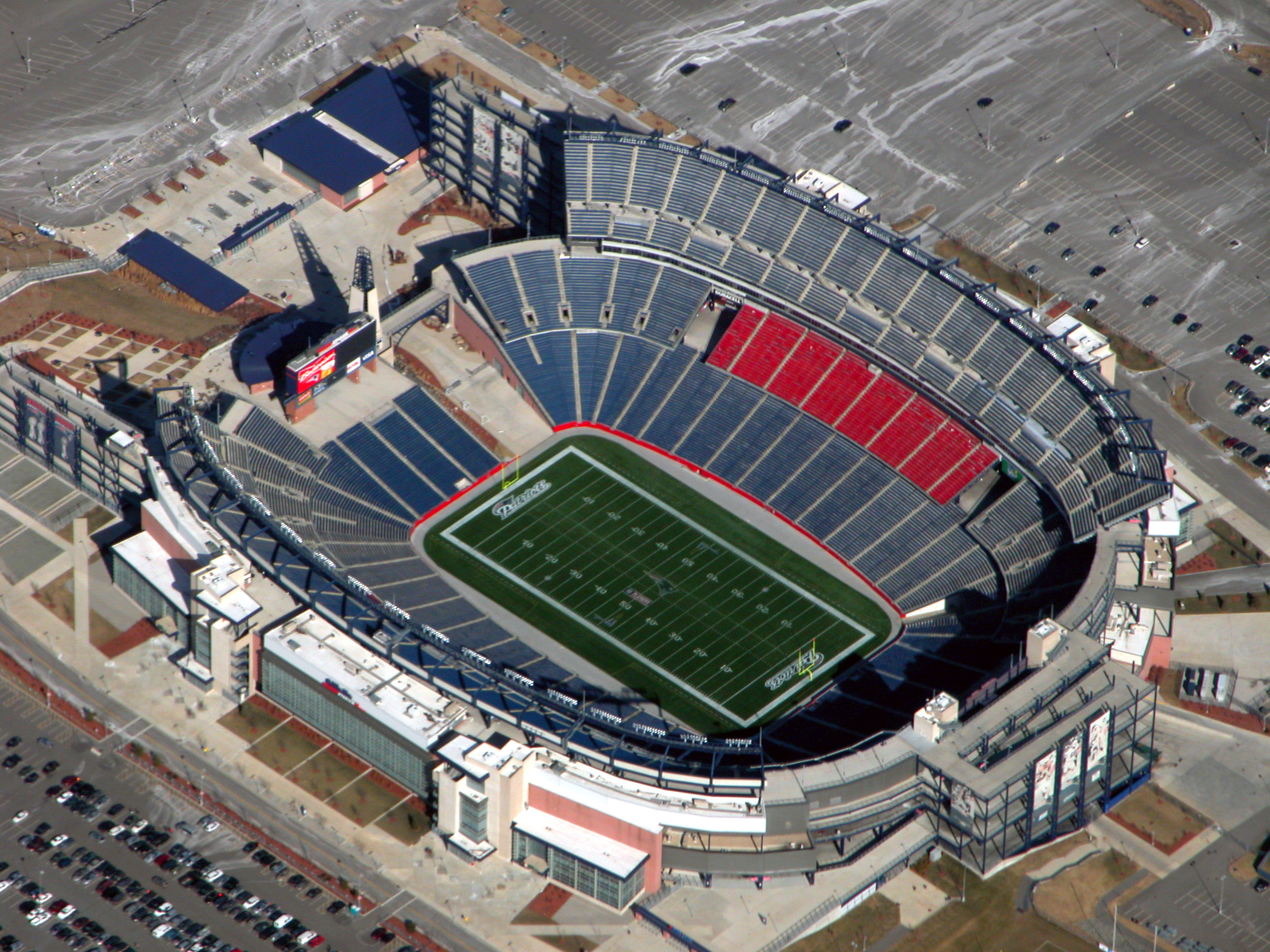
The tactical matchup would be compelling on its own, but this quarterfinal arrives soaked in history. In December 2022, France ended Morocco's fairy-tale semifinal run 2-0 in Qatar, a match Morocco dominated for long stretches without reward, hitting the woodwork and forcing desperate defending before Randal Kolo Muani's late goal killed the tie. Every Moroccan player and supporter has carried that night for four years. On Thursday, July 9, at 4pm Eastern at Boston Stadium in Foxborough, with a sellout crowd of around 65,000 expected, they get the rematch, one round earlier and on far more equal terms.
The 2022 semifinal is also tactically instructive, because Morocco's best spells in that match came when they abandoned caution and attacked France directly, creating the kind of sustained pressure Les Bleus rarely face. The lesson cuts both ways. Morocco proved they can trouble France's defence; France proved they can absorb pressure and strike decisively through their forwards. Four years on, both squads have evolved, but the fundamental contrast, French transition lethality against Moroccan structure and spirit, remains the axis of the fixture.
The occasion will not intimidate Morocco, because occasions never do. The wall of Moroccan support that turned Doha into Casablanca in 2022 has followed the team across North America all summer, and Houston was no different. Foxborough, a short flight from the large Moroccan communities of the northeastern United States and Montreal, may produce the most partisan pro-Morocco atmosphere of the tournament outside a Morocco home game. Crowd energy is not a tactic, but as Canada discovered, playing against Morocco and the stadium simultaneously wears on the legs and the mind.
Both teams arrive ranked in the top six in the world. One is the reigning tournament aristocrat chasing another final. The other is the nation that redrew football's map in 2022 and has spent four years building for exactly this rematch. Whatever happens, the winner will believe, with justification, that their name is on this World Cup.
Strip away the narrative and the quarterfinal reduces to three questions. First: can Morocco's block deny France clean chances for ninety minutes the way Paraguay managed for seventy? Morocco's defensive record across two World Cups says yes; Mbappe's seven goals say it will take the best defensive performance of the tournament. Second: can Morocco's transitions hurt France's rest-defence the way they hurt Canada's? The evidence from Houston, three goals from three high-leverage moments, says the machinery is ready; France's superior recovery speed says the margins will be thinner. Third: who wins the game state battle? The team that scores first inherits a structural advantage, and Morocco have built their entire tournament identity around converting exactly that advantage into wins.
For Canada, the autopsy will be gentler than the scoreline. Marsch's team played their identity to the end, pushed a world-class opponent for a half, and fell to a side that has now eliminated European royalty and a host nation in consecutive rounds. Their World Cup at home ends in genuine progress, even if the final match stings. The gap between Canada and Morocco on July 4 was not effort or courage. It was the accumulated tournament intelligence of a program that has been solving knockout football at the highest level since 2022.
For Morocco, Houston was validation of a method: patient, ruthless, unshakeable. Ouahbi's team have conceded nothing to panic all tournament, scored in every way a team can score, and now stand two wins from a World Cup final that would rank among the greatest achievements in the history of the sport. France are favourites on Thursday. Morocco have made a habit of making that word meaningless. Dima Maghrib.
Frequently asked
What was the final score of Morocco vs Canada in the World Cup 2026 Round of 16?
Morocco beat Canada 3-0 at NRG Stadium in Houston on July 4, 2026. Azzedine Ounahi scored twice, in the 50th and 82nd minutes, and substitute Soufiane Rahimi added a third deep in stoppage time. Canada became the first of the three co-hosts eliminated from the tournament.
Who scored Morocco's goals against Canada?
Azzedine Ounahi scored the first two goals: a low strike from outside the box in the 50th minute after a free kick worked to him by Achraf Hakimi, and a composed finish on the counter in the 82nd minute from a Brahim Diaz assist. Soufiane Rahimi scored the third in second-half stoppage time, also assisted by Diaz.
When and where do Morocco play France in the quarterfinal?
Morocco face France on Thursday, July 9, 2026, with kickoff at 4pm Eastern Time, at Boston Stadium in Foxborough, Massachusetts (known as Gillette Stadium outside the tournament). A sellout crowd of around 65,000 is expected.
Is Morocco vs France a rematch of the 2022 World Cup?
Yes. France beat Morocco 2-0 in the 2022 World Cup semifinal in Qatar, ending the first-ever semifinal run by an African team. The 2026 quarterfinal is the first competitive meeting between the two since that night, and Morocco arrive as a more complete team than in 2022.
Why did Canada lose despite pressing well in the first half?
Canada's high press controlled territory before halftime but produced no goals, while Morocco deliberately absorbed the pressure and conserved energy. Once Ounahi scored early in the second half, Canada had to chase the game, which opened space behind their defence. Morocco then scored twice more on counter-attacks against a stretched, tiring back line.
What did the coaches say after Morocco beat Canada?
Canada coach Jesse Marsch claimed his side had been the better team. Morocco coach Mohamed Ouahbi responded that it takes some nerve to say that after losing 3-0, acknowledged Canada's intensity, and insisted Morocco were clearly superior in the second half. He also said Morocco are no longer a surprise but a major contender.
How did France reach the quarterfinal against Morocco?
France beat Paraguay 1-0 in Philadelphia on July 4. Despite controlling around three-quarters of possession, they struggled to break down a compact Paraguayan defence and needed a 70th-minute Kylian Mbappe penalty, awarded by VAR after Desire Doue was fouled, to go through.
Where is France vulnerable against Morocco?
Three main areas: the space behind their attack in transition, especially with Aurelien Tchouameni's fitness in question; their patience when forced to chase a game against a compact block, as Paraguay showed; and set pieces, where Morocco's rehearsed routines and Hakimi's delivery can bypass France's possession dominance entirely.
How good is Kylian Mbappe's form at the 2026 World Cup?
Exceptional. His penalty against Paraguay was his seventh goal of the tournament, drawing him level with Lionel Messi in the Golden Boot race. Containing Mbappe, likely through a double-team built around his PSG teammate Achraf Hakimi, is Morocco's biggest defensive assignment on Thursday.
Is Morocco the first African team to reach multiple World Cup quarterfinals?
Yes. By beating Canada, Morocco became the first African nation to reach the World Cup quarterfinals more than once. They reached the semifinals in 2022, the first African team ever to do so, and this is their second consecutive run to the last eight.
How did Morocco get through the earlier rounds of the 2026 World Cup?
Morocco drew 1-1 with Brazil, beat Scotland 1-0, and defeated Haiti 4-2 to finish second in Group C. In the Round of 32 they came from behind against the Netherlands in Monterrey, equalizing in stoppage time after Cody Gakpo's opener, and won the penalty shootout 3-2 after a 1-1 draw.
What is Morocco's biggest tactical strength going into the France match?
Game state management combined with counter-attacking efficiency. Morocco control matches without needing the ball: they defend compactly, stay patient at 0-0, and once ahead they invite pressure and punish it in transition. All three goals against Canada came from high-leverage moments Morocco engineered, a template that maps directly onto how France can be hurt.
- Al Jazeera — Ounahi fires Morocco into World Cup quarterfinals with 3-0 win over Canada ↗
- FIFA — Canada 0-3 Morocco match report and highlights ↗
- NBC Sports — Canada 0-3 Morocco: Ounahi double sends Morocco to quarterfinals ↗
- World Soccer Talk — France vs Morocco: date, kickoff time and venue for the quarterfinal ↗
Video via official YouTube embeds; photos via Wikimedia Commons under their stated licenses. All rights belong to the respective owners; 212 Daily claims no ownership.