Morocco in Spring
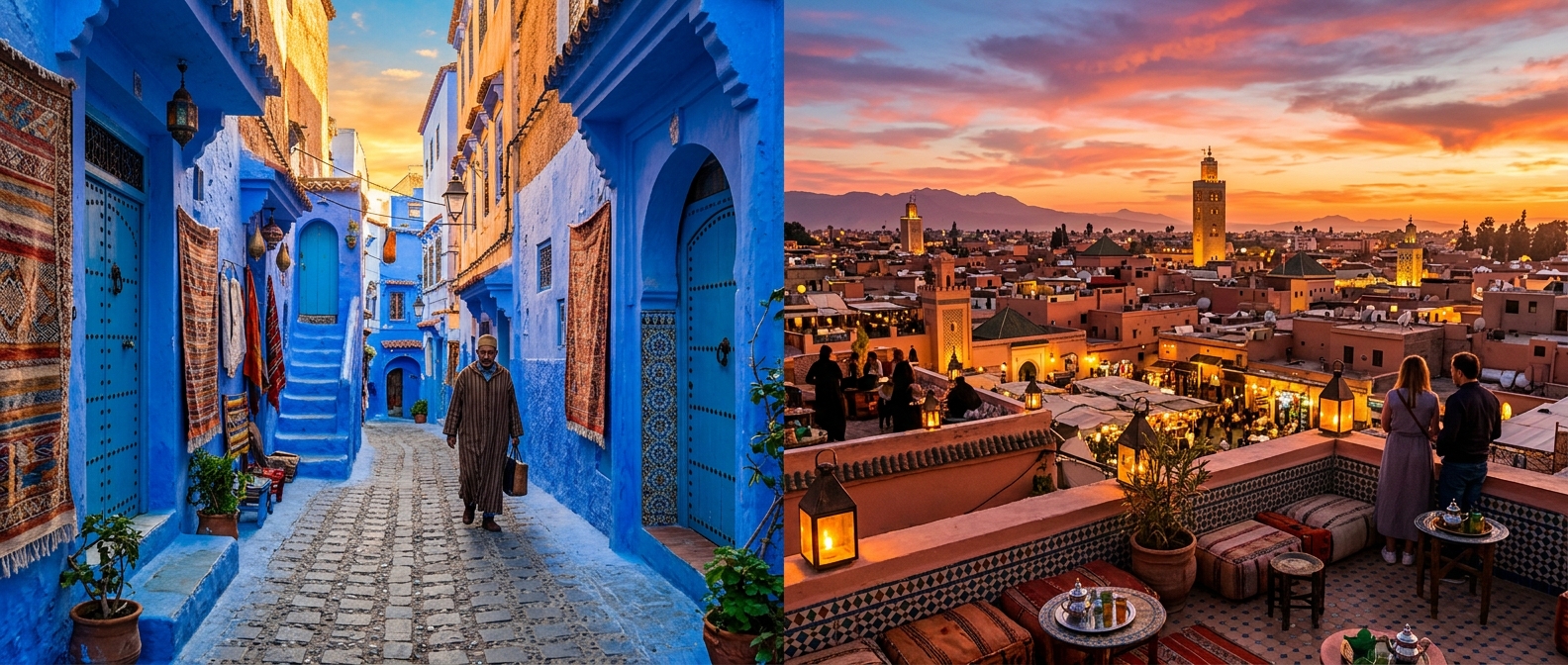
Why Spring Shines in Morocco
Spring is widely considered Morocco's finest travel season, and for good reason. After the cool, damp winter, the country warms into a sweet spot of comfortable temperatures, long sunny days, and lush, green landscapes before the punishing summer heat arrives.
It is one of the rare windows when nearly every region is enjoyable at once: cities, coast, mountains, and the desert all offer pleasant conditions. This versatility makes spring ideal for ambitious multi-region itineraries.
Spring Weather Across Regions
In the imperial cities of Marrakech and Fez, March starts mild around 22C and climbs to the high 20s or low 30s by May, with cool, comfortable evenings. The Atlantic coast stays mild and breezy, while the Atlas valleys are green and fresh, though high peaks still hold snow.
The desert is at its most comfortable for daytime exploration, with warm but not scorching days, though spring can bring occasional sand-laden winds. Rainfall tapers off through the season, dwindling to almost nothing by May.
What to Do in Spring
Spring is prime time for outdoor activity. Hiking in the Atlas valleys is glorious as wildflowers bloom and rivers run full, and lower treks are accessible even while high summits remain snowy. Desert tours are comfortable, and city sightseeing is a pleasure without summer's heat.
Gardens like Marrakech's Majorelle and the Ourika Valley are at their most vibrant. The famous rose harvest in the Valley of Roses near Kelaat M'Gouna peaks in May, complete with a rose festival, offering a fragrant seasonal highlight.
Crowds, Prices and Booking
Spring's appeal comes with a trade-off: it is peak tourist season alongside autumn. Riads, popular tours, and desert camps fill up, and prices are at their highest, especially around Easter and European school holidays in April.
Book accommodation and any guided treks or desert excursions well in advance, ideally several months ahead for popular riads. Major sites and the Marrakech medina can feel busy, so start early in the day to enjoy them before the crowds build.
What to Pack for Spring
Spring weather swings between warm afternoons and cool evenings, so pack layers: light, breathable clothing for the day and a warmer jacket or sweater for nights, which can still be cold in the mountains and desert. Modest, loose clothing remains culturally appropriate.
Bring sun protection, as the spring sun is already strong, a light waterproof for early-season showers in March and April, and sturdy footwear if you plan any hiking. A scarf is useful for both sun and the occasional desert wind.
Is Spring Right for You?
If you want the broadest range of comfortable activities, the greenest scenery, and reliable weather, spring is hard to beat. It suits hikers, photographers, and anyone combining cities, mountains, and desert in one trip.
The only reasons to choose another season are budget, since spring is pricey, or a desire to avoid crowds, in which case shoulder months like late November or even winter offer better value. Otherwise, spring delivers Morocco close to its best.
| Region | Avg High (C) | Highlight | Note |
|---|---|---|---|
| Marrakech/Fez | 22-32 | Comfortable sightseeing | Peak crowds |
| Atlantic coast | 19-24 | Mild and breezy | Pleasant, less busy |
| Atlas valleys | 18-26 | Green, wildflowers | High peaks still snowy |
| Sahara | 25-32 | Comfortable days | Occasional windy spells |
| Valley of Roses | 24-28 | Rose harvest (May) | Fragrant festival |
Spring conditions across Morocco (March-May)
FAQ
Is spring a good time to visit Morocco?
Yes, it is one of the best seasons. Temperatures are comfortable nationwide, landscapes are green and flowering, and cities, coast, mountains and desert are all pleasant at once.
What is the weather like in Morocco in spring?
Mild to warm, with highs of 20-30C in the cities, cool evenings, green Atlas valleys and comfortable desert days. Rainfall tapers off, becoming minimal by May.
Is spring crowded in Morocco?
Yes, spring is peak season alongside autumn, especially around Easter and European school holidays in April. Book riads, tours and desert camps well in advance and expect higher prices.
Loved this? Useful? React below — your feedback helps other readers.