Morocco's Set-Piece & Penalty Specialists
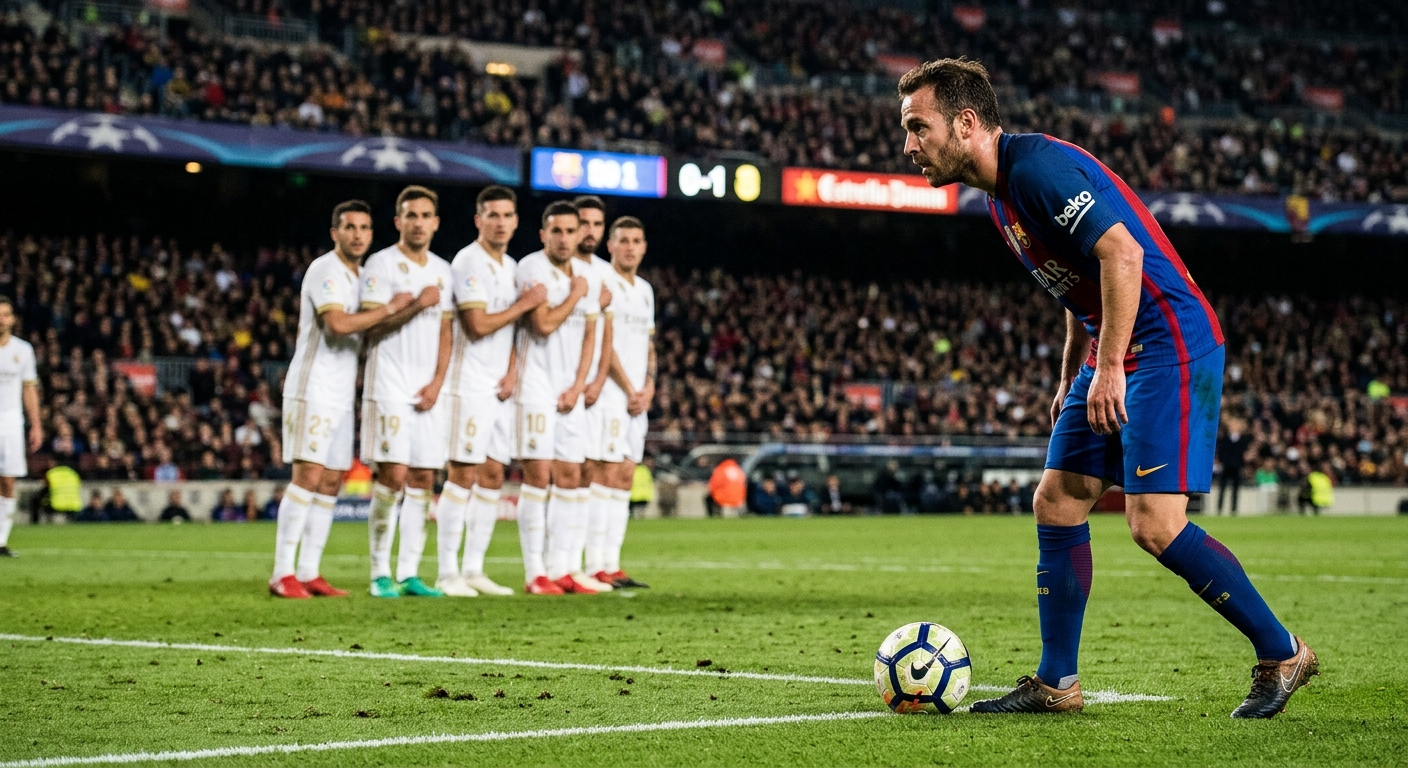
The Importance of Set Pieces in Modern Football
In the modern game, set pieces and penalties have become decisive weapons, often making the difference in tight matches and tournament knockout ties. For a team like Morocco, which built its success on defensive solidity and fine margins, mastery of these situations has been a crucial component of its rise to the top of world football.
Set pieces offer rare moments of controlled opportunity in an otherwise chaotic game. A well-delivered free kick or corner can unlock a stubborn defence, while penalties, whether in open play or shootouts, can decide the fate of entire tournaments. Morocco's recent history is rich with examples of both.
This deep dive examines the players who have made Morocco so dangerous from set-piece and penalty situations: the delivery experts, the spot-kick takers and, crucially, the goalkeeper whose penalty-saving heroics became the stuff of legend. Together, they form a vital part of the Atlas Lions' competitive edge.
Hakim Ziyech: The Delivery Maestro
When it comes to set-piece delivery, Hakim Ziyech stands at the forefront of Moroccan football. Blessed with a wand of a left foot, Ziyech has long been renowned for the quality of his free kicks and corners, able to whip in deliveries with pace, curve and precision that consistently trouble defences and goalkeepers.
Ziyech's reputation as a dead-ball specialist was forged during his time at Ajax, where his set-piece delivery and direct free kicks were a major source of goals and assists. His ability to find teammates with pinpoint crosses, or to threaten goal directly from free kicks, makes him one of Morocco's most valuable weapons.
For Morocco, having a delivery specialist of Ziyech's calibre transforms set pieces from routine restarts into genuine scoring threats. His left foot has created countless opportunities, and his presence over a dead ball commands the attention and anxiety of opponents, making him central to the team's set-piece strategy.
Achraf Hakimi: The Panenka Hero
No discussion of Moroccan penalties is complete without Achraf Hakimi's iconic Panenka against Spain at the 2022 World Cup. With the round-of-16 shootout on the line and the pressure immense, Hakimi chose the boldest of finishes, chipping the ball gently down the middle as Unai Simon dived away, sealing Spain's elimination.
The audacity of the moment was staggering. To attempt a Panenka in such a high-stakes situation, against the country of his birth, required extraordinary nerve and confidence. Hakimi's execution was flawless, and the penalty instantly became one of the defining images of the tournament and of his career.
Hakimi's penalty-taking exemplifies the temperament required to succeed from the spot at the highest level. The ability to remain calm, to commit fully to a chosen technique, and to execute under unbearable pressure separates the elite takers from the rest. His Panenka was a masterclass in composure and self-belief.
Yassine Bounou: The Penalty Stopper
If Morocco's takers have excelled, so too has its goalkeeper in denying opponents from the spot. Yassine Bounou's performance in the 2022 shootout against Spain was a goalkeeping masterclass, as he saved two Spanish penalties, from Carlos Soler and Sergio Busquets, while Pablo Sarabia also missed, meaning Spain failed to score a single kick.
Bounou's penalty-saving ability combines physical reflexes with psychological mastery. He engages with takers, delays his movements, commands his line and reads the kicks with the confidence of a goalkeeper who believes he holds the advantage. Against Spain, this combination of factors proved decisive.
A goalkeeper who can save penalties is an enormous asset in tournament football, where shootouts often decide knockout ties. Bounou's heroics against Spain not only sent Morocco into the quarterfinals but cemented his reputation as one of the world's premier penalty stoppers, a vital weapon in the Atlas Lions' armoury.
The Anatomy of a Great Free Kick
What makes a free kick like Ziyech's so effective? At its core, it is a combination of technique, vision and decision-making. The specialist must read the situation, choosing whether to shoot directly, whip in a cross to a specific zone, or play a clever variation to catch the defence off guard.
Technically, the best free-kick takers generate the right combination of power, curve and dip, manipulating the ball's flight to beat the wall and the goalkeeper or to deliver precisely to an attacking target. Ziyech's left foot allows him to produce deliveries with the spin and trajectory that consistently create danger.
Beyond technique, set-piece success depends on preparation and routines. Teams rehearse their movements, their decoy runs and their target zones, turning set pieces into choreographed opportunities. Morocco's combination of an elite delivery specialist and well-drilled routines makes its dead-ball situations a persistent threat.
The Psychology of Penalties
Penalties are as much a psychological battle as a technical one. The taker faces immense pressure, particularly in a shootout where the stakes are at their highest, while the goalkeeper seeks any edge through positioning, movement and gamesmanship. The mental dimension often determines the outcome.
For takers like Hakimi, success requires the ability to block out the pressure, commit fully to a decision, and execute without hesitation. The Panenka, in particular, demands supreme confidence, as any wavering can result in an easy save and public humiliation. Hakimi's nerve under that pressure was exceptional.
For goalkeepers like Bounou, the psychological game is about imposing doubt on the taker and maximising the chance of a save. By engaging the taker, delaying, and projecting confidence, the goalkeeper can disrupt the kicker's focus. Bounou's mastery of this mental contest was on full display against Spain.
Set Pieces in the 2022 Run
Morocco's 2022 World Cup run featured several pivotal set-piece and penalty moments. The shootout victory over Spain, decided by Bounou's saves and Hakimi's Panenka, was the most dramatic, a moment that hinged entirely on Morocco's penalty expertise at both ends.
Set-piece delivery also contributed to Morocco's attacking threat throughout the tournament. Abdelhamid Sabiri's free-kick goal against Belgium opened the scoring in a famous victory, demonstrating the value of dead-ball quality in unlocking tough opponents and seizing key moments.
These instances underline how central set pieces and penalties were to Morocco's success. In a tournament where the team relied on defensive solidity and fine margins, the ability to create and convert from dead-ball situations, and to excel in the penalty lottery, provided a crucial competitive advantage.
Defending Set Pieces
Set-piece expertise cuts both ways, and Morocco's defensive record in 2022 reflected its ability to defend dead-ball situations as well as attack them. Conceding just one goal en route to the semifinal required not only excellent open-play organisation but also discipline and strength in defending corners and free kicks.
Defending set pieces demands aerial ability, concentration and organisation. Morocco's centre-backs and the broader defensive unit, marshalled by Bounou, dealt effectively with the threats posed by opponents at restarts, denying chances that could have changed the course of matches.
This defensive competence at set pieces complemented Morocco's attacking threat. A team that can both create danger from its own dead balls and neutralise those of its opponents holds a significant edge, and Morocco's two-way set-piece strength was an underappreciated element of its 2022 achievement.
The Next Generation of Specialists
As Morocco looks to the future, the development of new set-piece and penalty specialists will be important for sustaining its competitive edge. Young creative players emerging through the diaspora and domestic systems, such as the gifted Bilal El Khannouss, may inherit the mantle of dead-ball delivery in the years ahead.
Identifying and nurturing players with the technique and temperament for set pieces and penalties is a deliberate process. The best teams cultivate multiple options, ensuring they are never reliant on a single specialist and can adapt to different situations and personnel availability across a long tournament.
For Morocco, maintaining a pipeline of set-piece and penalty experts will help preserve one of the key strengths of its golden era. The combination of elite delivery, composed takers and a penalty-saving goalkeeper proved transformative in 2022, and replicating that profile will support the team's ambitions going forward.
A Decisive Edge
Morocco's mastery of set pieces and penalties has been a decisive edge in its rise to the elite of world football. From Hakim Ziyech's wand of a left foot to Achraf Hakimi's nerveless Panenka and Yassine Bounou's penalty-saving heroics, the Atlas Lions have excelled in these high-value moments of the game.
In a footballing era where fine margins so often determine outcomes, the ability to create and convert from dead balls, and to triumph in the penalty lottery, is invaluable. Morocco's success in 2022 was built in significant part on this expertise, with the shootout victory over Spain standing as the supreme example.
As the team evolves and prepares for future challenges, including the 2026 World Cup, maintaining and developing its set-piece and penalty specialists will remain a priority. These moments may lack the continuous flow of open play, but in the cauldron of tournament football, they are often where history is made, and Morocco has shown it knows how to make the most of them.
| Player | Specialty | Signature moment |
|---|---|---|
| Hakim Ziyech | Free kicks and corners | Elite left-footed delivery |
| Achraf Hakimi | Penalties | Panenka vs Spain (2022) |
| Yassine Bounou | Penalty saves | Two saves vs Spain shootout (2022) |
| Abdelhamid Sabiri | Direct free kicks | Free-kick goal vs Belgium (2022) |
Morocco's set-piece and penalty specialists
FAQ
Who is Morocco's best free-kick taker?
Hakim Ziyech, renowned for his outstanding left-footed delivery from free kicks and corners, is Morocco's premier dead-ball specialist.
Who scored the Panenka penalty for Morocco against Spain?
Achraf Hakimi scored the decisive Panenka penalty to eliminate Spain in the 2022 World Cup round of 16.
How many penalties did Bounou save against Spain?
Yassine Bounou saved two penalties in the shootout, from Carlos Soler and Sergio Busquets, as Spain failed to score any.
Did Morocco score from a free kick in 2022?
Yes, Abdelhamid Sabiri scored from a free kick to open the scoring in Morocco's 2-0 win over Belgium.
Why are set pieces important for Morocco?
Morocco's success relied on fine margins and defensive solidity, making set pieces and penalties decisive weapons for creating and winning key moments.
Loved this? Useful? React below — your feedback helps other readers.