Morocco's Road to World Cup 2026
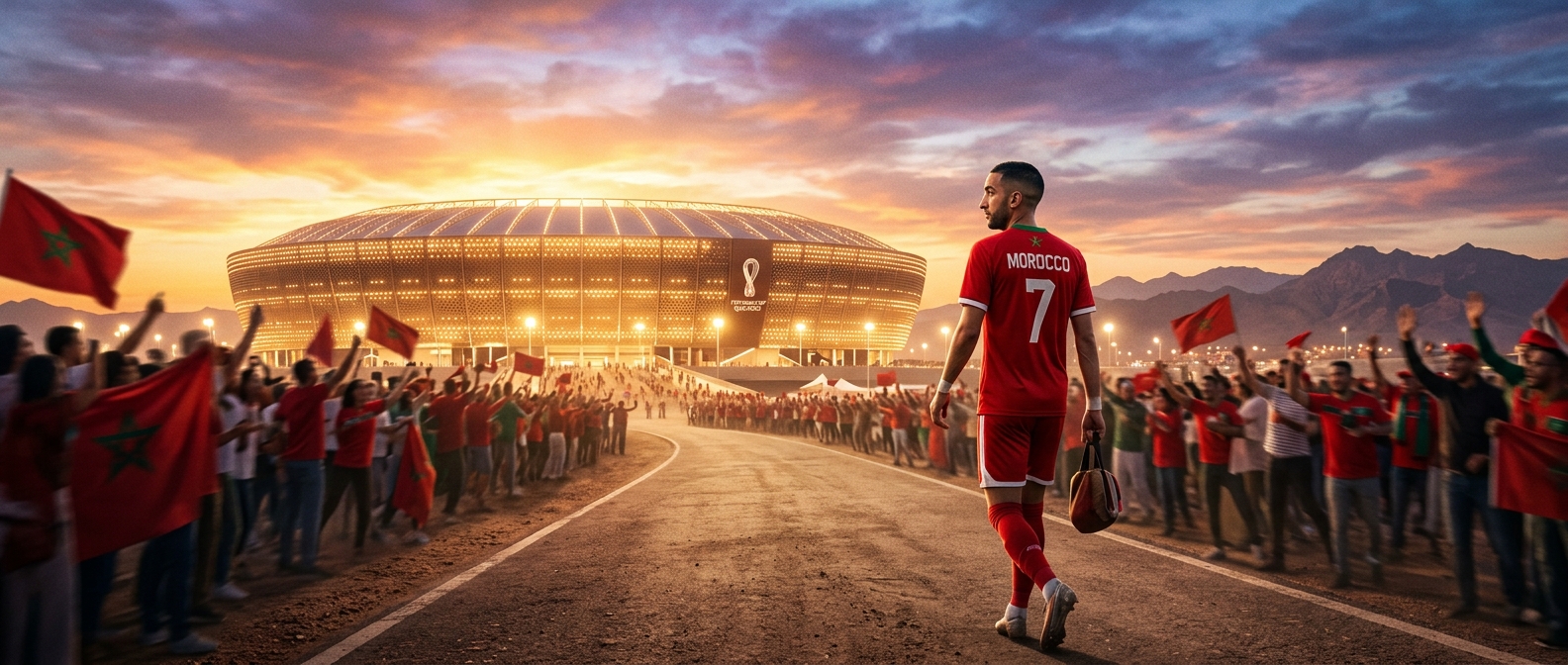
Building on a historic high
No African nation has ever carried as much credibility into a World Cup cycle as Morocco do toward 2026. The fourth-place finish in Qatar changed perceptions of what the Atlas Lions can achieve on the biggest stage.
Crucially, the core of that squad remains in its prime, giving Regragui continuity that most national teams can only dream of as they look to go one step further in North America.
A favourable qualifying picture
Africa's expanded allocation for the 48-team 2026 tournament makes qualification more attainable than ever, and Morocco are among the continent's strongest sides.
With a settled spine and elite individuals, the expectation in Rabat is not merely to qualify but to arrive in 2026 as genuine contenders to reach the latter stages once again.
Refreshing the squad
Regragui has used the cycle to integrate emerging talents alongside the established names, deepening a squad that already boasts Champions League-level players in defence, midfield and attack.
The success of Morocco's youth sides on the international stage has fed directly into senior selection, giving the manager genuine competition for places across the pitch.
Expectations for North America
The challenge for 2026 is managing expectation. Morocco are no longer dark horses in the eyes of their own fans, who now expect deep runs as a baseline.
If the golden generation stays fit and the young stars continue their trajectory, Morocco have a realistic platform to match or surpass their Qatar heroics.
| Factor | Status |
|---|---|
| Qatar 2022 finish | 4th (best ever for Africa/Arab world) |
| Manager | Walid Regragui (continuity from 2022) |
| Core squad | Largely intact and in prime years |
| Africa qualifying slots | Expanded for 48-team format |
| Tournament hosts | USA, Canada and Mexico |
Morocco's 2026 cycle at a glance
FAQ
Is Morocco likely to qualify for the 2026 World Cup?
Morocco are among Africa's strongest teams and the expanded 48-team format gives the continent more slots, making qualification a realistic expectation.
Who manages Morocco for the 2026 cycle?
Walid Regragui, the coach who led Morocco to the 2022 semi-final, has provided continuity into the 2026 World Cup cycle.
Where is the 2026 World Cup being held?
The 2026 World Cup will be co-hosted by the United States, Canada and Mexico, the first 48-team edition of the tournament.
Loved this? Useful? React below — your feedback helps other readers.