Morocco Real Estate Investment Guide 2026: Markets, Returns and How to Buy
Why Morocco Is Drawing Property Investors
Morocco has steadily climbed the radar of international property investors, and for good reason. It combines political stability that is rare in the wider region, a strategic location a short flight from Europe, a strong tourism brand and prices that look attractive against London, Paris or Lisbon. For European buyers in particular, a sun-soaked second home or rental property in Marrakech or on the Atlantic coast can cost a fraction of comparable Mediterranean alternatives while offering a distinct culture and lifestyle.
The fundamentals supporting the market are structural rather than speculative. Morocco's population is young and urbanizing rapidly, creating sustained demand for housing in major cities. A growing middle class is moving from informal or family housing into formal apartments and gated communities. At the same time, tourism, which draws millions of visitors annually, underpins a vibrant short-term rental and resort-property market in destinations such as Marrakech, Agadir, Essaouira and Tangier.
Layered on top of these long-term drivers is the catalytic effect of the 2030 FIFA World Cup. Major investment in airports, stadiums, roads and rail, together with a national push to dramatically expand tourist numbers, is improving connectivity and visibility for entire regions. Infrastructure upgrades historically lift surrounding property values, and the World Cup decade is concentrating exactly this kind of spending into host and gateway cities.
Can Foreigners Buy Property in Morocco?
One of Morocco's most investor-friendly features is its relatively open approach to foreign ownership. Foreign nationals can generally buy and fully own residential and commercial property, including apartments, villas, riads and land in urban zones, without needing local partners or residency. This openness distinguishes Morocco from a number of markets that restrict foreigners to leasehold arrangements or specific developments.
The principal exception concerns agricultural land. Foreigners are generally restricted from owning agricultural land directly, a rule designed to protect farmland and rural communities. Investors interested in such properties typically need to work within specific legal structures or reclassification processes, which makes professional legal advice essential before committing to any rural or farm-style acquisition.
Currency is another practical consideration. To protect a future right to repatriate funds, foreign buyers should bring investment money into Morocco through official banking channels and ensure transactions are properly recorded with the bank and authorities. Doing so allows the eventual resale proceeds, within applicable rules, to be transferred back abroad. Skipping these steps can complicate getting money out later, so documentation discipline from day one is critical.
The Buying Process Step by Step
The Moroccan purchase process is well-established and broadly similar to continental European practice, centred on the notary, known as the notaire or adoul for traditional deeds. Once a buyer and seller agree on a price, they typically sign a preliminary sale agreement, the compromis de vente, accompanied by a deposit that is commonly around ten percent of the purchase price. This document sets out the terms and conditions and binds both parties pending the final deed.
The notary then carries out essential due diligence, verifying that the title is clean, that the seller is the rightful owner and that the property is free of mortgages, liens or disputes. In Morocco it is especially important to confirm that the property is registered under the modern land-registration system, the Conservation Foncière, which provides secure, government-guaranteed title. Properties held under older, unregistered traditional ownership can carry far greater risk and complexity.
Once checks are complete, the parties sign the final deed of sale, the balance of the price is paid, and the notary registers the transfer and pays the relevant taxes on the buyer's behalf. Buyers should budget for transaction costs on top of the purchase price, typically including registration tax, notary fees, land-registry fees and stamp duties, which combined commonly add somewhere in the high single digits as a percentage of the price. Engaging an independent, English- or French-speaking lawyer alongside the notary is strongly advisable.
Where to Invest: City and Coast Strategies
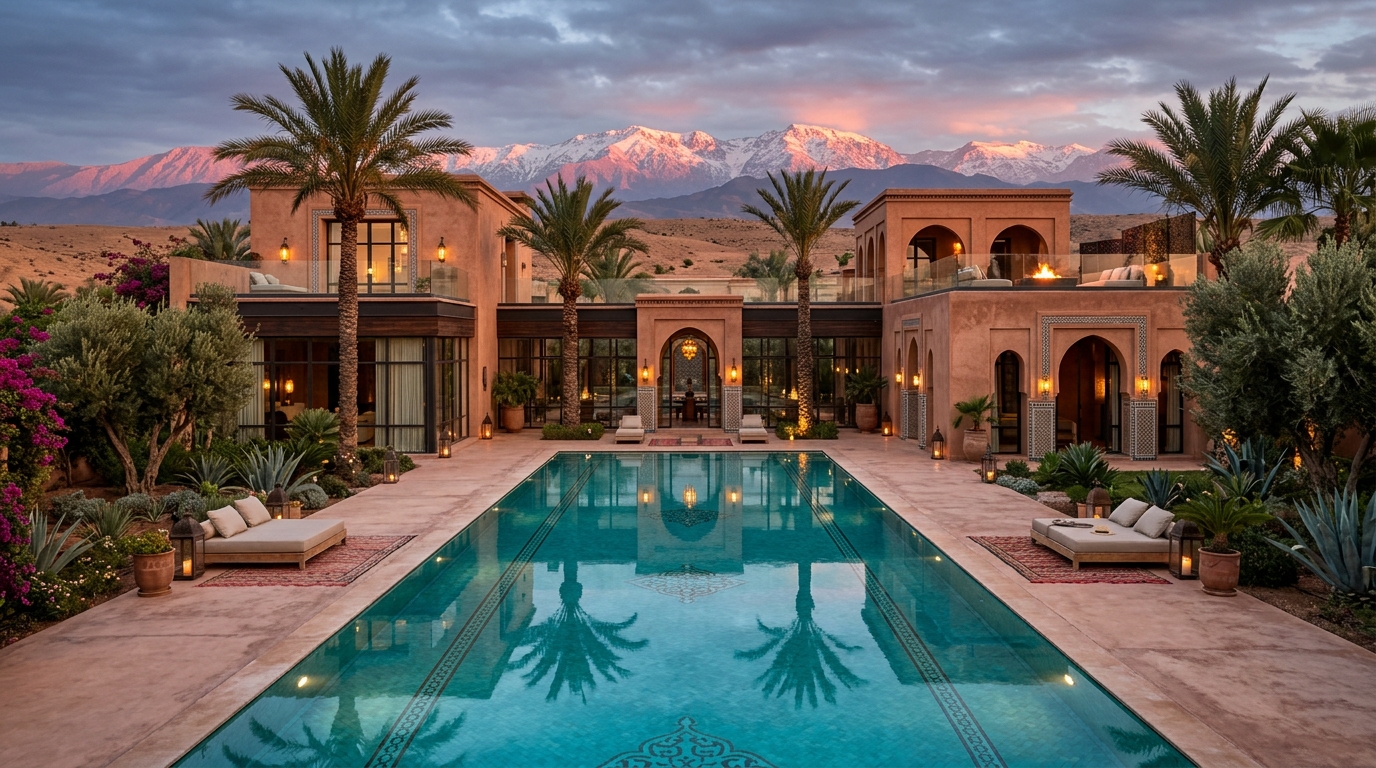
Marrakech remains the flagship destination for international buyers, prized for its riads in the historic medina, luxury villas with pools in the Palmeraie and golf-resort developments on the outskirts. Its global tourism appeal supports a strong short-term rental market, and well-located, well-managed properties can generate attractive seasonal income. The trade-off is that prime Marrakech assets command premium prices and require active management to perform as rentals.
Casablanca, the economic capital, is the play for those seeking long-term, rental-income-driven investments rather than holiday lets. As the country's business and financial hub, home to Casablanca Finance City, it offers steady demand from professionals and expatriates for quality apartments. Rabat, the political capital, similarly offers a stable, somewhat less volatile market underpinned by government and diplomatic demand.
On the coast, Agadir stands out as a year-round sun destination with a growing tourism and resort sector, while Tangier benefits from its proximity to Europe, the Tanger Med economic zone and major infrastructure investment. Essaouira and the northern Mediterranean coast attract lifestyle buyers. As a rule, rental yields in Morocco often sit in the mid-single digits, with holiday-let properties potentially earning more gross income but carrying higher costs, vacancy risk and management demands.
Costs, Taxes and Financing
Beyond the headline purchase price, investors must account for ongoing costs. Annual property taxes apply, though new constructions often benefit from a temporary exemption in their first years. Rental income is taxable in Morocco, and owners should understand their obligations both locally and in their home country, particularly where double-taxation treaties apply. Service charges in gated communities and resorts, plus maintenance for pools and gardens, can be significant for villa owners.
Financing is available but can be more complex for non-residents. Some Moroccan banks offer mortgages to foreign buyers, often requiring a larger down payment than locals would face and charging interest rates that reflect local conditions. Many international investors choose to purchase in cash or arrange financing in their home country, which simplifies the transaction and avoids local lending hurdles. Either way, building a clear picture of total acquisition and holding costs is essential.
Currency exposure deserves attention too. The dirham is managed within a gradually widening band rather than freely floating, which historically has meant relative stability against a euro-and-dollar basket. Still, foreign investors take on some currency risk between their home currency and the dirham over the holding period, which can either enhance or erode returns when measured back in euros, pounds or dollars.
Risks and How to Protect Yourself
The most common pitfalls in Moroccan real estate stem from title and documentation issues rather than the market itself. Buying property that is not properly registered, relying on informal agreements, or trusting verbal assurances about boundaries and permits can lead to serious disputes. The single most important protection is insisting on a property with clean, modern registered title and conducting full legal due diligence before any money changes hands.
Investors should also be realistic about liquidity and time horizons. Real estate in Morocco, like most markets, rewards patience. Reselling a property, especially a higher-end or niche asset, can take time, and the holiday-rental market is seasonal and competitive. Building in a multi-year horizon, conservative occupancy assumptions and a buffer for management and maintenance gives a far more reliable view of likely returns than optimistic gross-yield headlines.
Finally, working with reputable professionals is non-negotiable. A trusted local lawyer independent of the seller, a qualified notary, and where relevant a professional property-management company, dramatically reduce risk. With sensible diligence, Morocco offers a compelling blend of lifestyle appeal, growth fundamentals and accessible ownership rules that few markets within easy reach of Europe can match heading into the World Cup decade.
| City / Area | Best for | Typical investor profile |
|---|---|---|
| Marrakech | Holiday lets, riads, luxury villas | Tourism-income and lifestyle buyers |
| Casablanca | Long-term rental apartments | Income-focused, business-city investors |
| Rabat | Stable, lower-volatility rentals | Conservative, capital-preservation buyers |
| Agadir | Year-round coastal resort property | Holiday-home and rental investors |
| Tangier | Infrastructure-driven growth, near Europe | Growth and industrial-zone investors |
| Essaouira / coast | Lifestyle and boutique properties | Second-home and niche buyers |
Comparing Morocco's main property investment markets
FAQ
Can foreigners legally own property in Morocco?
Yes. Foreign nationals can generally buy and fully own residential and commercial real estate, including apartments, villas and riads, without residency or a local partner. The main restriction is on agricultural land, which foreigners typically cannot own directly.
What rental yields can investors expect in Morocco?
Long-term rental yields often fall in the mid-single digits as a percentage of value. Holiday lets in tourist hotspots like Marrakech can earn higher gross income but come with seasonality, higher management costs and vacancy risk.
What are the typical transaction costs when buying?
On top of the purchase price, buyers should budget for registration tax, notary fees, land-registry charges and stamp duties, which together commonly add somewhere in the high single digits as a percentage of the price.
Is it important to check the property's title?
Critically important. Buyers should ensure the property is registered under Morocco's modern land-registration system, which provides secure, government-guaranteed title. Unregistered traditional ownership carries far higher risk and should be approached only with expert legal advice.
Can I get a mortgage as a foreign buyer?
Some Moroccan banks offer mortgages to non-residents, usually with larger down payments and local-market interest rates. Many international investors prefer to pay cash or finance in their home country to simplify the process.
Loved this? Useful? React below — your feedback helps other readers.