Morocco Rainy Season Guide
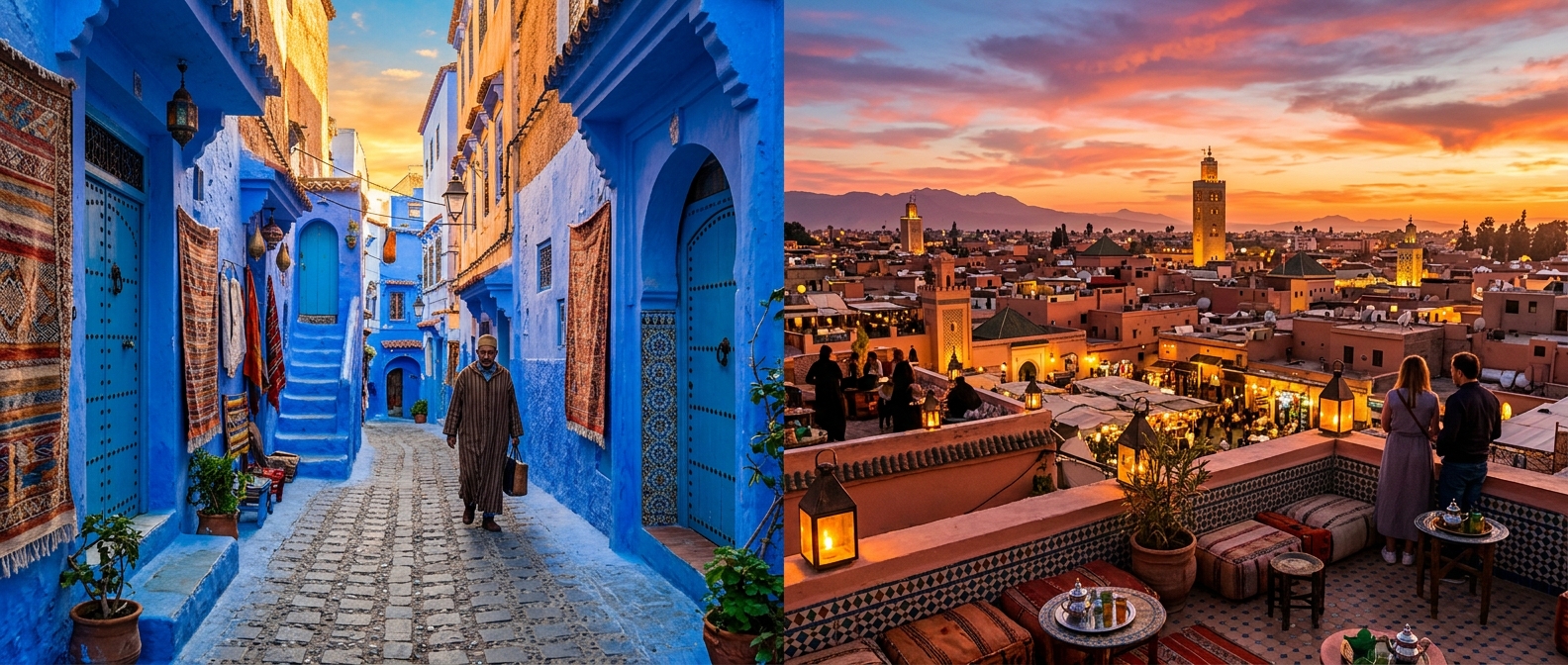
When Morocco Gets Its Rain
Morocco has a Mediterranean-influenced climate in the north and an arid one in the south, so the rainy season is firmly a winter phenomenon. Most precipitation falls between November and April, peaking from December to February. The summer months of June to August are almost completely dry across the entire country.
Crucially, even during the wet season, Morocco does not get monsoon-style rain. Showers tend to be intermittent, often clearing to sunshine within hours, so a rainy season trip is far from a washout in most regions.
Regional Differences in Rainfall
The north and northwest, including Tangier, Chefchaouen and the Rif mountains, are the wettest areas, receiving 600-1,000 mm a year, mostly in winter. The Atlantic coast around Casablanca and Rabat sees moderate rain, while the High Atlas gets significant winter precipitation, much of it as snow at altitude.
Inland cities like Marrakech and Fez are drier, with 250-400 mm annually. The pre-Saharan south and the desert itself are arid to hyper-arid, often receiving less than 100 mm a year, so rain there is rare and brief even in winter.
Travelling During the Rainy Season
Winter travel in Morocco is very doable and has real advantages: lower prices, thinner crowds, and dramatic snow-capped Atlas views. In cities, occasional rain mainly means cobbled medina streets get slippery and some rooftop terraces close temporarily.
The main practical issue is that many riads and older buildings are designed for summer cooling and can feel cold and damp, so confirm heating before booking. Pack a light waterproof layer and shoes with grip, and keep your itinerary flexible to slot indoor activities into the wettest hours.
Flash Floods and Mountain Roads
The one genuine hazard of the rainy season is flash flooding in normally dry riverbeds, known as oueds, particularly in the south and around the Atlas valleys. A storm in the mountains can send water rushing down dry channels with little warning, occasionally washing out roads.
If you are driving or on a desert tour in winter, heed local advice, never attempt to cross flooded crossings, and build buffer time into your schedule in case a mountain pass like Tichka is temporarily closed by snow or runoff.
Should Rain Change Your Plans?
For most travellers, the answer is no. The rainy season rarely ruins a trip and brings genuine perks. The exceptions are if you are set on long Atlas treks, where snow and mud complicate trails, or extended coastal beach time, which is better in summer.
If guaranteed dry weather is essential, simply skip November to March and travel in spring or autumn. Otherwise, embrace the season, pack a layer and a waterproof, and enjoy quieter, cheaper, and often beautifully clear Morocco between the showers.
| Region | Annual Rain | Wettest Months | Notes |
|---|---|---|---|
| North/Rif (Chefchaouen) | 600-1,000 mm | Nov-Feb | Wettest, can be cool and damp |
| Atlantic coast (Casablanca) | 400-600 mm | Dec-Feb | Moderate, mild winters |
| Marrakech/Fez (inland) | 250-400 mm | Nov-Mar | Drier, short showers |
| High Atlas | Variable | Dec-Mar | Much falls as snow |
| South/Sahara | Under 100 mm | Rare | Arid, flash-flood risk |
Rainfall by region in Morocco
FAQ
When is the rainy season in Morocco?
From November to April, peaking December to February. Summer is almost completely dry. Even in winter, rain usually comes in short bursts rather than all-day downpours.
Is it worth visiting Morocco in the rainy season?
Yes for most travellers. Winter brings lower prices, fewer crowds and snow-capped Atlas views. Just pack a waterproof layer, confirm heating in your riad, and keep your plans flexible.
Which part of Morocco gets the most rain?
The north and the Rif mountains, including Chefchaouen and Tangier, are wettest with 600-1,000 mm a year. The desert south is arid, receiving under 100 mm annually.
Loved this? Useful? React below — your feedback helps other readers.