Most Instagrammable Spots in Morocco
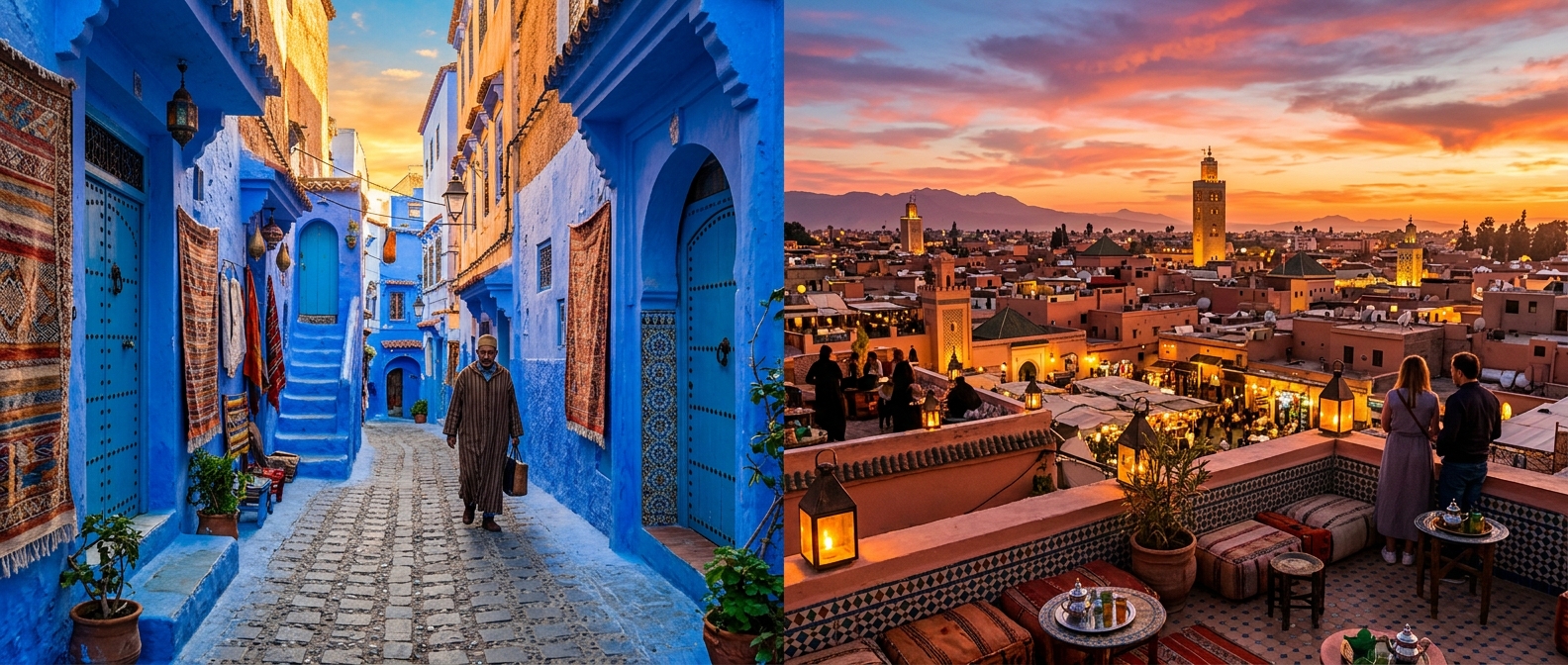
Chefchaouen, the blue city
Tucked in the Rif Mountains, Chefchaouen is famous for its blue-washed medina, an endless palette of cobalt walls, stairs and doorways. The early morning light and quiet lanes are best for clean shots before the crowds.
Look for the flower-pot-lined staircases, the kasbah, and the viewpoint of the Spanish Mosque above town for a panorama of the blue cityscape at golden hour.
The Sahara dunes at Merzouga and Zagora
The towering orange dunes of Erg Chebbi near Merzouga are the classic desert shot, especially at sunrise and sunset when the sand glows and shadows ripple. Camel caravans and starry night skies add drama.
Zagora and Erg Chigaga offer alternative desert scenes. A night in a desert camp gives you the Milky Way overhead and soft dawn light on the dunes.
Marrakech: gardens, palaces and rooftops
The cobalt-blue Jardin Majorelle, the carved courtyards of the Bahia Palace, and the bustling Jemaa el-Fnaa at dusk are Marrakech staples. Rooftop terraces capture the medina against the Atlas backdrop.
For a quieter scene, the Ben Youssef Madrasa's symmetrical tiled courtyard and reflecting pool is one of Morocco's most striking interiors. Go early for fewer people in frame.
Ait Ben Haddou and the kasbahs
The fortified earthen city of Ait Ben Haddou, a UNESCO site on the old caravan route, is a cinematic favourite (seen in many films). Shoot from the river side in the late afternoon as the mud-brick glows.
Along the Road of a Thousand Kasbahs and in the Dades and Todra gorges, dramatic canyons, palm oases and ancient ksour offer endless landscape photography.
Coastal and other gems
Essaouira's whitewashed-and-blue port, ramparts and seagulls make for breezy coastal shots, while Asilah on the north coast charms with murals and white-blue lanes.
Fez offers the dramatic Chouara Tanneries from above, and the Ouzoud Waterfalls provide lush cascades, often with rainbows in the spray on sunny days.
Photography etiquette and tips
Always ask before photographing people; many Moroccans prefer not to be photographed, and performers may expect a small tip. A polite request goes a long way and often leads to better portraits.
Shoot at golden hour for warm light and fewer crowds, carry a wide lens for narrow lanes, and protect gear from desert sand and dust. Respect signs forbidding photos at religious and royal sites.
| Spot | Why | Best time |
|---|---|---|
| Chefchaouen | Blue medina | Early morning |
| Merzouga (Erg Chebbi) | Sahara dunes | Sunrise / sunset |
| Jardin Majorelle | Cobalt garden | Opening hour |
| Ben Youssef Madrasa | Tiled courtyard | Early |
| Ait Ben Haddou | Earthen kasbah | Late afternoon |
| Essaouira | Blue-white port | Daytime / golden hour |
Top photo spots in Morocco
FAQ
What is the most photogenic place in Morocco?
Chefchaouen, the blue city in the Rif Mountains, is the most iconic, but the Sahara dunes at Merzouga, the Jardin Majorelle in Marrakech and the kasbah of Ait Ben Haddou are equally photogenic.
Is it OK to photograph people in Morocco?
Always ask first. Many people prefer not to be photographed, and performers in squares like Jemaa el-Fnaa usually expect a small tip. Asking politely is respectful and often yields better portraits.
When is the best light for photos in the Sahara?
Sunrise and sunset, when the low sun turns the dunes orange and casts long shadows. Staying overnight in a desert camp gives you both, plus night skies.
Loved this? Useful? React below — your feedback helps other readers.