Morocco Peak vs Low Season
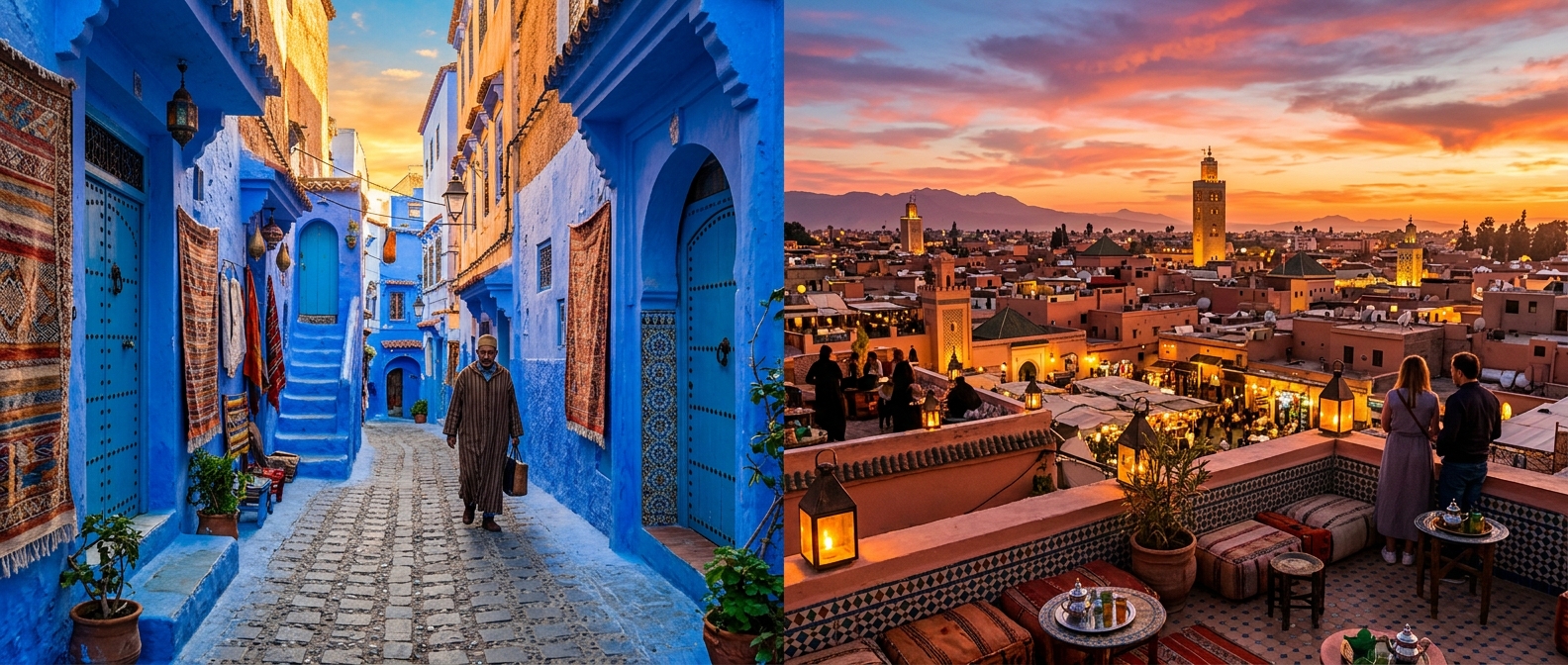
How Morocco's Seasons Break Down
Morocco's tourism calendar follows its weather closely. The two shoulder seasons, spring and autumn, are peak season because they deliver the most comfortable temperatures nationwide. Summer and winter are low season, each for a different weather reason: summer for inland heat, winter for cool, sometimes wet conditions.
Understanding this rhythm lets you balance three competing factors, weather, cost, and crowds, to match the trip you want. There is no single best season, only the best fit for your priorities and tolerance.
Peak Season: Spring and Autumn
From March to May and September to November, the weather is at its finest: warm comfortable days, cool nights, green landscapes in spring, and clear skies in autumn. Every region is enjoyable, making these the ideal months for ambitious itineraries.
The cost is exactly that, cost. Riads, tours, and desert camps fill up and charge their highest rates, popular sites are busy, and you must book months ahead for the best places. Easter and European school holidays in April are especially crowded and expensive.
Low Season: Summer and Winter
Summer (June-August) and winter (December-February) are low season for general tourism, bringing noticeably lower prices and thinner crowds at the headline sites. This is when budget travellers and those who dislike crowds find Morocco most rewarding.
The weather trade-offs are clear: summer inland heat is intense and desert tours are limited to dawn and dusk, while winter nights are cold and the north can be rainy. But each low season has its sweet spots, the cool coast in summer and sunny inland cities in winter.
Micro-Seasons and Exceptions
The picture is not uniform. The Atlantic coast inverts the calendar: summer is its peak season, busy with Moroccan and European beachgoers, while the interior empties. Surf towns like Taghazout peak in winter when the swell arrives.
The festive period around Christmas and New Year is a short high-demand spike within the winter low season, with prices jumping for two to three weeks. Major festivals and events can also drive up local demand and prices regardless of the broader season.
Best Value: The Shoulders of the Shoulders
For travellers chasing value with decent weather, the edges of peak season are the smart play. Late November and early March often retain reasonable conditions while prices and crowds dip toward low-season levels.
Similarly, early September can still be quiet as European families return to school, yet weather is improving fast. These transitional windows let you sidestep peak pricing without committing to the harsher extremes of deep summer or winter.
Choosing Your Season
If weather and a broad range of activities matter most and budget is flexible, choose peak spring or autumn and book early. If value and quiet are the priority, embrace winter inland or summer on the coast, and plan around the heat or chill.
For the best all-round compromise, target the shoulder edges, late November, early March, or early September. Match the season to your goals, whether that is desert tours, surfing, trekking, or city sightseeing, and Morocco rewards you in every part of the year.
| Factor | Peak (Spring/Autumn) | Low (Summer/Winter) |
|---|---|---|
| Weather | Ideal, comfortable | Hot inland / cool, wet north |
| Prices | Highest | Lowest (except festive) |
| Crowds | Busy | Quiet at major sites |
| Booking | Months ahead | More flexibility |
| Best for | All-round itineraries | Budget, coast (summer), cities (winter) |
Peak vs low season comparison
FAQ
When is peak season in Morocco?
Spring (March-May) and autumn (September-November), when weather is best nationwide. Prices and crowds are highest, and you should book accommodation and tours months in advance.
When is the cheapest time to visit Morocco?
Low season, in summer (June-August) and winter (December-February), excluding the festive Christmas and New Year spike. Expect lower prices and fewer crowds in exchange for weather trade-offs.
Does the coast follow the same season as inland Morocco?
No, the Atlantic coast inverts it. Summer is the coast's peak beach season while the interior bakes, and surf towns like Taghazout peak in winter when the Atlantic swell arrives.
Loved this? Useful? React below — your feedback helps other readers.