Medina vs Kasbah vs Mellah Explained
Why These Words Matter
Travellers in Morocco constantly encounter the words medina, kasbah and mellah, often used interchangeably or confusingly. In fact each refers to a distinct part of a historic Moroccan city, with its own purpose, history and architecture.
Knowing the difference enriches your visit: you will understand why certain streets feel fortified, why one quarter has different houses, and how the city was organised socially and defensively over centuries. It also helps you navigate and appreciate what you are seeing.
The Medina: The Old City
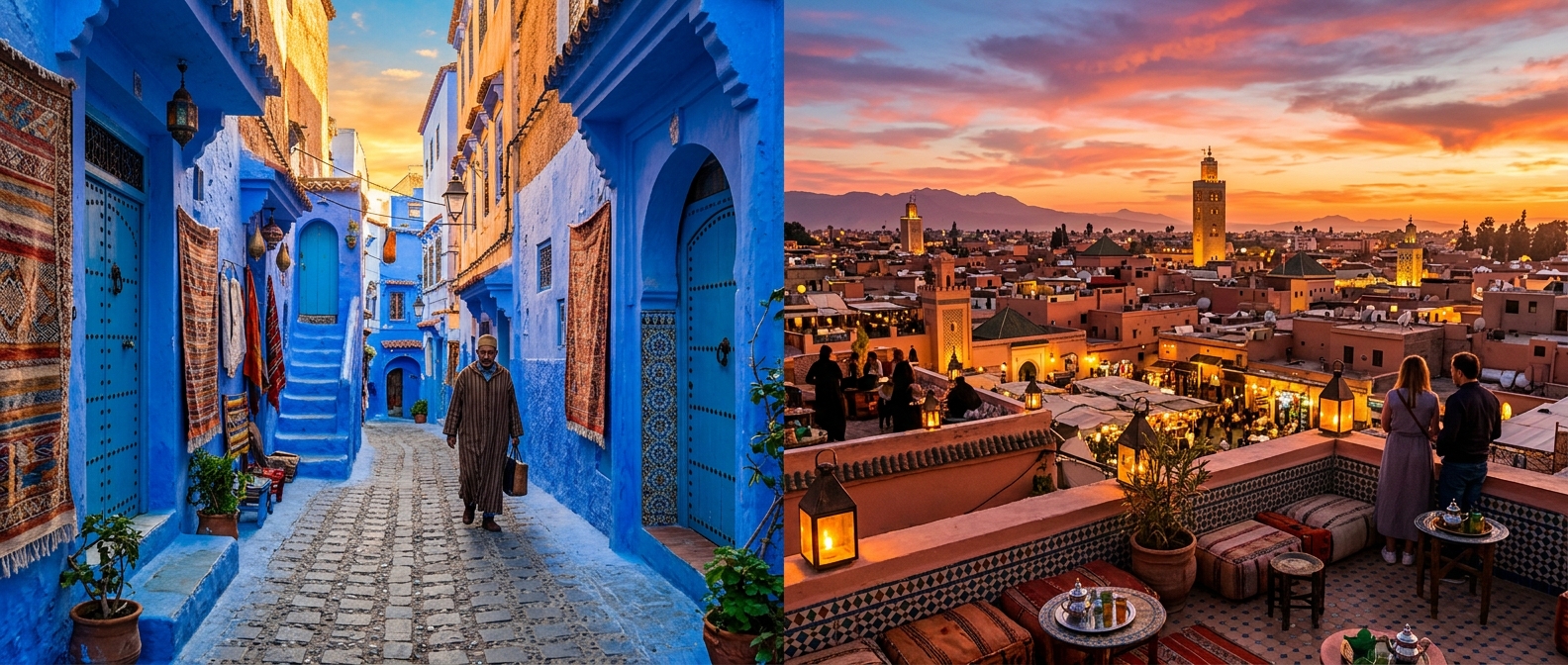
The medina is the original walled old town, the historic heart of cities like Fes, Marrakech and Tetouan. Characterised by narrow, winding car-free lanes, it contains the souks (markets), mosques, madrasas, fountains, riads and the everyday life of the traditional city.
Medinas were designed for foot and animal traffic, with deliberately maze-like streets that confuse outsiders and provide shade and privacy. The medinas of Fes and Marrakech are UNESCO World Heritage sites. The word simply means 'city' in Arabic, and the gates (babs) in the walls mark its entrances.
The Kasbah: The Fortress
A kasbah (or casbah) is a fortified structure: historically a citadel, fortress or fortified palace, often built on high ground to defend the city or to house a local ruler and garrison. Within a medina, the kasbah was the seat of power and defence.
In southern Morocco, the term also describes the fortified earthen homes and fortresses of the Atlas and pre-Sahara, built of rammed earth (pisé) with distinctive towers, like those at Aït Benhaddou or along the Dades Valley. The Kasbah of the Udayas in Rabat and the Kasbah Mosque area in Marrakech are classic urban examples.
The Mellah: The Jewish Quarter
The mellah is the historic Jewish quarter of a Moroccan city. The first and most famous was established in Fes in the 15th century, and others followed in Marrakech, Essaouira, Meknes and elsewhere. Morocco had one of the largest Jewish communities in the Muslim world for centuries.
Mellahs typically had distinct architecture, with balconied houses facing the street (unusual in Muslim quarters), synagogues, and Jewish cemeteries. Today the communities are much smaller, but the quarters survive, and restored synagogues and heritage sites, such as the Slat al-Azama Synagogue in Marrakech and sites in Essaouira and Fes, can be visited as part of Morocco's rich multicultural history.
How They Fit Together
In a classic Moroccan city, you would find the sprawling medina as the main old town, a kasbah as its fortified citadel or palace district, and a mellah as a defined Jewish quarter, often located near the royal palace or kasbah for protection.
This layout reflects centuries of social organisation: commerce and daily life in the medina, power and defence in the kasbah, and distinct religious communities in their own quarters. Walking between them reveals how the city was structured.
What to See in Each
In the medina, dive into the souks, visit a madrasa like Bou Inania in Fes, see the tanneries, and stay in a riad. In a kasbah, look for the fortified walls, towers, gates and elevated viewpoints; the southern earthen kasbahs are spectacular for photography.
In the mellah, seek out restored synagogues, the old market, and Jewish heritage museums where they exist. Visiting all three in one city, as you easily can in Marrakech or Fes, gives a layered understanding of Morocco's diverse past.
| Zone | What It Is | Key Features | Example |
|---|---|---|---|
| Medina | Old walled city | Souks, narrow lanes, mosques, riads | Fes el-Bali, Marrakech medina |
| Kasbah | Fortress or citadel | Walls, towers, gates, high ground | Kasbah of the Udayas, Aït Benhaddou |
| Mellah | Jewish quarter | Synagogues, balconied houses, cemetery | Marrakech & Fes mellahs |
Medina vs Kasbah vs Mellah
FAQ
What is the difference between a medina and a kasbah?
A medina is the entire old walled city with its markets, mosques and homes, while a kasbah is a fortified citadel or fortress, usually for defence or to house a ruler, located within or beside the medina. In short, the medina is the city and the kasbah is its fortress.
What was the mellah used for?
The mellah was the historic Jewish quarter of a Moroccan city, first established in Fes in the 15th century. It housed the Jewish community along with their synagogues, businesses and cemeteries, often near the royal palace for protection. Many mellahs and their synagogues can still be visited today.
Can I see all three in one city?
Yes. Cities like Marrakech and Fes contain a medina, a kasbah district and a mellah, often within walking distance of each other. Visiting all three gives a layered picture of Morocco's history, blending commerce, power and multicultural religious heritage.
Loved this? Useful? React below — your feedback helps other readers.