Morocco Football Jersey: History & Designs
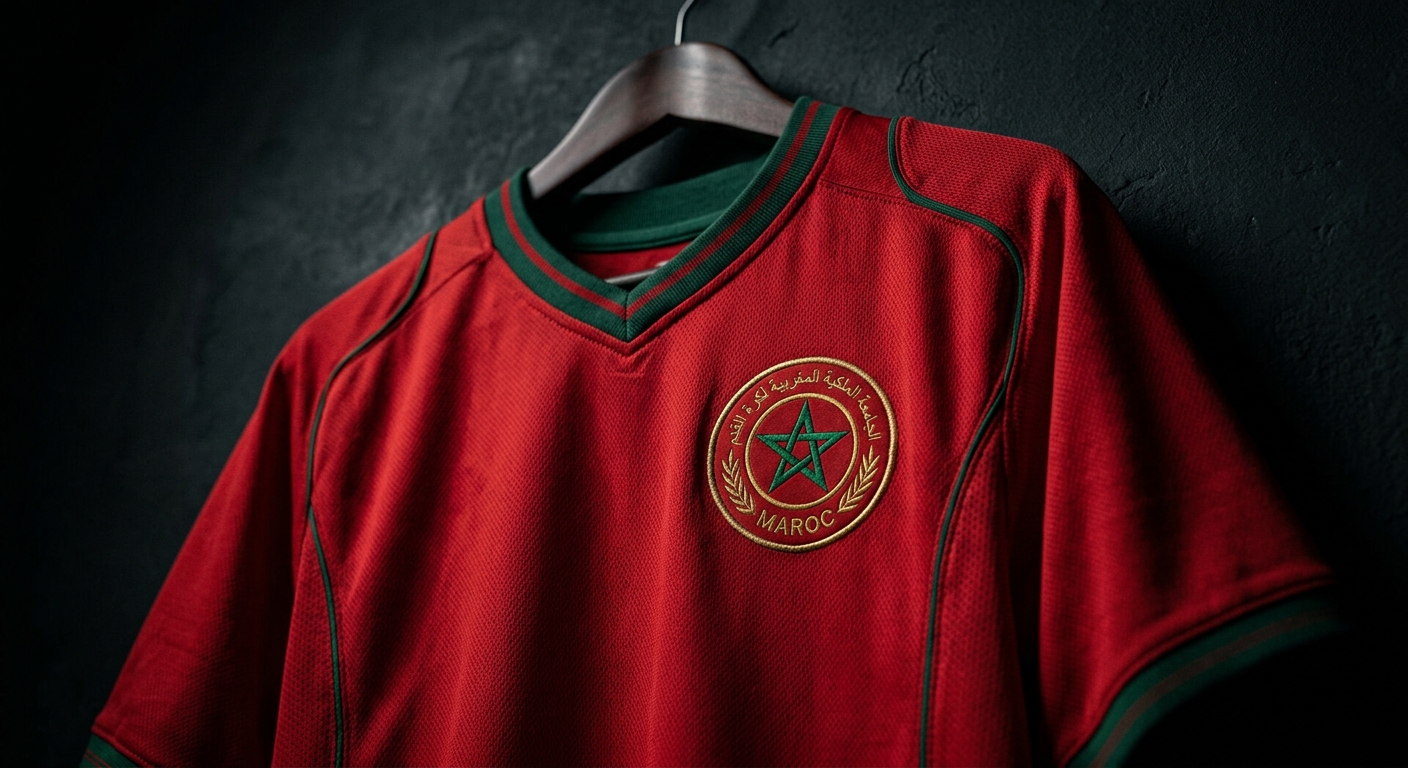
A Jersey Steeped in National Pride
The Morocco national football jersey is far more than mere sportswear; it is a powerful symbol of national identity, worn with immense pride by the Atlas Lions and their millions of supporters. Its distinctive red and green colors instantly evoke the Moroccan flag and the deep patriotism that surrounds the national team.
Across decades of footballing history, the Morocco jersey has been present at moments of triumph and heartbreak, from the pioneering World Cup campaigns of the past to the historic semi-final run of 2022. Each iteration of the kit carries the memories and emotions of the eras it represents.
For Moroccans at home and across the vast diaspora, donning the national jersey is an act of belonging and pride. This article traces the history, symbolism, and design evolution of one of football's most recognizable and meaningful kits, exploring how it became an enduring emblem of the nation.
The emotional power of the jersey lies in its ability to compress a vast amount of meaning into a single garment. To pull on the red shirt is to step into a lineage that stretches from the pioneers who first carried Moroccan football onto the world stage to the modern heroes who have rewritten the record books, and supporters intuitively grasp that continuity every time they see the team take the field.
It is also a garment that travels far beyond the stadium. Across the diaspora, the jersey appears in city streets, family gatherings, and celebrations thousands of miles from Morocco, functioning as a portable emblem of homeland and heritage. In this way the kit operates on two registers at once, as performance sportswear engineered for elite competition and as a deeply personal symbol of identity worn with pride by ordinary people.
The Symbolism of Red and Green
The colors of the Morocco jersey are drawn directly from the national flag, which features a red field with a green five-pointed star, known as the Seal of Solomon or pentagram, at its center. Red has long been associated with the Moroccan state and its ruling dynasties, symbolizing strength and bravery.
Green, the color of the central star, carries deep significance in Moroccan and Islamic culture, representing peace, hope, and faith. Together, the red and green form a combination that is instantly recognizable and rich with meaning, embodying the nation's heritage and values.
The home kit's predominantly red base with green accents directly mirrors this national iconography. The pentagram star frequently features in the design, reinforcing the connection between the jersey and the flag. This symbolism gives the kit a resonance that goes far beyond aesthetics, anchoring it firmly in national identity.
The pairing of red and green is unusually potent because each color already carries layers of national and cultural meaning before it ever appears on a football shirt. The red field of the flag speaks to the long history of the Moroccan state and the dynasties associated with it, while the green of the central star is woven into the spiritual and cultural fabric of the country. When combined on the chest of the national team, these colors become a concentrated statement of who Morocco is.
Designers have long understood that they are working with a sacred visual vocabulary rather than an arbitrary palette. The placement and proportion of red and green, and the treatment of the pentagram, are decisions that supporters scrutinize closely, because the kit is expected to honor the flag faithfully. This sensitivity ensures that even as styles change, the essential symbolic core of the jersey remains protected and instantly legible to every Moroccan.
Early Jerseys and the 1970 Pioneers
Morocco's footballing presence on the world stage began in earnest with their qualification for the 1970 World Cup, the first by an African nation in the modern qualification era. The jerseys of this pioneering era were simple by modern standards but already carried the proud red and green national colors.
These early kits reflected the football fashion of the time, with classic designs, minimal branding, and traditional collars. Yet even in their simplicity, they established the visual identity that would endure: the Atlas Lions clad in red, representing their nation on the global stage for the first time.
The jerseys of the 1970 generation hold historical significance as the attire of trailblazers who put African football on the world map. They laid the foundation for the visual heritage of the national team and connected the kit to a story of pioneering ambition from the very beginning.
Reaching the 1970 World Cup in Mexico was a watershed not only for Morocco but for African football as a whole, and the kit worn by that generation has acquired a heritage value that far outstrips its modest design. Stripped of the elaborate branding and engineered fabrics of later eras, those early shirts spoke purely through their colors, letting the red and green announce a nation arriving on the global stage for the first time.
Because they belong to football's pre-commercial age, the jerseys of this period feel almost artifact-like today, evoking a time when representing the country was an end in itself rather than a marketing opportunity. Their simplicity has only deepened their nostalgic appeal, and they are remembered fondly as the foundational uniform of the trailblazers who made everything that followed possible.
The Iconic 1986 World Cup Kit
The 1986 World Cup in Mexico produced one of the most fondly remembered eras in Moroccan football, as the team became the first African and Arab nation to top a World Cup group and reach the knockout stages. The jersey worn during this landmark campaign holds a special place in the hearts of Moroccan fans.
The 1986 kit embodied the design sensibilities of the era while proudly displaying the national colors. As the team achieved historic success, the jersey became associated with one of the proudest moments in the nation's footballing story, taking on a legendary status that endures to this day.
For decades, the 1986 jersey symbolized the high-water mark of Moroccan football, worn during a campaign that would not be surpassed until 2022. It remains a beloved piece of footballing heritage, evoking memories of pioneering achievement and the golden generation that delivered it.
The 1986 jersey is inseparable from the achievement it witnessed, and that fusion of shirt and story is precisely what gives it its legendary aura. Worn as Morocco topped a group containing established European nations and advanced into the knockout rounds, the kit became a visual shorthand for a moment when the Atlas Lions proved that African football belonged among the elite, a association that has never faded in the national memory.
For a generation of supporters, the sight of that strip instantly summons the pride of 1986, and it continues to influence how subsequent kits are received. Designers and fans alike often measure new jerseys against the emotional resonance of the 1986 shirt, which set a benchmark for what a Morocco kit can come to represent when it is bound to a landmark on the pitch.
Evolving Through the Manufacturers
Like all major footballing nations, Morocco's jerseys have been produced by a succession of kit manufacturers over the years, each bringing its own design language and technology. Global sportswear brands have held the Morocco contract at various times, shaping the look and feel of the kits across different eras.
These partnerships have seen the jersey evolve in line with advances in fabric technology, fit, and design trends, from the heavier cotton kits of earlier decades to the lightweight, performance-engineered jerseys of the modern game. Through these changes, the core red and green identity has remained constant.
The relationship with manufacturers also reflects the growing commercial profile of Moroccan football. As the national team's success and global appeal have surged, the jersey has become an increasingly sought-after commercial product, worn not only by fans but admired by football followers worldwide.
Each manufacturing partnership has left its own fingerprint on the Morocco kit, whether through the silhouette of the collar, the texture of the fabric, or the way the national colors are interpreted in trims and detailing. These shifts trace the broader evolution of football apparel itself, from the heavier, looser shirts of earlier decades to the close-fitting, moisture-wicking, performance-engineered jerseys that define the contemporary game.
Yet across every change of supplier and every advance in technology, the non-negotiable core has endured: a predominantly red home shirt anchored by the green of the flag's star. This continuity is a deliberate act of stewardship, ensuring that whichever brand holds the contract, the jersey remains unmistakably Moroccan and faithful to a visual identity that supporters regard as belonging to the nation rather than to any company.
The Modern Era and 2022 Kits
The jerseys worn during Morocco's historic 2022 World Cup run became instantly iconic, forever linked to the greatest achievement in the nation's footballing history. As the Atlas Lions reached the semi-finals, images of the team in their red home and contrasting away kits were beamed around the world.
Modern Morocco kits blend the timeless national colors and symbolism with contemporary design elements and cutting-edge performance technology. Designers have incorporated subtle motifs and patterns inspired by Moroccan culture and heritage, adding depth and meaning to the visual presentation.
The 2022 jerseys captured a moment of national euphoria and global admiration. Demand for the kits soared as the team's success and the captivating support of Moroccan fans made the jersey a symbol of an extraordinary footballing story, cementing its place in the modern football consciousness.
The 2022 kits earned their iconic status the only way football kits truly can, by being present at a defining moment. As Morocco dismantled expectations and marched to the semi-finals, the images of players in their red home shirt and contrasting alternate strip were broadcast to an enormous global audience, fusing the jersey forever with the greatest run in the nation's footballing history.
Beyond their association with success, the 2022 jerseys reflected a modern design philosophy in which heritage and innovation are deliberately balanced. The timeless colors and symbolism were preserved while contemporary detailing and performance technology were layered on top, producing a kit that felt both rooted in tradition and unmistakably current, a fitting uniform for a team announcing itself as a new force in the world game.
Home and Away: Contrasting Identities
Morocco's kit range traditionally features a red home jersey, reflecting the dominant color of the national flag, and an away jersey that has typically been white or green, providing contrast for matches where color clashes require an alternative strip.
The home red kit is the primary expression of national identity and the version most associated with the team's iconic moments. The away kits, while secondary, offer designers the opportunity to explore the green of the flag's star or crisp white alternatives, each carrying its own aesthetic appeal.
This home and away dynamic allows the national team to present distinct yet complementary identities. Whether in commanding red or contrasting alternatives, the kits consistently honor the national colors and symbolism, ensuring the Atlas Lions are always unmistakably Moroccan on the pitch.
The home red shirt functions as the definitive statement of Moroccan footballing identity, the strip in which the team's most celebrated victories have been won and the version supporters most readily picture when they imagine the Atlas Lions. Its dominance of the national imagination means the home kit is held to an especially high standard, expected to embody the dignity and pride of representing the country.
The alternate kits, typically rendered in white or in the flag's green, give designers room to experiment while still honoring the national palette. A clean white away shirt can project a sense of calm authority, while a green alternative leans directly into the symbolism of the flag's star. Whichever direction is chosen, the away strip is conceived as a complement to the home red rather than a departure from it, ensuring the team's visual identity remains coherent across every fixture.
Cultural Motifs in Kit Design
Modern Morocco jerseys have increasingly incorporated cultural motifs and design elements that celebrate the nation's rich heritage. Patterns inspired by traditional Moroccan art, architecture, and craftsmanship have been woven into kit designs, adding layers of meaning and distinctiveness.
These cultural references transform the jersey from a simple sporting garment into a canvas that tells a story about Morocco itself. Subtle geometric patterns, textile-inspired textures, and symbolic details connect the kit to the country's artistic traditions and identity.
This thoughtful approach to design reflects a broader trend in international football, where national teams seek to express their unique cultural identities through their kits. For Morocco, with its deep artistic heritage, this has produced jerseys that resonate not only as sportswear but as expressions of national culture.
The turn toward cultural motifs reflects a maturing confidence in how Morocco presents itself to the world through football. Rather than relying on color alone, designers have drawn on the country's celebrated traditions in geometry, tilework, textiles, and ornamentation, embedding patterns and textures that reward a closer look and reveal the depth of the nation's artistic heritage.
These details transform the jersey into a storytelling surface, allowing the kit to communicate something specific about Morocco rather than serving as a generic template in national colors. In doing so, the team participates in a wider movement across international football, where shirts are increasingly designed as cultural artifacts, but few nations possess as rich a visual vocabulary to draw upon as Morocco does.
The Jersey as a Commercial and Cultural Icon
The success of the national team has elevated the Morocco jersey into a significant commercial and cultural icon. The kit is worn proudly by fans at matches, in the streets, and across the diaspora, serving as a visible expression of national pride and belonging.
Replica jerseys have become highly popular, with sales surging during periods of footballing success, particularly the 2022 World Cup. The jersey has transcended its sporting function to become a fashion item and a symbol embraced by Moroccans and admirers of the team worldwide.
This commercial and cultural prominence reflects the broader rise of Moroccan football. As the nation's teams have captured global attention, the jersey has become an ambassador for Morocco, recognized and respected far beyond the football pitch and worn as a badge of identity by a global community.
The on-field success of recent years has translated directly into the jersey's status as a coveted commercial product, with replica sales surging during landmark campaigns and the shirt appearing well beyond traditional football contexts. The 2022 World Cup in particular drove demand to new heights, as supporters and admirers alike sought to own a piece of an extraordinary story.
Crucially, the jersey's commercial appeal is inseparable from its cultural meaning. People buy and wear it not merely as fashionable sportswear but as an emblem of belonging, a way of declaring affiliation with a nation and a footballing movement that has captured global attention. In this sense the kit has become an ambassador for Morocco, carrying the country's colors and story into streets, stadiums, and communities around the world.
A Jersey for a Golden Generation
As Morocco enjoys an unprecedented golden era of footballing success, the national jersey has never carried more meaning or prestige. Worn by a generation of players who have achieved historic feats across men's, women's, youth, and futsal football, the kit is now associated with triumph and ambition.
Future jerseys will be worn during major tournaments that Morocco is set to host, adding new chapters to the kit's storied history before passionate home crowds. Each new design will build on a rich heritage while embracing the contemporary identity of a rising global football power.
Ultimately, the Morocco football jersey is a thread that connects the nation's footballing past, present, and future. From the pioneers of 1970 to the heroes of 2022 and beyond, the red and green of the Atlas Lions endures as one of the game's most meaningful and beloved symbols, embodying the pride of a football-mad nation.
Worn by players who have reached a World Cup semi-final, contested a continental final, and claimed an Olympic medal, the jersey today is saturated with associations of achievement and ambition. It is no longer simply the uniform of a hopeful nation but the colors of a recognized footballing power, and that elevated status lends every new edition an added sense of occasion and expectation.
As Morocco moves toward an era of hosting major tournaments, the jersey is poised to be at the center of fresh chapters written before passionate home crowds. Each future design will inherit a heritage stretching from the pioneers of 1970 through the heroes of 1986 and 2022, and will be charged with carrying that legacy forward, ensuring the red and green of the Atlas Lions endures as one of football's most meaningful and beloved symbols.
| Element | Detail |
|---|---|
| Home color | Red, from the national flag |
| Accent color | Green, from the flag's central star |
| Star symbol | Pentagram (Seal of Solomon) |
| 1970 | First African World Cup qualifiers' kit |
| 1986 | Iconic kit of first African group winners |
| 2022 | Worn during historic World Cup semi-final run |
Morocco jersey design and symbolism overview
FAQ
What colors are Morocco's football jersey?
Morocco's home jersey is traditionally red with green accents, drawn directly from the national flag, which features a red field and a green five-pointed star at its center.
What does the star on Morocco's flag and kit represent?
The green five-pointed star, known as the Seal of Solomon or pentagram, is a central element of the national flag, with green symbolizing peace, hope, and faith in Moroccan and Islamic culture.
Why is the 1986 Morocco jersey iconic?
It was worn when Morocco became the first African and Arab nation to top a World Cup group and reach the knockout stages, making it a beloved symbol of a landmark achievement for decades.
What is special about Morocco's 2022 World Cup kit?
The 2022 jerseys are forever linked to Morocco's historic run to the World Cup semi-finals, the best ever by an African or Arab nation, and demand for the kits soared during the tournament.
Do Morocco's modern jerseys include cultural designs?
Yes. Modern Morocco kits increasingly incorporate motifs inspired by traditional Moroccan art, architecture, and craftsmanship, turning the jersey into an expression of the nation's cultural heritage.
Loved this? Useful? React below — your feedback helps other readers.