Perfect 4-Day Morocco Itinerary
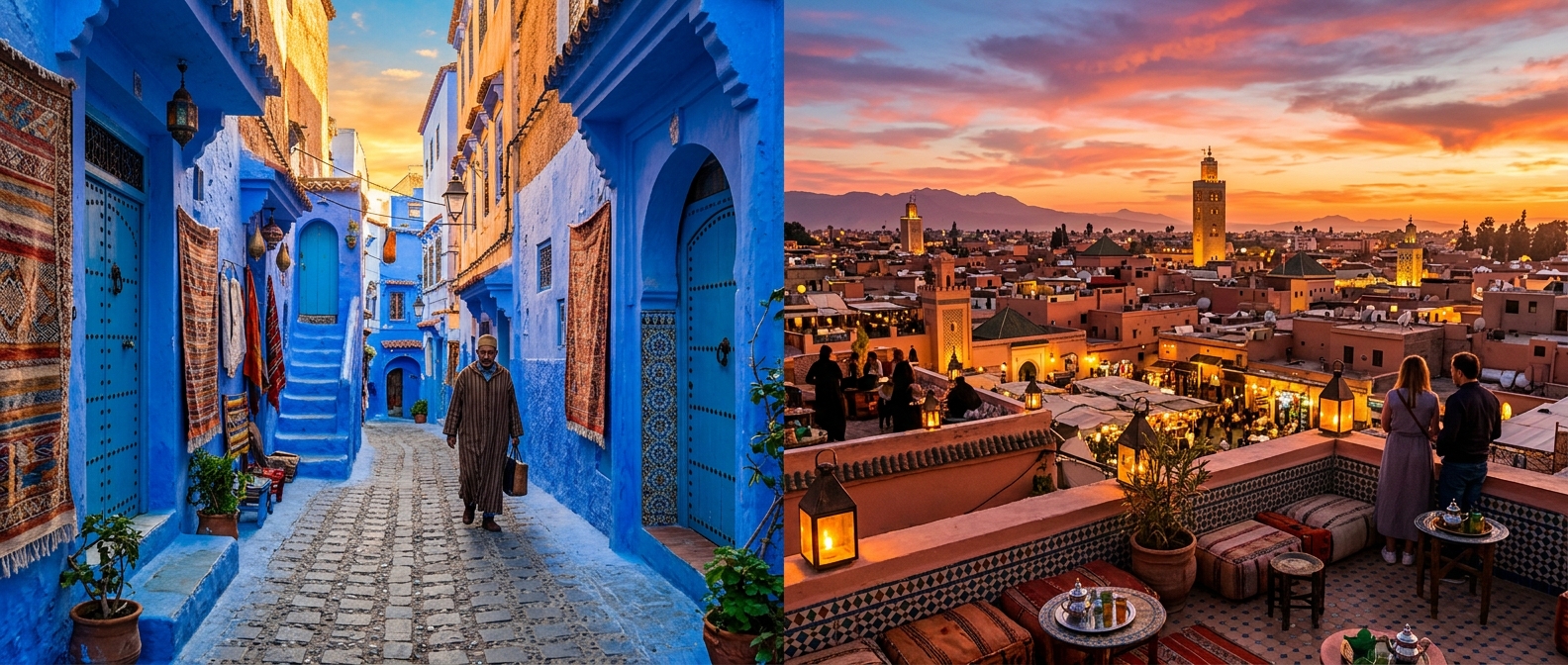
Why 4 Days Works Well
A fourth day transforms a rushed Marrakech visit into a properly varied trip. It gives you enough time to pair the city's intensity with a complete change of pace, whether that is the mountains or the coast. The most rewarding combination for first-timers is Marrakech plus Essaouira, a UNESCO-listed seaside town about 2.5-3 hours away by road.
Keep your base in Marrakech for the first three nights and either day-trip to Essaouira or stay one night there. An overnight is highly recommended, because Essaouira is at its most magical in the early morning and evening when day-trippers have left.
Days 1-2: Marrakech Essentials
Spend your first two days covering the must-sees: the Koutoubia Mosque exterior, the labyrinthine souks, Jemaa el-Fnaa square at dusk, and the Jardin Majorelle with the Yves Saint Laurent Museum. Add the Bahia Palace, Saadian Tombs and the El Badi ruins for history and architecture.
Build in slow time too. A long lunch in a riad courtyard, a hammam, or simply mint tea on a rooftop are as much a part of Marrakech as the monuments. Evenings are for the square and rooftop dinners overlooking the Atlas Mountains on clear days.
Day 3: Atlas Mountains
Take a full-day tour into the High Atlas. The Ourika Valley and Imlil are the classic choices, offering Berber villages, argan cooperatives, waterfalls and mint tea with mountain families. The scenery shifts dramatically within an hour of leaving the city heat.
If you prefer history over hiking, swap this for a day trip to Aït Benhaddou and Ouarzazate over the Tizi n'Tichka pass, though that is a longer day (roughly 4 hours each way). Aït Benhaddou is a spectacular UNESCO-listed fortified village famous as a film location.
Day 4: Essaouira on the Coast
Drive west to Essaouira, a fortified port town with whitewashed buildings, blue shutters and Atlantic breezes that earned it the nickname 'Windy City of Africa'. Walk the Skala de la Ville ramparts, watch fishermen unload the day's catch at the harbour, and explore a relaxed, easy-to-navigate medina.
Lunch on grilled sardines or freshly caught fish at the port stalls, then browse thuya-wood crafts and argan-oil shops. If you stay overnight, enjoy the sunset from the ramparts and a quiet seafood dinner. Otherwise, return to Marrakech in the early evening.
Transport and Logistics
Supratours and CTM run comfortable buses between Marrakech and Essaouira for around 80-100 MAD each way, taking about 3 hours. A private transfer or shared grand taxi is faster and more flexible if you are short on time.
Within both towns, walk the medinas and use petits taxis for longer hops. Book the Essaouira bus seats in advance during high season (spring and summer), when the route is popular with both tourists and surfers.
Budget and Tips
Plan around 900-1,600 MAD per person per day for mid-range comfort. Essaouira tends to be slightly cheaper and more relaxed than Marrakech, with gentler souk vendors and almost no hassle.
Pack a light jacket for Essaouira; the wind makes it noticeably cooler than inland Marrakech even in summer. Carry cash, dress modestly in the medinas, and keep small change for taxis and tips. A 4-day trip is the sweet spot for travellers who want both a city and a contrasting escape.
| Day | Location | Highlights | Est. Cost/Person |
|---|---|---|---|
| Day 1 | Marrakech | Medina, souks, Jemaa el-Fnaa | 300-500 MAD |
| Day 2 | Marrakech | Jardin Majorelle, palaces, hammam | 400-700 MAD |
| Day 3 | Atlas Mountains | Ourika/Imlil or Aït Benhaddou tour | 300-500 MAD |
| Day 4 | Essaouira | Ramparts, port seafood, medina | 400-700 MAD |
4-Day Marrakech & Essaouira Itinerary
FAQ
Should I day-trip or stay overnight in Essaouira?
An overnight is better if you can manage it, because the town empties of day-trippers in the evening and is most atmospheric at sunrise and sunset. A day trip still works and lets you keep all your luggage at one Marrakech riad.
Mountains or coast for the third day?
Choose the Atlas Mountains for dramatic scenery and Berber culture, or Aït Benhaddou for history and film-location fame. If you want maximum contrast with the city, the coast and mountains both deliver; pick based on whether you prefer nature or heritage.
How do I get from Marrakech to Essaouira?
Supratours and CTM buses run several times daily for about 80-100 MAD and take roughly 3 hours. Private transfers and shared grand taxis are faster and more flexible but cost more.
Loved this? Useful? React below — your feedback helps other readers.