Morocco in February: Weather, Events & Tips
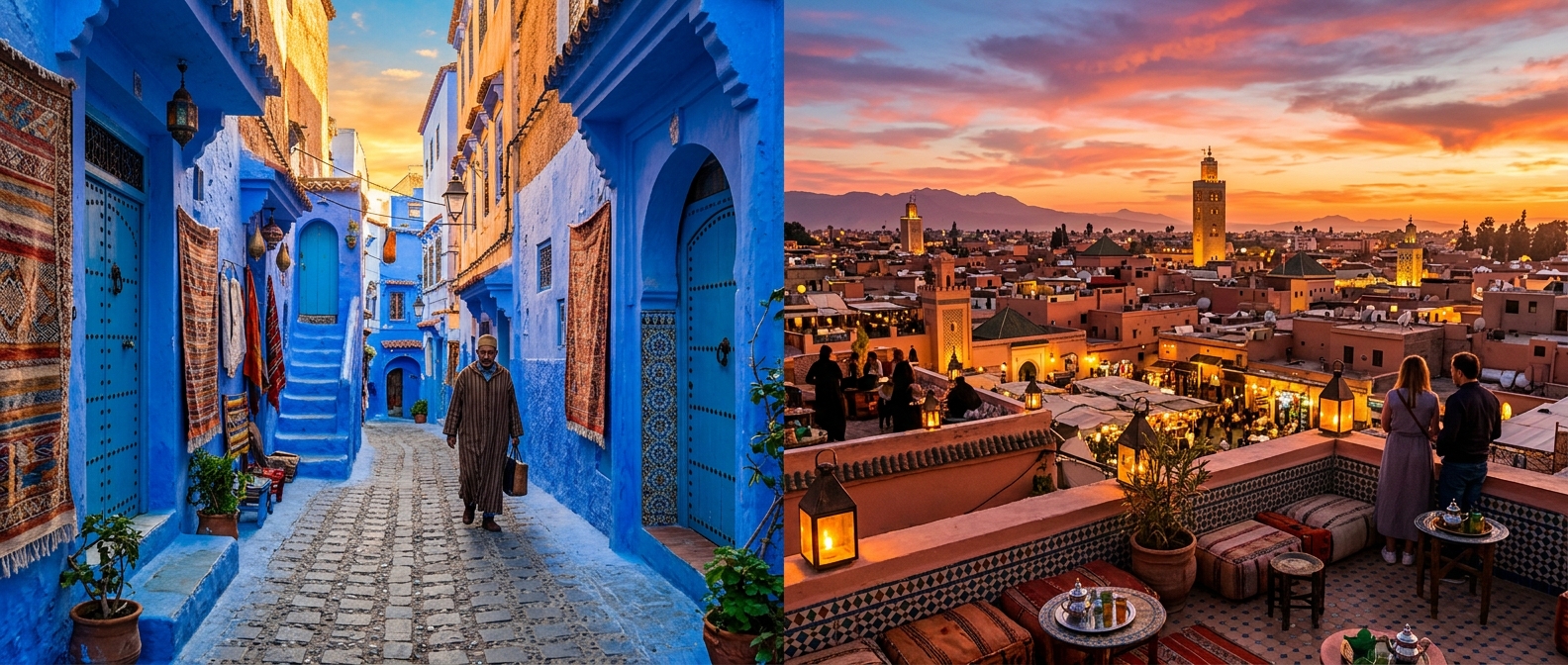
February Weather Across Morocco
February closely resembles January but with slightly longer, gradually warming days. Marrakech and Agadir see comfortable highs of 18-20°C, while inland Fez and Meknes stay cooler around 15-16°C. Nights remain cold across the board, often dipping to 5-8°C.
The Atlas still carries snow and the desert keeps its winter rhythm of warm days and very cold nights. The Atlantic coast is mild but windy, and February can bring a few rainy spells, particularly in the north around Tangier and Chefchaouen.
What February Is Best For
February is one of the best times for comfortable city sightseeing and souk shopping without summer heat or peak crowds. It is ideal for photographers and history lovers who want unhurried visits to medinas, palaces and museums.
It is also the signature month for the almond blossom season in the Anti-Atlas, especially around Tafraoute, where pink and white blooms transform the valleys. Skiing at Oukaïmeden can still be possible after good snowfall.
Events and Festivals
The Almond Blossom Festival in the Tafraoute region (typically held in February) celebrates the spectacular bloom with music, dance and local produce, drawing both Moroccan and international visitors to the Anti-Atlas.
Some years see cultural and film-related events in larger cities during February, and the month often overlaps with off-season cultural programming in Marrakech and Casablanca, making it easy to catch a concert or exhibition.
Crowds and Prices
February remains low season for most of Morocco, so flights, accommodation and tours are still affordable and rarely sold out. You can usually book popular riads and desert trips on short notice.
The exception is around school holiday weeks in Europe, when some coastal and Marrakech hotels see short spikes in demand. Booking a week or two ahead during these windows is sensible.
What to Pack
Pack the same layering strategy as January: light clothing for warm midday sun and warm layers for cold mornings and evenings. A fleece or warm jacket is essential, along with comfortable walking shoes.
For the mountains or desert nights, add a heavier coat, hat and gloves. Bring a light waterproof jacket or compact umbrella for occasional February rain, especially if you are heading north.
Practical Tips for February Travel
If the almond blossom is your goal, time your trip to mid or late February and base yourself near Tafraoute or Agadir, as bloom dates shift slightly each year with the weather.
Choose heated accommodation for cold nights and check mountain road conditions after storms. Days are lengthening, with sunset near 18:30, giving you a little more daylight for sightseeing than in January.
| City | Temp | Rain |
|---|---|---|
| Marrakech | 8-20°C | Low |
| Agadir | 9-21°C | Low |
| Fez | 6-16°C | Moderate |
| Tafraoute | 7-20°C | Low |
| Tangier | 9-17°C | Moderate |
Weather
FAQ
Is February a good time to visit Morocco?
Yes. February offers cool sunny days, low crowds and good prices, plus the spectacular almond blossom. Just pack warm layers for cold nights and possible rain in the north.
When is the almond blossom in Morocco?
The almond blossom usually peaks in February, particularly in the Anti-Atlas around Tafraoute, where a local festival celebrates the pink and white blooms. Exact timing varies with the weather each year.
Is it warm enough for the beach in February?
Coastal air reaches the high teens to around 21°C in Agadir, pleasant for walks and sunbathing, but the Atlantic is cold for swimming. February is better for sightseeing than beach holidays.
Loved this? Useful? React below — your feedback helps other readers.