Morocco's Greatest XI Ever
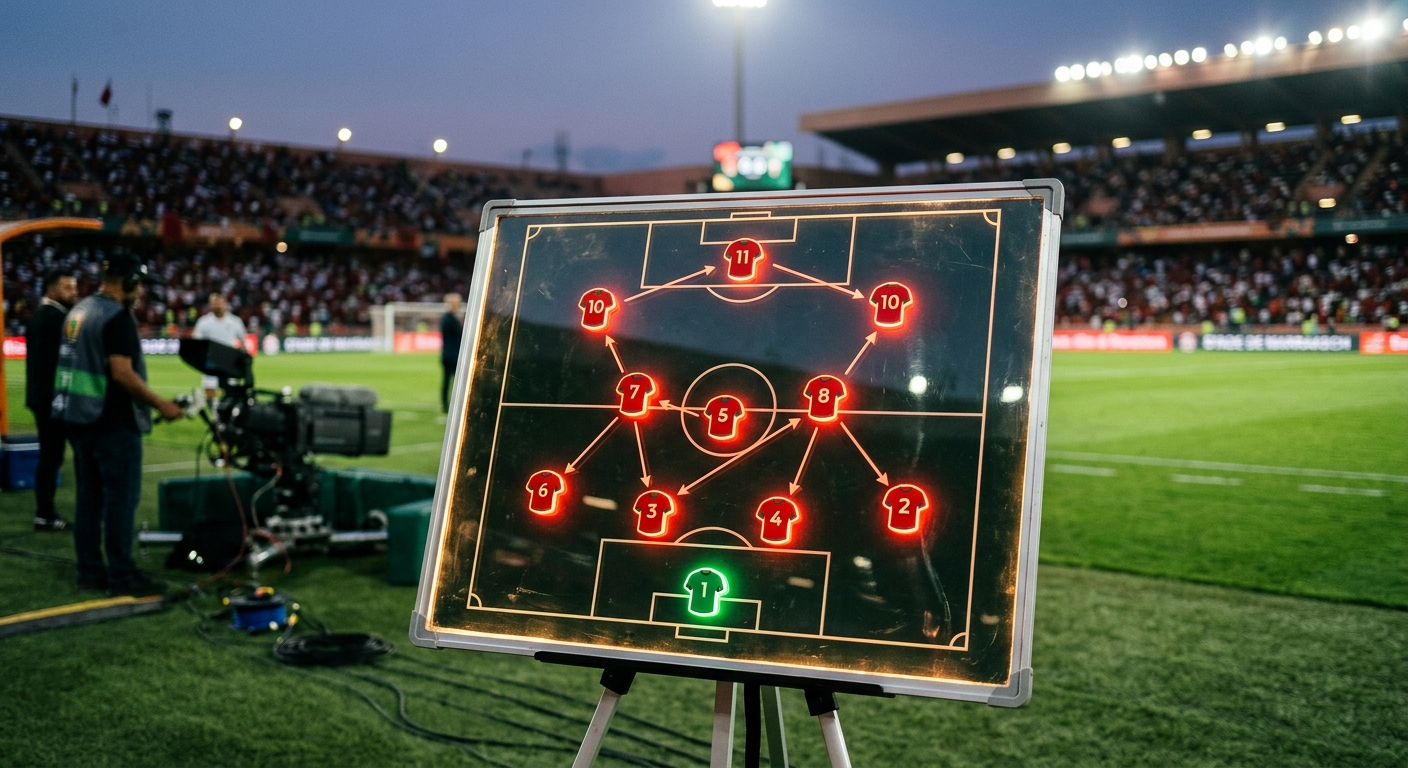
The Ultimate Selection Challenge
Choosing a greatest-ever XI for any footballing nation is a labor of love and an invitation to endless debate, and Morocco is no exception. The Atlas Lions have produced exceptional talent across multiple generations, from the AFCON-winning side of 1976 to the World Cup pioneers of 1986 and the semifinalists of 2022. Distilling all of that into a single eleven is a glorious challenge.
The difficulty lies not just in the depth of talent but in comparing players across radically different eras and contexts. How do you weigh a 1970s forward who never left the domestic league against a modern superstar who has won the Champions League? How do you balance the pioneers who broke barriers against the contemporary stars who reached the World Cup semifinal?
This greatest XI attempts to honor the entire sweep of Moroccan football history, blending the legends of the past with the heroes of the present. It is a team built to reflect not just individual quality but the spirit and identity of Moroccan football: organized, technical, resilient, and capable of beating anyone.
In Goal: Yassine Bono
The goalkeeping position presents a genuine dilemma, with two outstanding candidates. Badou Zaki was a hero of the 1986 World Cup and a former African Footballer of the Year, one of the finest goalkeepers in the continent's history. His performances helped Morocco become the first African team to top a World Cup group.
Yet the modern claim of Yassine Bono is compelling. Bono was magnificent throughout the 2022 World Cup, his commanding presence and penalty-shootout heroics against Spain proving decisive in Morocco's historic run to the semifinals. He repeatedly produced crucial saves against the world's best attackers and anchored one of the meanest defenses in tournament history.
For this greatest XI, Bono earns the nod on the strength of his role in Morocco's furthest-ever World Cup advance, though Zaki's claim is so strong that many fans would reverse the choice. Either way, Morocco's goalkeeping heritage is in excellent hands, a position of genuine strength in the nation's history.
Right Back: Achraf Hakimi
At right back, the selection is straightforward. Achraf Hakimi is not only Morocco's greatest fullback but one of the finest in the modern game globally. His combination of blistering pace, attacking threat, and defensive capability has made him a star at clubs like Real Madrid, Inter Milan, and Paris Saint-Germain.
Hakimi's contribution to the 2022 World Cup run was immense. His attacking thrust down the right gave Morocco a constant outlet, while his composure in the biggest moments was epitomized by the nerveless Panenka penalty that knocked out Spain. He is the prototype of the modern attacking fullback and an automatic inclusion.
In a greatest XI built to compete with the world, Hakimi provides both balance and dynamism. He can defend resolutely when required and transform into an auxiliary winger when Morocco attack, embodying the modern game's demands. His place in this team is beyond debate.
Central Defense: Naybet and Benatia
The heart of the defense pairs two of Morocco's finest center backs. Noureddine Naybet is the natural anchor, a defensive colossus who captained the national team for years, won La Liga with Deportivo La Coruna, and played for Tottenham. His reading of the game, composure, and leadership make him the foundation of this backline.
Alongside him, Mehdi Benatia offers modern quality and big-club pedigree, having played for the likes of Bayern Munich and Juventus. A commanding, technically assured defender, Benatia captained Morocco and brought elite-level experience and aggression to the heart of the defense, complementing Naybet's calm authority.
Together, Naybet and Benatia form a partnership combining the best of two eras: the long-serving, classically reliable Naybet and the modern, big-club Benatia. It is a pairing built to handle the world's finest forwards, providing the defensive bedrock on which a great team is built.
Left Back: Noussair Mazraoui
The left-back berth is filled by Noussair Mazraoui, a key member of the 2022 World Cup squad and a player who has performed at the highest level for Ajax and Bayern Munich. Technically excellent, comfortable on the ball, and capable of contributing in attack, Mazraoui represents the modern Moroccan fullback at its best.
His inclusion reflects the strength of Morocco's recent fullback production, which alongside Hakimi gave the 2022 side one of the best defensive flank pairings at the tournament. Mazraoui's ability to defend diligently while supporting the attack provides the balance this greatest XI requires on the left.
With Hakimi on the right and Mazraoui on the left, the team boasts a pair of modern, technically gifted fullbacks capable of contributing at both ends. It is a luxury reflecting the depth of talent Morocco has produced in recent years and a key element of a team built to compete with the world's elite.
Defensive Midfield: Sofyan Amrabat
The defensive midfield anchor is Sofyan Amrabat, who emerged as one of the players of the 2022 World Cup. His tireless work rate, ball-winning ability, and remarkable ground coverage provided the platform for Morocco's defensive solidity, allowing the more creative players ahead of him to flourish.
Amrabat's performances against the likes of Spain and Portugal, breaking up attacks and shielding the defense, were central to Morocco's run to the semifinals. He embodied the discipline and energy that defined that historic team and earned admiration from across the football world for his combative excellence.
In this greatest XI, Amrabat performs the crucial shielding role, protecting the Naybet-Benatia partnership and giving the attacking players license to express themselves. Every great team needs a midfield destroyer of his caliber, and Amrabat provides exactly that engine and bite.
Central Midfield: Timoumi and Hadji
The creative engine room pairs two of Morocco's most gifted midfielders. Mohamed Timoumi was named African Footballer of the Year for 1985 and was the creative heartbeat of the 1986 World Cup side, a player of vision and class who could dictate the tempo of a match and unlock defenses.
Beside him, Mustapha Hadji brings the flair and brilliance that won him the 1998 African Footballer of the Year award. A gifted attacking midfielder with technical excellence and an eye for the spectacular, Hadji starred at the 1998 World Cup and across a distinguished European club career, providing magic in the final third.
Together, Timoumi and Hadji offer a blend of orchestration and invention, the perfect creative complement to Amrabat's defensive solidity. With these two pulling the strings, Morocco's greatest XI would have the guile and quality to break down any opponent, fusing the best of the 1986 and 1998 generations.
Right Wing: Hakim Ziyech
On the right of attack sits Hakim Ziyech, one of the most creative talents in Morocco's modern history. A left-footed magician with exceptional vision, set-piece ability, and the capacity to score and create from distance, Ziyech starred for Ajax and won the Champions League with Chelsea before contributing to the 2022 World Cup run.
Ziyech's ability to deliver telling final passes, whip in dangerous crosses, and produce moments of individual brilliance makes him a match-winner. Cutting in from the right onto his favored left foot, he offers a goal threat and a creative dimension that elevates any attack he plays in.
In this greatest XI, Ziyech provides the cutting edge and unpredictability that turns good teams into great ones. His technical excellence and big-game pedigree, including success at the highest level of European club football, secure his place in Morocco's finest forward line.
Center Forward: Ahmed Faras and Larbi Ben Barek
The attacking spearhead honors Morocco's two foundational forwards. Ahmed Faras, the captain and star of the 1976 AFCON-winning side and African Footballer of the Year that year, leads the line as the man who delivered Morocco its only continental title. His clinical finishing and leadership make him an automatic choice.
Partnering him in spirit, if not always in formation, is the legendary Larbi Ben Barek, the pioneering forward known as the Black Pearl, whose world-class talent earned admiration across the global game decades before the modern era. Ben Barek's brilliance laid the foundations of Moroccan footballing greatness.
Whether deployed together in a front pairing or with one leading the line, Faras and Ben Barek represent the pinnacle of Moroccan attacking talent across the generations. Faras as the trophy-winning captain and Ben Barek as the trailblazing genius give this greatest XI a forward heritage of unmatched pedigree.
The Bench and the Debates
No greatest XI can please everyone, and the players left out underline the depth of Moroccan football. Goalkeeper Badou Zaki, captain Aziz Bouderbala, striker Youssef En-Nesyri, defender Romain Saiss, forward Abdelkrim Krimau, and many others would walk into most national teams' all-time elevens.
The squad reflects difficult choices. Bono over Zaki in goal is contentious; some would prefer the 1986 hero. The midfield could have accommodated Bouderbala, and the attack might have found room for En-Nesyri, whose header knocked out Portugal in 2022. These debates are the lifeblood of football fandom.
What the strength of the bench demonstrates is the remarkable consistency with which Morocco has produced top-class players. From the pioneers to the World Cup semifinalists, the nation has rarely been short of talent, making the task of selecting just eleven both a privilege and a source of endless, passionate argument.
A Team for the Ages
Assembled together, Morocco's greatest XI would be a formidable side capable of competing with any nation. The defensive solidity of Naybet, Benatia, and Amrabat, the dynamism of Hakimi and Mazraoui, the creativity of Timoumi, Hadji, and Ziyech, and the goal threat of Faras and Ben Barek combine talent across every line.
More than the sum of its parts, the team reflects the identity of Moroccan football: organized at the back, technically gifted in midfield, and clinical in attack. It blends the trophy-winning pedigree of 1976, the barrier-breaking heroics of 1986, and the historic achievements of 2022 into a single, formidable unit.
Ultimately, this greatest XI is a celebration of a footballing nation that has consistently produced players capable of inspiring belief and achieving the extraordinary. Whether or not every selection is agreed upon, the exercise honors a rich heritage and reminds Moroccan fans of the depth of talent that has carried the Atlas Lions to the heights of the global game.
| Position | Player | Era |
|---|---|---|
| Goalkeeper | Yassine Bono | Modern |
| Right back | Achraf Hakimi | Modern |
| Center back | Noureddine Naybet | 1990s-2000s |
| Center back | Mehdi Benatia | Modern |
| Left back | Noussair Mazraoui | Modern |
| Defensive mid | Sofyan Amrabat | Modern |
| Central mid | Mohamed Timoumi | 1980s |
| Central mid | Mustapha Hadji | 1990s |
| Right wing | Hakim Ziyech | Modern |
| Forward | Ahmed Faras | 1970s |
| Forward | Larbi Ben Barek | Pioneer era |
Morocco's greatest ever XI (4-3-3 with a creative front three)
FAQ
Who is in Morocco's greatest ever XI?
A common selection features Bono in goal; Hakimi, Naybet, Benatia, and Mazraoui in defense; Amrabat, Timoumi, and Hadji in midfield; and Ziyech, Faras, and Ben Barek in attack.
Should Badou Zaki or Yassine Bono start in goal?
It is a genuine debate; Zaki was a 1986 World Cup hero and African Footballer of the Year, while Bono starred in the 2022 semifinal run, with many fans split between the two.
Who are the attacking stars of Morocco's greatest XI?
The attack typically features 1976 hero Ahmed Faras, pioneering forward Larbi Ben Barek, and modern creative force Hakim Ziyech.
Which modern players make Morocco's all-time team?
Modern inclusions usually include Achraf Hakimi, Noussair Mazraoui, Sofyan Amrabat, Hakim Ziyech, and Yassine Bono from the 2022 World Cup generation.
Who narrowly misses out on Morocco's greatest XI?
Strong omissions include Badou Zaki, Aziz Bouderbala, Mehdi Benatia's competitors, Youssef En-Nesyri, Romain Saiss, and Abdelkrim Krimau, underlining Morocco's depth of talent.
Loved this? Useful? React below — your feedback helps other readers.