Morocco Futsal: African Champions
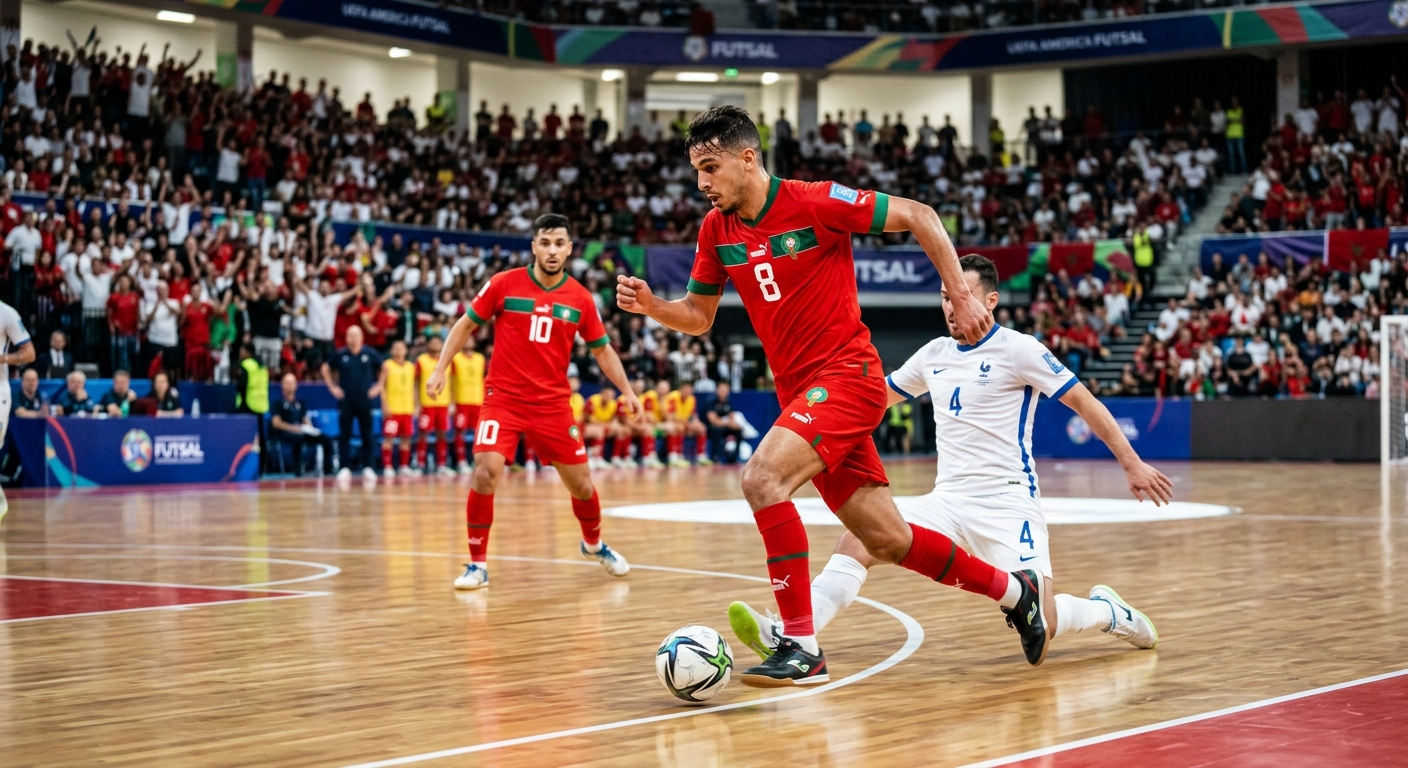
Africa's Futsal Superpower
While Morocco's outdoor football teams capture the biggest headlines, the nation's futsal program has quietly become one of the most successful in the world. The Morocco national futsal team is the undisputed king of the African game and a genuine contender at global level, a status earned through sustained excellence and smart investment.
Futsal, the fast-paced five-a-side indoor game, demands exceptional technical skill, quick decision-making, and tactical intelligence in confined spaces. These are qualities that align naturally with North African football culture, and Morocco has harnessed them to devastating effect on the international stage. The street-football traditions and emphasis on close control that run through Moroccan football translate seamlessly to the demands of the indoor court.
What makes Morocco's futsal story so striking is how comprehensively it has outgrown its origins. From being a peripheral discipline, futsal has become an arena in which Morocco is not merely competitive but dominant on its own continent and respected across the world, a transformation that mirrors and in some respects has outpaced the rise of the outdoor national teams.
This dominance also resonates beyond the scoreboard. In a nation where football is woven into daily life, the futsal team's exploits have given supporters another reason for pride and another source of heroes, broadening the appeal of the indoor game and drawing new audiences to a discipline that was once played mainly in neighbourhood courts and informal settings.
The Atlas Lions of futsal have repeatedly conquered Africa and made deep runs at the FIFA Futsal World Cup, climbing into the upper tier of the world rankings. Their success represents another strand of Morocco's broader football renaissance, demonstrating that the country's ambitions extend across every format of the game and that its sporting strategy is built on breadth as well as depth.
What Is Futsal and Why It Matters
Futsal is an indoor variant of football played five-a-side on a hard court with a smaller, low-bounce ball. The reduced space and constant involvement place a premium on close control, rapid passing, creativity, and composure under pressure. It is widely regarded as one of the finest developers of technical football ability.
Many of the world's greatest footballers credit futsal with shaping their skills in their formative years, and numerous federations use it as a key part of youth development. The game rewards intelligence and technique over physicality, making it a natural fit for nations with strong technical traditions. The constant touches and tight angles force players to think and act faster than the eleven-a-side game typically demands.
Futsal is also a serious competitive sport in its own right, with a global governing structure, a FIFA-organized World Cup, and continental championships that command genuine prestige. It is not simply a training tool but a discipline with its own elite professional ecosystem, particularly in countries such as Spain, Brazil, and Portugal, where leading clubs attract the best players in the world.
For Morocco, futsal is both a sport in its own right and a complement to the wider football ecosystem. Investment in futsal sharpens technical standards across the board while also providing the platform for genuine international honors, making it a strategically valuable part of the national football project. Few nations have grasped this dual benefit as fully as Morocco, which has treated futsal as a priority rather than an afterthought.
The Rise of the Moroccan Futsal Program
Morocco's emergence as a futsal force was no accident. The FRMF identified futsal as an area where targeted investment could yield major international success, and it backed the discipline with funding, facilities, coaching, and structured domestic competition. Rather than leaving the game to develop informally, the federation chose to professionalize it with the same deliberate approach applied across Moroccan football.
A national futsal league gave players a competitive environment to develop, while the federation supported the national team with professional preparation and international fixtures. This infrastructure transformed Morocco from an emerging side into a consistent winner. Regular high-quality matches, proper coaching, and a domestic structure to feed the national team created the conditions for sustained success rather than sporadic flashes.
The strategic logic was sound. Futsal offered a realistic route to genuine international honours in a sport where the traditional powers, while strong, were fewer in number than in eleven-a-side football. By committing seriously to the discipline, Morocco identified an opportunity to punch above its weight and to win silverware that would enhance the nation's overall football standing.
Crucially, the federation paired financial commitment with continuity, resisting the temptation to chop and change after setbacks and instead allowing coaches, players, and structures the time needed to mature. That patience, often in short supply in elite sport, gave the program the stability to compound its gains year after year rather than starting over with each disappointment.
The investment reflects a broader philosophy at the FRMF: that success comes from building proper systems rather than relying on chance. Just as the women's team and the academies benefited from deliberate, well-resourced strategies, so too did futsal, and the results have been spectacular. The futsal program has become a textbook example of how focused investment can elevate a national side from also-ran to powerhouse.
Dominating the Africa Futsal Cup of Nations
Morocco's stranglehold on the Africa Futsal Cup of Nations is the clearest measure of their continental supremacy. The team has claimed multiple titles, repeatedly proving themselves the best futsal nation on the continent and earning regular qualification for the world stage.
Their dominance has been built on a deep pool of skilled players, sophisticated tactical coaching, and the experience of competing regularly at the highest level. Continental rivals have struggled to match Morocco's combination of technique, organization, and depth. Whereas opponents might field a handful of talented individuals, Morocco arrives at continental tournaments with a balanced, well-prepared squad capable of controlling matches from start to finish.
This sustained dominance has had a self-reinforcing effect. Each title strengthens the program's reputation, attracts further investment and attention, and raises the expectations placed on the squad, which in turn drives standards higher still. Continental supremacy has become both the reward for Morocco's strategy and the engine of its continued improvement.
Winning the African title is not merely a matter of prestige; it secures Morocco's place at the FIFA Futsal World Cup, the pinnacle of the sport. This consistent qualification has allowed the team to test itself against the best in the world and to keep raising its standards through elite competition. Regular exposure to the global stage has been crucial in narrowing the gap to the established futsal superpowers.
Making Waves at the FIFA Futsal World Cup
On the global stage, Morocco has established itself as a side capable of troubling the traditional futsal heavyweights such as Brazil, Spain, Portugal, Argentina, and Iran. The Atlas Lions have progressed beyond the group stage at the FIFA Futsal World Cup, reaching the knockout rounds and announcing themselves as serious contenders.
These performances have lifted Morocco into the upper echelons of the world rankings, a remarkable achievement for an African nation in a sport long dominated by South American and European powers. It reflects the depth of talent and the quality of preparation behind the program. To be regarded as one of the leading futsal nations in the world, rather than merely the best in Africa, represents a significant breakthrough for the continent as a whole.
Reaching the knockout rounds at a World Cup is no small feat in a sport where the established elite have decades of professional infrastructure behind them. For Morocco to advance from groups and challenge those nations demonstrates that the program has reached a level where it can no longer be dismissed as a continental specialist punching above its weight on the world stage.
Each World Cup appearance has added experience and belief, narrowing the gap to the very best. Morocco's trajectory in global futsal mirrors its rise in the outdoor game: steady, structured, and increasingly threatening to the established order. With each tournament, the ambition shifts subtly upward, from simply competing to genuinely contending for the latter stages.
The Players Behind the Success
Morocco's futsal success rests on a cohort of technically gifted and tactically astute players, many of whom ply their trade in elite European futsal leagues, particularly in Spain, the spiritual home of top-level club futsal. Exposure to this environment has elevated the quality of the national team.
Standout performers have provided the goals, creativity, and leadership that underpin Morocco's results. The blend of domestically developed players and those competing abroad echoes the model used across Moroccan football, ensuring a high baseline of quality and competition for places. Players sharpened in the demanding Spanish league bring professional habits and elite tactical understanding back to the national setup.
The experience of competing week in, week out in the world's strongest futsal competitions cannot be overstated. Players who face the best opponents regularly arrive at international tournaments accustomed to the intensity and tactical sophistication required, giving Morocco an edge over rivals whose players compete in less demanding environments. This professional exposure is one of the program's most valuable assets.
This depth means Morocco is not reliant on one or two individuals but can field a balanced, well-drilled unit. It is a hallmark of a mature program and a key reason behind the team's consistency at both continental and global level. The ability to rotate, to cover injuries and suspensions, and to maintain standards across a squad is what separates genuine contenders from one-dimensional sides.
Coaching and Tactical Identity
Morocco's futsal team plays with a clear and effective tactical identity, combining disciplined defensive structure with quick, incisive attacking play. Sophisticated coaching has given the side the organization needed to compete with the world's best while preserving the technical flair that defines the squad.
Futsal is a deeply tactical game, with rotations, set plays, and the use of the flying goalkeeper all requiring careful planning and execution. Morocco's staff have demonstrated mastery of these elements, enabling the team to manage matches intelligently and to seize key moments. The flying goalkeeper tactic in particular, where the keeper joins the outfield play to create an overload, demands precise coordination and nerve, and Morocco have shown they can deploy such strategies effectively.
The tactical demands of elite futsal extend to transition moments, where the speed at which a team switches between attack and defence can decide matches. Morocco's coaches have drilled their players to react instantly to changes in possession, turning defensive solidity into rapid counter-attacks and back again, a fluidity that troubles even the most accomplished opponents.
The coaching setup also emphasizes physical conditioning and mental resilience, qualities essential in the intense, end-to-end nature of elite futsal. This holistic approach has turned a talented group into a genuinely formidable and reliable competitive force. In a sport where matches can swing rapidly and concentration lapses are punished instantly, the mental and physical preparation behind the Moroccan team has proven a decisive advantage.
Futsal and Talent Development
Beyond the senior team's honors, Morocco's futsal program plays a valuable role in the country's broader football development. The technical demands of futsal make it an excellent training ground, sharpening the close control, vision, and quick thinking that translate directly to the outdoor game.
By investing in futsal at multiple levels, the FRMF enriches the overall talent pool and reinforces the technical traditions of Moroccan football. Young players exposed to futsal develop attributes that benefit them regardless of which version of the game they ultimately pursue. The constant ball contact and pressure to make rapid decisions accelerate the development of skills that are harder to cultivate on a full-sized pitch.
This developmental value is well understood by leading footballing nations, several of which deliberately incorporate futsal into their youth pathways. Morocco's commitment to the indoor game therefore serves a dual purpose, producing both a successful national futsal side and better-rounded outdoor footballers, an efficiency that strengthens the entire ecosystem.
This synergy between futsal and outdoor football is part of what makes Morocco's overall football project so robust. Success in one area feeds and strengthens the others, creating a virtuous cycle that has propelled the nation to prominence across formats. The willingness to treat futsal as integral rather than peripheral is a mark of the strategic thinking that defines modern Moroccan football.
Comparing Morocco to the Global Elite
The global futsal hierarchy has long been led by Brazil, Spain, Portugal, Argentina, and Iran, nations with deep histories and professional structures in the sport. Morocco's emergence into this conversation marks a significant shift and a breakthrough for African and Arab futsal.
While the very top remains a demanding target, Morocco has closed much of the gap and proven capable of competing with and beating high-ranked opposition. Their world ranking reflects a genuine place among the leading nations rather than mere flattery. The traditional powers can no longer approach a match against Morocco expecting a comfortable result, a status that very few nations outside the historic elite have achieved.
Bridging the remaining gap to the absolute summit is the hardest part of any sporting ascent, requiring not just talent but the accumulated know-how that comes from generations of competing at the highest level. Brazil, Spain, and the other giants possess that institutional experience, and Morocco's challenge is to build it through repeated exposure to the latter stages of major tournaments.
The ambition is clear: to keep climbing and to challenge for a World Cup medal. Given the trajectory of the program and the resources behind it, such an aspiration is realistic rather than fanciful, and Morocco's futsal team is firmly positioned as one of the sport's rising powers. Where once the goal was simply to qualify, the target now is a place on the global podium.
The Future of Moroccan Futsal
The outlook for Moroccan futsal is bright. Continued investment, a competitive domestic league, and a steady pipeline of players gaining experience in top foreign leagues all point to sustained success. The federation's commitment shows no sign of waning, and the structures put in place over recent years should keep producing strong squads for the foreseeable future.
Continental dominance gives Morocco a stable foundation, but the real frontier is the world stage. The team will aim to convert its strong World Cup performances into a podium finish, an achievement that would crown years of careful building and place Morocco among the very elite. Each tournament cycle offers another opportunity to test how far the program has come and to push toward that ultimate goal.
Sustaining success will require continued renewal, ensuring that as established players move on, a new generation is ready to maintain the standards that have been set. The depth of the domestic league and the flow of players into elite foreign competitions suggest that Morocco has the means to manage this transition without a drop in quality.
There is also a wider regional significance to Morocco's rise. As the standard-bearer for African and Arab futsal, the team has shown neighbouring nations what is achievable with the right commitment, potentially inspiring a broader strengthening of the discipline across the region that would, in turn, raise the level of competition Morocco faces and sharpen the team further.
Whatever the future holds, Morocco's futsal team has already secured its place as one of the great success stories of the nation's football revolution. As African champions and a global force, the Atlas Lions of the indoor game stand as proof that Moroccan ambition extends to every corner of the sport, and that focused investment can transform a nation into a genuine power on the world stage.
| Aspect | Detail |
|---|---|
| Continental status | Multiple Africa Futsal Cup of Nations titles |
| Global standing | Among the highest-ranked nations worldwide |
| World Cup | Regular qualifier, reached knockout stages |
| Player base | Domestic league plus elite European-based players |
| Backing | Strong FRMF investment and infrastructure |
| Global rivals | Brazil, Spain, Portugal, Argentina, Iran |
Morocco national futsal team at a glance
FAQ
Is Morocco the best futsal team in Africa?
Yes. Morocco is the dominant force in African futsal, having won multiple Africa Futsal Cup of Nations titles and consistently qualifying for the FIFA Futsal World Cup as the continent's leading side.
Has Morocco performed well at the FIFA Futsal World Cup?
Morocco has progressed beyond the group stage to the knockout rounds at the FIFA Futsal World Cup, establishing itself as a genuine contender and rising into the upper tier of the world rankings.
Why is Morocco so good at futsal?
Morocco's success stems from strong FRMF investment, a competitive domestic league, sophisticated coaching, and a deep pool of technically gifted players, many competing in elite European futsal leagues.
What is futsal and how is it different from football?
Futsal is an indoor five-a-side game played on a hard court with a smaller, low-bounce ball. It emphasizes technique, quick passing, and decision-making in tight spaces, and is a renowned developer of football skill.
Who are Morocco's main rivals in world futsal?
The traditional global powers in futsal are Brazil, Spain, Portugal, Argentina, and Iran. Morocco has emerged to compete with these elite nations and aims to challenge for a World Cup medal.
Loved this? Useful? React below — your feedback helps other readers.