More Than a Scoreline: What a Morocco Win Over France Would Mean for Africa and the Arab World

The night two continents stood still
To understand what is riding on Thursday, you have to go back to a run of results that still sounds implausible on paper. At Qatar 2022, Morocco went through a group containing Belgium and Croatia unbeaten, beat Spain on penalties in the round of 16 with Yassine Bounou saving twice, then knocked out Cristiano Ronaldo's Portugal 1-0 in the quarterfinal on a Youssef En-Nesyri header in the 42nd minute. That result made Morocco the first African team and the first Arab team in the tournament's 92-year history to reach a World Cup semifinal — a sentence that, before December 2022, no one had ever had reason to write.
The scenes that followed were not confined to Morocco. CNN reported jubilation across the Arab world and Africa after the Portugal win, describing exuberant fans from Abidjan in Ivory Coast to Riyadh in Saudi Arabia celebrating what they saw as a historic win for both continents at once. Al Jazeera's correspondent Nicolas Haque, reporting from Casablanca, called the mood "absolutely electric," describing a city dancing and celebrating through the night. In Rabat, Adnane Bennis, managing director of Morocco World News, put it simply: "We are not going to sleep tonight."
The celebrations did not stop at Morocco's borders. Al Jazeera documented street celebrations in Gaza, where supporters described the win as a victory for "all Arab nations," and in Baghdad, where residents called the result "so symbolic" precisely because it represented success for the entire African continent and Arab region simultaneously. A Bahraini fan told reporters he was proud that, for the first time, "we have an Arabic team reaching the semifinals." Congratulatory messages arrived from the prime ministers of Libya and Iraq, the Palestinian Authority, and the rulers of Bahrain and the United Arab Emirates — a wave of official recognition rarely seen for a football result.
France ended that run 2-0 in the semifinal at Lusail Stadium, Theo Hernandez scoring after five minutes and substitute Randal Kolo Muani finishing it in the 79th. Morocco then lost the third-place match to Croatia and finished fourth — still, to this day, the best World Cup finish by any African or Arab nation in history. When the squad returned home, ESPN reported thousands lining the highway into Rabat, spilling off the sidewalks as the team bus passed, before the players were received at the royal palace by King Mohammed VI to celebrate what the palace called a "great and historic accomplishment."
That is the emotional ledger Morocco's 2026 squad inherited before a ball was kicked in North America. Nine players from that 2022 run made this year's World Cup roster. Every one of them has spent four years being asked, in some form, what Lusail felt like — and every one of them now gets an answer written in real time, on the same continent-sized stage, against the same opponent.
It is worth pausing on how unusual that sentence is in the context of World Cup history. Plenty of nations have produced a single, once-in-a-generation run to a semifinal or final and then faded — the story stops being about a team and becomes a story about one summer. What made Qatar 2022 different from the start was how immediately it was framed, by fans and by the press covering it, not as a Moroccan story but as a shared one: an achievement that belonged to Dakar and Cairo as much as it belonged to Casablanca, to Amman and Ramallah as much as to Rabat. That framing is precisely why the emotional stakes did not shrink between 2022 and 2026 — if anything, four more years of Morocco winning the Africa Cup of Nations, climbing to seventh in the FIFA rankings and returning to a World Cup quarterfinal have widened the audience that considers this team, in some sense, theirs.

Whose victory was it? Pan-African pride, Arab pride, and the question in between
Morocco's 2022 run produced an unusual phenomenon: a single team simultaneously claimed, with total sincerity, as the standard-bearer of two different, sometimes overlapping, sometimes competing identities. Moroccan players themselves fed both narratives. After the win over Spain, midfielder Sofyan Boufal told reporters the victory was dedicated to "Moroccans, Arab and Muslim people" — a comment that drew swift criticism online for omitting the African solidarity the run had also generated, and that Boufal later apologized for, acknowledging the continent's investment in the team's success.
Academics have since studied that tension directly. A peer-reviewed article published in the journal Sport in Society, titled "Victory for Africa or the Arab world? Moroccan nationalism, Arab exceptionalism, pan-African solidarity and digital fandom during the 2022 FIFA World Cup," examined exactly this question: how fans, media and the players themselves negotiated competing claims of ownership over what the run meant. The very existence of that scholarly debate is itself evidence of how large the moment became — a football result parsed for what it revealed about identity across an entire region.
There is a third thread in that story that gets less airtime than either the pan-African or pan-Arab framing: Morocco's Amazigh, or Berber, identity. Many members of the golden generation, including players with roots in the Rif region, come from Amazigh communities whose own claim on the team's success is real but was rarely foregrounded in the global coverage that settled, understandably, on the cleaner "first African, first Arab" storylines. It is a reminder that a single national team, especially one representing a country as layered as Morocco, can never fully satisfy every identity that wants to see itself reflected in it — and that the loudest global narrative is not always the only one that matters at home.
None of this diminished the moment; if anything, it explains why the moment traveled so far. A result narrow enough to be claimed by Moroccans, by the wider Arab world and by the African continent all at once is, almost by definition, a result built to become historic. Four years later, as a new Morocco squad — built by a new coach, but still carrying nine survivors of that run — prepares to face France again, all three of those audiences are watching Boston with the same complicated, overlapping sense of ownership.
Palestine on the pitch: how a football team became a platform
Nothing captured the scale of what Morocco's run meant more vividly than what happened on the pitch itself, unscripted, in the minutes after full time. After Morocco's round-of-16 win over Canada, defender Jawad El Yamiq raised a Palestinian flag in celebration. Days later, following the penalty-shootout win over Spain, several Moroccan players again unfurled a Palestinian flag on the field, an image that CNN, Al Jazeera and Africanews all carried within hours as it spread across social media across the Arab world. Middle East Eye described the run as a moment in which "joy, faith and Palestine" united audiences across the region around a single team.
The image of Achraf Hakimi rushing into the stands to embrace and kiss his mother after his decisive penalty against Spain became one of the enduring photographs of the tournament in its own right, shared widely by fans across the Arab world as a symbol of the team's rootedness in ordinary Moroccan family life even at its moment of greatest global exposure. Morocco's players never presented the Palestinian flag as an official team statement, and FIFA drew no sanction against them for it — but the gesture, repeated more than once, was read clearly by millions of viewers as an extension of a cause the Moroccan public has long supported.
That reading did not require much interpretation. Morocco's government has publicly backed a two-state solution for the Palestinian-Israeli conflict for years, and Moroccan public opinion has historically been strongly sympathetic to the Palestinian cause even as the kingdom's diplomatic relationships in the region have shifted. What the 2022 tournament did was give that sentiment a global stage it had never had before: a Moroccan flag and a Palestinian flag, raised by the same hands, broadcast to hundreds of millions of viewers who had tuned in simply to watch a football match.
It is this pattern — a Moroccan team whose victories become vehicles for causes and identities well beyond the touchline — that frames how seriously fans across the Arab world and Africa will be watching Thursday's rematch. A Morocco win would not just avenge a scoreline. Based on precedent, it would almost certainly become, once again, a moment claimed by audiences far beyond Rabat.
1912 to 2026: what beating a former colonial power means in football's language
Morocco was a French protectorate from 1912 to 1956, a period during which Paris controlled the country's foreign policy, security and much of its administration under a nominally indirect system of rule. Independence came in 1956, but the two countries' histories remained deeply intertwined: French language, education and legal structures left a permanent mark on Moroccan public life, while decades of labor migration from Morocco to France, beginning in earnest in the 1960s, built what is today the largest Moroccan diaspora community in the world.
Scholars who study North African and Middle Eastern politics have been explicit about what that history adds to a France-Morocco football match. Writing about the fixture, the historian Jonathan Wyrtzen — who has written on the French protectorate era — noted that France "absorbed Morocco into its African empire in 1912, imposed its modernizing/traditionalizing protectorate logics for forty years," and "remains enormously influential culturally, economically, and politically" in Morocco even today. Political scientist Adria Lawrence, writing about the same fixture, put the fan experience directly: for many Moroccans, a match against France, the former colonial power, "is not simply a game."
It is worth being precise about what that framing does and does not mean. No Moroccan federation statement, and no player in either camp, has cast this quarterfinal as a political confrontation; Deschamps' and Ouahbi's players have both spoken all week in the measured language footballers use before any big match. What commentators and academics are describing is something closer to resonance than agenda: a match that will be read, by many millions of fans, through a historical lens that has nothing to do with tactics, simply because of who the two nations are to each other. That resonance exists whether or not anyone on the pitch invokes it.
The academic literature on the fixture also complicates any simple colonizer-versus-colonized story. Anthropologist Paul Silverstein has cautioned that framing the match purely along national lines "plasters a national logic over a much more complex subnational and transnational reality" — a reference to the fact that Morocco's own squad includes numerous players born and raised in France, and that millions of French citizens have Moroccan heritage, and vice versa. The rivalry, in other words, is not a clean binary of two separate peoples. It is, in large part, a match many of its most passionate viewers experience from inside both identities at once.
That layered history is precisely why Thursday's game carries meaning that a quarterfinal against, say, Argentina or England would not replicate in quite the same way. It is not that a Morocco win over France would resolve or rewrite that history — no football result does that. It is that for a fixture already loaded with a 2022 script of revenge and a fan base already primed to read symbolism into every touch, the colonial backdrop adds one more layer that makes the match, for millions of people, feel bigger than the trophy still four rounds away.
This is also why coverage of the fixture, both in 2022 and again in 2026, has generally avoided treating the game as a simple grudge match. The Moroccan federation has never issued any statement framing the fixture in colonial terms, and Ouahbi, like Regragui before him, has stuck strictly to football language in pre-match media duties. The historical framing lives instead in the commentary that surrounds the match — in academic essays, in diaspora publications, in the op-ed pages of outlets serving Arab and African audiences — which is itself an important distinction. It is fans, writers and scholars doing the interpreting, not players or federations turning a football match into a political statement. That distinction matters for reporting the story accurately, and it is also, in its own way, part of what makes the resonance feel genuine rather than manufactured: nobody had to invent this meaning. Millions of people arrived at it on their own.
A diaspora built for exactly this moment
If the history explains why this match matters so much to Moroccan fans, the diaspora explains how that meaning turns into decibels inside American stadiums thousands of miles from Morocco. France is home to the largest Moroccan diaspora community on earth, with an estimated 1.5 million people of Moroccan descent living in a country of roughly 69 million — a demographic legacy of exactly the migration patterns that followed the protectorate era and accelerated through decades of labor recruitment from the 1960s onward. Morocco World News, describing the buildup to this fixture, framed it as a story of "dual belonging": being French and Moroccan, the outlet argued, "has never been a contradiction," and cheering for Morocco on a French street "is not a rejection of France. It is simply what dual belonging looks like in public."
That diaspora logic extends across the Atlantic. At this World Cup, Moroccan supporters have built what Hespress described as a genuine "home-like atmosphere" for the Atlas Lions despite playing every match on North American soil. In New York, hundreds of supporters packed Times Square waving Moroccan flags and chanting "Dima Maghrib!" — "Always Morocco" — dressed head to toe in the national red and green. In Boston, large crowds gathered at Boston Common, playing traditional drums and singing Moroccan songs, turning one of America's oldest public parks into what reporters described as a sea of red and green. Similar scenes have repeated in Houston, Monterrey and Sacramento, following the team from city to city across an entire continent.
The squad itself embodies the same diaspora story the fans are living. Morocco's 2026 roster includes players born in France — among them Neil El Aynaoui, born in Nancy, Ayyoub Bouaddi, born in Senlis, and Issa Diop, born in Toulouse, alongside other French-born contributors — reflecting a broader pattern noted by researchers studying the squad: roughly half of Morocco's World Cup player pool in recent tournaments has been born outside the country, the direct product of the same migration waves that built the diaspora fan base now filling American stadiums.
There is a competitive dimension to all of this that goes beyond sentiment. A published systematic review in PLOS One found that home teams playing without spectator support show measurably lower technical and tactical performance — the empirical basis for the widely observed "home advantage" in football. Morocco's traveling support has, by most independent accounts from this tournament, recreated the emotional and acoustic conditions of a home match on foreign soil more completely than any other team at the 2026 World Cup, a phenomenon multiple outlets have linked directly to the size, organization and passion of the Moroccan diaspora across North America and Europe alike.
Put simply: when Morocco takes the field in Foxborough, the crowd noise will not be a neutral tournament atmosphere politely split between two flags. It will be the latest chapter of a diaspora phenomenon that has followed this team from Casablanca to Doha to Houston to Boston, and that has made "the Atlas Lions never really play away" one of the defining storylines of successive World Cups.
That phenomenon also travels in the other direction. Moroccan diaspora communities are not only exporting fans to American stadiums; they are also the audience beaming reactions straight back to North Africa in real time, on the same phones and the same social platforms that carried images of the 2022 Palestinian-flag celebrations around the world within minutes. A Boston Common drum circle filmed on someone's phone on Tuesday can be a trending clip in Casablanca by Wednesday morning. That feedback loop, largely invisible to anyone not following Moroccan football media directly, is part of why the emotional temperature around this fixture has stayed so high across an ocean and a continent, four years and thousands of miles removed from Lusail.

Why the story keeps circling back to this exact opponent
Football's calendar rarely hands out symmetry this clean. Of all the teams Morocco could have drawn in this quarterfinal, it is France — the only side that has ever beaten them at a World Cup, the side that ended the greatest run in African and Arab football history, and the side whose flag, language and colonial-era administration once governed Morocco for 44 years. Morocco's 2026 team, under new coach Mohamed Ouahbi after Walid Regragui's departure following Africa Cup of Nations success, reached this point by beating co-hosts Canada 3-0 in Houston, a result that made Morocco the first African nation ever to reach back-to-back World Cup quarterfinals — underlining that 2022 was not a one-off miracle but the start of a genuine golden era for African football.
That distinction matters enormously to how this match is being read across the continent. A single extraordinary run, like Qatar 2022, can always be filed away by skeptics as lightning in a bottle: a perfect alignment of spirit, form and bracket luck. A second run four years later, under a different coach, with half a different squad, reaching the same stage of the tournament again, is a different kind of evidence. It is the difference between a moment and a movement — and every African federation, every young player in Lagos, Dakar, Cairo or Abidjan who has grown up idolizing this generation of Atlas Lions, has a stake in which version of the story Thursday confirms.
For the Arab world, the stakes carry a parallel weight. No Arab nation has ever reached a World Cup final; Morocco came within two matches of it in 2022. A win on Thursday puts them two matches away again — a Moroccan team, backed by a diaspora and a wider Arab public that has shown, twice now, that it treats Morocco's World Cup run as a shared regional project rather than a purely national one. Losing again to France would not erase 2022's achievement. But winning would transform it from a historic exception into a repeatable, structural fact about where Moroccan and African football now sits in the world game.
None of that changes what actually happens over ninety-plus minutes on the pitch: a genuinely close tactical contest between a France side that has not lost a knockout match in years and a Morocco side playing the best football of its post-2022 era. But it does explain why neutrals across the football world — not just Moroccan or Arab or African fans — have adopted this fixture as one of the tournament's must-watch games. Few rematches in World Cup history arrive this loaded.
It also explains why broadcasters and outlets with no direct stake in either team have leaned so heavily into the historical framing this week. Coverage of the quarterfinal draw was less about tactics and more about anniversaries: the four years since Lusail, the 92 years it took for an African or Arab nation to reach a World Cup semifinal in the first place, the decades since Moroccan independence. A neutral viewer flipping on the broadcast Thursday will be handed all of that context within the first few minutes, whether they came looking for it or not — a sign of how thoroughly this specific fixture has escaped the ordinary bounds of a World Cup quarterfinal preview.
Beyond the scoreline: what Thursday could actually change
Strip away the history and the diaspora and the politics, and a Morocco win over France would still be, in pure sporting terms, one of the biggest results in African football history: the first competitive victory Morocco have ever recorded over Les Bleus, ending a head-to-head streak that has never once tilted in Morocco's favor across decades of meetings. It would send Morocco to back-to-back World Cup semifinals, a feat no African nation has ever managed even once, let alone twice in a row. And it would leave them two wins from something that has never happened in the history of the tournament: an African, and an Arab, team in a World Cup final.
It is that last fact more than any other that explains the emotional charge around this specific fixture, four years on from Lusail. In 2022, Morocco's run ended in the semifinal, an outcome that was celebrated as historic precisely because nothing like it had happened before — the first, not the best-yet-achieved. A win in Boston would reframe the entire conversation: not "can an African team ever get this far," a question Morocco has already answered, but "how far can this team, this generation, actually go." That is a fundamentally different, and in some ways more thrilling, question for the tens of millions of fans who have adopted Morocco as their team of the tournament.
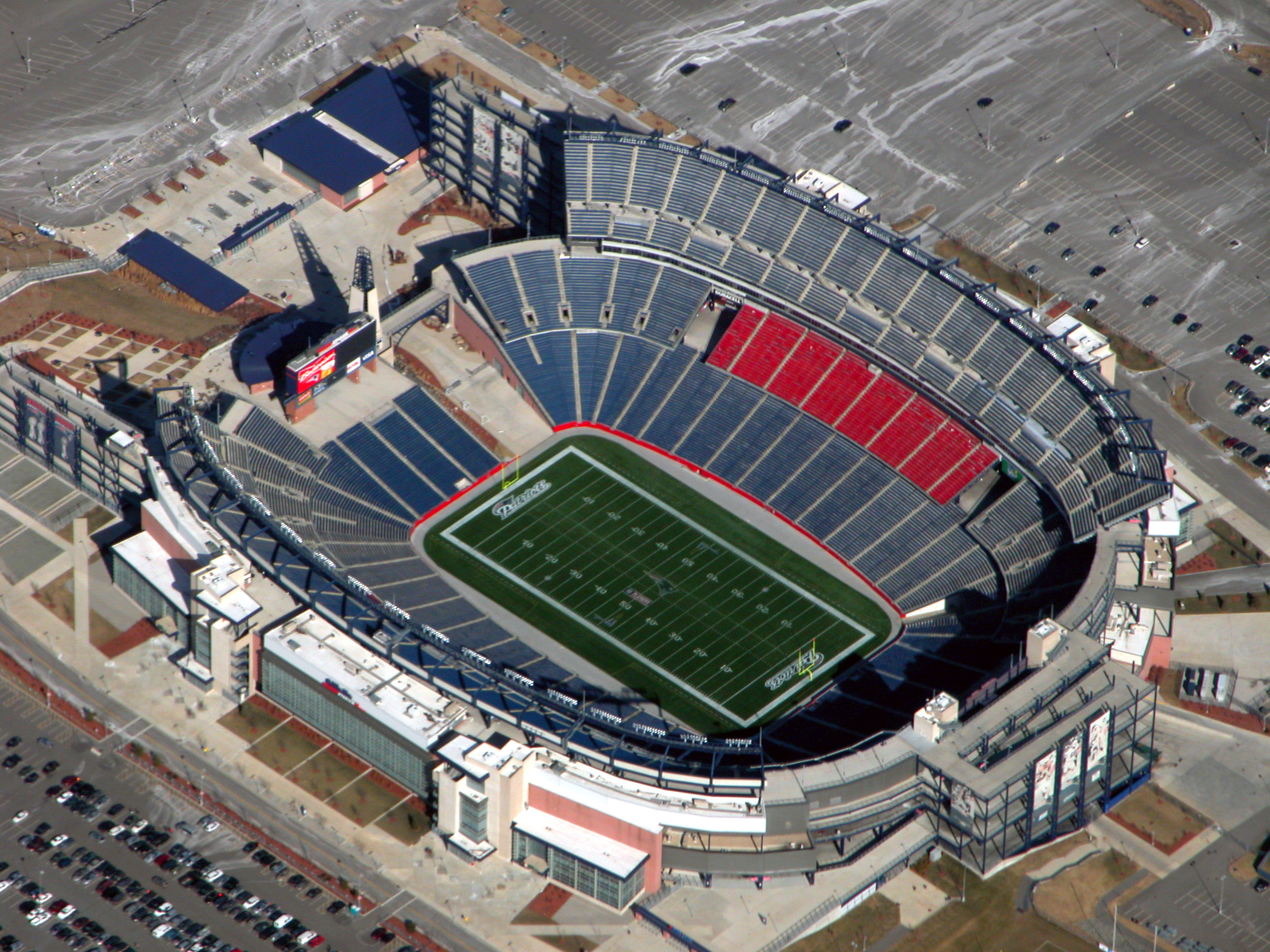
It is also worth being honest about what a Morocco win would not do. It would not undo forty-four years of colonial history, settle any argument about identity in North Africa, or resolve any of the political questions that fans and commentators have, understandably, projected onto this fixture. Football results do not carry that kind of power, and no serious voice covering this match — not Wyrtzen, not Lawrence, not the Moroccan federation, not the players themselves — has claimed otherwise. What a win would do is give millions of people across Morocco, the Arab world, the African continent and a vast global diaspora one more night like the ones in December 2022: streets in Casablanca and Rabat filling with cars honking through the night, celebrations reported from Gaza to Baghdad to Bahrain, a shared moment of joy stretched across two continents by a single result in a stadium named, for one summer, after an American football team.
That is the real answer to the question of what this match means beyond the scoreline. It means a chance to repeat, and even exceed, one of the most widely celebrated achievements in the history of African and Arab sport — against the exact team that ended it the first time. Whatever happens on the pitch in Foxborough on Thursday, the fact that this fixture exists again, in this context, at this stage of the tournament, is itself a measure of how far Morocco's footballing story has traveled since 2022. A win would simply be the next unforgettable chapter.
Frequently asked
Why does a Morocco win over France mean so much beyond football?
Morocco's 2022 run to the World Cup semifinal, ended by France 2-0, made them the first African and first Arab nation ever to reach that stage, sparking celebrations reported from Casablanca to Gaza to Baghdad to Bahrain. France also ruled Morocco as a colonial protectorate from 1912 to 1956, adding a historical resonance that scholars and media have widely noted, even though neither team has framed the match as a political statement.
Did Morocco really become the first African and Arab nation to reach a World Cup semifinal?
Yes. After beating Spain on penalties and Portugal 1-0 in the quarterfinal at Qatar 2022, Morocco became the first African team and first Arab team to reach a World Cup semifinal in the tournament's 92-year history, according to CNN, Al Jazeera and France 24 coverage from that tournament.
How did Africa and the Arab world react to Morocco's 2022 run?
Celebrations were reported across the continent and region: CNN documented jubilant fans from Abidjan to Riyadh, Al Jazeera reported street celebrations in Gaza, Baghdad and Bahrain, and congratulatory messages came from the prime ministers of Libya, Iraq and the Palestinian Authority and the rulers of Bahrain and the UAE.
Why did Morocco players raise a Palestinian flag at the 2022 World Cup?
After wins over Canada and Spain, Moroccan players including Jawad El Yamiq unfurled Palestinian flags on the pitch in celebration, gestures widely covered by CNN, Al Jazeera and Africanews and read by fans across the Arab world as an extension of longstanding Moroccan public sympathy for the Palestinian cause.
Was France really Morocco's colonial ruler?
Yes. France administered Morocco as a protectorate from 1912 until Moroccan independence in 1956. Historians and political scientists who study the region, including Jonathan Wyrtzen and Adria Lawrence, have noted that this history is part of why many Moroccan fans experience a match against France as more than just a game, even though it plays no official role in team preparation.
How large is the Moroccan diaspora and how does it support the team?
France alone is home to an estimated 1.5 million people of Moroccan descent, the largest Moroccan diaspora community in the world. At the 2026 World Cup, that diaspora and Moroccan-American communities have filled stadiums and public spaces in New York, Boston, Houston, Monterrey and Sacramento with flag-waving, drum-playing crowds, creating what multiple outlets have described as a home-field atmosphere for Morocco at every match.
Do any Morocco players have French roots?
Yes. Several members of Morocco's 2026 squad were born in France, including Neil El Aynaoui (Nancy), Ayyoub Bouaddi (Senlis) and Issa Diop (Toulouse), reflecting the same migration history that produced Morocco's large diaspora communities in France.
Has an African or Arab nation ever reached a World Cup final?
No. No African or Arab nation has ever reached a World Cup final. Morocco's fourth-place finish in 2022 remains the best World Cup result by any African or Arab team. A win over France in this quarterfinal would put them two matches from becoming the first.
How did Morocco's 2022 squad connect to identity debates across Africa and the Arab world?
Morocco's run was claimed simultaneously as a pan-African and pan-Arab triumph, and academic research, including a peer-reviewed study in Sport in Society, examined how fans and players negotiated that dual framing, alongside the team's often less-discussed Amazigh (Berber) heritage.
How many players from Morocco's 2022 semifinal squad are still on the 2026 team?
Nine members of Morocco's 2022 World Cup squad that reached the semifinal in Qatar made the trip to the 2026 tournament in North America, giving the current squad a direct personal stake in facing France again.
- CNN — Moroccan ecstasy at World Cup win shared by Africa and Arab world ↗
- Al Jazeera — How the Arab world celebrated Morocco's win ↗
- CNN — Palestinian flag waved on pitch as Morocco celebrates historic World Cup win ↗
- ESPN — Morocco receives a triumphant homecoming after historic fourth place at the World Cup ↗
- Taylor & Francis (Sport in Society) — Victory for Africa or the Arab world? Moroccan nationalism, Arab exceptionalism, pan-African solidarity and digital fandom during the 2022 FIFA World Cup ↗
- Abu Aardvark's Middle East Blog — A postcolonial World Cup showdown for the ages ↗
- Morocco World News — France vs Morocco: When the World Cup Meets the Story of a Diaspora ↗
- Hespress — Moroccan diaspora fuels Atlas Lions' home-like atmosphere at 2026 World Cup ↗
Video via official YouTube embeds; photos via Wikimedia Commons under their stated licenses. All rights belong to the respective owners; 212 Daily claims no ownership.