The FRMF: Morocco's Football Federation
The Governing Body Behind the Golden Era
Behind every great footballing nation stands a federation, and Morocco's recent rise to the pinnacle of the world game owes much to the Royal Moroccan Football Federation, known by its French acronym FRMF (Fédération Royale Marocaine de Football). This governing body has been the architect of a transformation that has propelled Morocco to unprecedented success.
The FRMF oversees every aspect of organized football in Morocco, from the senior men's and women's national teams to youth setups, the domestic leagues, futsal, refereeing, and grassroots development. Its decisions and investments shape the trajectory of the entire football ecosystem.
In recent years, the FRMF has earned widespread acclaim for the boldness and effectiveness of its strategy. While many federations talk about long-term development, the FRMF has delivered tangible results across the board, making it a case study in how visionary administration can transform a nation's footballing fortunes.
The scale of the FRMF's responsibility is easy to underestimate. Governing football in a nation where the sport is a defining passion means balancing the competing demands of elite performance, mass participation, commercial development, and public expectation, all at once. The federation's modern achievements stand out precisely because it has managed these pressures while pursuing a clear and consistent direction rather than lurching from one priority to the next.
Perhaps the most striking feature of the FRMF's recent record is its breadth. Many federations achieve a flash of success in a single area, a strong World Cup or a promising youth side, but struggle to sustain it or to replicate it elsewhere. The FRMF, by contrast, has delivered across the men's and women's games, at youth level, and in futsal more or less simultaneously, a pattern that points unmistakably to systemic strength rather than isolated good fortune.
Founding and Early History
The Royal Moroccan Football Federation was founded in 1955, on the eve of Moroccan independence, establishing the framework for organized football in the newly sovereign nation. It subsequently affiliated with FIFA and the Confederation of African Football (CAF), integrating Morocco into the global and continental football structures.
In the decades that followed, the FRMF oversaw a national team that experienced notable highs, including becoming the first African and Arab nation to reach the knockout stages of a World Cup in 1986. Yet for long stretches, the federation's resources and ambitions were constrained, and Moroccan football's potential went underexploited.
The history of the FRMF is therefore one of long-held promise punctuated by moments of brilliance. The foundations were laid early, but it would take a modern era of focused leadership and investment to fully unlock the nation's capabilities and elevate Morocco to the level it occupies today.
The timing of the federation's birth, at the dawn of independence, gave Moroccan football an institutional anchor at a formative moment in the nation's history. Affiliation with FIFA and CAF connected the country to the global and continental game and provided the framework within which its national teams could pursue international competition. From the outset, then, the FRMF was woven into both the sporting and the national story of modern Morocco.
Yet for much of the twentieth century the gap between the federation's mandate and its means remained wide. Flashes of brilliance, above all the pioneering achievements of the men's team in major tournaments, hinted at the country's potential, but the structures, funding, and long-term planning needed to convert that potential into consistent success were not yet in place. The early decades thus established a proud tradition while leaving the larger promise of Moroccan football substantially unfulfilled.
The Lekjaa Era and Strategic Vision
The modern transformation of Moroccan football is closely associated with the leadership of FRMF president Fouzi Lekjaa. Under his stewardship, the federation adopted an ambitious, well-resourced strategy aimed at making Morocco a genuine force at every level of the game.
Lekjaa's vision was comprehensive rather than piecemeal. It encompassed elite player development, the professionalization of the women's game, world-class infrastructure, the recruitment of top coaches, and the active courting of diaspora talent. Crucially, the strategy was backed by the financial resources needed to execute it.
This combination of clear vision, decisive leadership, and substantial investment set the FRMF apart. Where many federations struggle with short-termism and limited funds, the FRMF pursued a coherent long-term plan, and the results, across men's, women's, youth, and futsal football, have been extraordinary.
Central to this transformation was a shift in how the federation thought about success. Instead of treating each tournament as a discrete event to be navigated, the Lekjaa-era FRMF treated football as a system to be built, with development, infrastructure, coaching, and recruitment understood as interlocking parts of a single long-term project. That systemic mindset allowed investment in one area to reinforce gains in another, multiplying the impact of the federation's spending.
The willingness to commit serious financial resources was what turned this vision from rhetoric into reality. Ambitious plans are common in football administration; the funding to execute them fully is rare. By backing its strategy with substantial investment over a sustained period, the FRMF distinguished itself from federations that announce grand intentions but cannot follow through, and it created the conditions in which Morocco's golden era could take shape.
Investing in Infrastructure
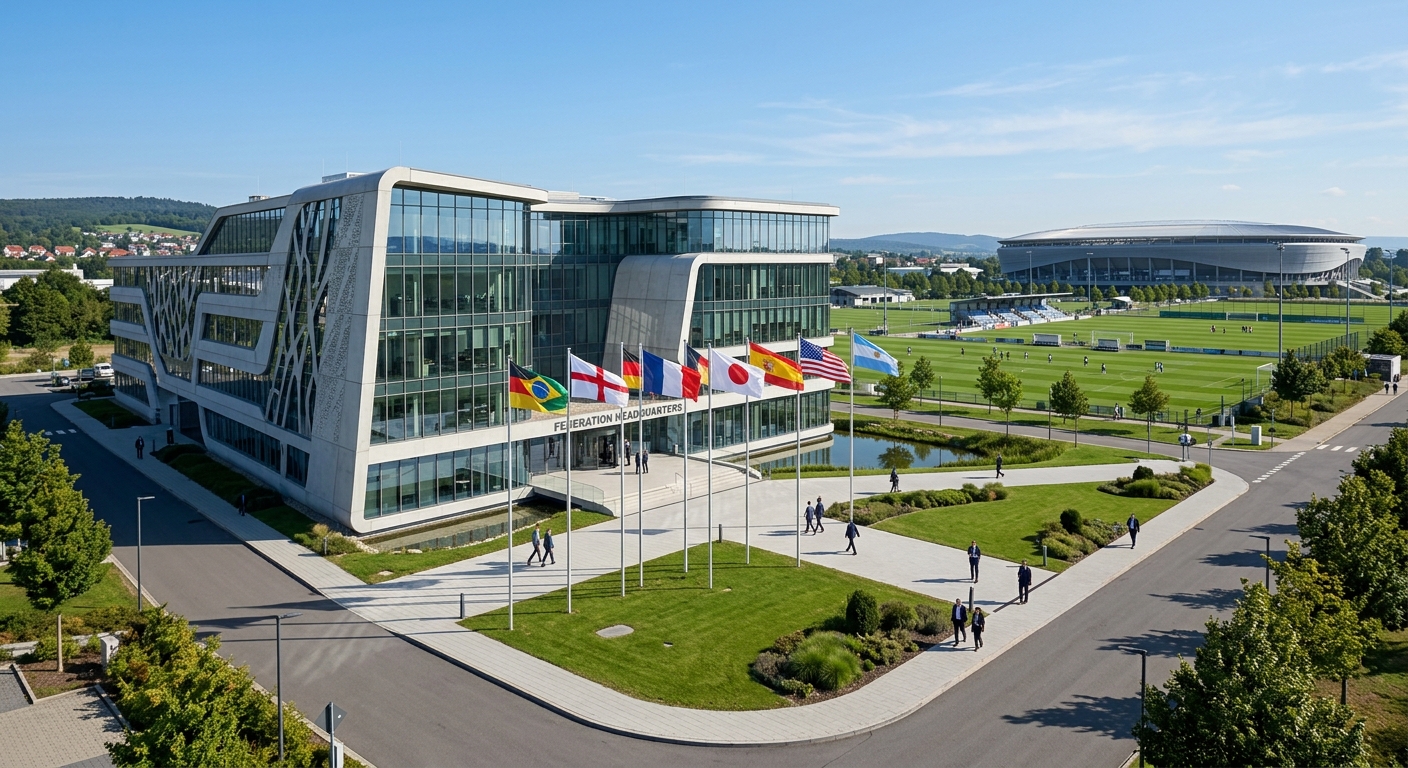
A cornerstone of the FRMF's strategy has been investment in world-class infrastructure. The Mohammed VI Football Complex, a state-of-the-art training base, provides national teams with facilities that rival the best in the world, supporting elite preparation and performance.
Beyond the flagship complex, the federation has supported the development of stadiums, training centers, and academies across the country. This physical investment creates the environment in which talent can be identified, nurtured, and prepared for the highest levels of competition.
Infrastructure is often the unglamorous foundation of football success, but the FRMF recognized its importance. By ensuring that players at every level have access to quality facilities, the federation removed a major historical barrier to Moroccan footballing progress and laid the groundwork for sustained success.
The Mohammed VI Football Complex came to symbolize this commitment, offering national teams across the men's, women's, and youth categories a single, world-class base for preparation. Centralizing elite training in such a facility meant that Morocco's best players, whatever their team, could benefit from consistent standards of pitches, recovery, and sports science, removing the makeshift conditions that had historically hampered international preparation.
Beyond its practical benefits, infrastructure of this calibre carried a psychological dimension. Players and staff who train in environments that match those of the world's leading nations come to expect to compete at that level, and prospective recruits, including talented members of the diaspora, see tangible evidence of a serious, professional project. In this sense the federation's brick-and-mortar investment helped reshape the very ambitions of Moroccan football.
Building the Women's Game
One of the FRMF's most celebrated achievements has been its transformation of women's football. Recognizing the historical neglect of the women's game, the federation launched a comprehensive program from around 2019 to professionalize and elevate it.
This included the creation of a professional women's league, the requirement for men's clubs to establish women's sections, investment in facilities and coaching, and the recruitment of an elite head coach for the national team. The results were swift and spectacular: the Atlas Lionesses reached the 2022 WAFCON final and the 2023 World Cup knockout stage.
The women's program stands as perhaps the clearest example of the FRMF's effectiveness. Few federations anywhere have transformed a women's national team so rapidly, and the achievement has positioned Morocco as the standard-bearer for women's football in the Arab world and a leader on the African continent.
The speed of the turnaround in the women's game astonished observers across the football world. A national team that had long struggled even to play regular fixtures was, within a few short years, competing in a continental final on home soil and winning matches at a World Cup. That trajectory was no accident but the direct product of the federation's decision to treat women's football as a genuine priority deserving of professional structures and real money.
The ripple effects extended well beyond the senior national team. By compelling men's clubs to establish women's sections and by creating a professional league, the FRMF expanded participation, raised the visibility of the female game, and built a pipeline of players and competitive opportunities where almost none had existed. The success of the Atlas Lionesses, in turn, inspired a surge of interest among girls and young women, reinforcing the foundations the federation had laid.
Developing Youth and Academies
The FRMF's commitment to youth development is embodied by the Mohammed VI Football Academy and a broader network of regional academies and grassroots programs. This focus on producing talent at home has been central to the federation's long-term strategy.
By investing in elite institutions and the wider development pipeline, the FRMF has reduced reliance on chance and ensured a steady supply of well-prepared players for the national teams. Graduates of these systems have starred at the World Cup and won an Olympic medal at Paris 2024.
This emphasis on youth reflects an understanding that sustainable success cannot be bought overnight but must be cultivated over years. The FRMF's patience and investment in development have created a deep talent pool that underpins Morocco's competitiveness across age groups and formats.
The federation's youth strategy was built on the understanding that no amount of short-term spending can substitute for a steady supply of well-developed players. By anchoring its approach in institutions like the Mohammed VI Football Academy and a network of regional centers, the FRMF created a renewable source of talent rather than relying on the unpredictable emergence of individual stars or the recruitment of players raised entirely abroad.
The payoff has been visible across Morocco's recent achievements. Graduates of these systems featured prominently in the men's World Cup squad and formed the core of the U23 side that won Olympic bronze at Paris 2024, evidence that the development pathway functions across age groups and competitions. This consistency of output is the surest sign that the federation's patient investment in youth has matured into a genuine competitive advantage.
Harnessing the Diaspora
A distinctive and highly effective element of the FRMF's approach has been its active recruitment of players from the large Moroccan diaspora, particularly in Europe. Many talented players of Moroccan heritage grew up in football powerhouses such as France, the Netherlands, Belgium, and Spain.
The federation made a concerted effort to identify these players, build relationships with them, and persuade them to commit their international futures to Morocco. This strategy added world-class quality and professional experience to the national teams, complementing homegrown talent.
The diaspora policy paid spectacular dividends, with numerous dual-national players starring for both the men's and women's teams in their historic achievements. By embracing rather than ignoring its diaspora, the FRMF tapped into a vast reservoir of talent that transformed its national sides.
The diaspora strategy required more than simply identifying eligible players; it demanded a deliberate effort to make Morocco their first choice. Many dual-national talents could have represented the European nations in which they were raised, often footballing powers with their own strong appeal. The FRMF's success in persuading so many of them to commit to the Atlas Lions reflected careful relationship-building, a compelling sporting project, and an emotional appeal to heritage and identity.
The results reshaped both the men's and women's national teams. Diaspora players brought elite professional habits, exposure to top European competition, and technical maturity, qualities that blended with the pride and grounding of homegrown talent to create unusually well-rounded squads. By embracing rather than overlooking its global community, the FRMF turned the scattering of Moroccan football families across Europe into one of its greatest strategic assets.
Hosting Major Tournaments
The FRMF has positioned Morocco as a premier host of international football. The country hosted the 2022 Women's Africa Cup of Nations and was awarded future editions of the competition, cementing its role as a continental hub for the women's game.
Morocco's hosting ambitions extend to the very top of the global game, with the nation set to play a prominent role in hosting major tournaments alongside other countries. This reflects the FRMF's confidence and the international recognition of Morocco's organizational capabilities and infrastructure.
Hosting major events brings prestige, investment, and the priceless advantage of competing in front of home crowds. The FRMF's success in securing these tournaments is both a reward for its broader strategy and a catalyst for further growth, creating a virtuous cycle of development and opportunity.
Securing major tournaments was both a consequence and a driver of the federation's broader rise. International bodies entrust events to nations with the infrastructure, organization, and ambition to deliver them, and Morocco's investments in stadiums, complexes, and administration made it an increasingly credible host. Each successful tournament, in turn, strengthened the case for awarding the country still bigger events.
Hosting also generated benefits that fed back into the wider football project. The demand to stage international competition justified further infrastructure investment, created showcase occasions for Moroccan talent, and offered national teams the immense advantage of competing before passionate home crowds. For the FRMF, attracting major tournaments was therefore not an end in itself but a catalyst that accelerated the development it was already pursuing.
Domestic Football and the Botola
The FRMF also governs Morocco's domestic professional league, the Botola, which provides the competitive foundation for the country's football. Clubs such as Wydad Casablanca and Raja Casablanca are giants of African club football, having won continental titles and built passionate fan bases.
A healthy domestic league is vital to a national football ecosystem, providing a stage for local talent, sustaining grassroots interest, and contributing to the development pipeline. The FRMF's stewardship of the Botola is part of its broader responsibility for the health of the game.
Strengthening the domestic structure complements the federation's elite and youth initiatives. Together, these strands create a comprehensive system that supports football at every level, from local clubs to the national teams that have brought the country such pride.
The Botola provides the everyday foundation on which much of Morocco's football rests. As the primary competitive stage for domestically based players, it sustains professional careers, generates the rivalries and atmosphere that keep public interest high, and offers a proving ground from which talent can rise toward the national setup. A vibrant league is, in this sense, inseparable from a healthy national football culture.
Clubs such as Wydad and Raja Casablanca extend the league's significance onto the continental stage, where their successes in African club competition have carried Moroccan football's reputation abroad. By overseeing and supporting this domestic structure, the FRMF ensures that the elite, youth, and grassroots strands of its work are connected to a living, competitive league rather than existing in isolation from the everyday game.
The FRMF's Place in Moroccan Success
The achievements of Moroccan football in recent years, the men's 2022 World Cup semi-final, the women's WAFCON final and World Cup run, the U23 Olympic bronze, and futsal dominance, all trace back to the strategy and investment of the FRMF. The federation has been the common denominator of success.
What makes the FRMF's story instructive is the coherence of its approach. Rather than chasing quick fixes, it pursued a holistic, long-term vision encompassing infrastructure, development, the women's game, the diaspora, and tournament hosting, and funded that vision adequately.
As a result, the FRMF has become a model federation, admired across Africa and beyond. Its work has transformed Morocco from a nation of footballing potential into one of genuine, sustained achievement, and its continued leadership will be central to maintaining the golden era it helped create.
What makes the federation's record so compelling is the way the separate achievements reinforce one another into a coherent whole. The men's World Cup heroics, the women's breakthroughs, the Olympic medal, and futsal dominance are not unrelated triumphs but the varied fruits of a single, consistent philosophy applied across the entire football landscape. Read together, they tell the story of an institution that understood how the pieces of a football nation fit.
That coherence offers a lesson that resonates far beyond Morocco. The FRMF's example suggests that lasting football success flows less from chasing isolated results than from building durable systems and funding them properly over time. As Morocco moves into an era of hosting and competing at the highest level, the continued application of that philosophy will be central to sustaining the golden age the federation worked so deliberately to create.
| Aspect | Detail |
|---|---|
| Founded | 1955 |
| President (modern era) | Fouzi Lekjaa |
| Domestic league | Botola Pro |
| Women's milestone | 2022 WAFCON final, 2023 World Cup |
| Men's milestone | 2022 World Cup semi-final |
| Key strategy | Academies, women's game, diaspora, infrastructure |
FRMF key facts and achievements
FAQ
What is the FRMF?
The FRMF is the Royal Moroccan Football Federation (Fédération Royale Marocaine de Football), the governing body of football in Morocco, founded in 1955 and responsible for all national teams, leagues, and development.
Who is the president of the Moroccan Football Federation?
Fouzi Lekjaa has led the FRMF through its modern transformation, driving the ambitious, well-funded strategy that produced Morocco's recent successes across men's, women's, youth, and futsal football.
How did the FRMF transform Moroccan football?
Through a coherent long-term strategy of investment in academies, world-class infrastructure, professionalizing the women's game, recruiting diaspora talent, and hosting major tournaments.
What is Morocco's domestic football league?
Morocco's top domestic league is the Botola Pro, featuring African club giants such as Wydad Casablanca and Raja Casablanca, both of which have won major continental titles.
Why is the diaspora important to the FRMF's strategy?
The FRMF actively recruited talented players of Moroccan heritage raised in European football powerhouses, adding world-class quality and experience that complemented homegrown talent in the national teams.
Loved this? Useful? React below — your feedback helps other readers.