Morocco Fans Erupt: Inside the Global Celebration After the Atlas Lions Knock Out the Netherlands
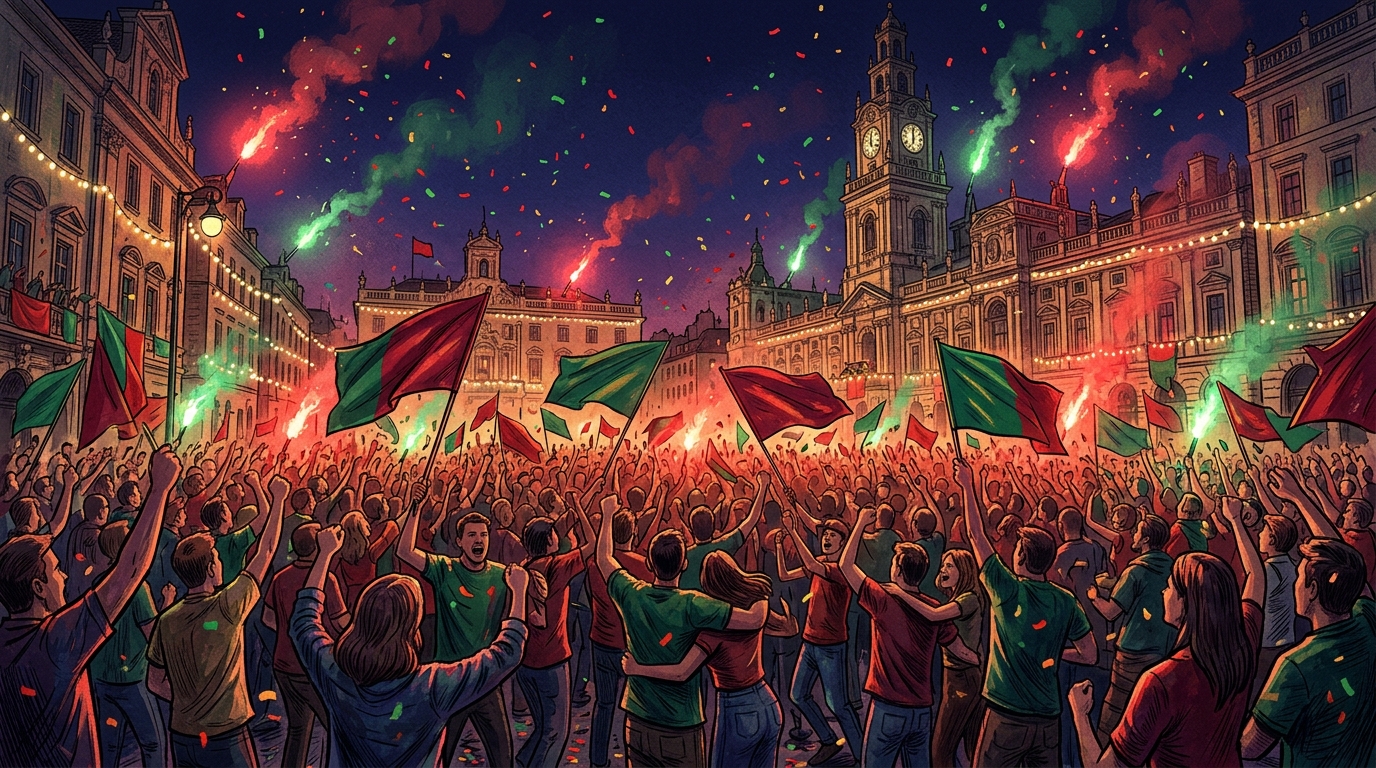
The Final Whistle in Monterrey, and a Nation Holds Its Breath
For ninety minutes, then thirty more, and finally through the cruel lottery of a penalty shootout, Moroccan supporters around the world held a collective breath that seemed to stretch on for hours. When Ismael Saibari stepped up and stroked the decisive penalty low and to the left, that breath was released as a single, planet-spanning roar. Morocco had beaten the Netherlands 3-2 on penalties after a 1-1 draw, and the Atlas Lions were through to the last 16 of the World Cup 2026.
The match itself, played at the Estadio Monterrey on Monday night, was the kind of drama that football occasionally gifts a nation at exactly the right moment. Morocco had been on the brink. Cody Gakpo's 72nd-minute goal — his third of the tournament, scored in emotionally charged circumstances after his partner had shared the loss of their unborn son — had pushed the Dutch towards victory. For roughly twenty minutes, Moroccan fans braced for an exit.
Then came the first minute of stoppage time. Substitute Chemsdine Talbi delivered a cross, Issa Diop rose to meet it with a header, and the ball nestled into the Dutch net. The equalizer did not just save the match; it detonated something. In living rooms, cafes, and packed squares from Rabat to Rotterdam, the noise that followed Diop's header was the first tremor of a celebration that would last well into the night and ripple across continents.
What followed extra time and penalties was less a sporting result than a global event for one of football's most passionately supported nations. To understand why Moroccan fans celebrated the way they did — why grown men wept on the streets of Casablanca and why car horns blared in Amsterdam neighborhoods a thousand miles from the pitch — you have to understand what this team has come to mean.
How It Happened: Diop's Header and the Shootout That Broke the Night Open
The road to the celebration ran through one of the tournament's most chaotic finishes. After Diop's stoppage-time equalizer forced extra time, both goalkeepers stood tall. Yassine Bounou and his Dutch counterpart Bart Verbruggen each made important saves as the additional thirty minutes produced further chances. Verbruggen, in particular, denied Soufiane Rahimi with an excellent stop after the Moroccan forward broke clean through on goal — a moment that, had it gone in, would have spared everyone the shootout's torment.
But torment it was. The penalty shootout was as nerve-shredding as they come, littered with misses on both sides. Neil El Aynaoui struck the crossbar for Morocco. Justin Kluivert hit the post on the Dutch's second kick. Quinten Timber missed, and then Achraf Hakimi — the Paris Saint-Germain star and Moroccan talisman — saw his effort strike the post. For long stretches the shootout felt like it might never resolve, each miss tightening the knot in millions of stomachs.
Then the moment that will be replayed for years: Bounou's save. And finally Saibari, ice in his veins, finishing low to the left to seal a 3-2 shootout win and send Morocco into a last-16 meeting with Canada in Houston.
For the fans, the sheer disorder of the finish only amplified the catharsis. There is a particular kind of joy reserved for victories that should not have happened, that were rescued from the jaws of defeat in stoppage time and then survived the roulette of penalties. This was that joy, multiplied across a diaspora of millions.
There is also a psychological subtext the most devoted fans seized on instantly. Morocco rode its luck at moments, leaned on its goalkeeper, and refused to fold when Gakpo's goal seemed to have settled matters. That refusal — the late equalizer, the willingness to go to penalties against a dangerous opponent and win — is the signature of a side that knows how to survive knockout football. For supporters who lived through 2022, the result felt less like a surprise than a confirmation of character, which is exactly the kind of belief that fuels the loudest celebrations.
Bounou, Again: The Goalkeeper Who Became a National Symbol
If one image came to define the night for Moroccan fans, it was Yassine Bounou — known affectionately to many supporters as 'Bono' — diving to deny the Netherlands in the shootout. The save was the hinge on which the entire result turned, and it cemented a status Bounou had already earned in Qatar four years earlier.
Bounou is more than a goalkeeper to Morocco's supporters; he is a recurring protagonist in the country's biggest footballing nights. In 2022, his shootout heroics against Spain helped author the most celebrated run in Moroccan and indeed Arab and African football history. To watch him produce another decisive save on the grandest stage was, for many fans, confirmation of a cherished belief: that this team has a way of bending the most pressurized moments to its will.
On social media and in the streets, his name was chanted, his save clipped and shared within minutes. Goalkeepers rarely become folk heroes, but Bounou occupies that rare space. For a diaspora that prizes resilience — the quality of holding firm under pressure far from home — a goalkeeper who stands tallest when everything is on the line is more than an athlete. He is a metaphor that the community recognizes in itself.
The save also fed directly into the celebration's emotional logic. Penalty shootouts produce a singular, knife-edge release, and when the hero of that release is a figure already woven into the national story, the joy carries an extra charge of vindication.
There is a generational dimension to Bounou's standing too. Older fans remember decades when Moroccan football promised much and delivered heartbreak; the current era, anchored by figures like Bounou, has rewritten that relationship with hope. When he saves a penalty on the world stage, he is not only winning a match but settling an old account between a football-mad nation and the disappointment it once expected. That is why his name, more than almost any other in the squad, became a rallying cry the instant the shootout ended.
Casablanca and Rabat: The Heartland Erupts
In Morocco itself, the celebrations were, as they have been throughout this era of the Atlas Lions, immediate and overwhelming. The general pattern that has accompanied Morocco's biggest wins is well established: within moments of the final whistle, the main arteries of Casablanca, Rabat, and other cities fill with people. Flags appear from windows and on the backs of mopeds. Car horns become a continuous wall of sound. Fireworks crackle over the rooftops.
During the 2022 run, fans famously flooded the streets of Rabat with flags, chanting under the night sky, and the visual language of those celebrations — red and green everywhere, drums, flares, families spilling out of homes — has become a recognizable signature of Moroccan football joy. A win of this magnitude, secured in such dramatic fashion, follows that same template.
It is worth being precise here: the specific scenes of any given night vary, and reporting on the exact size and character of each gathering takes time to confirm. But the broad pattern is not in doubt. Morocco's progress at major tournaments reliably turns its cities into open-air festivals, and a stoppage-time-and-penalties victory over a heavyweight like the Netherlands is exactly the sort of result that produces the largest of these.
For the people at home, these celebrations are also a message to the diaspora abroad: we are with you, you are with us, and tonight there is no distance between us at all. The flags in Casablanca and the flags in Amsterdam are, in this sense, the same flag.
The home celebrations also carry an economic and social texture worth noting. Cafes that screen the matches become packed community hubs; small businesses sell flags, scarves, and face paint; neighborhoods that might otherwise keep to themselves spill into shared space. A deep World Cup run is, for the cities of Morocco, a recurring civic event as much as a sporting one — a few weeks in which public life reorganizes itself around the rhythm of the team's fixtures.
The Netherlands Irony: Beating the Country So Many Atlas Lions Call Home
No fixture in this tournament carried quite the same layered meaning as Morocco against the Netherlands. The Netherlands is home to one of the largest and most established Moroccan communities in Europe. As of recent figures, roughly 433,000 people of Moroccan descent live in the Netherlands — about 2.4 percent of the population and the second-largest community of foreign origin in the country after those of Turkish descent.
That community is concentrated in the big cities. People of Moroccan descent make up around 9 percent of Amsterdam's population — the second-largest group in the city — and roughly 6 percent in Rotterdam, with substantial communities also in The Hague, Utrecht, and increasingly in cities like Almere and Tilburg. Many trace their roots to Morocco's Rif region, the product of labor migration that began in the 1960s and 1970s.
This is what gave the result its particular emotional weight. For hundreds of thousands of dual-heritage Moroccan-Dutch supporters, the match was a meeting of the two halves of their identity — the country of their birth or residence against the country of their roots. When Morocco won, the celebration unfolded inside Dutch cities, among people who are as Dutch as they are Moroccan, beating the national team of the place they live.
It is an irony that football has produced before — Morocco's 2022 win over Belgium triggered intense scenes in Brussels, home to another large Moroccan community — but it never loses its charge. To win on penalties against the Netherlands, with the Dutch Moroccan community watching, is to stage the celebration in the very streets where the question of belonging is most alive.
The dual-identity tension that makes this fixture so resonant is not abstract. It surfaces in classrooms, workplaces, and political debate across the Netherlands, where questions of integration and belonging are perennially live. Football does not resolve those questions, but for ninety minutes plus extra time it crystallizes them into something simple: a team to support, a flag to wave, a heritage to celebrate without having to explain or defend it. That simplicity is precisely what makes the occasion feel so charged for dual-heritage fans.
Amsterdam, Rotterdam, The Hague: Celebration in the Heart of the Diaspora
In the Dutch cities with the largest Moroccan populations, a Morocco win at a World Cup is never a quiet affair. The general pattern across recent tournaments has seen neighborhoods with strong Moroccan communities erupt into celebration — flags out of car windows, processions of vehicles with horns blaring, young people gathering at well-known squares and intersections that have become informal celebration points.
During the 2022 World Cup, videos from Amsterdam circulated almost instantly alongside footage from Casablanca, Paris, Brussels, and beyond, as the diaspora's joy spread across TikTok and Instagram in real time. The same dynamic applies now, amplified by the fact that the team being beaten was the host community's own national side.
For the Moroccan-Dutch, especially the second and third generations born in the Netherlands, these celebrations are an assertion of a heritage that is sometimes contested in public debate. To pour into the streets of Amsterdam or Rotterdam waving the Moroccan flag after beating the Oranje is to claim space, joyfully and unmistakably, for a part of the national fabric that is too often discussed as a problem rather than celebrated as a presence.
Here it is important to describe the pattern honestly rather than to invent specific scenes. What is certain is the demographic reality and the established template of celebration; the precise details of any single night's gatherings are the kind of thing local reporting fills in over the following hours and days. But the emotional fact is clear: in the Netherlands, this was both a defeat and, for a huge number of residents, a victory.
For the Dutch national team and its supporters, of course, the night was painful — an early exit for a side that fancied its chances, made crueler by Gakpo's emotionally significant goal counting for nothing in the end. The two experiences coexisted in the same cities on the same night: Oranje grief in some homes, Moroccan jubilation in others, sometimes on the same street. That coexistence is the lived reality of a country shaped by migration, and football rendered it unusually visible.
Paris and the French Connection
If the Netherlands hosts one of the most symbolically loaded Moroccan communities, France hosts the largest. More of Morocco's estimated five million expatriates live in France than anywhere else, and French cities have long been among the epicenters of Atlas Lions celebration.
In 2022, the Champs-Elysees and neighborhoods across Paris, Marseille, Lyon, and beyond became sites of mass Moroccan celebration during the team's run — celebrations that, on the night Morocco eliminated France in the semifinal, took on an extraordinary intensity given the same dual-identity dynamic at play with the Dutch this time. France, like the Netherlands, is a country where a huge share of Moroccan supporters were born, live, and belong.
A round-of-16 berth secured against the Netherlands does not carry the direct France-versus-Morocco charge, but it reactivates the same diaspora machinery. The French-Moroccan community has, across this cycle, been a major engine of the team's online and offline support, and a dramatic penalty win is precisely the trigger that brings people out and onto the streets and timelines.
As with every diaspora hub, the honest framing is that the pattern is established and the demographic base is enormous; the specifics of any given night's gatherings are confirmed by local reporting as they happen. But France's role as the diaspora's largest single home guarantees that its celebrations are among the loudest anywhere outside Morocco itself.
France's diaspora is also notable for how multi-generational it has become. The grandchildren of laborers who arrived decades ago now lead the chanting, fluent in French and Darija alike, entirely at home in both cultures. Their celebration of a Moroccan win is not nostalgia for a country they left but pride in a heritage they actively claim, which is part of why French-Moroccan support has been such a durable engine of the team's atmosphere across this cycle.
Brussels and the Belgian Echo
Brussels occupies a special place in the recent history of Moroccan football celebration. In 2022, Morocco's group-stage victory over Belgium — another nation with a large, deeply rooted Moroccan community — set off intense scenes in the Belgian capital, scenes that drew international attention and, in places, spilled into disorder that authorities had to manage.
That memory hangs over every subsequent Morocco win that intersects with the diaspora. Brussels, like Amsterdam, is a city where the Moroccan flag is part of the urban landscape, where the question of dual belonging is constantly negotiated, and where football provides one of the few arenas in which that belonging can be expressed in pure, uncomplicated joy.
A win over the Netherlands resonates strongly in Belgium too, both because of the geographic and cultural proximity and because the Low Countries share that history of Moroccan labor migration and its multi-generational legacy. The communities in Brussels, Antwerp, Amsterdam, and Rotterdam are, in many ways, branches of the same tree.
The lesson of Brussels in 2022 was also a cautionary one — that the scale of these celebrations can challenge local authorities and that a minority of incidents can come to dominate coverage of an overwhelmingly joyful occasion. It is a tension the diaspora is acutely aware of, and one that responsible reporting tries to hold in proportion: the story is the joy, even where the policing is also part of the night.
Brussels also illustrates how quickly the narrative around these celebrations can be contested. The overwhelming majority of those who gather do so peacefully, to sing and wave flags, yet a small number of incidents can dominate headlines and shape perceptions of an entire community. Holding that distinction firmly — joy as the rule, disorder as the rare exception — is part of reporting these nights fairly, and it is a distinction the diaspora itself is keen to insist upon.
Montreal and the North American Diaspora
Across the Atlantic, Montreal has emerged as one of the most vibrant nodes of Moroccan football support, thanks to a large and growing Moroccan community in Quebec. In 2022, large crowds gathered in Montreal after Morocco's wins, including after the historic defeat of Portugal, and the city became a recognizable part of the global map of Atlas Lions celebration.
That North American dimension takes on extra significance in 2026, with the tournament co-hosted by Canada, the United States, and Mexico, and with Morocco's next match against Canada to be played in Houston. The Moroccan community in Montreal and across Canada now finds itself supporting its team on or near home soil, an unusual and emotionally rich situation for a diaspora used to cheering from afar.
For Moroccan-Canadians, the round-of-16 result is both a cause for street celebration and a prelude to something even more charged: a match against their adopted country. As with the Netherlands, many in the community will feel the pull of two flags when Morocco faces Canada, and the celebration of beating the Dutch is shadowed, just slightly, by the knowledge of what comes next.
The growth of the Montreal scene reflects a broader truth about the Moroccan diaspora: it is not confined to its historic European hubs. Wherever Moroccan families have settled — North America, the Gulf, and beyond — the Atlas Lions travel with them, and a win like this one lights up living rooms and city squares across time zones.
The North American timing also reshapes the rhythm of celebration. Because the tournament is hosted across Canada, the United States, and Mexico, matches fall at hours that suit the Americas, and the diaspora there experiences results live rather than in the small hours. For Moroccan-Canadians in particular, a World Cup unfolding partly on home soil is a novelty after years of cheering from distant time zones, and it lends the build-up to the Canada fixture an intimacy these fans have rarely felt.
'Dima Maghrib': The Anthem That Soundtracked the Whole Night
If the celebrations had a single soundtrack, it was 'Dima Maghrib.' The phrase translates roughly as 'Always Morocco' or 'Morocco Forever' — 'dima' meaning 'always' and 'Maghrib' referring to Morocco and the wider Maghreb. It is at once a chant, a slogan, and now a fully fledged fan anthem, and on the night Morocco beat the Netherlands it was everywhere.
The chant rose to prominence during the 2022 World Cup, when Morocco became the first African and Arab nation to reach the semifinals, and fans flooded squares from Rabat outward chanting 'Dima Maghrib' under the night sky. For this World Cup cycle, the phrase has been adopted and re-energized as the unofficial anthem of the campaign, blending patriotic feeling with football passion, and it has been hugely popular on TikTok throughout the tournament.
What makes 'Dima Maghrib' so potent is its portability. It works in a stadium and on a street corner, sung by a single fan or a thousand. It needs no translation to carry its meaning, and it stitches together a diaspora that speaks Darija, French, Dutch, Spanish, and English. When the same two words echo from Casablanca and Amsterdam and Montreal on the same night, the song becomes a kind of invisible thread binding the whole community together.
Readers following 212daily.com's ongoing Dima Maghrib coverage will recognize how completely the anthem has fused with this team's identity. It is no longer just a song that accompanies the Atlas Lions; for many fans it has become inseparable from what supporting Morocco feels like in 2026.
What gives the anthem additional staying power is that it has migrated beyond stadiums and onto everyday platforms. It scores celebration clips, wedding videos, and montage edits; it is hummed by children who were not yet born during the 2022 run. A chant becomes an anthem when it detaches from any single moment and starts to mean the whole story, and 'Dima Maghrib' has made exactly that leap, which is why it surfaced everywhere the instant Saibari's penalty went in.
The Social Media Wave: Celebration at the Speed of the Feed
Modern football celebration is as much a digital phenomenon as a physical one, and Morocco's diaspora has become exceptionally fluent in it. In 2022, footage of celebrations from Casablanca, Paris, Brussels, Amsterdam, and beyond spread across TikTok and Instagram almost instantly, turning local joy into a global, shareable moment within minutes of each result.
The same machinery kicked into gear the instant Saibari's penalty went in. Clips of the winning kick, of Bounou's save, of Diop's header, and of street scenes in various cities began circulating immediately, set time and again to 'Dima Maghrib' and other Moroccan anthems. The hashtags around the Atlas Lions and the diaspora's celebration filled feeds far beyond the Moroccan community itself.
It is worth being careful with numbers here: the precise view counts and engagement figures for any given clip take time to verify and are easy to exaggerate. What can be said with confidence is that the pattern is unmistakable — Morocco's results are reliably among the most shared football content of their respective tournament days, and the diaspora's geographic spread means the wave never really stops, rolling from European evening into North American afternoon.
This digital dimension matters because it collapses distance. A young Moroccan-Dutch fan in Rotterdam and a cousin in Casablanca experience the same goal, the same save, the same song, in the same scroll. The feed becomes a shared square, and the celebration, already loud in the streets, becomes effectively borderless.
The portability of the celebration online also means it crosses communities. Non-Moroccan football fans, neutrals charmed by the team's story, and supporters of other African and Arab nations frequently amplify the clips, so that the Atlas Lions' joy spills well beyond its own diaspora. That broader embrace, first felt strongly in 2022, is part of what has turned Morocco into one of the tournament's most widely supported sides.
Echoes of 2022: When Morocco Carried a Continent
Every Moroccan celebration in 2026 is layered over the memory of 2022, the tournament that changed what the Atlas Lions mean. In Qatar, Morocco did what no other Arab or African nation had ever done, reaching the World Cup semifinals and beating Belgium, Spain, and Portugal along the way before falling to France.
That run was not experienced as a national event but as a continental and pan-Arab one. Across Africa and the Arab world, Morocco became a shared team, its progress celebrated far beyond its own borders and diaspora. The images of those weeks — the Rabat crowds, the diaspora scenes in European capitals, players celebrating with their mothers on the pitch — became some of the defining football pictures of the decade.
The 2026 victory over the Netherlands inevitably summons all of that. For supporters, reaching the last 16 is both a result in itself and a reopening of the question 2022 posed: how far can this team go, and can it touch those heights again? The celebrations carry, alongside their joy, a current of belief that the answer might be yes.
This is why the eruption after the Netherlands felt larger than a round-of-16 berth might normally warrant. It was not just about this match. It was about a continuity of pride, a sense that the extraordinary story begun in Qatar is still being written, and that the diaspora gets to live it again.
The 2022 run also reset expectations in a way that complicates every subsequent result. Where reaching the round of 16 might once have been celebrated as an achievement in itself, the semifinal in Qatar redefined the ceiling, so that fans now hold two feelings at once: pure joy at the win over the Netherlands, and a hungry, half-spoken question about whether this team can climb even higher than the last. That blend of gratitude and ambition is part of what makes the modern Moroccan celebration so intense.
The Atlas Lions as a Diaspora Identity Project
One of the most remarkable things about this Moroccan team is how directly it embodies the diaspora it thrills. More than half of Morocco's World Cup squad were born outside Morocco, the product of the same migration histories that built communities in the Netherlands, France, Belgium, Spain, and elsewhere. The team is, quite literally, the diaspora made flesh.
This is the result of a deliberate strategy. Morocco's football federation has, over the past decade, actively harnessed diasporic talent, recruiting players raised in European academies and persuading dual-eligible stars to commit to the country of their heritage. The success of that approach — players born in Amsterdam or Paris or beyond choosing the Atlas Lions — has reshaped the team and its meaning.
For diaspora fans, this is profoundly affirming. When a player who grew up in the Netherlands or France pulls on the Moroccan shirt and succeeds, it validates the very experience of dual belonging that those communities navigate every day. The team says, in effect: you can be from here and from there, and both are real.
Beating the Netherlands sharpened that message to a point. A squad full of players shaped by European football, several with direct ties to the Low Countries' migration story, eliminating the Dutch national team — it is the diaspora identity project delivering its most pointed possible result, and the celebration reflected exactly that.
This identity project is not without its critics and complications, and honest coverage acknowledges them. Debates about national belonging, about players raised abroad, and about who counts as 'truly' Moroccan or Dutch or French run alongside the celebrations. But on the pitch the federation's strategy has produced results that are hard to argue with, and for the diaspora the symbolism is unambiguous: a team that looks like them, that shares their journeys, succeeding at the highest level.
Women, Families, and the Generational Picture
The Moroccan football celebration is, distinctively, a family affair. One of the enduring images of 2022 was of players celebrating with their mothers on the pitch, and that spirit carries into the way the diaspora marks these nights. These are not celebrations confined to young men; they spill across generations, with grandparents, parents, and children together in the streets and squares.
The Moroccan community in the Netherlands and across Europe is characterized by a youthful profile with significant second- and third-generation members. That demographic reality shapes the celebration: it is the children and grandchildren of the original Rif migrants, born in Amsterdam or Brussels or Paris, who now lead the singing — often alongside elders who remember a Morocco that never dreamed of a World Cup semifinal.
Women and girls are visibly part of these scenes, wrapped in flags, leading chants, filming and sharing. The Atlas Lions' success has become an occasion for the whole community to be present in public space together, an inclusive festival rather than a narrow one. For families straddling two cultures, it is a rare moment when heritage is celebrated without complication or apology.
Describing this honestly means resisting the urge to invent specific characters or quotes. But the generational, family-centered texture of Moroccan football celebration is well documented across this era, and it is part of why these nights feel less like sporting revelry and more like a community-wide rite of belonging.
The Amazigh Thread: Rif Roots from Morocco to the Lowlands
Beneath the national story runs a regional and cultural one. Roughly half of the Moroccan migration to the Netherlands originated in Morocco's Rif region, bringing Amazigh (Berber) languages and traditions that have shaped Dutch urban life for decades. The same Amazigh heritage threads through Moroccan communities in Belgium, France, and beyond.
This matters to how the celebration is understood. The Atlas Lions are embraced as a national team, but for many in the diaspora the pride is also rooted in specific regional identities — Rif, Souss, and others — that the national success gathers under one flag. The team becomes a vessel large enough to hold these multiple belongings at once.
When fans of Rif descent in Rotterdam or Utrecht celebrate Morocco beating the Netherlands, they are celebrating a heritage that is at once Moroccan, Amazigh, and Dutch — a layered identity that football momentarily resolves into a single, uncomplicated joy. The flag they wave carries all of those histories.
It is a reminder that the Moroccan diaspora is not a monolith but a mosaic, and that the team's broad embrace is part of its power. 'Dima Maghrib' is sung in Darija, but it is sung by people who also speak Tarifit, Dutch, and French, and who hear in it an affirmation of every layer of who they are.
The Amazigh dimension also connects the celebration to a longer story of language and survival. Tarifit and other Amazigh tongues traveled with the Rif migrants and persisted in Dutch and Belgian cities across generations, often under pressure. When that heritage is folded into a joyful national celebration, it gains a visibility it rarely enjoys in ordinary public life, and for many fans of Amazigh descent that recognition is part of what makes these nights feel so meaningful.
What This Win Means Beyond Football
For all the drama of the shootout, the deeper reason Moroccan fans celebrated as they did has little to do with the round of 16 itself. The Atlas Lions have become a focal point for pride, visibility, and belonging for a community that is often discussed, in its European homes, in the language of integration debates and social tension rather than achievement and joy.
Football offers a counter-narrative. On nights like this, the Moroccan diaspora is not a policy question but a celebrating public, claiming streets and timelines with confidence and happiness. The team's success provides a positive, unifying symbol around which a sometimes-marginalized community can gather and be seen on its own joyful terms.
This is why the irony of beating the Netherlands lands so deeply. In a country where the Moroccan community has at times felt scrutinized, the national team's elimination by Morocco — celebrated by Dutch citizens of Moroccan heritage in Dutch cities — is a moment of assertion. It says: we are here, we belong here, and tonight we are joyful here.
None of this is to overstate football's power to resolve real social questions. It cannot, and the morning after returns everyone to the ordinary world. But for a few hours, the Atlas Lions give the diaspora something precious and rare: a shared, public, uncomplicated reason to celebrate exactly who they are.
There is, finally, a dignity in how the diaspora frames these wins to itself. The Atlas Lions are not a vehicle for grievance but for joy; the celebration is not against anyone so much as for something — a heritage, a community, a shared story of movement and belonging. That framing matters, because it keeps the occasion generous rather than defensive, and it is part of why Moroccan celebration, at its best, reads to the wider world as an invitation rather than a confrontation.
Flags, Colors, and the Symbols of Belonging
The visual identity of Moroccan celebration is by now instantly recognizable: the red flag with its green five-pointed star, draped over shoulders and hung from windows; the red and green color scheme that floods every gathering; the drums, the flares, the car convoys. These symbols travel with the diaspora and reappear, identical, in every city where Moroccans gather to celebrate.
That visual consistency is part of what makes the global celebration feel like a single event rather than many separate ones. A photograph from Casablanca and a photograph from Amsterdam on the same night are nearly interchangeable in their iconography. The flag is the flag; the colors are the colors; the joy looks the same.
For second- and third-generation diaspora youth, displaying these symbols is an act of identity as much as celebration. Wrapping yourself in the Moroccan flag on a Dutch or French or Canadian street is a statement about heritage and pride, made joyfully and in numbers, at a moment when the whole world's attention is briefly on the team that connects them all.
The symbols also feed the digital wave. The visual richness of Moroccan celebration — the sea of red and green, the flares lighting up the night — is precisely the kind of imagery that travels on social platforms, ensuring that the look of the celebration becomes as globally familiar as the result that sparked it.
Pride, Proportion, and the Policing Question
No honest account of these celebrations can ignore the tension that sometimes accompanies them. In 2022, the scale of Moroccan celebration in some European cities, Brussels among them, strained local authorities, and a minority of incidents drew disproportionate media attention relative to the overwhelmingly peaceful and joyful majority.
This dynamic is a sensitive one for the diaspora. Communities that already feel scrutinized are acutely aware that a handful of incidents can be used to characterize an entire celebration, and by extension an entire community, unfairly. The challenge, for fans and reporters alike, is to keep the story in proportion: the dominant reality of these nights is families, songs, flags, and joy.
Authorities in various European cities have, across recent tournaments, prepared for large Moroccan celebrations as a matter of routine crowd management, much as they would for any major football occasion involving a large local fanbase. Framing these preparations as ordinary, rather than exceptional, is part of treating the community with the fairness it deserves.
The right lens, then, is the one the celebration itself demands: this is a community expressing pride and happiness on a historic night. Where there are challenges, they are the challenges of any large public celebration, and they should not be allowed to eclipse the joy that is the actual story.
Authorities and fan organizations have also, over successive tournaments, grown more practiced at facilitating these celebrations safely — coordinating with community leaders, managing traffic around known gathering points, and treating a major Moroccan result as the predictable public event it has become. Normalizing that cooperation, rather than dramatizing it, is part of allowing the community its joy on the same terms any large fanbase would expect.
The Road to Houston: Canada Awaits on July 4
The celebration of beating the Netherlands is, of course, only a waypoint. Morocco's reward for surviving the shootout is a round-of-16 meeting with Canada in Houston, scheduled for July 4. For a tournament co-hosted in North America, and for a diaspora with a thriving presence in Montreal and across Canada, the fixture carries its own emotional complexity.
Just as the Netherlands match pitted Morocco against a country many of its supporters call home, the Canada match will do the same for the Moroccan-Canadian community. Fans in Montreal who celebrated wildly on this night will soon face the bittersweet prospect of Morocco against their adopted country, the two-flags feeling returning in a new form.
On the pitch, Morocco will fancy its chances. A team that found a stoppage-time equalizer through Issa Diop and then held its nerve through a chaotic shootout — with Bounou again decisive — carries exactly the kind of momentum and self-belief that makes the Atlas Lions dangerous in knockout football. The 2022 run proved this group thrives precisely in these high-pressure, fine-margin contests.
For the diaspora, the build-up to Houston means another week of anticipation, another round of 'Dima Maghrib' on every feed, and another chance for the global Moroccan community to gather around its team. Whatever happens on July 4, the journey has already given the diaspora one of its great nights. The only question now is how many more lie ahead.
The match against Canada will test more than tactics; it will test the squad's composure in exactly the kind of fine-margin contest it has come to specialize in. A team that equalized in stoppage time through Issa Diop and held its nerve through a ragged shootout has every reason to trust itself in another tight knockout. For the diaspora, the days before Houston mean a sustained hum of anticipation, with 'Dima Maghrib' as its constant background score.
Forever Morocco: Why 'Dima Maghrib' Won't Fade
When the streets eventually emptied and the car horns finally fell silent, what lingered was the phrase that had soundtracked the entire night. 'Dima Maghrib' — Forever Morocco. It is more than a chant for a single match or even a single tournament; it has become a statement of permanence for a community defined by movement.
That is the quiet genius of the anthem. For a diaspora scattered across France, the Netherlands, Belgium, Spain, Canada, and beyond — a people who have made homes far from the country the song names — 'always Morocco' is both a football slogan and a declaration of identity that distance cannot erode. You can be born in Amsterdam and live in Montreal and still be, always, Morocco.
Beating the Netherlands gave that declaration a stage it could not have scripted better: a victory won inside the cities where the diaspora lives, against the team of the country it shares, celebrated to the sound of an anthem about belonging forever. The result was last-16 qualification. The meaning was something much larger.
As Morocco turns towards Canada and Houston, the Atlas Lions carry the hopes of a global community that has learned, across this remarkable era, exactly how to celebrate. The flags are ready. The song is ready. And whatever July 4 brings, one thing is already certain: Dima Maghrib. Forever Morocco.
Frequently asked
How did Morocco fans react to beating the Netherlands?
Moroccan fans erupted in celebration across the world. In Morocco, cities like Casablanca and Rabat filled with flags, car horns, and fireworks in the established pattern of Atlas Lions celebration. Across the diaspora — in the Netherlands, France, Belgium, and Canada — Moroccan communities took to the streets and to social media, with the anthem 'Dima Maghrib' soundtracking the joy. The dramatic nature of the win, secured by Issa Diop's stoppage-time equalizer and a chaotic penalty shootout, made the release of emotion especially intense.
What is Dima Maghrib?
'Dima Maghrib' translates roughly as 'Always Morocco' or 'Morocco Forever' — 'dima' meaning 'always' and 'Maghrib' referring to Morocco and the wider Maghreb region. It rose to prominence as a chant during Morocco's historic 2022 World Cup run and has been adopted as the unofficial fan anthem for the 2026 campaign, becoming hugely popular on TikTok. It functions as both a football chant and a broader declaration of national and diaspora pride.
Why is beating the Netherlands special for Morocco?
The Netherlands is home to one of Europe's largest Moroccan communities — roughly 433,000 people of Moroccan descent, about 2.4 percent of the population and the second-largest community of foreign origin in the country. Cities like Amsterdam and Rotterdam have large Moroccan populations. That means Morocco beat the national team of a country hundreds of thousands of Atlas Lions supporters call home, with the celebration unfolding inside Dutch cities among dual-heritage Moroccan-Dutch fans. It echoed the charged dynamic of Morocco's 2022 win over Belgium.
What was the final score of Morocco vs Netherlands?
The match finished 1-1 after extra time, with Morocco winning 3-2 on penalties. Cody Gakpo scored for the Netherlands in the 72nd minute, and Issa Diop equalized for Morocco with a header in the first minute of stoppage time, off a cross from substitute Chemsdine Talbi. The shootout was chaotic, with misses on both sides, before Yassine Bounou's save and Ismael Saibari's decisive penalty sent Morocco through.
Who scored the winning penalty for Morocco?
Ismael Saibari scored the winning penalty, finishing low and to the left to seal a 3-2 shootout victory. The decisive moment was set up by goalkeeper Yassine Bounou, who made a crucial save during the shootout. Earlier kicks saw Neil El Aynaoui hit the crossbar, while the Netherlands' Justin Kluivert hit the post and both Quinten Timber and Morocco's Achraf Hakimi missed.
Who does Morocco play next at the World Cup 2026?
Morocco advances to the round of 16, where they face co-host Canada in Houston on July 4. The fixture carries added emotional weight for the large Moroccan diaspora in Canada, particularly in Montreal, who will see their team play against their adopted country — echoing the two-flags dynamic of the Netherlands match.
How big is the Moroccan diaspora?
Morocco has an estimated five million expatriates, with more living in France than anywhere else. There are also very large communities in the Netherlands (around 433,000 of Moroccan descent), Belgium, and Spain, plus a significant and growing presence in North America, including Montreal and across Canada. More than half of Morocco's World Cup squad were born outside Morocco, making the team a direct embodiment of that diaspora.
Why do Moroccan celebrations spread so quickly on social media?
The Moroccan diaspora is geographically spread across multiple continents and time zones, and it is highly active online. During the 2022 World Cup, celebration footage from Casablanca, Paris, Brussels, Amsterdam, and beyond circulated almost instantly on TikTok and Instagram. The same pattern holds in 2026, with clips of key moments set to 'Dima Maghrib' spreading worldwide within minutes. (Specific view counts vary and are best verified case by case rather than assumed.)
How does the 2026 celebration compare to 2022?
The 2026 celebrations consciously echo 2022, when Morocco became the first African and Arab nation to reach a World Cup semifinal, beating Belgium, Spain, and Portugal before falling to France. That run produced iconic diaspora scenes across Europe and North America and turned the Atlas Lions into a shared team for the African and Arab world. The 2026 win over the Netherlands reopened that sense of possibility and belief, which is part of why the celebration felt larger than a round-of-16 berth alone might suggest.
What role does Yassine Bounou play for Morocco fans?
Yassine Bounou, affectionately known as 'Bono,' has become a national symbol for his clutch goalkeeping in high-pressure moments. His shootout heroics helped power Morocco's 2022 run, and his decisive save against the Netherlands in 2026 cemented his status. For a diaspora that prizes resilience under pressure, a goalkeeper who stands tallest when everything is on the line has become more than an athlete — he is a figure the community sees its own qualities reflected in.
Is it accurate to describe specific street celebrations in each city?
This article describes the well-documented general pattern of Moroccan football celebration — flags, car convoys, songs, and family gatherings — rather than inventing specific eyewitness scenes for each city on this particular night. The demographic facts (community sizes, locations) and the established template of celebration are well sourced; the precise details of any single night's gatherings are typically confirmed by local reporting in the hours and days afterward. We have aimed to keep general descriptions clearly general and to flag what is sourced versus what is pattern.