Morocco Digital Nomad Complete Guide 2026: Visas, Cities, Cost & Wi-Fi
Why Morocco Has Become a Top Nomad Hub
A decade ago, Morocco was a backpacker stopover; today it is one of the fastest-growing remote-work destinations in the world. The appeal is a rare combination of factors that rarely line up in a single country. Morocco sits in the GMT+1 time zone, meaning a worker can keep European business hours almost perfectly and overlap comfortably with the US East Coast in the afternoon. Flights from London, Paris, Madrid and Lisbon are short and cheap, often under three hours, and budget carriers like Ryanair, easyJet and Royal Air Maroc keep prices low year-round.
The cost of living is the headline draw. A nomad can rent a furnished one-bedroom apartment in a good Marrakech or Rabat neighbourhood for the price of a single week in many European capitals. Restaurant meals, taxis, fresh produce and domestic flights all cost a fraction of what they do in the eurozone, which means even a modest freelance income stretches into a genuinely comfortable lifestyle.
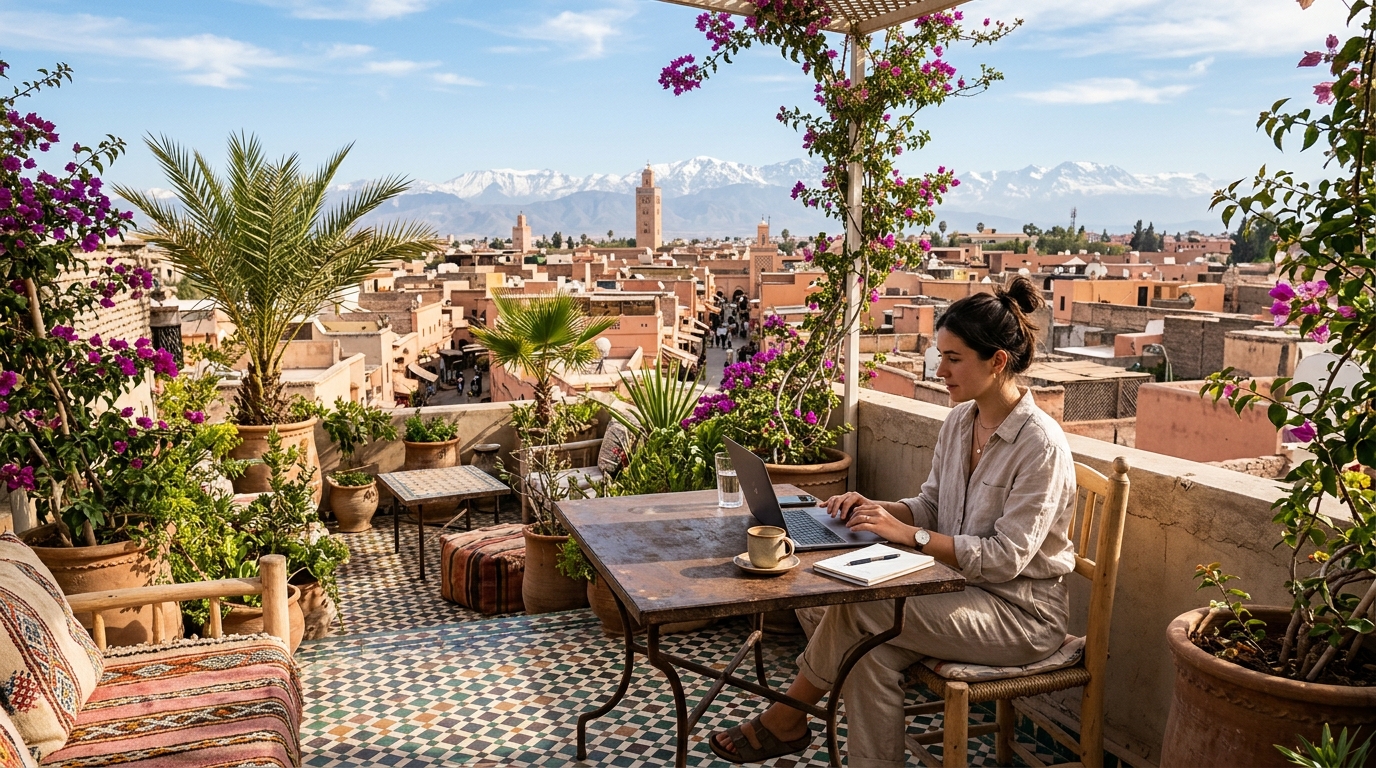
Beyond economics, Morocco offers texture. You can spend a morning answering emails on a riad rooftop, an afternoon surfing the Atlantic, and an evening eating tagine in a 12th-century medina. The diversity of landscapes, from Saharan dunes to Atlantic surf breaks to ski slopes in the High Atlas, means the country never feels monotonous, which is exactly what keeps long-stay nomads from burning out.
Visa Rules and How Long You Can Stay
For most Western nationalities, including citizens of the United States, Canada, the United Kingdom, the European Union, Australia and New Zealand, Morocco grants 90 days visa-free on arrival. You simply land, get a stamp, and you are legal for three months. This makes it one of the most accessible long-stay destinations on the continent and removes the bureaucratic friction that deters nomads from places with complicated e-visa systems.
As of 2026, Morocco has not launched a dedicated digital nomad visa in the style of Portugal or Croatia, though the topic has been discussed by tourism authorities. In practice, most nomads work the 90-day rule. To extend beyond 90 days, you have two realistic paths: apply for a residence permit (carte de séjour) at the local prefecture, which requires proof of income, accommodation and patience with paperwork; or do a visa run by leaving the country and re-entering. Popular border runs include a flight to Spain, the Canary Islands, or Portugal.
If you intend to stay long term, the carte de séjour is worth the effort. It legitimises your presence, makes opening a bank account easier, and removes the stress of border runs. Bring multiple passport photocopies, proof of funds, a lease agreement and bank statements. Processing can take several weeks, so start early. Always confirm current rules with your nearest Moroccan consulate before travelling, as immigration policy can change.
The Best Cities and Towns for Remote Work
Marrakech is the default first stop for most nomads. It has the largest concentration of coworking spaces, cafes with reliable Wi-Fi, an international community and an airport with connections across Europe. The trade-off is heat in summer (regularly above 40C in July and August) and the sensory intensity of the medina, which some find exhilarating and others exhausting. The newer Gueliz and Hivernage districts offer a calmer, more modern base with apartments, supermarkets and quieter cafes.
Rabat, the capital, is the choice for nomads who prioritise calm, walkability and infrastructure over buzz. It is cleaner, more relaxed, has excellent fibre internet and a coastal setting, and feels distinctly less touristy. Casablanca is the business and tech capital, ideal if you need a genuine metropolis with the fastest internet, the most coworking options and the best onward flight connections, though it lacks the postcard charm of other cities.
For lifestyle nomads, the coast wins. Essaouira is a breezy, artsy fortified port town beloved for its laid-back pace and cooler summers. Taghazout, near Agadir, is Morocco's surf capital and has developed a thriving nomad and surf-camp scene, with coworking spaces built specifically for remote workers who want to catch waves between calls. Chefchaouen, the blue city in the Rif Mountains, is stunning but better suited to short creative retreats than long-term work given its smaller infrastructure.
Internet, SIM Cards and Coworking
Internet quality is the make-or-break factor for any nomad, and Morocco performs better than its reputation suggests. Major cities have widespread fibre-optic connections, and a well-chosen apartment in Marrakech, Rabat or Casablanca can deliver 100 Mbps or faster. Always confirm the connection type and run a speed test before committing to a long lease. Cafes and coworking spaces in nomad hubs are accustomed to remote workers and generally offer dependable Wi-Fi.
For mobile data, Morocco has three main carriers: Maroc Telecom, Orange and Inwi. A tourist SIM with a generous data package costs only a few dollars and is sold at the airport and in shops everywhere. eSIM options are increasingly available too. Mobile coverage and 4G are excellent in cities and along major roads, making a phone hotspot a perfectly viable backup for video calls when your home connection wobbles.
Coworking has matured significantly. Marrakech alone has numerous dedicated spaces offering day passes and monthly memberships, complete with meeting rooms, fast connections and a built-in social scene. Taghazout and Essaouira have surf-and-work hybrid spaces. Membership typically costs far less than equivalent spaces in Europe, and the community aspect is invaluable for combating the isolation that long-term remote work can bring.
Monthly Budget: What It Really Costs
Morocco offers exceptional value, but your budget depends heavily on lifestyle. A frugal nomad sharing accommodation, eating local food and using public transport can live well on around $900 to $1,100 per month. A mid-range lifestyle with a private furnished one-bedroom in a desirable area, regular restaurant meals, a coworking membership and weekend travel typically lands around $1,400 to $1,800. A comfortable, near-luxury existence with a modern apartment and frequent eating out can still come in under $2,500.
Rent is your largest variable. Furnished apartments aimed at expats and nomads cost considerably more than what locals pay, so spending time on the ground and negotiating directly with landlords (rather than booking months of Airbnb) saves substantial money. Monthly rentals negotiated locally often cost half the nightly-rate equivalent.
Daily costs are where Morocco shines. A filling local meal of tagine or couscous costs a few dollars, fresh produce from souks is extremely cheap, taxis within a city rarely exceed a few dollars, and intercity trains and buses are affordable and comfortable. The main budget creeps come from imported goods, alcohol (which is taxed and limited in availability), and Western-style restaurants in tourist zones.
Safety, Culture and Practical Etiquette
Morocco is generally a safe country for nomads, including solo travellers and women, with violent crime against tourists rare. The most common issues are petty scams, aggressive sales tactics in tourist souks, and pickpocketing in crowded areas. A confident, polite but firm manner deflects most hustle. Women travellers should expect some unwanted attention and may prefer to dress modestly, particularly outside cosmopolitan districts, to blend in and reduce hassle.
Morocco is a Muslim country, and respecting cultural norms goes a long way. Dress modestly when visiting mosques and rural areas, learn a few words of Darija (Moroccan Arabic) or French, and be mindful during Ramadan, when daytime eating in public is discouraged and many businesses adjust their hours. Friday is the main prayer day and some shops close around midday. A little cultural sensitivity transforms how locals treat you.
On the practical side, carry some cash as many small businesses do not accept cards, keep digital copies of your passport, and register your trip with your embassy if staying long term. Healthcare in private clinics in major cities is good and affordable, but comprehensive travel or nomad health insurance is strongly recommended. Tap water is best avoided for drinking in many areas; bottled or filtered water is the norm.
Building Community and Staying Productive
The biggest risk for any long-term remote worker is isolation, and Morocco's nomad scene has matured enough to solve it. Facebook groups, WhatsApp communities and coworking memberships connect you to other remote workers within days of arriving. Marrakech, Taghazout and Essaouira all have recurring meetups, skill shares and social dinners. Surf camps in Taghazout in particular blend work and lifestyle in a way that makes friendships form quickly.
Establishing a routine is essential given the temptation to treat every day like a holiday. Successful nomads typically anchor their week with a coworking membership or a regular cafe, set clear working hours that respect their clients' time zones, and reserve weekends for exploring the country. The GMT+1 time zone makes this discipline easier for those working with European clients, while US-facing freelancers usually shift to afternoon and evening hours.
Finally, treat Morocco as a base rather than a sprint. The country rewards slow travel: spend a month in each city, build relationships with landlords and cafe owners, and you will unlock better prices, deeper friendships and a richer experience than rushing through. Many nomads who arrive for a few weeks end up staying months, drawn back by the affordability, the weather, the food and the warmth of Moroccan hospitality.
| City / Town | Best For | Typical 1-bed rent/month | Internet | Vibe |
|---|---|---|---|---|
| Marrakech | First-timers, community | $450 - $750 | Fast fibre | Buzzy, hot summers |
| Rabat | Calm, infrastructure | $400 - $650 | Excellent fibre | Relaxed capital |
| Casablanca | Business, fastest net | $500 - $800 | Fastest fibre | Big-city, less charm |
| Essaouira | Lifestyle, cooler air | $400 - $600 | Good | Artsy coastal town |
| Taghazout | Surf nomads | $350 - $600 | Good | Surf-and-work scene |
Morocco nomad cities compared (2026 estimates)
FAQ
Does Morocco have a digital nomad visa?
As of 2026, Morocco does not offer a dedicated digital nomad visa. Most nomads use the 90-day visa-free entry granted to many Western passports, then either apply for a residence permit (carte de sejour) or do a short visa run to a nearby country to reset the clock. Always verify current rules with a Moroccan consulate.
Is the internet good enough for video calls in Morocco?
Yes. Major cities like Casablanca, Rabat and Marrakech have widespread fibre-optic internet, and a well-chosen apartment can deliver 100 Mbps or more. Coworking spaces and many cafes offer reliable Wi-Fi, and a cheap local SIM provides strong 4G as a backup for calls.
How much money do I need per month to live in Morocco?
A frugal nomad can live on around $900 to $1,100 per month, a comfortable mid-range lifestyle costs roughly $1,400 to $1,800, and even a near-luxury setup usually stays under $2,500. Rent is the biggest variable, and negotiating monthly leases locally is far cheaper than nightly Airbnb rates.
Is Morocco safe for solo and female digital nomads?
Morocco is generally safe, with violent crime against tourists rare. The main concerns are petty scams and unwanted attention, particularly for women. Dressing modestly outside cosmopolitan districts, being polite but firm with vendors, and basing yourself in established nomad communities all help reduce hassle.
What is the best time of year to be a nomad in Morocco?
Spring (March to May) and autumn (September to November) offer the most pleasant weather across the country. Coastal towns like Essaouira and Taghazout stay comfortable in summer, while inland cities such as Marrakech become very hot in July and August. Winters are mild on the coast but cold in the Atlas Mountains.
Loved this? Useful? React below — your feedback helps other readers.