Morocco Coast and Surf Guide: Taghazout, Essaouira and the Atlantic's Best Breaks
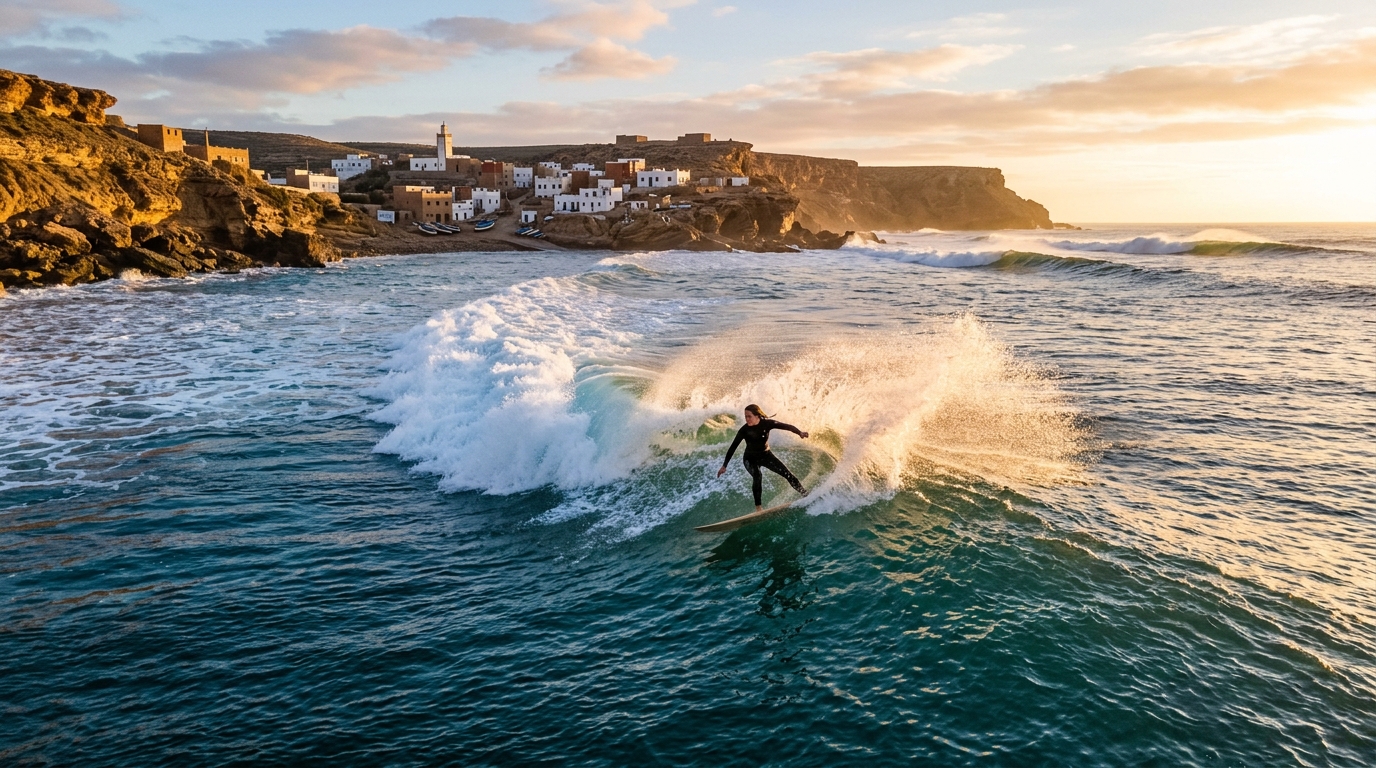
Morocco's Atlantic Surf Coast
Stretching for hundreds of kilometers along the country's western edge, Morocco's Atlantic coastline has quietly become one of the surfing world's favorite winter playgrounds. While most people picture Morocco as a land of deserts and souks, its coast tells a different story: cold, powerful Atlantic swells, consistent surf, year-round mild temperatures, and a string of laid-back beach towns where the rhythm slows to the pace of the tide.
The coast's appeal lies in a rare combination of factors. The swells generated in the North Atlantic march down to hit Morocco's points and reefs throughout the cooler months, the water stays surprisingly comfortable thanks to the climate, and the whole scene remains remarkably affordable compared to surf hubs in Europe, Australia or the Americas. Add reliable sunshine and an easy flight from Europe, and the formula becomes irresistible.
The epicenter is the south-central coast around Agadir, where the small village of Taghazout has grown from a sleepy fishing hamlet into an international surf capital. Further north, the artsy walled city of Essaouira offers a different flavor, with relentless wind that has made it a global capital of kitesurfing and windsurfing rather than wave riding. Together they bookend a coast brimming with breaks for every skill level.
Taghazout: The Surf Capital
Taghazout, about 20 kilometers north of Agadir, is the beating heart of Moroccan surf culture. Once a tiny Berber fishing village, it has transformed into a bustling hub of surf camps, yoga retreats, smoothie bars and digital nomads, while still retaining a scruffy, charming authenticity. Brightly painted buildings tumble down to the sea, and the smell of grilled fish mingles with sunscreen and incense.
The surrounding coast is studded with legendary breaks. Anchor Point is the crown jewel, a world-class right-hand point break that peels for hundreds of meters on the right swell and draws experienced surfers from across the globe. Nearby, Killer Point, Mysteries and La Source offer more challenging waves, while gentler spots like Panorama, Hash Point and the beach breaks toward Tamraght and Imsouane suit beginners and improvers.
Just up the coast, the village of Imsouane deserves special mention. Its sheltered bay produces one of the longest and mellowest waves in the country, a dreamy, slow-rolling right that can carry a surfer for several hundred meters and is perfect for longboarders and those building confidence. Between Taghazout, Tamraght and Imsouane, this stretch of coast packs more quality, varied surf into a small area than almost anywhere else in North Africa.
Essaouira: Wind, Waves and Soul
Some 170 kilometers north of Agadir lies Essaouira, a fortified port city with a character all its own. Its UNESCO-listed medina, ringed by 18th-century ramparts and pounded by Atlantic surf, has long attracted artists, musicians and free spirits; in the 1960s it became a hippie haven, and it still hums with creative energy, galleries, gnaoua music and a bustling fishing harbor where the day's catch is grilled on the spot.
What truly defines Essaouira, though, is the wind. The same powerful, consistent breezes that earned it the nickname the Windy City make it one of the world's premier destinations for kitesurfing and windsurfing. The broad, sandy bay provides ideal conditions for these sports, and schools line the beach offering lessons and equipment. Pure wave surfing exists here too, but it plays second fiddle to the wind sports.
Essaouira's charm extends well beyond the water. The relaxed, walkable medina, the seafood, the blue boats in the harbor, and the wide beach perfect for long walks or camel rides make it a wonderful base even for non-surfers. It is also an easy and popular day trip or overnight from Marrakech, roughly two and a half to three hours away by road, which makes it the ideal coastal complement to an inland Moroccan adventure.
When to Surf and What to Expect
Timing your trip to the surf seasons is essential. The prime swell season on Morocco's Atlantic coast runs roughly from October through April, when North Atlantic storms send consistent, powerful waves toward the points around Taghazout. Winter, from December to February, delivers the biggest and most reliable surf, drawing experienced surfers chasing the famous point breaks at their best.
Beginners and intermediates often prefer the shoulder months of autumn and spring, when the waves are still good but generally more manageable and the weather is pleasant. Summer (roughly May to September) sees the smallest, gentlest waves and is the quietest surf season, though it can still be enjoyable for total novices and is the prime time for the windsurfing and kitesurfing conditions at Essaouira.
Water temperatures hover in a comfortable range that nonetheless calls for a wetsuit most of the year, a thicker suit in winter and a lighter one in the warmer months. The air is mild and sunny far more often than not. One practical note: the popularity of breaks like Anchor Point means crowds in peak winter weeks, so early starts and a willingness to explore lesser-known spots pay off handsomely for those seeking emptier lineups.
Surf Camps, Lessons and Costs
Morocco is one of the most beginner-friendly and budget-friendly places in the world to learn to surf, which explains the explosion of surf camps along the Taghazout coast. A typical camp package bundles accommodation, daily lessons or guided surf sessions, board and wetsuit rental, transport to whichever break is working best that day, and often breakfast and dinner, all at a price that significantly undercuts comparable camps in Europe or Australia.
Camps cater to every type of traveler, from intensive learn-to-surf weeks for absolute beginners to guided surf-and-explore trips for experienced riders who want local knowledge of the breaks. Many blend surfing with yoga, making for a popular surf-and-yoga retreat formula that has helped turn Taghazout into a wellness destination as much as a surf one. Solo travelers find camps especially appealing for the built-in social scene.
For independent surfers, board and wetsuit rental is cheap and widely available, as are casual lessons by the hour. Beyond the surf, costs across the coast remain gentle: simple guesthouses, abundant cheap and delicious seafood, and fresh juice and tagine for a few dollars. The combination of low prices, warm hospitality, quality waves and that intangible laid-back coastal soul is exactly why Morocco's Atlantic shore has become a fixture on the global surf trail.
Planning Your Coastal Trip
Getting to the surf coast is straightforward. Agadir's Al Massira International Airport is the main gateway, receiving direct flights from many European cities, and Taghazout is a short transfer away. Essaouira has its own smaller airport and is easily reached by road from Marrakech, making it simple to combine a coastal surf or wind-sports stint with an inland cultural trip to the imperial cities.
A great coastal itinerary might base you in Taghazout for several days of surfing and yoga, with side trips to Imsouane for that long, gentle wave and to the Paradise Valley, a palm-fringed gorge with natural swimming pools in the foothills just inland. From there, a drive or transfer north to Essaouira adds a dose of culture, seafood and wind sports before looping back to Marrakech.
A few final tips smooth the experience. Respect local etiquette in the water, where lineups can get crowded and a friendly, patient attitude goes a long way. Bring or rent reef-appropriate gear, as several of the best breaks are rocky points rather than sandy beaches. Dress modestly off the beach, as the coastal towns, while relaxed, are still part of conservative Morocco. And give yourself enough days; the coast's whole appeal is its unhurried pace, and the longer you stay, the more its mellow magic takes hold.
| Spot | Best for | Notes |
|---|---|---|
| Anchor Point (Taghazout) | Advanced surfers | World-class long right point break |
| Imsouane Bay | Beginners, longboarders | One of the longest, mellowest waves |
| Panorama / Hash Point | Beginners, improvers | Gentler beach and point breaks |
| Killer Point | Advanced surfers | Powerful, challenging right |
| Essaouira Bay | Kite & windsurfing | Reliable strong wind, broad sandy beach |
Morocco's top coastal surf spots
FAQ
When is the best time to surf in Morocco?
The prime swell season runs roughly October to April, with the biggest, most consistent waves in winter (December to February). Beginners often prefer autumn and spring for more manageable surf, while summer suits novices and is best for windsurfing in Essaouira.
Where is the best place to surf in Morocco?
Taghazout, north of Agadir, is the main surf hub, home to the world-class Anchor Point and many breaks for all levels. Nearby Imsouane offers a famously long, gentle wave ideal for beginners and longboarders.
Is Morocco good for beginner surfers?
Yes. The Taghazout coast has many gentle beach and point breaks, plus an abundance of affordable, beginner-friendly surf camps offering lessons, equipment and transport. Imsouane's long, slow wave is especially good for learning.
What's the difference between Taghazout and Essaouira?
Taghazout is the dedicated surf capital with classic point breaks, while Essaouira is a windswept artsy port city better known for kitesurfing and windsurfing thanks to its strong, reliable wind, plus a rich cultural and culinary scene.
How much does a surf trip to Morocco cost?
Morocco is one of the world's most affordable surf destinations. Surf camp packages bundling accommodation, lessons, equipment and transport cost far less than comparable camps in Europe or Australia, and independent rentals and food are inexpensive too.
Loved this? Useful? React below — your feedback helps other readers.