Chergui Heatwave Hits Morocco: City-by-City Temperatures & Survival Tips
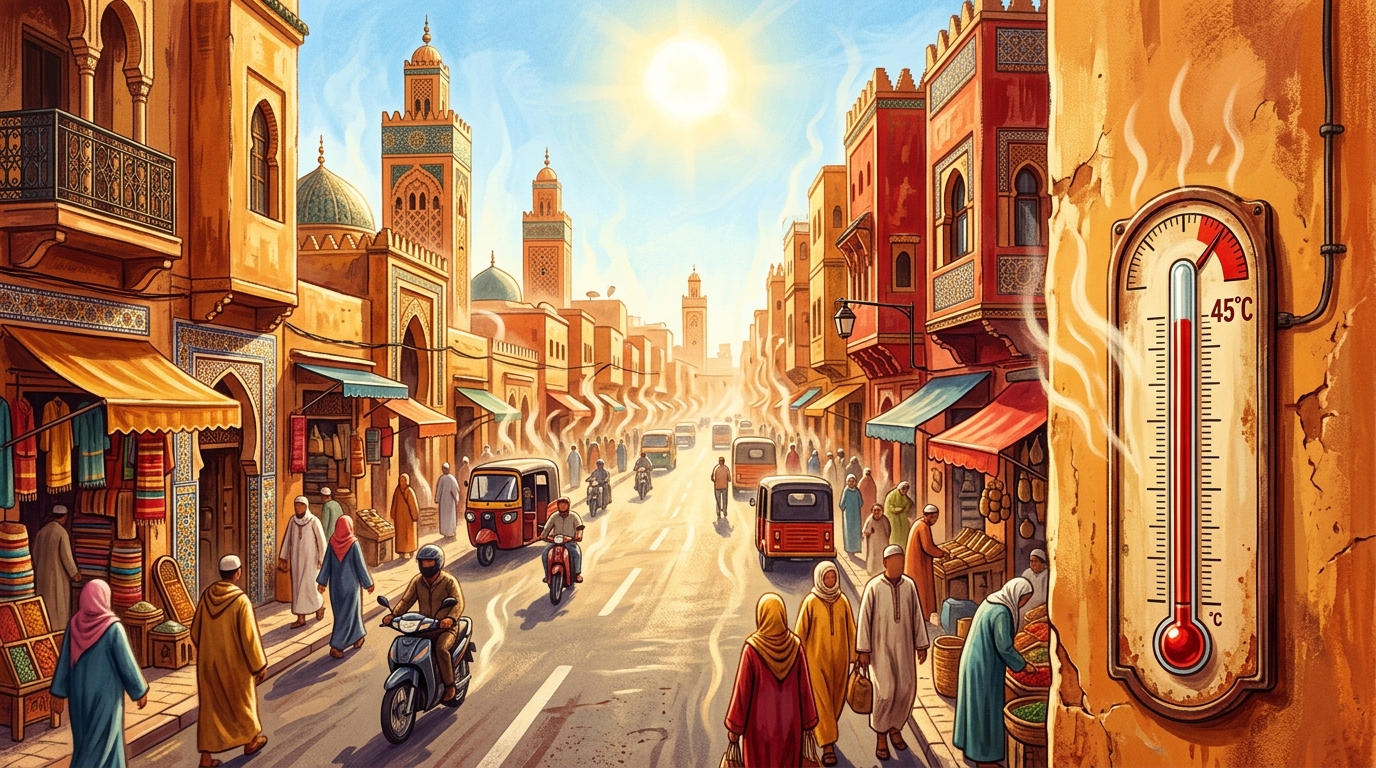
What Is the Chergui?
The Chergui (also spelled Cherqui) is a hot, dry continental wind that blows from the east and south, dragging scorching air off the Sahara across Morocco. It is driven by a strengthening subtropical high-pressure system over North Africa combined with an active Saharan thermal low, a setup that lets desert air masses surge northward.
When the Chergui takes hold, temperatures can leap far above seasonal norms in a matter of hours. The air is parched as well as hot, which is why a Chergui day feels so different from ordinary summer warmth: it is the dryness, not just the number on the thermometer, that wears people down.
How Hot It Got in Late June 2026
The late-June 2026 episode was exceptional. Temperatures peaked on the weekend of June 28 and 29, surpassing the 45C threshold across many regions and exceeding 47C in places. Sidi Slimane recorded a blistering 47.1C, with Taroudant close behind at 46.9C.
Records tumbled. Benguerir set a new high of 46.1C, beating its previous 45.3C mark, and monthly temperature records fell across the country, in some spots running as much as 20C above seasonal norms. Meteorologists flagged it as one of the more extreme late-June heat events on record.
Where to Find Relief
Geography is everything during a Chergui. The interior, including cities like Marrakech, Fes, Beni Mellal and the plains around Taroudant, bears the worst of it, with afternoon temperatures becoming genuinely dangerous. If you have flexibility, this is the time to head for the coast.
The Atlantic coast offers real respite. Towns like Essaouira, Rabat, Casablanca and Agadir stay markedly cooler thanks to the ocean breeze, which is one reason the Gnaoua Festival in Essaouira and Mawazine in Rabat remain comfortable even as inland Morocco bakes. The mountains, including the High Atlas, are another cooler option.
How to Stay Safe in the Heat
Treat a Chergui day with respect. Stay hydrated with water rather than sugary or caffeinated drinks, avoid being outdoors between roughly noon and 5pm, and seek shade or air conditioning during peak hours. Wear light, loose, light-coloured clothing and a hat, and reapply sunscreen often.
Watch for warning signs of heat exhaustion and heatstroke, dizziness, nausea, headache, a rapid pulse or confusion, and act fast by cooling down and rehydrating. Check on the elderly, young children and anyone working outdoors, who are most at risk. Plan sightseeing and travel for early morning or after sunset when the air finally eases.
Frequently asked
How hot did it get during Morocco's June 2026 heatwave?
Temperatures exceeded 47C in places, with Sidi Slimane reaching 47.1C and Taroudant 46.9C, breaking several monthly records around June 27 to 29, 2026.
What causes the Chergui heatwave?
The Chergui is a hot, dry wind that pushes Saharan air across Morocco, driven by high pressure over North Africa and a Saharan thermal low. It can lift temperatures far above seasonal norms.
Which parts of Morocco stay cooler during a heatwave?
Atlantic coastal cities like Essaouira, Rabat, Casablanca and Agadir stay markedly cooler thanks to the ocean breeze, as do higher-altitude areas in the Atlas Mountains. The interior is hottest.