Morocco at AFCON: Full History
Morocco's Place in African Football
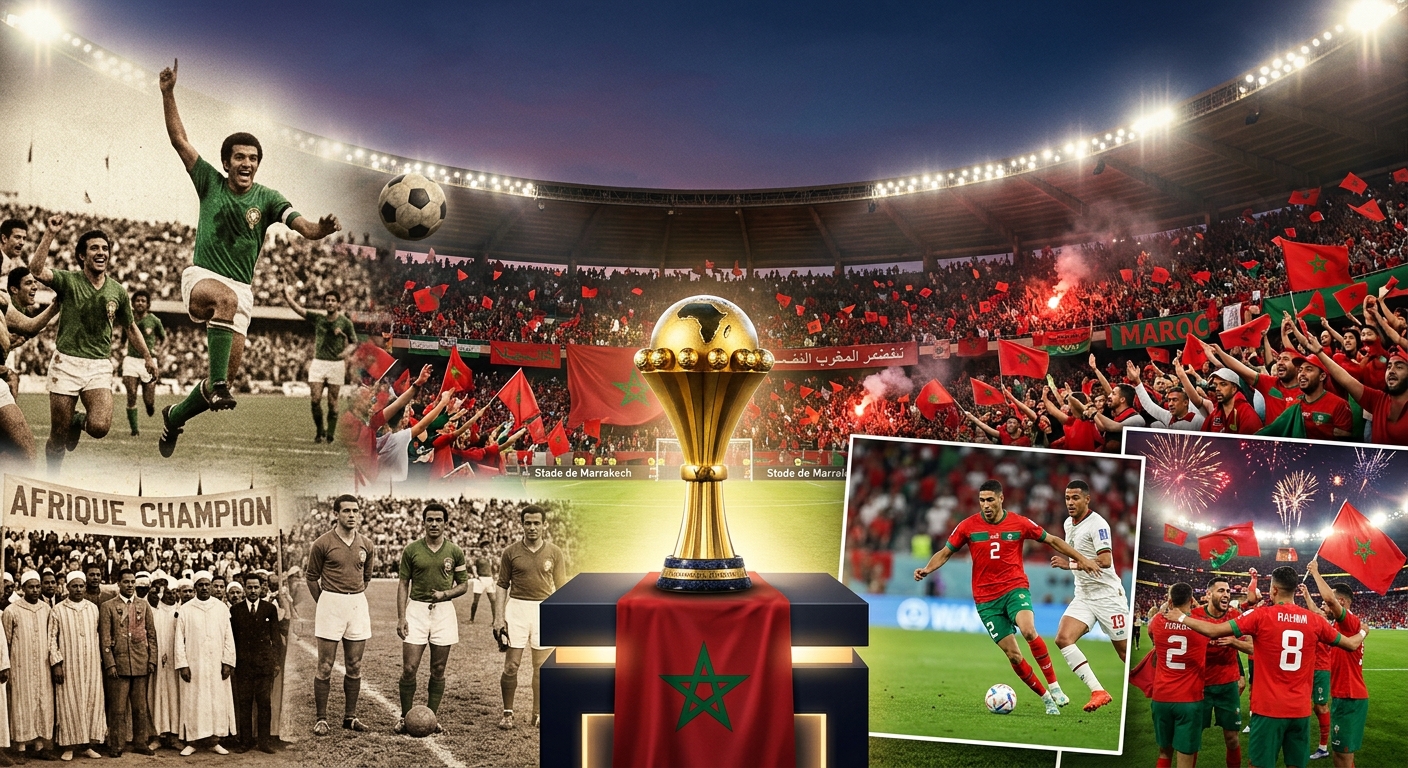
Morocco occupy a unique position in the history of the Africa Cup of Nations. They are simultaneously one of the continent's most respected and consistent footballing nations and, paradoxically, one of its great underachievers in the tournament itself. With only a single AFCON title to their name, won nearly half a century ago, Morocco's continental record sits oddly alongside their World Cup pedigree and their reputation for technical, organized football.
The Atlas Lions have been a regular presence at AFCON since the 1970s, frequently arriving as one of the favorites and just as frequently departing with the sense of an opportunity missed. They have produced legendary players, hosted the tournament, reached finals, and endured agonizing penalty shootouts and last-minute heartbreaks. Their AFCON story is one of pedigree without the matching haul of silverware.
This history charts that journey from the breakthrough triumph of 1976 through the decades of near-misses, the hosting of 1988, the final defeat of 2004, and the modern era in which a golden generation seeks to finally end a continental drought that has lasted longer than many of the players have been alive.
The 1976 Triumph
Morocco's solitary AFCON title came in 1976, at a tournament held in Ethiopia. It remains the defining moment in the nation's continental history. The format that year culminated in a final group stage rather than a single-match final, and Morocco emerged at the top of that group to be crowned champions of Africa for the first and, so far, only time.
The side was led by the brilliant Ahmed Faras, who captained the team and scored crucial goals, and who would be named African Footballer of the Year that same year. Faras embodied the quality and leadership that carried Morocco to glory, and his name remains synonymous with the country's golden moment on the continental stage.
The 1976 triumph established Morocco as a serious power in African football. It came at a time of growing confidence for the nation's game, sandwiched between their pioneering 1970 World Cup appearance and the historic run of 1986. For a brief, glorious period, Morocco sat atop the African game, and the memory of that achievement has fueled the nation's ambitions ever since.
Building on the Crown: The Late 1970s
After their 1976 success, Morocco remained competitive but could not immediately replicate their championship form. The nature of African football in the era, with strong sides emerging across the continent in nations like Ghana, Egypt, Cameroon, and Nigeria, meant that winning AFCON was an increasingly difficult task. Morocco found themselves among the contenders without recapturing the summit.
Ahmed Faras continued to be the talisman, but as that golden generation aged, Morocco entered a transitional phase. The challenge of sustaining success, common to many footballing nations, proved real. The 1976 squad had set a standard that subsequent teams would be measured against, and the weight of that expectation began to grow.
Even so, Morocco's status as a top-tier African nation was firmly established. They remained a side that opponents respected and feared, and the foundations laid in the 1970s would feed into a strong period of competitiveness in the following decade, culminating in their hosting of the tournament.
Hosting AFCON 1988
In 1988, Morocco hosted the Africa Cup of Nations, a mark of the nation's standing and infrastructure within African football. Home advantage and a quality squad gave the Atlas Lions genuine hope of capturing a second title in front of their own supporters, a prospect that captured the imagination of the Moroccan public.
The tournament saw Morocco compete strongly, but the host nation was unable to convert home advantage into the trophy. The competition was fierce, and Morocco fell short of the ultimate prize despite the backing of passionate home crowds. It was an early example of a recurring theme: Morocco arriving with strong credentials and high hopes, only to be denied at the decisive moments.
Hosting the tournament nonetheless reinforced Morocco's organizational capabilities and its commitment to the continental game. The experience of staging a major tournament fed into the nation's long-term ambitions, which would eventually extend to hosting bids and a central role in the 2030 World Cup. As a footballing host, Morocco proved itself; as a champion on home soil, the wait continued.
The Long Wait and the 1990s
Through the 1990s, Morocco continued to qualify for AFCON and field talented sides, but the second title remained elusive. This was the era of the great Moroccan exports to European football, with players like Mustapha Hadji and Noureddine Naybet establishing themselves at the highest club levels and bringing that experience back to the national team.
Despite the individual quality at their disposal, the Atlas Lions could not translate it into continental silverware. AFCON success requires a blend of quality, momentum, and fortune in tight knockout matches, and Morocco repeatedly found one element missing. They remained a side that could beat anyone on their day but could not string together the run required to lift the trophy.
The 1990s did, however, set the stage for Morocco's strong showings at the World Cup, with appearances in 1994 and 1998, and produced players who would become national legends. The continental drought was frustrating, but the talent pipeline was clearly healthy, keeping hope alive that a second AFCON title was a matter of time.
The 2004 Final Heartbreak
Morocco's best chance of a second AFCON title in the modern era came in 2004, when they reached the final of the tournament held in Tunisia. Under coach Badou Zaki, himself a hero of the 1986 World Cup as a goalkeeper, Morocco played attractive, confident football and swept into the final as one of the standout sides of the competition.
In the final, Morocco faced hosts Tunisia. It was a tight, tense affair played in front of a passionate home crowd. Tunisia took the lead, Morocco responded, but ultimately the hosts edged the contest 2-1 to claim their first and only AFCON title at the expense of the Atlas Lions. For Morocco, it was an agonizing near-miss, the closest they had come to a second crown since 1976.
The 2004 final crystallized the recurring narrative of Moroccan AFCON history: a talented, well-organized team that reaches the business end of the tournament only to be denied at the final hurdle. It was a defeat that stung deeply, and one that subsequent generations of players and fans would carry as motivation.
Hosting Again and the 2015 Controversy
Morocco was scheduled to host the 2015 Africa Cup of Nations, another reflection of its standing in the continental game. However, amid the Ebola outbreak in West Africa at the time, Morocco requested a postponement of the tournament over public-health concerns. The request was rejected by the Confederation of African Football, and the tournament was moved to Equatorial Guinea.
The fallout was significant. Morocco was stripped of hosting rights and faced disciplinary consequences, including a period of tension with CAF and a ban from the next edition that was later overturned. The episode was a difficult chapter, illustrating that Morocco's relationship with the continental game has not always been smooth, even as its footballing credentials remained strong.
The controversy did not, however, derail Morocco's long-term trajectory. The nation continued to invest heavily in football infrastructure, youth development, and the establishment of an elite training academy, all of which would underpin the rise of the powerful generation that would carry Morocco to the World Cup semifinals in 2022 and renew hopes of continental glory.
The Modern Era and the Golden Generation
The 2010s and 2020s ushered in a new era of Moroccan football, powered by a golden generation of talent and significant investment in academies, most notably the Mohammed VI Football Academy. Players like Achraf Hakimi, Hakim Ziyech, Youssef En-Nesyri, and Sofyan Amrabat gave Morocco a depth and quality arguably unmatched in their history.
This generation reached its pinnacle at the World Cup rather than at AFCON, becoming the first African and Arab nation to reach a World Cup semifinal at Qatar 2022. That achievement raised expectations enormously at the continental level. With such a squad, the question became not whether Morocco could compete for AFCON, but why they had not yet ended the drought.
At recent editions, Morocco have arrived as genuine title favorites, only to once again fall in the knockout stages despite their evident superiority on paper. The pattern of the talented Moroccan team being undone in a tight knockout match has persisted into the modern era, deepening the sense that a second AFCON title is overdue.
Why the Continental Title Has Eluded Them
The central puzzle of Morocco's AFCON history is how a nation of such consistent quality has won the tournament only once. Several factors help explain it. AFCON is a notoriously unpredictable competition, often played in challenging conditions, with congested schedules and the great equalizing lottery of knockout football and penalty shootouts.
Morocco have also, at times, been victims of their own status as favorites, carrying expectation that can become a burden in tight matches. The depth of competition across Africa, with traditional powers like Egypt, Cameroon, Nigeria, Ghana, Ivory Coast, and Senegal all capable of winning, means that even the strongest squad cannot assume a clear path to the title.
There is also the simple cruelty of fine margins. The 2004 final and several knockout exits turned on small moments. Morocco have rarely been outclassed at AFCON; they have more often been undone by a single goal, a missed penalty, or a moment of misfortune. For a nation with their pedigree, the absence of a second title remains one of the great anomalies of African football.
The Hunt for a Second Title
As Morocco look to the future, ending their AFCON drought is among the highest priorities for a nation whose footballing ambitions have never been greater. With a golden generation in or approaching its prime, a deep talent pipeline, and a coaching and infrastructure setup among the best in Africa, the Atlas Lions arrive at every recent tournament as one of the leading candidates.
The motivation runs deep. A nation that has reached a World Cup semifinal and co-hosts the 2030 World Cup feels the absence of continental silverware acutely. The players are acutely aware that, for all their global achievements, they have not yet matched the class of 1976 by being crowned champions of their own continent.
Whenever Morocco finally lift a second AFCON trophy, it will close a chapter that has run for decades and will be celebrated as the long-awaited fulfillment of the nation's continental promise. Until then, the 1976 triumph and the legacy of Ahmed Faras stand alone, a singular crown that the modern Atlas Lions are desperate to join.
| Year | Host | Morocco's outcome | Significance |
|---|---|---|---|
| 1976 | Ethiopia | Champions | Only AFCON title, led by Ahmed Faras |
| 1988 | Morocco | Host, no title | Strong showing on home soil |
| 2004 | Tunisia | Runners-up | Lost final 2-1 to hosts Tunisia |
| 2015 | Equatorial Guinea | Hosting stripped | Postponement request over Ebola rejected |
| Modern era | Various | Title favorites | Golden generation seeking second crown |
Key moments in Morocco's AFCON history
FAQ
How many AFCON titles has Morocco won?
Morocco have won the Africa Cup of Nations once, in 1976 in Ethiopia, which remains their only continental title to date.
Who led Morocco to their 1976 AFCON title?
Captain Ahmed Faras led the side and was named African Footballer of the Year in 1976, the same year Morocco were crowned continental champions.
Has Morocco reached an AFCON final since 1976?
Yes, Morocco reached the AFCON final in 2004 but lost 2-1 to hosts Tunisia, their closest brush with a second title in the modern era.
Why was Morocco stripped of hosting AFCON 2015?
Morocco requested a postponement over fears related to the Ebola outbreak; CAF rejected the request, moved the tournament to Equatorial Guinea, and stripped Morocco of hosting rights.
Why has Morocco struggled to win a second AFCON title?
Despite consistent quality, Morocco have repeatedly been undone in tight knockout matches by fine margins, penalty shootouts, and the unpredictability of a fiercely competitive tournament.
Loved this? Useful? React below — your feedback helps other readers.