Morocco 1976: Their Only AFCON Title
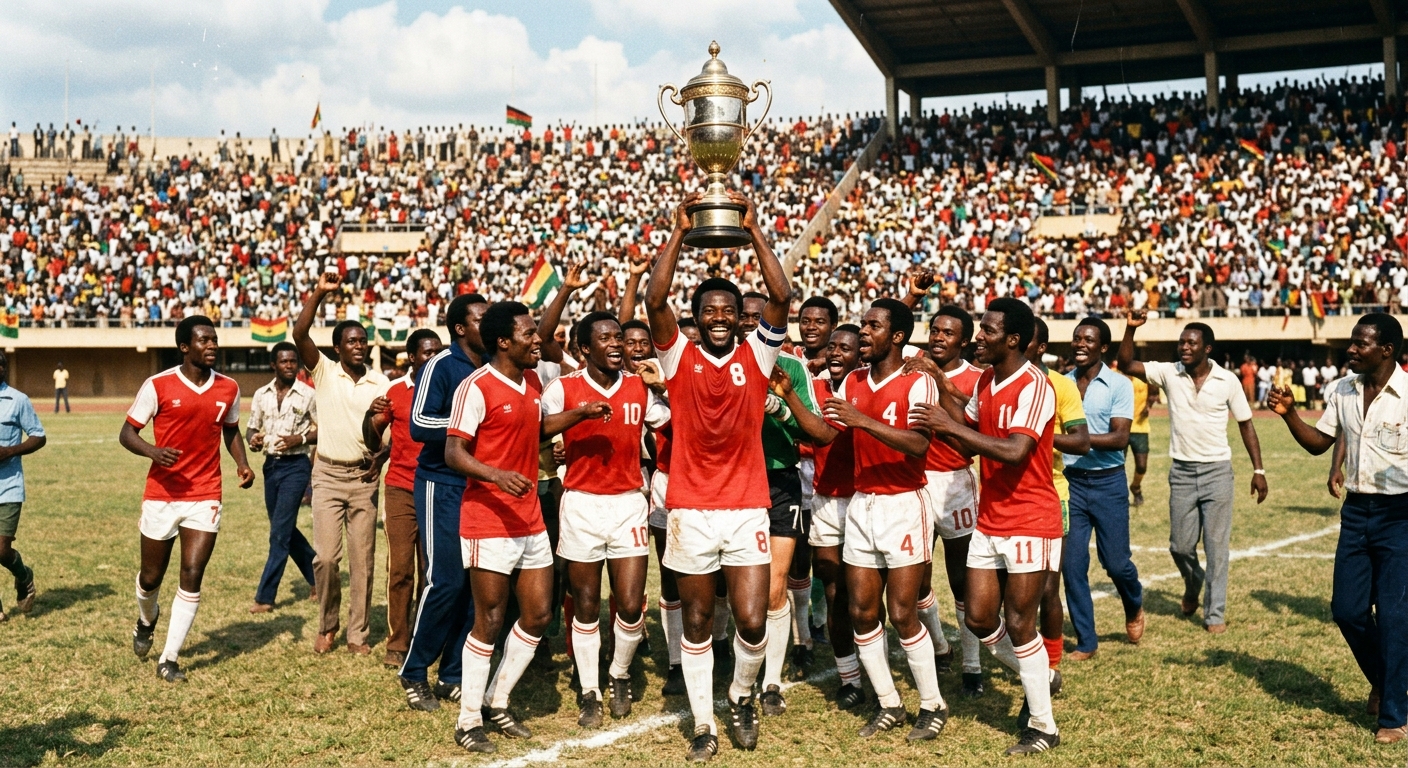
The Crown That Stands Alone
In the long and proud history of Moroccan football, one achievement towers above all others at the continental level: the 1976 Africa Cup of Nations title. Won in Ethiopia, it remains, decades later, the only time the Atlas Lions have been crowned champions of Africa. That singular status gives the 1976 triumph a near-mythical quality in Moroccan football lore.
For a nation that has produced World Cup pioneers, golden-generation superstars, and a historic run to a World Cup semifinal, the absence of a second AFCON title makes the 1976 success all the more precious. It is the one continental crown, the benchmark against which every subsequent generation is measured and which none has yet matched.
To understand Moroccan football is to understand the weight of 1976. It was the moment the Atlas Lions sat atop their own continent, the validation of a footballing project that had begun with their pioneering 1970 World Cup appearance. This is the story of how Morocco reached the summit of African football.
Morocco's Rise in the 1970s
The 1970s were a period of growing confidence for Moroccan football. In 1970, Morocco had become the first independent African nation of the modern era to qualify for the World Cup, traveling to Mexico and pushing West Germany before exiting at the group stage. That experience, competing on the global stage, hardened the team and raised belief at home.
By the middle of the decade, Morocco had assembled a generation of talented players capable of challenging for continental honors. The squad combined technical quality with the kind of organization and resilience that would become a hallmark of Moroccan teams. At the center of it all was Ahmed Faras, a forward of rare quality who captained the side and provided both goals and leadership.
The Africa Cup of Nations of the era was a fiercely competitive tournament, with powers across the continent vying for supremacy. For Morocco to win it, they would need to navigate strong opposition and perform at a sustained high level. The stage was set in Ethiopia in 1976 for the Atlas Lions to make their mark.
Ahmed Faras: Captain and Talisman
No account of Morocco's 1976 triumph can begin anywhere but with Ahmed Faras. The captain and leading light of the side, Faras was a forward of elegance, intelligence, and clinical finishing. He embodied the team's quality and carried the responsibility of leadership with distinction throughout the campaign.
Faras spent his entire club career in Morocco, a one-club man whose loyalty and excellence made him a beloved figure long before the 1976 success cemented his legend. His goals and his leadership were decisive as Morocco navigated the tournament, and his influence extended beyond the pitch to the spirit and confidence of the entire squad.
His crowning individual honor came that same year when he was named African Footballer of the Year for 1976, recognition of his pivotal role in Morocco's continental triumph. For Faras to lead his country to its only AFCON title and to be named the best player on the continent in the same year placed him among the immortals of Moroccan and African football.
The Unique Format of 1976
The 1976 Africa Cup of Nations featured a distinctive format that shaped how the title was decided. Rather than culminating in a traditional single-match final, the tournament concluded with a final group stage. The teams that advanced from the earlier rounds were placed in a final group, and the side that finished top of that group was crowned champion.
This format meant that consistency over several decisive matches, rather than a single do-or-die final, determined the winner. For Morocco, it placed a premium on the qualities they possessed in abundance: organization, resilience, and the ability to grind out results across a series of high-stakes fixtures against the continent's best.
The final-group format has become part of the lore of the 1976 triumph, a quirk of history that means Morocco's title was sealed not by a dramatic last-minute final goal but by topping a deciding group. It was, in its way, a fitting reflection of the team's character: relentless, consistent, and ultimately the best over the long haul of the tournament.
The Tournament Campaign
Morocco's path to the title in Ethiopia required them to navigate a competitive field and reach the final group stage that would decide the championship. The Atlas Lions progressed through the tournament displaying the blend of quality and steel that defined them, with Faras leading the line and the team functioning as a cohesive, well-drilled unit.
In the decisive final group, Morocco faced the other leading sides of the tournament in a series of matches where every point mattered. The pressure was immense, with the title hinging on accumulating the best record across the group. Morocco rose to the occasion, producing the results required to position themselves at the top of the standings.
The campaign demanded not just talent but mental fortitude. With the championship decided over multiple matches rather than a single final, Morocco had to maintain focus and quality throughout, refusing to slip up when it mattered most. Their ability to do so is what separated them from their rivals and delivered the historic crown.
Sealing the Title in Ethiopia
As the final group reached its conclusion, Morocco found themselves on the brink of history. Topping the deciding group would make them champions of Africa, a feat no Moroccan side had achieved before. The Atlas Lions held their nerve and secured the results needed to finish first, claiming the continental crown.
The moment of triumph was the culmination of years of progress for Moroccan football. From the pioneering World Cup appearance of 1970 to the assembling of a golden generation led by Faras, the journey had reached its peak. Morocco were the best team in Africa, and they had earned it through the unforgiving final-group format.
For the players, the coaching staff, and the watching nation, it was a moment of pure jubilation. The capture of the AFCON title placed Morocco firmly among the elite of African football and provided a memory that would endure for generations. Faras, lifting the honors as captain, became the face of the greatest achievement in the nation's continental history.
Faras Named African Footballer of the Year
The 1976 triumph was crowned by individual recognition for its inspirational leader. Ahmed Faras was named African Footballer of the Year for 1976, the first Moroccan to receive the honor and a fitting tribute to the role he played in delivering the continental title. The award affirmed what Moroccan fans already knew: Faras was among the very best players on the continent.
The honor was significant beyond the individual. It marked Moroccan football's arrival at the pinnacle of African recognition, both as a team and through its standout player. Faras joined an elite list of African greats to win the award, and his name would forever be associated with the golden year of 1976.
For Faras personally, the combination of captaining his country to its only AFCON title and being named the continent's finest player in the same year represented the summit of a remarkable career. It was a season of perfect harmony between collective and individual glory, and it secured his place in the pantheon of Moroccan football legends.
What the Title Meant for Morocco
The 1976 AFCON title meant more than a trophy; it was a statement about Morocco's place in the football world. Coming between the 1970 World Cup appearance and the historic 1986 World Cup run, it formed part of a remarkable golden period for the nation's game, a stretch in which Morocco repeatedly punched above expectations on both the continental and global stages.
The triumph instilled belief and pride that would echo through subsequent generations. It proved that Moroccan football could not only compete with the best in Africa but could be the best, a benchmark of excellence that fueled the ambitions of every team that followed. The standard of 1976 became both an inspiration and a challenge.
It also reinforced Morocco's identity as a footballing nation defined by organization, resilience, and quality, characteristics that would recur in the World Cup heroics of 1986 and 2022. The 1976 side laid down a marker, and although the continental crown has not been recaptured since, its memory continues to define what Moroccan football aspires to be.
The Enduring Legacy
Nearly half a century on, the 1976 AFCON title remains a source of immense pride and, increasingly, of longing. Every Moroccan generation since has chased the second crown that would join 1976 in the record books, and the failure to do so has only enhanced the legendary status of that original triumph.
Ahmed Faras passed into the realm of national icons, his name invoked whenever Morocco approach a continental tournament. The 1976 side as a whole occupies a cherished place in the nation's footballing memory, remembered as the team that achieved what none before or since has managed: to be crowned champions of Africa.
As Morocco's modern golden generation, fresh from World Cup heroics, continues to pursue continental glory, the shadow and the inspiration of 1976 loom large. Until a second title arrives, the class of 1976 and their captain Ahmed Faras stand alone atop the history of Moroccan football, the singular champions of Africa.
Honoring the Class of 1976
In Morocco, the heroes of 1976 are honored as foundational figures in the nation's footballing story. Ahmed Faras in particular has been celebrated as one of the greatest players the country has ever produced, his legacy preserved in the memory of fans and in the record books that show him as the captain of the only Moroccan team to win the continental championship.
The achievement is regularly invoked in the build-up to major tournaments, a reminder of what is possible and a measuring stick for the ambitions of the present. When Moroccan teams take the field at AFCON, they carry the weight and the inspiration of 1976 with them, chasing a legacy set down by Faras and his teammates.
That a single tournament, played under an unusual format in Ethiopia in 1976, can still resonate so powerfully decades later is testament to its significance. It was Morocco's finest continental hour, a crown that has never been equaled, and a story that continues to inspire the pursuit of a second title that would finally give the class of 1976 some long-awaited company at the summit.
| Detail | Information |
|---|---|
| Host nation | Ethiopia |
| Year | 1976 |
| Format | Final group stage decided the champion |
| Result | Morocco finished top of the final group |
| Captain and star | Ahmed Faras |
| Individual honor | Faras named 1976 African Footballer of the Year |
| Significance | Morocco's only AFCON title to date |
Morocco's 1976 AFCON triumph at a glance
FAQ
When did Morocco win the AFCON title?
Morocco won their only Africa Cup of Nations title in 1976, at the tournament hosted in Ethiopia.
How was the 1976 AFCON champion decided?
The 1976 tournament used a final group stage rather than a single final, and Morocco were crowned champions by finishing top of that deciding group.
Who was Morocco's captain in 1976?
Ahmed Faras captained Morocco to the title and was also named African Footballer of the Year for 1976.
Has Morocco won AFCON since 1976?
No, the 1976 title remains Morocco's only AFCON crown, despite reaching the final in 2004 and producing many strong sides since.
Why is the 1976 title so important to Moroccan football?
It is the nation's only continental championship and a centerpiece of Morocco's golden era, serving as the benchmark every later generation has tried to match.
Loved this? Useful? React below — your feedback helps other readers.