Zellige: Moroccan Mosaic Art
What Is Zellige?
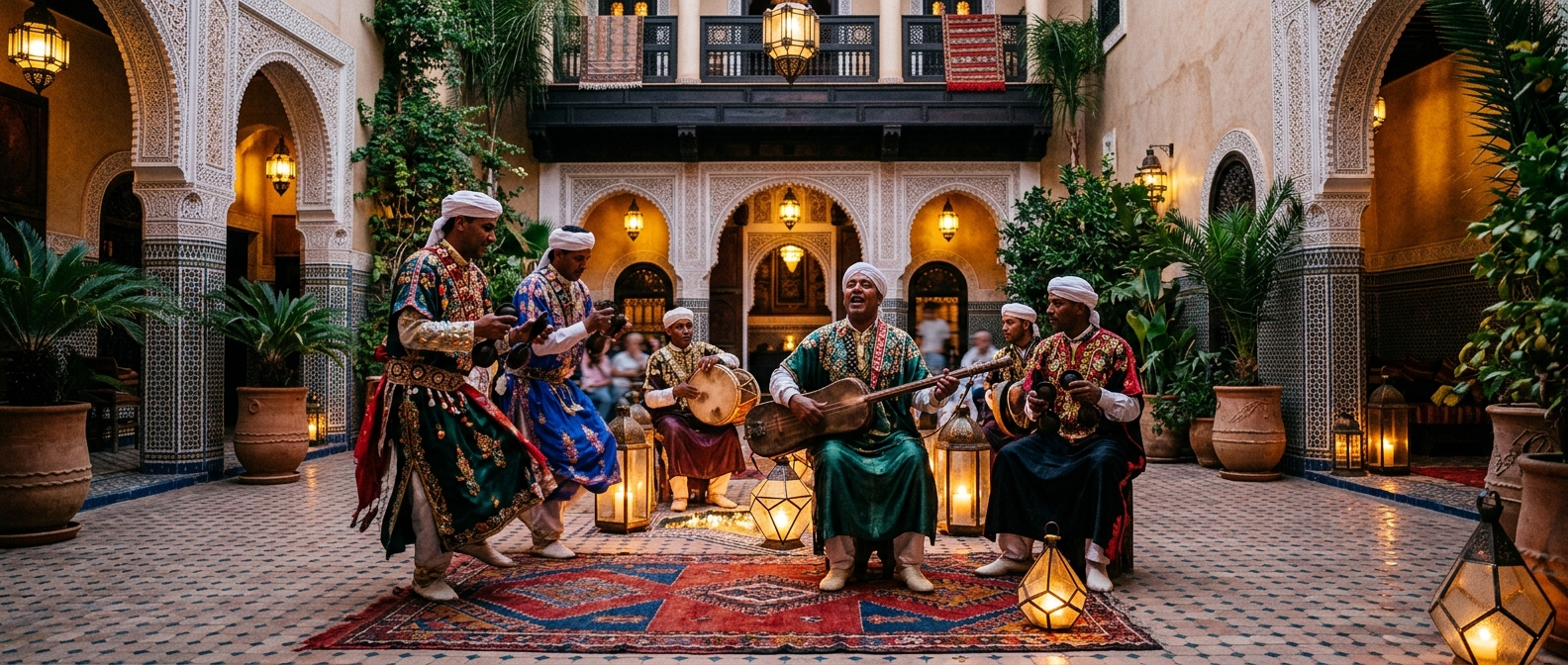
Zellige is a form of mosaic tilework in which small pieces of glazed terracotta are cut into geometric shapes and assembled into complex patterns. It is one of the most recognizable elements of Moroccan and wider Maghrebi architecture, covering walls, floors, fountains, and columns.
Unlike printed or machine-made tiles, traditional zellige is entirely handmade, with each piece individually shaped. This gives the finished surfaces a subtle irregularity and depth that mass production cannot replicate, and it is a key reason the craft is so highly valued.
History and Origins
Zellige developed in the Maghreb under the influence of Islamic art, with roots traceable to the early medieval period. It flourished particularly under the Marinid dynasty between the thirteenth and fifteenth centuries, when many of Fez's great madrasas and mosques were built.
The craft shares a heritage with the tilework of Andalusia, and the two traditions influenced one another across the medieval Mediterranean. Fez became, and remains, the most important center of zellige production and the guardian of its most refined techniques.
How Zellige Is Made
The process begins with clay from the region of Fez, shaped into square tiles, dried, glazed in a single color, and fired. Skilled cutters known as maalems then chip each tile by hand into precise geometric shapes called furmah, using a sharp hammer.
The cut pieces are arranged face-down according to a memorized pattern, then bonded with a layer of plaster or mortar poured over the back. Once set, the panel is turned over to reveal the finished mosaic. The work demands years of training and exceptional precision.
Geometry and Symbolism
Zellige patterns are built on Islamic geometric principles, using interlocking stars, polygons, and rosettes that can repeat infinitely. This emphasis on geometry rather than figurative imagery reflects Islamic artistic traditions that favor abstract ornamentation.
The endless, mathematically precise patterns are often understood as a meditation on infinity and the order of creation. Mastery of this geometry, passed down through generations of artisans, allows for extraordinary complexity built entirely from simple repeated units.
Colors and Materials
Traditional zellige used a limited palette derived from natural pigments: white, blue, green, yellow, and earthy browns, with older work often dominated by white and blue. Over time, the range of available colors expanded, allowing more elaborate compositions.
The terracotta base and mineral glazes give zellige its durability, allowing centuries-old surfaces to retain their brilliance. The slight variations in handmade glaze produce a living, shimmering quality that changes with the light.
Where to See Zellige
Some of the finest historic zellige can be seen in Fez, especially in the Bou Inania and Al-Attarine madrasas, where walls, columns, and fountains are sheathed in dazzling mosaic. The Saadian Tombs and Bahia Palace in Marrakech also display exceptional examples.
Zellige continues to adorn modern mosques, hotels, and homes throughout Morocco, and Moroccan artisans export their skills worldwide. Workshops in Fez remain the heart of the craft, where visitors can watch maalems at work.
Preserving a Living Craft
Zellige is a living tradition, but it faces competition from cheaper machine-made imitations that mimic its appearance. Genuine handcrafted zellige requires skilled artisans whose training can take many years to complete.
Supporting authentic workshops, restoring historic tilework with traditional methods, and educating buyers about the difference between handmade and industrial tile all help sustain this craft and the communities of artisans who maintain it.
| Stage | Description |
|---|---|
| Forming | Shape and dry clay tiles from Fez region |
| Glazing and firing | Apply single color glaze and fire in kiln |
| Cutting | Chip tiles by hand into geometric shapes |
| Assembly | Arrange pieces face-down into a pattern |
| Setting | Pour plaster backing, then flip to reveal mosaic |
Stages of making traditional zellige
FAQ
What is zellige?
Zellige is the Moroccan art of geometric mosaic made from hand-cut, individually glazed terracotta tiles assembled into intricate repeating patterns.
Where is the best zellige made in Morocco?
Fez is the historic and ongoing center of zellige, home to the most skilled artisans and famous examples in its madrasas and palaces.
Why does zellige use geometric patterns instead of images?
Islamic artistic tradition favors abstract geometric ornamentation, and the infinitely repeating patterns are often seen as a meditation on order and infinity.
Loved this? Useful? React below — your feedback helps other readers.